Pages

Monday, May 19, 2025

Reliance Power teams up with Bhutan for country's largest ever solar energy project at Rs 2000 crore;-ET


Reliance Power and Bhutan's Green Digital Private Limited have partnered to construct Bhutan's largest solar power plant, generating 500 MW of electricity. This Rs 2,000 crore project, a 50-50 venture with Druk Holding and Investments, aims to boost clean energy in the region. Reliance Power has initiated the bidding process for construction and is securing funding for the project.


Tuesday, May 6, 2025

Japan's financial powerhouse SMBC moves a step closer to taking control of Yes Bank:-ET


Mumbai: Japanese financial powerhouse Sumitomo Mitsui Banking Corp. (SMBC) is in advanced discussions to buy a significant stake in Yes Bank, following months of negotiations, said people aware of the matter. The move is expected to trigger an open offer for an additional 26% of the bank, the sixth-largest private lender by assets.


From blackouts to bunkers: Inside India’s civil defence mock drills across 244 districts on May 7 :-ET


civil defence mock drill is a large-scale preparedness exercise. It tests how quickly and effectively a civilian population can respond to an emergency — particularly during war-like situations such as missile strikes or aerial attacks. The drills simulate real-world scenarios: air raid sirens go off, lights in cities are switched off, civilians practice taking shelter, and emergency services respond in real-time. The aim is to reduce panic, avoid chaos, and save lives.

These measures date back to the Cold War era. While they may seem outdated, global tensions have once again brought them into sharp focus.

What will happen on May 7?


On 7 May 2025, a national-level civil defence rehearsal will be held across 244 officially designated Civil Defence districts. States and union territories have been instructed to organise and oversee the drill. It will involve local government authorities, Civil Defence wardens, Home Guards, National Cadet Corps (NCC), National Service Scheme (NSS
) volunteers, Nehru Yuva Kendra Sangathan (NYKS) members, and students from schools and colleges

These measures date back to the Cold War era. While they may seem outdated, global tensions have once again brought them into sharp focus.

What will happen on May 7?

On 7 May 2025, a national-level civil defence rehearsal will be held across 244 officially designated Civil Defence districts. States and union territories have been instructed to organise and oversee the drill. It will involve local government authorities, Civil Defence wardens, Home Guards, National Cadet Corps (NCC), National Service Scheme (NSS) volunteers, Nehru Yuva Kendra Sangathan (NYKS) members, and students from schools and colleges.

The Ministry of Home Affairs (MHA) issued the directive following a communication dated 2 May 2025. According to officials, the drill falls under the Civil Defence Rules, 1968.


Drill Activities: A Step-by-Step Breakdown

The drill will include five major components, each targeting a key aspect of civil protection:

Air Raid Sirens

Sirens will be tested and activated in vulnerable urban centres and installations. These alarm systems alert the public to aerial threats, giving people crucial seconds to find safety.

Training Civilians

Workshops will be held in schools, offices, and community centres. Participants will learn how to respond during an attack — such as drop-and-cover techniques, locating nearby shelters, basic first aid, and staying calm under stress.

Crash Blackouts

Cities will simulate sudden blackouts, turning off all visible lights to avoid detection during potential night-time airstrikes. This tactic was last widely used during the 1971 Bangladesh Liberation War.

Camouflage Exercises

Strategic buildings and installations — including military bases, communication towers, and power plants — will undergo camouflaging. This will make them harder to detect during satellite or aerial surveillance.

Evacuation Drills

Officials will rehearse evacuation plans, moving people from high-risk zones to safe areas. These dry runs help identify bottlenecks and ensure smooth operations in real emergencies.

This exercise does not come in isolation. It follows the Pahalgam terror attack on 22 April 2025, in which 26 Indian tourists lost their lives in Jammu and Kashmir. The attack, reportedly backed by Pakistan-based groups, has sharply escalated tensions between the two countries.

In the days since the attack, Prime Minister Narendra Modi has held multiple high-level security meetings. "We will hunt down the perpetrators and conspirators and bring them to justice in a manner that goes beyond their imagination," he said.

The MHA’s renewed focus on civil defence traces back to the ‘Chintan Shivir’ held in October 2022, where both the Prime Minister and Union Home Minister highlighted the need for enhanced civil preparedness.

A subsequent letter from the Union Home Secretary in January 2023 echoed this urgency. It called on states and union territories to strengthen civil defence capabilities, especially in border and coastal areas.


Ferozepur leads by example

Even before the nationwide drill, some regions have already begun similar exercises. On Sunday evening, Ferozepur Cantonment in Punjab — located close to the India-Pakistan border — carried out a 30-minute blackout drill. The exercise offered a preview of what much of the country will experience on 7 May.

Who is involved?

The Ministry has instructed the participation of multiple stakeholders:

  • District Authorities will oversee coordination.
  • Civil Defence Wardens and Home Guards will carry out ground-level operations.
  • Students, NSS, NYKS and NCC cadets will be involved in training sessions and mock scenarios.
  • Every participating state and UT is required to submit an "Action Taken Report" after the exercise, detailing execution, findings, and areas for improvement.

The move to revive Cold War-era drills is not just symbolic. It signals a broader strategy — that national defence extends beyond the battlefield. When citizens know what to do, when to do it, and how to stay calm, the country's overall resilience grows stronger.


Monday, May 5, 2025

Flash back to March 26, 2021. JSW Steel had just completed its largest acquisition—Bhushan Power and Steel (BPSL)— under the Insolvency and Bankruptcy Code (IBC). “This acquisition not only aligns with our core business and purpose but also establishes our presence and acceler­ates our growth vision in eastern India,” Sajjan Jindal, chairman of JSW Steel, had written to BPSL employees after paying financial creditors ₹19,350 crore. Four years later, on May 2, 2025, that vision took a severe blow when the Supreme Court rejected JSW Steel’s resolution plan for BPSL and ordered its liquidation.:-Bar and Bench


In a scathing judgment, the Supreme Court of India on Friday quashed JSW Steel's ₹19,700 crore resolution plan for Bhushan Power and Steel Ltd (BPSL) calling it a "flagrant violation of the IBC's mandatory provisions" and a dishonest and fraudulent attempt made by JSW.

In a strongly worded judgment, a Bench of Justices Bela Trivedi and Satish Chandra Sharma said that JSW did not make upfront payments as committed by it and unjustly enriched itself. It then sought to comply with the terms of the resolution plan after rise in the price of steel, the Court said while also flagging collusion with the resolution professional (RP) and the committee of creditors (CoC).

"There was a dishonest and fraudulent attempt made by JSW, misusing the process of the Court by not making the upfront payments as committed by it for about two and a half years and thereby enriching itself unjustly, and thereafter considering the rising prices of steel in the market, JSW sought to comply with the terms of Resolution Plan at a very belated stage, in collusion with the CoC and the Resolution Professional,” the Court stated.

Therefore, it set aside resolution plan approved by National Company Law Appellate Tribunal (NCLAT) earlier, and directed liquidation of the debt-laden steelmaker.

The court criticised JSW Steel's conduct, stating that the company had "played smart" and demonstrated mala fide and dishonest intention throughout the insolvency process.

"Nobody should be permitted to misuse the process of law nor should be permitted to take undue advantage of the pendency of any proceedings in any Court or Tribunal," the Court observed, rejecting JSW's attempts to present a situation of fait accompli before the Supreme Court.

Justice Bela M Trivedi and Justice Satish Chandra Sharma

The judgment highlighted that JSW did not implement the approved resolution plan for about two years after its approval by the NCLAT, despite no legal impediment. The upfront payments, which were to be made within 30 days of the NCLT's approval, were delayed by 540 days for financial creditors and 900 days for operational creditors.

"Such flagrant violation of the terms of the resolution plan, has frustrated the very object and purpose of the Code," the Court stated.

JSW Steel had emerged as the successful resolution applicant for BPSL in 2019 after offering to pay over ₹19,000 crore to financial creditors. The plan was approved by the National Company Law Tribunal (NCLT) in September 2019. It was later upheld by the NCLAT as well despite legal challenges, including concerns raised by the Enforcement Directorate (ED) regarding the attachment of BPSL’s assets.

The matter reached the Supreme Court amid growing concern that JSW Steel had not implemented the plan for the years since approval. The Court noted that the resolution applicant failed to fulfill essential post-approval obligations, undermining the very objectives of the IBC, which includes time-bound resolution of insolvency and maximization of asset value.

Notably, in December 2024, the ED decided not to pursue its appeal before the Supreme Court against JSW Steel's takeover of BPSL under the IBC.

The Court severely criticised the resolution professional for "utterly failing to discharge his statutory duties" during the Corporate Insolvency Resolution Process (CIRP).

According to the judgment, the RP did not adhere to the mandatory timeline for completing the CIRP within the prescribed 270 days from the commencement date.

"The Committee of Creditors had failed to exercise its commercial wisdom while approving the Resolution Plan of the JSW, which was in absolute contravention of the mandatory provisions of IBC and CIRP Regulations," the Court noted, questioning the changing stance of the CoC throughout the proceedings.

The Court also said that NCLAT’s decision in the case was "perverse, coram non judice and liable to be set aside."

The Court specifically ruled that NCLAT had exceeded its authority when it entertained JSW Steel's appeal against conditions imposed by NCLT. According to the judgment, JSW's appeal before NCLAT was not legally maintainable since none of the grounds specified in Section 61(3) of the IBC existed to challenge the NCLT's approval of JSW's own resolution plan.

"The NCLAT vide the impugned judgment dated 17.02.2020, not only entertained but also allowed the said Appeal of JSW which was not legally maintainable, modified the conditions which were not suitable to JSW, and dismissed all the other Appeals filed by the Operational Creditors, the Ex-Promoters and the State of Odisha," the Court noted.

The Court was particularly critical of NCLAT's decision to rule on matters related to the Prevention of Money Laundering Act (PMLA). After the NCLT approved JSW's resolution plan on September 5, 2019, the ED provisionally attached BPSL's assets under the PMLA on October 10, 2019.

The Supreme Court found that NCLAT had no power to review decisions made by statutory authorities under public law statutes like the PMLA.

"The observations made and the findings recorded by the NCLAT in the impugned judgment with regard to the PAO dated 10.10.2019 passed by the Directorate of Enforcement under the PMLA, being without any authority of law and without jurisdiction, were coram non judice," the Court ruled.

The Court identified several critical failures in the insolvency resolution process:

  • The RP failed to file an application for extension of time before the expiry of the 180-day period as required by Section 12(2) of the IBC, and submitted the resolution plan for approval after nearly one and a half years, far beyond the 270-day maximum period.

  • The resolution plan violated Regulation 38 of the CIRP Regulations by not giving priority to payments for operational creditors over financial creditors.

  • JSW failed to implement the approved resolution plan for about two years, delaying upfront payments to financial creditors by 540 days and to operational creditors by 900 days.

In its final order, the Supreme Court:

- Quashed and set aside the judgments of both the NCLT and NCLAT;

- Rejected JSW's resolution plan for non-conformity with Section 30(2) of the IBC;

- Directed the NCLT to initiate liquidation proceedings against BPSL;

- Ordered that payments made by JSW to creditors be dealt with according to previous statements recorded by the Court;

The appellants were represented by Senior Advocate Dhruv Mehta with Advocate Ranjeeta Rohatgi, Milind Kumar, VD Khanna, Arup Banerjee, Mayank Kshirsagar and Samapika Biswal.

The CoC was represented by Senior Advocate Abhishek Manu Singhvi with a team from Cyril Amarchand Mangaldas.
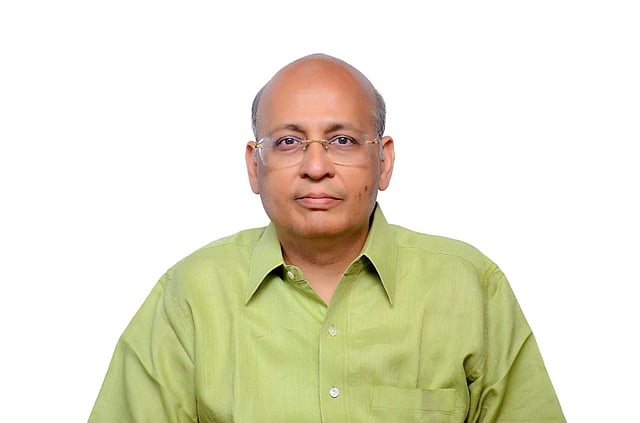
Abhishek Singhvi
Abhishek Singhvi

BSPL was represented by Senior Advocates Shyam Divan and Navin Pahwa with a team from Shardul Amarchand Mangaldas.

JSW was represented by Senior Advocates Neeraj Kishan Kaul, Gopal Jain and Madhavi Divan with a team from Karanjawala & Co.

The Government of India was represented by Additional Solicitor General KM Natraj.

[Read Judgment]


Friday, May 2, 2025

I-Sec maintains Buy on IDFC First Bank, raises target price to Rs 80:-ET


ICICI Securities maintains a Buy call on IDFC First Bank, revising the target price to Rs 80. The bank's Q4FY25 PAT was impacted by elevated provisioning, though funded assets and deposits showed strong YoY growth. While NIM declined slightly, MFI slippages are expected to have peaked, with ICICI Securities anticipating RoA to reach 1% by the end of FY26E.


ICICI Securities maintains a Buy call on IDFC First Bank, revising the target price to Rs 80. The bank's Q4FY25 PAT was impacted by elevated provisioning, though funded assets and deposits showed strong YoY growth. While NIM declined slightly, MFI slippages are expected to have peaked, with ICICI Securities anticipating RoA to reach 1% by the end of FY26E.

Read more at:
https://economictimes.indiatimes.com/markets/stocks/recos/i-sec-maintains-buy-on-idfc-first-bank-raises-target-price-to-rs-80/articleshow/120717374.cms?utm_source=contentofinterest&utm_medium=text&utm_campaign=cppst
ICICI Securities maintains a Buy call on IDFC First Bank, revising the target price to Rs 80. The bank's Q4FY25 PAT was impacted by elevated provisioning, though funded assets and deposits showed strong YoY growth. While NIM declined slightly, MFI slippages are expected to have peaked, with ICICI Securities anticipating RoA to reach 1% by the end of FY26E.

ICICI Securities has maintained the Buy call on IDFC First Bank with a revised target price of Rs 80 (Rs 75 earlier). The current market price of IDFC First Bank is Rs 66.62. IDFC First Bank, incorporated in 2014, has a market cap of Rs 48955.61 crore).

ICICI Securities has maintained the Buy call on IDFC First Bank with a revised target price of Rs 80 (Rs 75 earlier). The current market price of IDFC First Bank is Rs 66.62. IDFC First Bank, incorporated in 2014, has a market cap of Rs 48955.61 crore).

ICICI Securities has maintained the Buy call on IDFC First Bank with a revised target price of Rs 80 (Rs 75 earlier). The current market price of IDFC First Bank is Rs 66.62. IDFC First Bank, incorporated in 2014, has a market cap of Rs 48955.61 crore).

ICICI Securities has maintained the Buy call on IDFC First Bank with a revised target price of Rs 80 (Rs 75 earlier). The current market price of IDFC First Bank is Rs 66.62. IDFC First Bank, incorporated in 2014, has a market cap of Rs 48955.61 crore).

ICICI Securities maintains a Buy call on IDFC First Bank, revising the target price to Rs 80. The bank's Q4FY25 PAT was impacted by elevated provisioning, though funded assets and deposits showed strong YoY growth. While NIM declined slightly, MFI slippages are expected to have peaked, with ICICI Securities anticipating RoA to reach 1% by the end of FY26E.

Thursday, May 1, 2025

Coming soon: Universal Studios' amusement park in India:-ET


Universal Studios is reportedly in discussions with Bharti Real Estate to establish its first Indian theme park within Bharti's upcoming 3-million-sq-ft mall near Delhi airport. The mall, slated for completion by mid-2027, will allocate 300,000 sq ft for the indoor amusement park.


US-Ukraine Minerals Deal: US and Ukraine ink strategic minerals deal after long delay:-ET


US and Ukraine Minerals Deal: The United States and Ukraine have signed a long-negotiated investment deal granting Washington access to Kyiv’s critical mineral reserves. This agreement, framed as part of a broader peace strategy, comes as the war with Russia continues into its third year with no resolution in sight. The deal creates a joint fund to attract global investment, as both countries attempt to balance military and economic concerns. Meanwhile, Russian attacks on Ukrainian cities continue, with civilian casualties rising sharply, according to a new UN report.