Pages

Wednesday, October 4, 2017

Five ways to build a rewarding career

Oct 04, 2017, 11.10 AM IST

Discovering one's true potential

A rewarding career might mean different things to different people. However, any career becomes truly meaningful when it includes an amalgamation of different gratifying experiences. One should be able to learn, share, contribute and discover one's true potential. Brinda Dasgupta brings you tips from the experts on how to build a meaningful and rewarding career.
ThinkStock Photos

Have a hunger

Have a hunger

There needs to be a constant enthusiasm and hunger to learn, unlearn and innovate. "You should be fearless in the pursuit of excellence and making a difference," says Jagjit Singh, chief people officer, PwC India. It is crucial to soak up as much knowledge as possible and apply it in your line of work.
ThinkStock Photos

Communication

Communication

An ability to work with diverse groups and respect divergent views is important. "Effective communication and influencing skills, handling ambiguity, managing diversity and leading multi-generational teams ­ these are the qualities that tomorrow's employers will look for," says PwC's Singh. Being able to communicate effectively is half the battle won.
ThinkStock Photos
Feedback

Feedback

Be sure to regularly engage with your manager and proactively ask for feedback. "Conversations with your manager can revolve around what capabilities you have, how the world of work is changing and whether or not your career goals are realistic. You also need to ask how you can accelerate your learning," says Vipul Singh, head of HR, CSR and communications, ADP.
ThinkStock Photos

Company help

Company help

Everyone has different aspirations and it's important to keep the organisation in the loop via your people manager and your career coach, if any. "Be sure to speak to senior leaders on learning opportunities that are available, and take the help of mentors to action feedback-based improvements," says PwC's Singh. You can also ask for options to work on different assignments, products, geographies or clients. These will help give you a professional edge.
hinkStock Photos
Think long term

Think long term

While it is a good idea to experiment on choices to formulate a direction for your career, it's also equally important to see those choices through and consider what they mean in the long term. "It's not just about the next job, it's about the whole of your career, so it is crucial to have patience and take a holistic view of what each decision could mean," says ADP's Singh.

This army of women is battling India’s $10 billion power problem


Bloomberg|
Oct 04, 2017, 01.05 PM IST

abhas_bloomberg

India's power companies have a problem largely responsible for $10 billion a year in losses. Slum dwellers steal electricity and refuse to pay their bills. But company officials often can't go in without being chased by mobs—and sometimes beaten, tied up, urinated on, even murdered. 

So officials at Tata PowerBSE 1.03 % Co.'s joint venture with the Delhi state government came up with a solution that's turning out to be a model, not just for the rest of India, but for the world: It hired women living in the 223 slums it serves in the northern and northwest parts of the capital and called them "Abhas," from the Sanskrit word for light. 


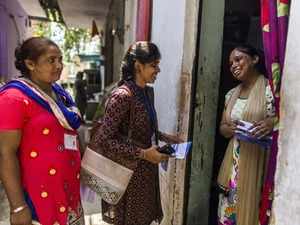
Tata Power Delhi Distribution Ltd.'s force of now 841 wives, mothers, and women as young as 20 go around the slums, knocking on neighbors' doors and persuading, coaxing, cajoling and nagging them to pay their power bills. 

The result is a 183 percent increase in revenue over five years from the slums where  TATA operates the project, with minimal cost to the company. Active power connections have risen 40 percent to 196,000—meaning that 56,000 previously freeloading homes have become active, bill-paying power customers. 

"This gave us a way to get into these neighborhoods, rife with mafia and political influences," said Praveer Sinha, chief executive officer and managing director at Tata Power-DDL, which had started out operating literacy campaigns for slum women in 2010 as a way into the communities. "We thought educated women would give us a much better buy-in.'' 

The success of Tata Power-DDL's initiative is inspiring imitation. Rival BSES Delhi, co-owned by the Delhi state government and Anil Ambani-controlled Reliance Infrastructure Ltd.BSE 0.95 %, engaged 40 women earlier this year in a pilot project in a west Delhi slum. Having resident women distribute bills and collect payment from neighbors produced "very encouraging results" that will now be used to expand the program, according to BSES spokesman Deepak Shankar. 
The World Bank is trying out similar initiatives in Jamaica and Kenya, and is considering adapting it to other African countries. So far, Kenya Power & Lighting Co. has improved connection rates by doing more community engagement based on the Tata model that "has provided a lot of learning, which we are incorporating," Sunita Chikkatur Dubey, a Ghana-based World Bank consultant, said via email. 

The slum in north Delhi known as Sanjay Basti, home to 4,000 people just 2 miles (3 kilometers) away from Tata Power-DDL headquarters, was once notorious for harassing power inspectors. Residents would threaten to pull away ladders when company officials climbed electricity poles to disconnect illegal hookups, said Amarjeet Kaur, who used to be an illiterate housewife before she was hired as an Abha in 2013. 

"Residents would ask me: 'Why did you become a 'company person' when you are one of us?'" said Kaur, 39, as she walked through the slum's serpentine lanes filled with low-slung electricity cables that these days connect to almost all the brightly painted brick dwellings. "Now, women are in a queue to take up this job. Even the boys want to become Abhas." 

Abhas, whose numbers are expected to swell to 1,000 by next year, do more than just hand-deliver electricity bills and collect payments. They advise slum dwellers on power conservation and safe practices: Use LED bulbs, don't use old motors to pump underground water or it will spike your electricity bill, and most importantly, don't use power cables as clotheslines. The Abhas' newest mandate, Tata Power-DDL's Sinha says, is to encourage slum residents to make mobile payments, which reduces the need to handle and safeguard large amounts of cash. 

Abhas make about 4,000 rupees ($60) a month on average, which is what some part-time domestic helpers can make. It includes a base salary plus extra pay based on securing full bill payment, partial payment or new meter installation. Abha managers, 25 in total, can make as much as 12,000 rupees a month—about the equivalent of a bus or van driver in Delhi. 

Residents say they prefer dealing with women from their own communities—who personally deliver bills when they know neighbors are home and accept partial payment when money is tight—rather than outsiders. If their repeated cajoling and nagging doesn't result in payment, then power is disconnected. The Abhas have the support of the community leaders, known as pradhans, who weigh in if needed. 

"Earlier if we weren't home when the company official came to deliver the bill, we'd miss paying and become defaulters," said Usha, 38, who goes by one name and lives in a 90-square-foot room with six other family members. She likes the convenience of dealing with people she knows, and laughs off any questions about feeling nagged. "If we consume electricity, we're supposed to pay for it!" 
The scarcity of resources in slums ensures an interdependence among residents that means they're more likely to listen to one of their own, said Purnima Singh, a psychology professor at the Indian Institute of Technology in New Delhi. 

"The social fabric is much tighter in slum clusters," said Singh. "An outsider will never match up in having this level of influence." 

Tata Power-DDL started zeroing in on slums in 2009, considering them the last hurdle to paring losses. India's power companies lose revenue on about a fifth of the electricity they supply, or about $10.2 billion annually, due to problems including theft, meter tampering, billing issues and leakage due to faulty equipment, according to PricewaterhouseCoopers India estimates. 

To thaw the hostility that Tata Power-DDL officials were encountering, it set up a special consumer group to start drug rehabilitation, provide medical vans, install drinking water stations and launch the women's literacy program. The idea to hire women surfaced in 2012 when, Sinha said, the women who had been studying to read and write started asking how to put their education to use. 

"These women weren't allowed to go out and work by their families," said Manisha Wadhwa who now heads the group. "But they could always work in their own communities, choose their own hours and still give us better reach in their neighborhoods." 

Wadhwa's group is still trying to tame 39 slums Tata Power-DDL serves that remain crime-prone and mafia-ridden, where the few Abhas the company has been able to hire haven't made much headway. 

People pelt stones and pour hot water from the roofs" in one of the areas, Wadhwa said. "We are still trying to befriend them." 

Still Tata Power-DDL has come a long way from the days before 2012 when officials had to remove their badges to keep from being identified when visiting slums. Now women like Kaur insist on having Tata Power identity cards, as it gives them status. 

"We have learned from this initiative that we can work closely with communities to improve economic outcomes," said Sinha. "We don't need to do charity.'' 

DATA STORY: Wealth managers of the super-rich deliver best returns in Asia Pacific

World Wealth Report says that the total wealth of millionaires of the world is expected to reach USD 100 trillion by 2025. HNIs (High Networth Individuals) in India rose by nearly 10 percent.

DATA STORY: Wealth managers of the super-rich deliver best returns in Asia Pacific

Shubham Raj
Moneycontrol News Only 0.22 percent of the world’s population possess almost one-fourth of the total wealth of the world. There are 16.5 million millionaires in the world and they are worth USD 63.5 trillion, according to Capgemini's World Wealth Report 2017 Interestingly, a mere 1 percent of these millionaires i.e. 157,200 people contribute over one-third of the total worth of High Net-worth Individuals (HNIs). In the last one year, there has been an addition of 1.5 million new HNIs (wealth over USD 1 million).
India’s share in HNIs
The total number of High Net-worth Individuals (HNIs) from India rose by nearly 10 percent over the year. At the end of 2015, India had 200,000 HNIs. In 2016, the number increased to 219,000 as the country added 19,000 HNIs. India outshines countries like South Korea, Russia, Saudi Arabia and Hong Kong in terms of number of HNIs. However, despite the increase, India contributes a minuscule 1.3 percent of all the millionaires in the world.
Millionaires by country
The US with 4,795,000 HNIs leads the charts accounting for more than one-fourth of total millionaires of the world. It is followed by Japan with 2,891,000 millionaires and Germany with 1,280,000 millionaires. According to the report, the total worth of HNIs is expected to cross 100 trillion by 2025.
Wealth Management Industry
Over 8 percent growth in total wealth of the HNIs over the year was spearheaded by robust returns of 24.3 percent on investment portfolios overseen by wealth managers (eg: mutual funds). The returns on managed funds were much more than passive funds. Investments managed by wealth managers saw the best returns in Asia-Pacific region with a 33 percent appreciation.
The growth in portfolio resulted in greater trust in wealth managers across the globe. The industry saw a nearly 20 percent growth in trust and confidence in wealth managers.Again, the trust was highest in Asia. Over 90 percent respondents from the largest continent of the world said that they had confidence in wealth managers. The trust on financial regulators and regulatory bodies were also the highest among Asian HNIs.The high returns also cost the investors dearly. As per the report, HNIs across the world, on an average pay USD 65,795 yearly as fees to the wealth managers which roughly amounts to 8.4 percent of their assets under management.Though the majority of HNIs reflect that wealth managers are important for them, the satisfaction level of HNIs with wealth managers leaves wanting for more. The biggest factor which is the reason for a low satisfaction level is the fees charged by them.Less than half of the HNIs (47.8 percent) globally agreed that they were fully comfortable with the level of fees charged for wealth management services.
The low satisfaction level has also prompted the HNIs to try newer options. More than half of the HNIs were willing to tie up with BigTech firms to manage their wealth, especially the younger generation.As the number of millionaires is growing at a robust pace, the opportunities for wealth management industries are also growing. The advent of technology in the last decade has led to innovation and a greater competition in the field.Despite the usual worries of privacy and security of data, the efficiency, transparency, access and reliability has lured the HNIs to accept the use of technology in wealth management. The report suggests that a hybrid of traditional management with the help of technology is the best way to go forward. 

Tuesday, October 3, 2017

Indian scientists played a key role in the project that has won Nobel prize in Physics

Oct 03, 2017 05:18 PM IST | Source: Moneycontrol.com

Indian scientists contributed by creating models which helped in detecting the gravitational waves

Indian scientists played a key role in the project that has won Nobel prize in Physics
Moneycontrol News Three American physicists working on gravitational waves on the Laser Interferometer Gravitational-Wave Observatory (LIGO) project has been awarded Nobel Prize in Physics. Rainer Weiss, Barry C. Barish and Kip S. Thorne who along with their team managed to record gravitational waves in 2015 were awarded the coveted prize for “opening up unseen worlds.”
The LIGO project is a collaborative project with over one thousand researchers from more than 20 countries including India. Sixty-seven scientists from 13 Indian institutions have made vital contributions in capturing the gravitational waves.
Indian scientists developed the theoretical modelling of gravitational-wave signals from black holes and data-analysis techniques used to detect weak signals hidden in noise in the subsequent waves.The waves were first predicted by Albert Einstein a hundred years ago. In his theory of relativity, Einstein said gravitational waves spread at the speed of light, filling the universe. They are always created when a mass accelerates, like when ice-skater pirouettes or a pair of black holes rotate around each other.
Interestingly, Einstein was convinced that it would never be possible to measure them. The LIGO project’s achievement was using a pair of gigantic laser interferometers to measure a change thousands of times smaller than an atomic nucleus, as the gravitational wave passed the Earth.Nobel prizes are given by The Royal Swedish Academy of Sciences. The three scientists will share 9 million Swedish Krona (approx. Rs 7.2 crores) received as prize money.

CHILDHOOD LIFE BEFORE INTERNET TECHNOLOGY-I AM LUCKY HAVING ENJOYED THAT


Hacker puts info of over 6,000 Indian businesses up for sale in massive data breach.

According to the researchers, the seller claims to have the ability to tamper the IP allocation pool, which could result in a serious outage or Denial of Service like condition.

PUNE: In what could be the biggest breach affecting Indian organizations, Seqrite Cyber Intelligence Labs along with its partner seQtree InfoServices has tracked an advertisement on DarkNet announcing secret access to the servers and database dump of over 6000 Indian businesses – ISPs, Government and private organisations. 

It has identified the affected organisation as India's National Internet Registry: IRINN (Indian Registry for Internet Names and Numbers) which comes under National Internet Exchange of India (NIXI). 


As a precautionary measure, Seqrite Intelligence Labs has reached out to Government authorities and Asia Pacific Network Information Centre (APNIC) with a strong recommendation to alert all potentially affected organisations and urge them to change passwords and get their servers and systems patched with latest updates. 

The hacker has priced the information at 15 Bitcoins and is offering network takedown of affected organisations and urge them to change passwords and get their servers and systems patched with latest updates. 

The hacker has priced the information at 15 Bitcoins and is offering network takedown of affected organizations for an unspecified amount. 

According to the researchers, the seller claims to have the ability to tamper the IP allocation pool, which could result in a serious outage or Denial of Service (DoS) like condition. This could impact various CDN and and hosting providers as well. If the hacker gets an interested buyer, then an attack on the system could disrupt Internet IP allocation and affect Internet services in India.Along with the access, the hacker is also selling credentials, PII and various contractual business documents and claims to have access to a large database of Asia Pacific Network Information Centre (APNIC). 

Seqrite Cyber Intelligence Labs is the DarkNet monitoring division of Seqrite, the enterprise security security solutions brand of cyber security firm Quick Heal Technologies. The company said that on noticing the broadcast advertisement, the team realised that the persona was created recently – an ongoing trend seen with other recent data breaches. They then contacted the actor for further details, posing as an interested buyer, and were finally able to get a sample of the email list. 

The sample shared included the email address of a prominent Indian technology firm and another from the Indian government; eventually, a list of about 6000 emails was was shared which led them to believe that the compromised database was frim IRINN. Seqrite said that if the database was sold, then an attack on the system could disrupt Internet IP allocation and in-turn affect Internet services in India. 

Why is rupee kept strong and who gains from it?

By 
T K Arun
, ET Bureau|
Oct 03, 2017, 09.27 AM IST

Untitled-11
Not so long ago, people worried about the rapid loss in the value of the rupee; the boot pinches on the other foot now (see the rise in the value of the rupee's exchange rate against a basket of currencies, after taking out the effect of inflation, the so-called Real Effective Exchange Rate, in the graphic below). The rupee is strong and its strength hurts India's exports and thus overall growth and job creation. Why is the rupee kept strong and who gains from it? 

Those with large external borrowings gain from keeping the rupee strong. It helps the government manage inflation and its budget. Domestic producers who have large imported inputs would also gain from a strong rupee. However, exporters, workers looking for jobs and overall economic growth lose out from a strong rupee. 

The stock market gains from the rupee's strength. It keeps foreign funds coming in, mostly into debt these days, and the additional liquidity keeps stock prices high. Liquidity also helps rein in interest rates. Consumers gain from the relatively cheaper prices of foreign-made phones, TV sets and so on enabled by a strong rupee. Consumers are not a homogenous group, however. Those with stable jobs looking to increase consumption by borrowing money at cheap rates of interest are consumers. 

Untitled-9

So are young entrants to the workforce who cannot find a job, and the hordes of people who hold jobs now but face uncertainty over how long their jobs would last. So, this is the picture that emerges. 

The government is a gainer, in the sense that it is easier for it to hold down inflation and the fiscal deficit, when the rupee is strong than when it is weak. Big industry, who typically borrow abroad and import inputs, gain from keeping the rupee strong. Stock market players gain


Foreign investors, who can borrow cheap abroad, say at around 1% in Japan, and invest that money in India's bond market, where yields are over 7%, gain from a strong rupee — any decline in the rupee would depress the return on their so-called carry trade, when calculated in foreign currency. Civil servants and others like them with job security stand to gain, both as consumers and as borrowers. These gainers represent the elite of society. Who are the losers from an overvalued rupee? 


Exporters, whether of garments, information technology and outsourcing services, those who seek jobs in these sectors, the small and medium enterprises, by and large, and overall growth. 

Why is the rupee so strong when export earnings are weak? 

Essentially because foreign portfolio investments are gushing in. Net FPI in the debt segment has been more than three-and-a-half times that in equities in 2017 so far: Rs 34,352 crore in equities and Rs 1,29,863 crore in the debt market. The total inflow this calendar year has been four times the net inflow in 2015 and 2016 combined. 


And why is FPI rushing in at such a hectic pace? 
Untitled-10
Because India has made more room for them in debt, particularly short-term debt. One justification for expanding the room in the debt segment is that when FPI wants to exit stocks — when stocks in the Sensex are trading at some 23 times the earnings per share, a few sane FPI want to stay in equity — unless they are allowed space in debt, they would exit India, reducing reducing liquidity and putting downward pressure on the rupee. So, to keep liquidity in the markets high, and, therefore, the Sensex, more foreign money is allowed into short term debt, pushing the rupee up and exports and growth down. 

At the root of the FPI attraction for India is its relatively high interest rate in a world of cheap money and the policy of keeping the rupee strong. If the rate of interest comes down, a lot of FPI invested in short-term debt would leave, and weaken the currency as well. RBI worries this would lead to inflation. But inflation is a function of overall economic management by the government. 

Even when crude prices are down, the government keeps retail prices of petro-fuels high, so that it can extract huge tax revenues and keep the fiscal deficit down. But the government can keep the fiscal deficit down by persuading the states to not waive farm loans (what matters for the economy is the combined deficit of the Centre and states). 

There are other policy options before the government to manage the fiscal deficit, apart from keeping petroprices low via a strong rupee. RBI must cut rates, curb FPI in shortterm debt and let the rupee slide. This will so that it can extract huge tax revenues and keep the fiscal deficit down. But the government can keep the fiscal deficit down by persuading the states to not waive farm loans (what matters for the economy is the combined deficit of the Centre and states). 

There are other policy options before the government to manage the fiscal deficit, apart from keeping petroprices low via a strong rupee. RBI must cut rates, curb FPI in shortterm debt and let the rupee slide. This will redistribute income from the elite to the subaltern, and spur net exports, job creation and overall growth. 


Monday, October 2, 2017

WHAT MAJORITY OF HINDUS THINK OF MAHATAMA GANDHI NOW?-SOME MEANINGFUL WRITE UPS EVERY INDIAN PATRIOT MUST READ

Image result for PIC OF GANDHI
Godse says : One of the conditions imposed by Gandhi for his breaking of the fast unto death related to the mosques in Delhi occupied by the Hindu refugees. But when Hindus in Pakistan were subjected to violent attacks he did not so much as utter a single word to protest and censure the Pakistan Government or the Muslims concerned. Gandhi was shrewd enough to know that while undertaking a fast unto death, had he imposed for its break some condition on the Muslims in Pakistan , there would have been found hardly any Muslims who could have shown some grief if the fast had ended in his death. It was for this reason that he purposely avoided imposing any condition on the Muslims. He was fully aware of from the experience that Jinnah was not at all perturbed or influenced by his fast and the Muslim League hardly attached any value to the inner voice of Gandhi.
Image result for PIC OF NATHURAM KILL GANDHI


On Muslim slaughter of Hindus and Sikhs, Gandhi elsewhere said. “I would tell the Hindus to face death cheerfully if the Muslims are out to kill them. I would be a real sinner if after being stabbed I wished in my last moment that my son should seek revenge. I must die without rancor. … You may turn round and ask whether all Hindus and all Sikhs should die. Yes, I would say. Such martyrdom will not be in vain.”


Gandhi addressed the homeless Hindus at the end of one of his Prayer Meetings and said, “After all, who are the killers ? They are our Muslim Brethren, none other. Does a converting into another religion break the bond of brotherhood ?”
In a speech on April 6, 1947; Gandhi again advised the destitute Hindus, “Even if Muslims decide to wipe out the Hindu race, there is no point in Hindus getting angry on Muslims.Even if they slit our throats, we should be patient and accept death. Let them rule the world, we will pervade the world and merge with it. At least we should not be afraid of death. The providence is made of life and death. Why feel unhappy about it ? We will enter a new life if we face death with a smile. We will create a new Hindustan [India].


Though Gandhi was an orthodox Hindu even he went against the sentiments or the feelings of the Hindus in order to maintain communal harmony. The famous Vande Mataram’ song had proved an inspiration during those days. Bengali community almost worshipped the song. But when Jinnah, the president of Muslim League and a handful of his follower Muslims objected, disregarding the nationalist sentiment of the song, Gandhi put a ban on it and forced the whole nation to abandon it. In 1940, Congress announced a decision that the words Vande Mataram’ should not be used by Congress members in any public speeches and announcements.


Gandhiji could have saved Sukhdev, Bhagat Singh and Rajguru. 
Image result for PIC OF BHAGAT SINGH RAJGURU SUKHDEV
They were hung to death for avenging the murder of Lala Lajpat Rai, (a Hindu Mahasabha founder member). It’s believed Gandhiji could have stopped their hanging, so why didn’t he ? Bhagat Singh was only 24 when he was hanged. It could have been stopped by Gandhi. But Gandhiji was not sincere in his efforts for reasons of his own. Gandhi could have put pressure on Irwin to release Bhagat Singh. Irwin & Gandhi were very close. So close that Irwin had forced a temporary truce on the freedom movement. However, he sent S Shastri, T B Sapru & M R Jaykar to plead wih Irwin. Gandhiji seemed to believe that if Bhagat Singh lived on, his idea of “non violent” movement would get challenged. So it is alleged that he did not do enough to stop their hanging.Gandhiji, in fact, told openly that militant movement was harmful to “India’s freedom movement”. Although Gandhiji, on popular pressure, did write to Irwin on the day of the execution, pleading to have mercy on the three revolutionaries but as anyone would expect – the letter would be too late.

The deadliest mass shootings in US history

Last updated on: October 02, 2017 16:43 IST
At least 50 people have been killed after a gunman opened fire at the Mandalay Bay Casino in Las Vegas - the deadliest mass shooting in the history of United States.
IMAGE: A Las Vegas Metropolitan Police officer stands in the intersection of Las Vegas Boulevard and Tropicana Avenue after a mass shooting at a country music festival nearby. Photograph: Ethan Miller/Getty Images
Here's a look at other such incidents that have struck the country in recent times. 
  • June 12, 2016
A lone gunman armed with an assault rifle shot and killed 50 people and injured 53 others at Pulse -- a gay nightclub in Orlando, Florida in June, 2016, making it one of the deadliest mass shooting in the US which was also described as the "worst terror attack" in American history since 9/11.
  • December 2, 2015
Syed Rizwan Farook, 28, and his partner Tashfeen Malik, 27 -- armed with assault rifles and semi-automatic handguns, and dressed in 'assault-style clothing', stormed the Inland Regional Center in San Bernardino, California. The shot 14 people dead and wounded 17.
  • July 20, 2012
James Eagan Holmes arrived at the Aurora movie theatre armed with guns, ammunition, tear gas and a gas mask before indiscriminately shooting moviegoers during a midnight screening of 'The Dark Knight Rises', killing 12 and injuring 70. The 27-year-old was sentenced to life in prison without parole.
  • December 14, 2012
Adam Lanza, 20, killed 28 people including 20 children and eight adults in Sandy Hook Elementary School in the US state of Connecticut. Lanza first killed his mother at their shared home before taking her guns and driving to the school.
  • April 3, 2009
Jiverly Wong, 42, a Vietnamese immigrant invaded an immigration services centre in downtown Binghamton, New York, during citizenship classes and shot 13 people to death and critically wounded 4 others before killing himself.
  • November 5, 2009
Nidal Hasan, a US Army major and psychiatrist, fatally shot 13 people and injured more than 30 others at Fort Hood, Texas. The shooting produced more casualties than any other on an American military base. He was convicted and sentenced to death by a military jury after just two hours of deliberation. He said he acted to protect Islamic insurgents abroad from American aggression.
  • April 16, 2007
Seung-Hui Cho, a 23-year-old student from the Republic of Korea goes on a shooting spree at Virginia Tech University in Blacksburg of Virginia, killing 32 people and wounding 15 others before killing himself. It was the worst school shooting in the US history.
  • April 20, 1999
Seniors Eric Harris and Dylan Klebold storm Columbine High School in Jefferson County, Colorado shooting four guns and carrying dozens of pipe bombs. They kill 12 classmates, one teacher and then themselves. They also wound 23 others. Authorities find a powerful 20-pound propane-tank bomb Harris and Klebold had planted in the school's kitchen. Officials later say if it had gone off, hundreds of people would have been killed.
  • October 16, 1991
George Hennard, 35, opened fire crashed his blue Ford Ranger though a floor-to-ceiling window at Luby's Cafeteria just off US Highway 190 in Kileen, Texas. He then shot dead 23 people and wounded 20 others before retreating to a restroom and killing himself.
  • August 20, 1986
Patrick Henry Sherrill, a part-time mail carrier who thought he was being treated unfairly, entered the Edmond Post Office in Oklahoma armed with three handguns. He killed 14 postal workers in 10 minutes before killing himself.
  • July 18, 1984
James Oliver Huberty, a 41-year-old unemployed security guard dressed in camouflage fatigue pants, walked into San Ysidro McDonald's restaurant armed with an Uzi semiautomatic rifle, a shotgun and a pistol and started shooting. He killed 21 people and injured 19 others before he was slain by a police sharpshooter. At the time, it was the largest massacre in the United States.
  • August 1, 1966
Charles Whitman, a 25-year-old architectural engineering major and ex-Marine who had previously complained of searing headaches and depression -- climbed to the top of the University of Texas Tower with three rifles, two pistols, and a sawed-off shotgun. From there, he killed 14 and wounded at least 30 before police officers shot him dead. He had already murdered his mother, Margaret, and his wife, Kathy, earlier that morning.


What slowdown? Consumers are buying more premium products this festive season -ET

KOLKATA | MUMBAI: Sales of cars, televisions and refrigerators increased more than 15 per cent this Navratri and Dussehra from last year, pointing to bumper business in the run-up to Diwali and calming concerns that the currency swap and the goods and services tax (GST) will have a prolonged impact on consumer sentiment.  
sale_anirban

Maruti SuzukiBSE 0.96 %, Hyundai Motor, LG, Sony, Panasonic, and Godrej Appliances said consumers across the country, including those in smaller towns, are buying more premium products this festive season. Companies attribute the pronounced migration up the value chain to a good monsoon, availability of cheap financing options even in the hinterland and an end to supply disruption associated with introduction of GST. 
"The consumer buying power is back this Navratri," said Sony India sales head Satish Padmanabhan. 

He said even consumers in smaller towns are buying high-end television sets, such as 4K TVs that start at Rs 65,000, and large-screen models that hitherto were limited to the big cities. 

The impact of the GST and demonetisation, which LG Electronics India's CMO Amit Gujral described as "once-in-a-lifetime" events, is receding. "Nothing can stop the Indian consumer from celebrating big festivals," Gujral said, adding that sales at the company increased more than 30 per cent over the last Navratri-Dussehra season. 

India's biggest carmaker Maruti Suzuki reported an 18 per cent growth in bookings and 15 per cent increase in volumes during Navratri, while Hyundai Motor India's sales rose 50 per cent , making this festive season a record of sorts for the carmaker. 
RS Kalsi, senior executive director, marketing and sales, at Maruti Suzuki, said the momentum built up during Onam and Ganesh Chaturthi continued into Navratri. 

Hyundai Motor India director, sales and marketing, Rakesh Srivastava said the company is likely to have sold more than 26,000 units during Navratri, more than half of what it does in a month. "The momentum is likely to continue into Diwali. Hyundai may cross retail sales of 50,000 units in September," he said.
dussehra 
For white goods makers, the Navratri-Dussehra sales came as a major relief after a rather muted Onam and Ganesh Chaturthi this year. The festive season accounts for almost 40 per cent of annual sales for appliance makers. 

Manufacturers said demand this year is more for frost-free refrigerators, inverter ACs and large-capacity washing machines. According to industry estimates, the top four firms - LG, Samsung, Sony and Panasonic - have increased their primary sales (to dealers) by25 per cent this festive season. 

Panasonic India sales head Ajay Seth said strong primary demand is an indicator that Diwali sales will be big this year, with the Navratri-Dussehra weekend setting the stage for a bumper season. Sony has clocked 15 per cent growth in volume sales at its stores this Navratri, and is now hopeful of 20 per cent increase by Diwali. 

Two-wheeler makers, too, are reporting strong volumes during Navratri on prospects of a robust rural economy, underpinned by good monsoon rain. 

Honda Motorcycle & Scooter India senior vice-president, sales and marketing, YS Guleria, said sales increased more than 30 per cent , as higher capacity increased the availability of the company's products. 

The earliest signs of buoyant festive sales this year were visible when ecommerce marketplaces, led by Flipkart and Amazon, reported their best-ever performance. While Flipkart had doubled its overall sales,  Amazon reported similar growth for more than half the categories of products on its web site. 

Godrej Appliances business head Kamal Nandi said the online buzz and strong advertising by large retailers have boosted demand, even in markets such as Kerala, where sales picked up after Onam. Kalsi of Maruti Suzuki, however, said the growth momentum may slow after Diwali to 7-8 per cent for the industry due to the statistical base effect. He still expects that his company will log double-digit growth. 
By 
Writankar Mukherjee
Ketan Thakkar


WHO IS REAL RAVANA NOW A DAYS

Image may contain: 1 person, sitting and text