Pages

Saturday, November 4, 2017

RERA, NCLT process may trigger collapse in land prices, say report

Report also indicates stress for non-banking finance companies, or NBFC, and housing finance companies that have large exposure to developer loans

As per a 5 July report by property consultant Knight Frank, launches of residential projects in India’s top eight cities declined by 41% in the first six months of this year. Photo: Mint
New Delhi: The implementation of the new real estate regulation along with the ongoing insolvency and bankruptcy proceedings by the National Company Law Tribunal (NCLT) against debt ridden builders are likely to push for sale of distressed assets, triggering a fall in land prices by February 2018, according to a report by brokerage firm Ambit Capital Pvt. Ltd.
The report also indicates stress for non-banking finance companies (NBFC) and housing finance companies (HFCs) that have large exposure to developer loans.
The report, titled ‘Real Estate-Recovery is far away’, pointed out that limited availability of funding for real estate developers, inception of Real Estate (Regulation and Development ) Act and NCLT process are making developers hold off from launching new projects. Besides, with inventory piling up over the last three to four years, most developers are focused on offloading their current stock rather than launching new projects.
As per a 5 July report by property consultant Knight Frank, launches of residential projects in India’s top eight cities declined by 41% in the first six months of this year.
“We expect land prices to fall from February 2018 as Insolvency Practitioners (IPs) liquidate the assets of bankrupt companies. As land prices fall, it is natural that real estate developers launch cheaper properties through 2019 and 2020,” said the report.
The failed auctions for prime plots in Mumbai and Oberoi Realty’s discounted land purchase in Thane from GlaxoSmithKline Pharmaceuticals (GSK)) is proof of this dynamic, it said.
In September, GSK sold around 60 acres land at Thane in Maharashtra to Oberoi Realty for around Rs555 crore. The transaction translates into Rs9 crore per acre. A decade ago, the same plot of land would have fetched double the amount, the report said.
“Thanks to the oversupply of flats in Thane and due to punitive sanctions imposed by RERA, no other developer had the means or the gumption to bid for this plot,” it said.
NCLT has started insolvency proceedings against Delhi based developers like Amrapali Infrastructure and Jaypee Infratech for failing to repay loans to banks.
“Land prices have already started softening as land owners have become more realistic. Land owners and co-developers have understood the reality of the market and have started rationalising their expectations. Instead developers and land owners are opting for partnerships and more structured transaction in the form of area or revenue sharing,” said Vrushank Mehta, head of corporate strategy and land acquisition at Wadhwa Group, a Mumbai-based realty firm.
The report by Ambit also said that as a consequence of fall in land and property prices homeowners may start defaulting on their loans. “Homeowners who are repaying mortgages which are far bigger than the prevalent prices of their property could start defaulting on their mortgages,” the report stated, adding that NBFCs and HFCs with large developer loan portfolios may take a hit.
According to the report, JM Financial Ltd, Piramal Enterprises Ltd and Edelweiss Financial Services Ltd have the highest exposure to developer loans. “There is trouble ahead for NBFCs/HFCs since their ability to refinance or evergreen stressed developer loans will progressively get compromised as the downturn prolongs. Real estate developers with strong balance sheet and strong brands will benefit,” Ambit said.
Analysts are of the view that only those NBFCs and HFCs may face stress that have not followed adequate risk management policies and have large exposures in high end properties.
Harsha Patkar, senior analyst—financial institutions at India Ratings said that a slowdown in real estate was prevalent even during 2014 and that property prices have corrected during the current fiscal after the demonetization impact started to wear off.
“Stress on NBFCs and HFCs will depend on the kind of portfolio they have and the risk mitigation policies they follow. Lenders have ring-fenced the project cashflows as well as have a decent cash flows cover over assets depending on the project stage,” he said.
Ambit expects Godrej Properties and Sobha Developers to gain market share in the real estate business. It said that property market will see a consolidation and only those developers will survive who can manage their capital well and execute projects speedily.
Bidya Sapam and Malvika Joshi First Published: Fri, Nov 03 2017. 11 43 PM IST livemint

WEEKEND THOUGHT

Image result for PIC OF A HAPPY MAN
Best message received after a long time
🌟If you have
Food in your fridge,
Clothes on your body,

A roof over your head and
A place 2 sleep,
You're richer than 75% of the entire world.
.....
🌟If you have
Money in your wallet,
A little change,
And Can go anywhere you want
You are among the top 18% of the world's wealthy
people.
..
🌟If you are alive today with more health than illness,
You are more blessed than the million people
who will not survive this week and die.
..
🌟If you can actually 'READ' this message
and understand it,
You are more fortunate than the 3 billion people in the
world who cannot see,
cannot read or suffer mental retardation.
..
🌟Life is not about complaining pain and sorrows.

It's about a thousand other reasons to Thank our
Creator!!! 

MEANINGFUL PLACARD IN A RESTAURANT

No automatic alt text available.

Friday, November 3, 2017

5 reasons why WhatsApp's 'Delete for Everyone' is just what we need


November 03, 2017 08:25 IST
Is this the best update of 2017?
WhatsApp Delete for everyone
The wait is over.
WhatsApp's 'Delete for everyone' is finally available to all of us. We can now delete messages, photos and videos sent by mistake, whether to one person or to an entire group.
The only catch: We get just 7 minutes to delete the message after it is sent.

But for now, is it enough to make us rejoice, because...
 
Bitching just became hassle-free :)Ever sent a bitchy message about your boss to said boss?
Whatsapp delete for everyone

Relationships will probably last longerFinding someone who hasn't sent an inappropriate message to the wrong person is way harder than you can imagine. Believe us. We tried to.
Whatsapp delete for everyone

Goodbye, screenshot swap scare!We feel you.
Whatsapp Delete for everyone

Sexting definitely got easier!Flaunt it. Delete it.
WhatsApp Delete for Everyone 
Vent. Send. Delete.Let the anger games begin.
Whatsapp delete for everyone
Rediff Get Ahead Bureau in Mumbai

Thursday, November 2, 2017

Sitting is the smoking of our generation Sitting is so prevalent and so pervasive that we don’t even question how much we’re doing it.

People are averaging 9.3 hours of sitting a day, compared to 7.7 hours of sleeping. Photo: Bloomberg
I find myself, probably like many of you, spending way too much time in front of my computer. When I do face-to-face meetings, my colleagues and I typically meet around some conference table, sometimes at an airport lounge (nothing like getting the most out of a long layover), and quite often at coffee shops (hello Starbucks!). But that means that the most common denominator across all these locations wasn’t the desk, or, the keyboard, or even the coffee. The common denominator in the modern workday is our, um, tush.
As we work, we sit more than we do anything else. We’re averaging 9.3 hours a day, compared to 7.7 hours of sleeping. Sitting is so prevalent and so pervasive that we don’t even question how much we’re doing it. And, everyone else is doing it also, so it doesn’t even occur to us that it’s not okay. In that way, I’ve come to see that sitting is the smoking of our generation.
Of course, health studies conclude that people should sit less, and get up and move around. After an hour of sitting, the production of enzymes that burn fat falls by as much as 90%. Extended sitting slows the body’s metabolism, affecting things like (good cholesterol) HDL levels in our bodies. Research shows that this lack of physical activity is directly tied to 6% of the impact for heart diseases, 7% for type 2 diabetes, and 10% for breast cancer, or colon cancer. You might already know that the death rate associated with obesity in the US is now 35 million. But do you know what it is in relationship to tobacco? Just 3.5 million. The New York Times reported on another study published in the journal Circulation that looked at nearly 9,000 Australians and found that for each additional hour of television a person sat and watched per day, the risk of dying rose by 11%. In that article, a doctor is quoted as saying that excessive sitting, which he defines as nine hours a day, is a lethal activity.
So, over the last couple of years, we saw the mainstreaming of the standing desk. Which is a step forward. But even that won’t help you get real exercise.
So four years ago, I made a simple change when I switched one meeting from a coffee meeting to a walking-meeting. I liked it so much it became a regular addition to my calendar; I now average four such meetings, and 20 to 30 miles each week. Today it’s life-changing, but it happened almost by accident.
My fundamental problem with exercise has always been this: it took time away from other more “productive things.”
Going to the gym to take care of me (vs. firms, colleagues, family) seemed selfish. My American-bred puritan work ethic nearly always won out. Only when I saw I could do both at the same time, by making exercise part of the meeting, did I finally start to get more exercise. This is one of those 2-for-1 deals. I’m not sacrificing my health for work, nor work for fitness. Maybe that’s why making fitness a priority finally doesn’t feel like a conflict. It’s as easy as stepping out the door and might need just a change of shoes.
After an hour of sitting, the production of enzymes that burn fat declines by as much as 90%.
And, yet, it’s true that some people will turn you down. Probably 30% of the people I ask to do these kinds of meetings say that they are not fit enough to do a walking meeting.
I had one person tell me afterwards that they got more active for an entire month before our meeting, so as to not embarrass themselves on their hike with me.
I don’t judge the people who won’t do a hiking meeting, and in most cases will choose to do another type of meeting with them (lunch or whatever) but I am also reminded of James Fowler and Nicholas Christakis’s research from their related book, Connected. They observed that obesity spreads according to network effects; if your friend’s friend’s friend who lives a thousand miles away gains weight, you’re likely to gain weight, too. And if that extended friend also loses weight, even if you’re not in the same city, you’re likely to lose weight, too. My goal is to be someone who socializes the idea that physical activity matters, and that we each matter enough to take care of our health.
And after a few hundred of these meetings, I’ve started noticing some unanticipated side benefits. First, I can actually listen better when I am walking next to someone than when I’m across from them in some coffee shop. There’s something about being side-by-side that puts the problem or ideas before us, and us working on it together.
Second, the simple act of moving also means the mobile device mostly stays put away. Undivided attention is perhaps today’s scarcest resource, and hiking meetings allow me to invest that resource very differently.
And, finally we almost always end the hike joyful. The number one thing I’ve heard people say (especially if they’ve resisted this kind of meeting in the past) is “That was the most creative time I’ve had in a long time”. And that could be because we’re outside, or a result of walking. Research certainly says that walking is good for the brain.
I’ve learned that if you want to get out-of-the-box thinking, you need to literally get out of the box.
When you step outside, you give yourself over to nature, respecting its cycles and unpredictability. It keeps me more awake to what is happening around me by experiencing the extreme heats of summer, or the frigid power of winter. It makes me present to the world around me instead of being insulated from it.
To keep this commitment— to myself and to others—I’ve marked off certain times on my calendar for these meetings. I block off two morning appointments (when I can take a shower afterwards) and two end-of-day appointments for hiking meetings.
I try and schedule these slots before scheduling “regular” sitting meetings because it means I have no excuse to not move that day and it helps me be more awake during the day or less zombie-like (and still-thinking-about-my-inbox) going into the evening. On the rare days when someone bails on a hike last minute, I typically still head out for the time, and I find myself hearing even my own voice more clearly.
Nilofer Merchant is an author and speaker based in the Silicon Valley. Ranked by Thinkers50 as one of the world’s leading thinkers, her 2013 TED Talk “Sitting Is the Smoking of Our Generation,” is in the top 10% of TED’s most viewed talks.
This article was first published on HBR Ascend (bit.ly/2xwjn9B).

iNDIAN BRO (BORDER ROADS ORGANIZATION) builds world’s highest motorable road in Ladakh at 19,300 feet

The world’s highest motorable road passes through Umling La Top in Ladakh at a height of over 19,300 feet and connects Chisumle and Demchok villages, located 230km from Leh

The Border Roads Organisation’s (BRO) road through Umling La, the world’s highest motorable road, beats Khardung La at an altitude of 17,900 feet and Chang La Pass at 17,695 feet. Photo: Ramesh Pathania/Mint

Srinagar: In a major feat, the Border Roads Organization (BRO) has constructed the world’s highest motorable road in the Ladakh region of Jammu and Kashmir, passing through Umling La Top at a height of over 19,300 feet.
The feat was achieved under “Project Himank” of the BRO. Being close to Hanle, the 86-km-long strategic road through Umling La Top connects Chisumle and Demchok villages, located 230km from Leh. These villages are very close to the India-China border in eastern sector, a spokesman of BRO said.
Felicitating the BRO personnel for completing the herculean task, Project Himank chief engineer Brigadier D.M. Purvimath said constructing the road at the altitude of over 19,300 feet was filled with life threatening challenges. He said the climate at the location is always adverse for construction activities.
“During peak summers, temperature hovers around minus 10-20 degrees Celsius, and in winters, it dips to minus 40 degrees. Oxygen level at the altitude is 50% less than at normal places,” Purvimath said. “Efficiency of machines and manpower declines by 50% due to harsh climate and less oxygen level. Also, machine operators have to come down every 10 minutes for oxygen,” he said.
The brigadier said logistics was another major challenge at such an altitude. “Taking equipment at such a height, repairing and maintaining it is a major task since equipment face a lot of breakdowns,” he said. Purvimath said because of this gradation, the personnel faced serious health problems like loss of memory, eyesight and high blood pressure. “Such a construction does not come without a cost, but given the national and strategic importance of the road, our men and machinery worked overnight to meet the targets set out by director general, Border Roads.
Pardeep Raj, commander 753 BRTF, who looks after road construction of this sector, said the BRO personnel were acclimatised through a tedious process and a lot of training before being assigned the job. “Acclimatization of men is done at three stages—Leh, Shakti and Numa—before being inducted into the sector. Physical and mental fitness of men is emphasized upon for working in the area as the working season is limited in the region,” he said.
The Project Himank has already constructed roads like Khardung La at an altitude of 17,900 ft and Chang La Pass at 17,695 ft in Leh by connecting Nubra valley and Durbuk valley in the cold desert.

MUTUAL FUNDS INVESTMENTS

Nov 01, 2017 01:47 PM IST | Source: Moneycontrol.com

Investing in mutual fund for the first time? Here are things to keep in mind

There are several types of mutual funds available. One should select the scheme as per their risk-taking capacity.

ByNavneet Dubey
Investing in mutual fund for the first time? Here are things to keep in mind
Making mutual fund investing is one of the most favored ways to create wealth, especially for beginners who want to have exposure to financial markets. Mutual funds are a collection of stocks and bonds managed by investment professionals. If you are planning to start investing in mutual funds be prepared to take these important broad steps – having necessary documents in hand, knowing the purpose of investment and selecting the right mutual fund schemes. However, beginners in mutual fund investing need to know few more things to help them take a right decision. Here is a list of things you should know:
Know your purpose of investment
The purpose of doing an investment should be well defined – buying a car, buying a home, child education planning, wedding planning, retirement planning, etc. Even if you don’t have any goal, you should be clear on how much wealth you are targeting to create and in what time frame.
“Always decide the “purpose of saving” and “year when you need your money back”. This will help in filtering various mutual fund options basis – risk level, lock-in period, payment method, etc,” said Anjaneya Gautam - National Head, Mutual Funds, Bajaj Capital.
Keep documents handy 
Every transaction you make needs to be well documented. The first thing you need is to become KYC compliant. This is nothing but a due diligence of your personal details like the submission of the address proof, your photograph, date of birth certificate and your PAN card. Gautam added that you need to fill up the form of respective scheme where you are going to make your investments. If you have a PAN card, you are qualified to invest in Mutual Funds. “An Aadhaar card can make account/folio creation easy through completely paperless e-KYC, else one-time paper KYC process can also be done,” he said.
 Risk factor should always be considered
If you are a new investor, you need to know that there are several types of mutual funds available in India based on catering one’s risk appetite. One should select the scheme as per their risk-taking capacity. “Remember, higher return expectation means associated risk. Mutual Funds possibly have an answer to all investment needs. Choose wisely, it is your money and your future,” said. Gautam. “You should think about your exposure to equities in a simple way. If you’re not comfortable with the value of your equity investments falling, then you shouldn’t be in euities at all,” Kunal Bajaj, Founder & CEO, Clearfunds.com.
Selection of scheme and mode of investment
It is always advisable to plan for long-term financial goals. “One should take the help of a qualified mutual fund advisor. They can list down schemes (Liquid, Debt, Hybrid or Equity), option (growth, Dividend Payout or reinvestment), strategy (SIP, Lumpsum, STP, SWP, etc.) as per your preferences,” said Gautam.
Do not only chase past performance of a fund
Anil Rego, founder, and CEO, Right Horizons said that past performance is not a guide to future performance. For instance, look at pharma and IT funds that were among the best wealth creators in previous 5 to 10 years but are down in the last 1 year. What any fund has earned in the past is no guarantee for what it will generate in the future. However, the past returns can be a good starting point to select a mutual fund. A fund that has performed well in the past has a better chance of performing well in the future as well, as compared to a fund that hasn't done so well historically. “Investors should actually study how a fund has done over various market cycles. The returns tell you how good is the fund manager both during up, down and volatile times. If a fund has consistently beaten its benchmark and category average, that is a great fund,” he said.
 Select while the option
Selecting options - Dividend or Growth - becomes very important when you are defining the purpose of your financial goal. If you aim to fulfill a goal where you need a huge capital, you should opt for growth option whereas if you need some profits from time to time as and when a company gains from the market, you should select dividend option.
“Many mutual funds choose to distribute their profits to shareholders in the form of dividends, while others choose to use their profits to reinvest in the growth of the company. Your selection of dividends or growth plans should be based on how often you need the money,” said Bajaj.
Have a balanced portfolio as per your age
One needs to check the time horizon of their financial goal and invest accordingly. However, there is no hard-and-fast rule, but in general, as you get older and closer to retirement, you should reduce your exposure to stocks in order to preserve your capital. “As a rule of thumb, subtract your age from 110 to find the percentage of your portfolio that should be in stocks, and adjust this up or down based on your individual willingness to take risks,” said Bajaj.
Finally, keep the costs low.
Bajaj said that when possible, pick a direct plan. Every mutual fund in India comes in two flavours: Regular – where a regular commission is paid to your bank or advisor, out of your investments; and Direct – where no commission is paid to anyone. “When you buy a direct mutual fund, the commission saved is added to your wealth, which means more for you and your family, instead of your advisors,” he said.

THE BITCOIN STORY

Nov 02, 2017 05:51 PM IST | Source: Moneycontrol.com

The Bitcoin Story: With over 700% growth in 10 months, the digital currency is now over $6800

If you had bought even 25 bitcoins at the start of the year, you would have become a crorepati by now!

The Bitcoin Story: With over 700% growth in 10 months, the digital currency is now over $6800
Bitcoin
Almost all the major cryptocurrencies, especially bitcoin and ether, have seen an unprecedented growth in its valuation in this year. Riding on increasing global acceptance and the prospect of heavy returns, the valuation of bitcoin has multiplied over seven times in 2017. Till now, the growth has belittled the prophecies of many financial experts who regarded it as a part of a larger bubble. On Thursday, the bitcoin-USD exchange rate touched a new height and is now close to USD 7,000 mark. The price of one bitcoin kissed Rs 4,63,050 (USD 7,355) intraday on November 2 (at 1750 hours IST), according to Coindesk Bitcoin Price Index. That means, if you had bought even 25 bitcoins at the start of the year, you would have become a crorepatiby now!
Stellar growth On December 31, 2016, bitcoin closed at USD 968.42 and growing at a compound monthly growth rate of over 22 percent, it crossed USD 7,000 for a while on November 2. Initially, while the legal acceptance of bitcoin as a currency in Japan encouraged more people to invest in it, the banning of the same in China in September saw the first major correction in its value. 
Coindesl-Bitcoin-YTD

Source: Coindesk
The most recent surge, of over USD 900 in three days can be attributed to Chicago Mercantile Exchange's (CME) announcement on Tuesday that it could come up with bitcoin futures, reflecting its growing clout.CME Group Inc., the world's largest derivatives exchange operator, said that it would provide a regulated trading venue for the cryptocurrency market and would launch the new derivatives in the fourth quarter of 2017. There were also reports that Goldman Sachs was considering offering bitcoin trading.
The market cap of the currency crossed USD 100 billion in October and now stands at USD 118 billion. The total supply of bitcoin in the market stood at 16,659,613. Supply indicates the total number of bitcoins available.Interestingly, data released in October from SEMrush, a search engine data analytics firm, found the price had a 91 percent correlation with Google searches on bitcoin, suggesting that all news—whether negative or positive—drives up demand, even if bad news can have a temporary negative effect.
Other currencies
The growth is not limited to bitcoin only. Other currencies grew in tandem, although not as much as one of the oldest cryptocurrencies in the world. The surge in the market also gave birth to quite a few other currencies. Ethereum or Ether, the next biggest cryptocurrency in the market has also seen over 3,600 percent growth in its value over the year, much more than Bitcoin. At the start of 2017, it was priced at USD 7.98, and on Thursday, it was trading at over USD 283. However, lately, Ethereum has seen a correction in the price. Its all-time high was USD 389 on September 1. The market cap of the currency stood at USD 27.11 billion as on November 2.Various other cryptocurrencies have taken birth to many other cryptocurrencies like Bitcoin Cash, Monero and DigitalCash. Cryptocompare listed 389 cryptocurrencies which were traded in last seven days.
Future
Despite their growth, experts and financial institutions have had a lukewarm response towards them, mostly, terming the growth part of a bubble waiting to burst.Billionaire Saudi Prince Alwaleed bin Talal, widely known as Warren Buffett of the Middle East predicted that Bitcoin ‘‘will implode one day’’. Whereas, UBS said that cryptocurrencies like Bitcoin are in a "speculative bubble" and are unlikely to become mainstream currenciesMany governments and central banks like Russia and China have either banned the websites offering cryptocurrencies or deemed it illegal to trade.The former stockbroker, who has been portrayed in the movie The Wolf of Wall Street, Jordan Belfort termed the Initial Coin Offerings (ICOs) as “the biggest scam ever”. European regulators also have warned the investors that they should be prepared for a scenario when the value of the tokens, usually issued in exchange for cryptocurrencies like Bitcoin or Ether by ICO promoters, drops to zero.

FOREIGNERS JOINING LORD KRISHNA WORSHIP

Image may contain: 5 people, people smiling, people standing and outdoor

EFFECT OF EATING TOO MUCH KFC CHICKEN

Image may contain: one or more people and text

MEANINGFUL CARTOON

No automatic alt text available.

PRESENTATION DOES MATTER IN LIFE-READ THIS IF YOU DO NOT AGREE


Image result for PIC OF TWO LADIES CHATTING AT OFFICE
2 Wives chatting in office :
*Wife 1*: I had a fine evening, how was Urs???
*Wife 2* : It was a disaster. My husband came home, ate his dinner in 3 mins & fell asleep in 2 mins. How was yours?
*Wife 1* : Oh mine was amazing ! My husband came home and took me out for a romantic dinner. After dinner we walked for an hour. When we came home he lit the candles around the house. It was like a fairy tale !
At the same time, their husbands are talking at work..
*Husband 1*: How was your evening?
*Husband 2*: Great. I came home, dinner was on the table, I ate & fell asleep. What about you ?
*Husband 1*: It was horrible. I came home, there's no dinner, they cut the electricity because I forgot to pay the bill; so I took her out for dinner which was so expensive that didn't have money left for a cab or auto.We walked home which took an hour & when we got home I remembered there was no electricity so I had to light candles all over the house !!!!!!
*MORAL*: _PRESENTATION DOES MATTER... NO MATTER WHAT THE REALITY IS
"If you want to be
Happy with your husband,
Love him Less &
Understand him more !

If you want to be
Happy with your wife,
Love her More &
NEVER try to Understand her !"

*Dedicated to All married couple*https://static.xx.fbcdn.net/images/emoji.php/v9/f83/1/16/1f60e.png😎


BUSINESS OF DEATH

Doms of Varanasi make a living among the dead

Varanasi's cremation grounds

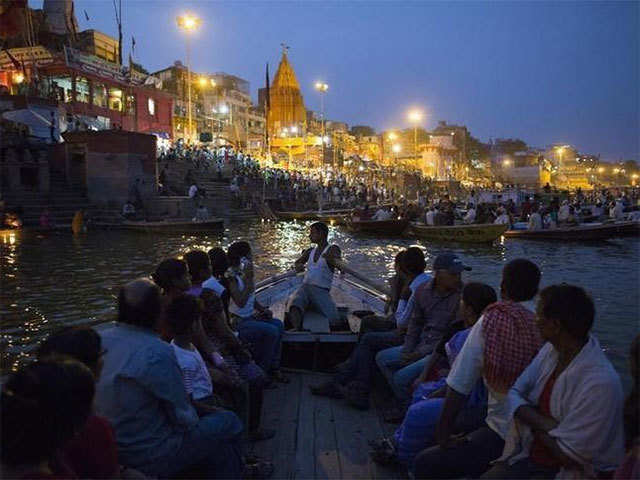
Situated on the banks of the Ganga, Varanasi is one of the holiest cities for Hindus. Pilgrims and visitors come from around the world to explore its temples and culture. The constant smell of burning camphor from the rituals performed at the temples and the sound of Indian classical music drifts through the city's streets.
1/7
Reuters

Death is the big attraction

Death is the big attraction

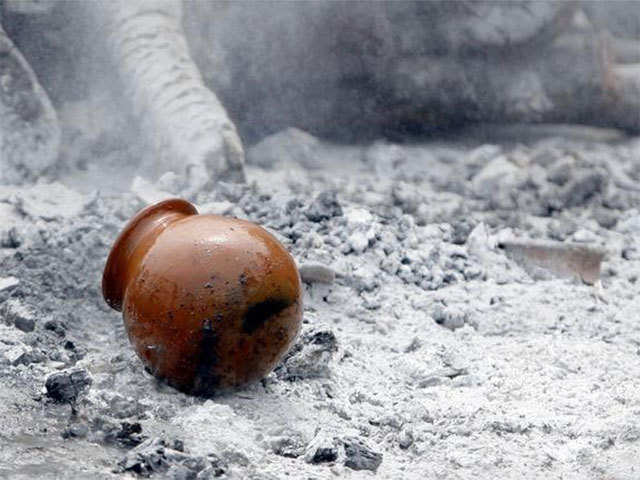
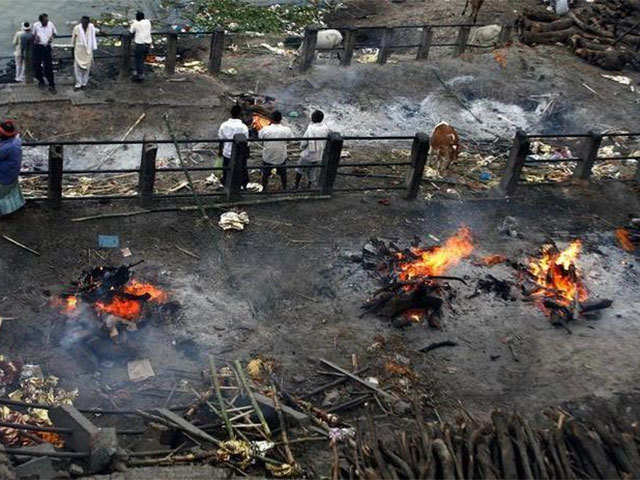
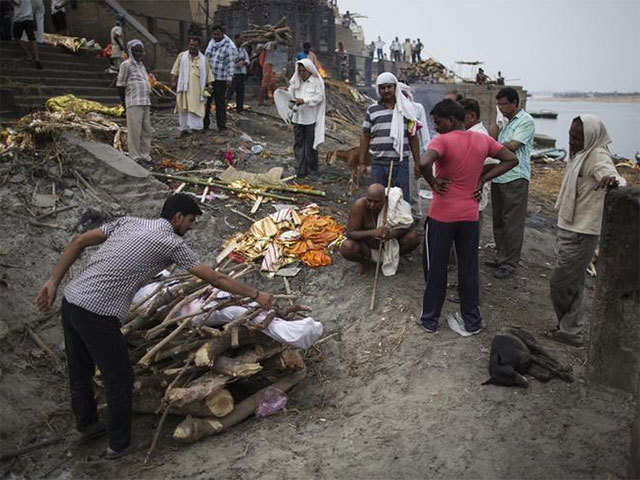
Believers say that those who are cremated in Varanasi attain "Moksha", or freedom from the cycle of life and death. At the Harishchandra ghat, amidst a maze of burning pyres, 68-year-old Yamuna Devi watched a corpse arrive, wrapped in white cloth and covered with flowers.

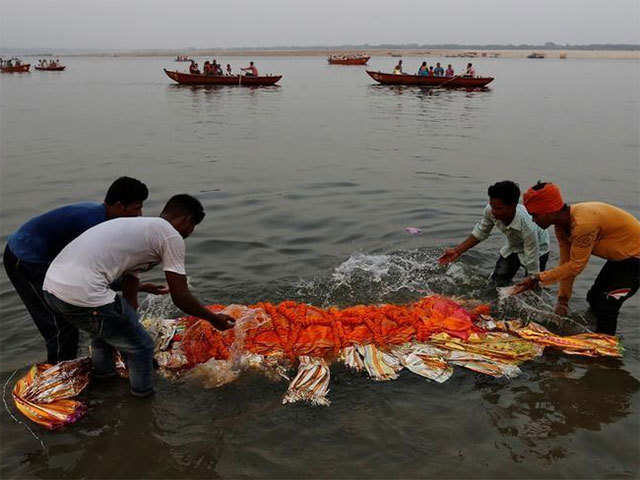
Chanting the sacred prayer "Ram Naam Satya Hain" ("The name of Lord Ram is the truth"), the family members took the corpse towards the river Ganga, for one last dip before cremation. Devi tended to an oven in a temple at the ghat, getting the fire ready to cremate the body.
2/7
Reuters

Life of a dom

Life of a dom

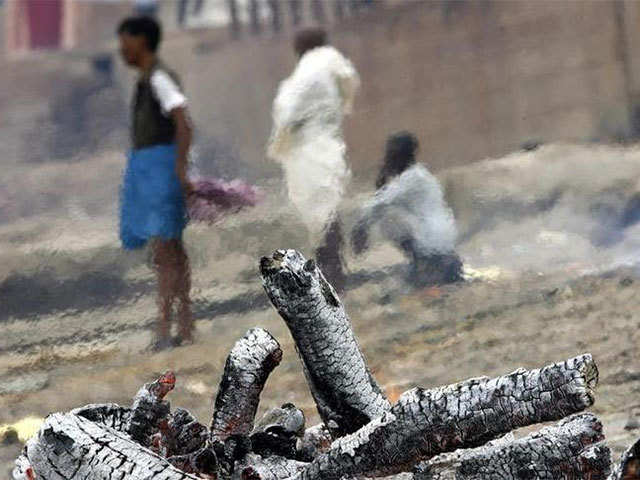
Yamuna Devi is a Dom. Doms are the caretakers of the cremation grounds and the main keepers of the fire that lights the pyres. "One cannot enter the gates of heaven if their bodies are cremated without the presence of a Dom," said Devi. "But people only respect us when it’s time for death so we have made a life, living amongst the dead."
3/7
Reuters
Business of death

Business of death

According to Hindu mythology, the Doms were cursed by Lord Shiva when a member from their community named Kallu Dom tried to steal an earring of the goddess Parvati. To gain forgiveness, they agreed to become the keepers of the flame.

Doms belong to the lowest ranks of the 'Dalits', themselves at the bottom of the Hindu caste system. Some are employed as farmers or weavers, but many earn their livelihood through the 'business of death'.
4/7
Reuters

Burning ghats

Burning ghats

Today, about 35 families from the community live around the town's main cremation grounds or "burning ghats" - Manikarnika ghat and Harishchandra ghat. These ghats cover an area of about 7 square kilometres each, lining the banks of the river. The smell of dead bodies and clouds of black smoke fill the air around these cremation grounds. Their proximity to the river is because of the religious importance of the Ganga in cremation rituals.

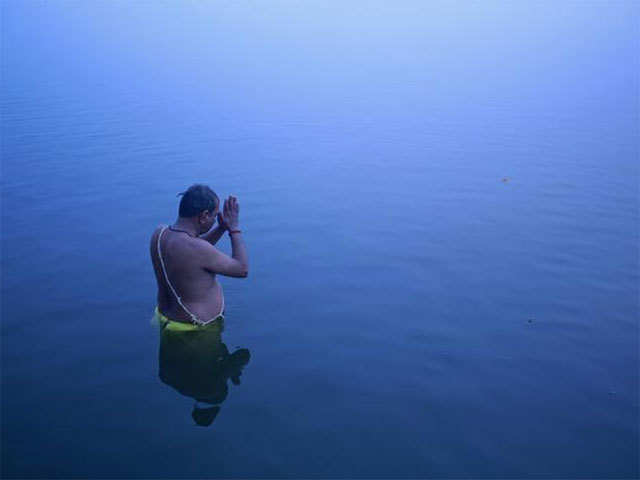
After the cremation process, Hindus release the ashes from incinerated dead bodies into the river, with the belief that the soul of the corpse will be cleansed.
5/7
Reuters

The earnings

The earnings

Bodies are generally dressed in a white shroud and sacred ash called 'Vibhuti' is applied on the forehead. Flowers are also used to adorn the body. Typically, Doms will receive 20 to 50 bodies a day. "There are days when I earn just Rs 300 rupees and days when I've made more than Rs 6,000," said Dom Shyam Chaudhary.

"Once the corpse burns completely, the young children from the Dom family collect the clothes or jewels (of) the corpse and sell it in shops," said Dr K.K. Sharma, who has written a book on Varanasi and life in the cremation grounds. "Any wood and other materials which have not been used for the incineration are also sold or used in Dom households."

In 1998, the Municipal Committee of Varanasi got the Doms to charge a standard rate of Rs 100 for their work. But this did not last. In most cases, Doms charge people what they seem to be able to afford.
6/7
Reuters
Serving the dead

Serving the dead

Devi plans to continue to do things her way until she dies. "This job empowers me. I am often insulted for doing this job as a woman and a widow. But people don't realise that on a cremation ground, your gender, caste or marital status does not matter. I live with that belief and will continue serving the dead."

Text: Priyanka Shankar, Reuters

Multiple people down reported in shooting at Colorado Walmart Reuters|Updated: Nov 02, 2017, 07.28 AM IST

Reports of shots fired came out shortly before 6:30 p.m. Mountain Time, a police spokesman told local 9NEWS in Denver.
(Representative Image)

Multiple people were shot on Wednesday inside a Walmart store in a Denver suburb, local police said. 

Police in Thornton, Colorado, did not release any information on the number of victims and it was not clear if an assailant had been taken into custody, taken his own life or been slain by officers. 

"We've got multiple parties down, we're still trying to ascertain what their conditions are," Officer Victor Avila of the Thornton Police Department told Reuters. 


About an hour after the initial alert the Thornton Police Department said on Twitter that the gunfire had ended at the store, which was surrounded by police and fire crews. 

"At this time this is NOT an active shooter. Active crime scene. We will update as info becomes available," the police department said in a tweet. .. 


Wednesday, November 1, 2017

Abdul Qavi Desnavi, the prolific Urdu author, honoured in today’s Google Doodle on 87th birthday

Many famous poets and academicians of today have been Abdul Qavi's disciples. Javed Akhtar is one of them.

abdul qavi desnavi, abdul qavi desnavi google doogle, Google doodle today, google doodle, abdul qavi birth anniversary, abdul qavi 87th birthday, google doodle today, indian express, latest newsAbdul Qavi Desnavi.jpg
Abdul Qavi’s birth anniversary commemorated by an animated doodle by Google.

Abdul Qavi Desnavi (1 November 1930 – 8 July 2011) was an Indian Urdu language writer, critic, bibliographer and linguist. He wrote many books on Urdu literature.His work included about Maulana Abul Kalam Azad, Mirza Ghalib and Allama Muhammad Iqbal. He was awarded with several awards for his literary work.
Desnavi was born in village Desna, Bihar of block Asthawan  to the family of Muslim scholar Sulaiman Nadvi, who claimed to be descended from and who was a recognized historian and biographer of Muhammad. Desnavi was the son of Syed Mohammed Saeed Raza, who was Professor of Urdu, Arabic and Persian languages in St. Xavier's College, Mumbai. Desnavi had two brothers, elder Prof. Syed Mohi Raza and younger Syed Abdul Wali Desnavi.
Many scholars, poets, and teachers of today were his students in Bhopal, and several other students obtained Ph.D. degree under his guidance. He died on 7 July 2011 in Bhopal, India.
Desnavi got his primary education in Arrah town of Bihar state. He completed his Graduation and Post Graduation in First from St. Xavier's College, Mumbai.He joined Urdu department in Saifia Post Graduate College in February 1961. He became Professor and head of the Urdu department of Saifia College. He was a well known literary figure in India and in the Urdu world.