Pages

Sunday, November 5, 2017

GSTN launches new facility for exporters to claim refunds

Exporters can save and upload their export data which are part of GSTR-1 after filling up export details in table 6A.

NEW DELHI: GST Network today said it has introduced a utility Table 6A in Form GSTR1 for exporters to claim refunds. 

An exporter can claim refund of Integrated GST tax paid at the time of export by filling the details of shipping bill and tax paid GST invoice in his Form GSTR1 in the relevant month. 

"Table 6A of Form GSTR1 has been introduced on the GST portal," GSTN said in a statement. 


The shipping bill filed by an exporter with customs authorities is considered to be an application for refund of integrated tax paid on the goods exported out of India. 

Table 6A of FormGSTR1 enables taxpayers to file export related data for the tax period so that refund of that tax- period may be processed on the basis of declaration made under Form GSTR 3B and Table 6A of GSTR 1. 

Since for the months of August, September and October a number of taxpayers have filed return GSTR- 3B but as the dates for filing of GSTR-1 for August onwards have not yet been notified and GSTR1 has not been filed, therefore to enable exporters to file for refund, this functionality has been made available, the GSTN said. 
Exporters can save and upload their export data which are part of GSTR-1 after filling up export details in table 6A. 

The table will be then extracted separately and after exporters digitally sign it, it would automatically go to the customs department. 

The customs department will then validate the information provided in the table with the shipping bill data and also the taxes paid in GSTR-3B. 

The refund amount would be either credited to exporter's bank account through ECS or a cheque would be issued. 

"Every registered taxable person who has made exports on payment of IGST, other than an input service distributor or compounding taxpayer or TDS deductor or TCS collector can file Table 6A of Form GSTR1 electronically on the GST Portal" GSTN CEO Prakash Kumar said. The table can be filed from the returns section of the GST Portal. 


Life lessons from the Mahabharata


November 01, 2017 09:40 IST
Want to know how can the Mahabharata help you succeed in life? Read on!
The Mahabharata
As an epic tale, the Mahabharata remains unrivalled in length and complexity, weaving stories within stories with aplomb.
While its historical context is debatable, there can be no disputing that it contains a wealth of spiritual and philosophical material.
It has life lessons to offer that are relevant in the contemporary world today.
Though characters in Indian epics are revered and given a divine status, they are completely humanised by their own struggles.
Krishna may have revealed his Vishwaroopa to Arjun, but he was a wily strategist and steered the Pandavas to success in the war of Kurukshetra, with a carefully orchestrated master plan.
Personally, I have always felt that winning the war came at a tremendous cost for the Pandavas.
But it was what they set out to achieve and they were annihilating in their success.
So what lessons in success can we learn from this motely bunch of heroes and villains?
  • It's imperative to have the right mentor
The Pandavas considered Krishna their mentor from the time they met him -- their faith in him was absolute, and his word was their command.
He was a mentor who understood their weaknesses and strengths, someone who could advise, criticise when required and hold their hand and show them the right and more importantly, righteous path.
Duryodhana, on the other hand, had Shakuni -- a corrupt, conniving and scheming man who made it his business to bring out the worst in Duryodhana.
The Kaurava prince was not without good qualities. He was a brave warrior, a loyal friend and a just king.

He is commonly vilified as the personification of evil, but it is to be remembered that when the time came for the kings to choose sides in the war, Duryodhana had 11 akshauhunis versus the Pandavas seven.
He crowned Karna the King of the Angas just to remove the stain of sutaputra from his name, and remained his loyal friend until the end.
But in the hands of Shakuni, Duryodhana let the worst side of himself come to the fore.
It is important to have a mentor that sees your true potential and helps you achieve it instead of leading you down the road of negative emotions and revenge.
  • When in dire situations, bend the rules and think outside the box
In the first few days of the war, the Pandavas had a difficult time facing the onslaught of their grandfather Bheeshma, who was the commander to the Kaurava army.
He was unbeatable, and was creating mayhem in the Pandava army at Duryodhana's behest.
The Pandavas knew that he could not be killed by ordinary means.
They made a warrior known as Shikhandi face Bheeshma, and the Pandavas along with other maharathis stood behind Shikandi.
They knew Bheeshma would not attack Shikhandi because he had once been a woman -- in this convoluted way, they were able to injure Bheeshma and get him out of the war.
Similarly, when Drona became too hot to handle, the Pandavas killed an elephant in their own army by the name of Ashwatthama.
Drona's son too was called Ashwatthama, and when Yudhisthira announced that Ashwatthama was dead, Drona was too disheartened to fight any more, and the Pandavas were able to kill him.
These two are instances of bending the rules, but were a means to an end in a dire situation.
  • Focus on your objective without distractions
When Drona was teaching the Pandava and Kaurava boys archery, he was accused by Duryodhana of favouring Arjuna.
To prove why he thought Arjuna was the most superior warrior of them all, Drona placed a wooden bird on a branch and asked the boys what they could see when they took aim at the bird.
All of them replied in the same vein, that they could see the bird, the branch, the sky, the tree, etc.
When it came to Arjuna's turn, his reply was, "I see only the eye of the bird."
Arjuna's unerring focus was the secret arsenal from which his greatness stemmed.
With his eye focused only on the prize, he was leaps and bounds ahead of those who were distracted by everything around them.
In the modern world, distractions are many, and when you take your eye off the ball, it can be detrimental to your success.
  • Make your choices smartly -- don't be dazzled by the seemingly bigger prize
When the Pandavas and the Kauravas were canvassing for support before the war of Kurukshetra, both Arjuna and Duryodhana came to ask for Krishna's support.
Krishna gave them a choice;  one of them could have his army, the fearsome Narayani Sena, and the other could have just him -- unarmed and not fighting.
But since he had awoken and seen Arjuna first, Arjuna would choose first.
Arjuna chose the lone, non-fighting Krishna without hesitation.
Krishna was their mentor, he was everything to them.
Duryodhana smiled, thinking he had got the best of the deal -- what use was one unarmed man against an army of skilled warriors!
But Arjuna knew that even the best of resources, such as the Narayani Sena, were useless without the strategic vision of Krishna.
It transpired that the lone Krishna, serving as Arjuna's charioteer, was all the Pandavas needed to win the war of Kurukshetra, and Arjun had chosen wisely.
So we learn that even if something looks brighter on the surface, it's not necessarily the right choice for us.
Look beneath the surface of the offer and choose what’s right for you, no matter how attractive the other option may look.
  • Think about the consequences of your actions -- don't make emotional decisions!
The biggest mistake you can make is taking and important decision in an emotional state.
Shantanu was blinded by love for a fisherwoman, and he allowed his son Bheeshma to take a vow of celibacy.
In his  eagerness to marry an avaricious woman, he unleashed a series of events that led to the catastrophic war of Kurukshetra.
Pandu too made a rash decision -- when he was cursed by Rishi Kindhama, he was so distraught that he gave up his throne to Dhritarashtra and went to the forest to lead a retired life.
Had he thought it through, he may not have taken such an unwise decision, which led to the uncertain future of his five sons and their calamitous enmity with the Kauravas.
The lesson to be learned is, hasty decisions lead to our downfall.
All decisions should be analysed with a clear mind, while being cognisant of any future repercussions.
  • Don't focus on the fruit of your labour
The Bhagvad Gita, an intrinsic part of the Mahabharata, has life-lessons hidden on every page, but the one that is most commonly taught is that we should do our work without hankering after the reward.
Many spiritual and philosophical explanations for this abound, but I like to look at it from a more practical point of view.
I believe that all work is meditation; whether you are making a paratha or populating a spreadsheet, if you are focusing as you should be it is a form of meditation.
If thoughts are clouding your mind about whether your husband will complement you on dinner tonight, or your boss will give you a promotion detract from that meditation.
I truly believe that when we are not attached to the fruit of out actions, we are able to focus on our efforts in entirety, and consequently achieve better results.
Hard and focused work always bears fruit, more so if we don't obsess about it.
  • Be adequately prepared before you act -- half knowledge is dangerous
Abhimanyu knew how to enter the Chakravyuha, but he didn't know how to come out of it.
That didn't stop him from breaking the vyuha and facing the wrath of the Kaurava maharathis alone -- it says a lot for his bravery, but not much for his strategic planning.
His death at the hands of six great warriors was one of the more tragic and unrighteous acts committed on the battlefield of Kurukshetra, but it does teach us that in order to be successful, one needs to be prepared.
Whether it's an examination or a presentation, being armed with all the facts is mandatory if one wants to succeed.
Being properly prepared for the task at hand is one of the crucial steps to success.
Lead image: Kind courtesy Ramanarayanadatta astri/Wikimedia commons
Author Anita Shirodkar recently released her fourth book, Guardians of the Blue Lotus - Aryavir, the first part of a trilogy, which is an epic mythological fantasy.
Anita Shirodkar

COMPLICATED BANKING PASSWORD FOR AN INDIAN VILLAGER UNDER DIGITAL INDIA INITIATIVE

Can't stop laughing guys .................Image result for pic of rahul gandhi


An Indian Villager's e-banking password was:
"ram-sita-laxman-hanuman-ravan-delhi-rahul"

His friend: Yaar! Itna lamba password? (Friend !Why such a long password?)

Villager replied Kya karoon. Bank wale kehte hai ki password main 5 character aur 1 capital hona chahie....(What can i do as Bank says that in password there must be five characters and one Capital)
His friend: wo sab thik hai, par Rahul kyun ??(That is all right but why you added name of Mr.Rahul Gandhi)
villager replied: Ek special character bhi zaroori hai....(One special character was also required)


WORD OF WISDOM

Image result for PIC OF AN ENTANGLED SNAKE IN MACHINE
A Snake penetrated into a carpentry workshop. As it slipped, it passed over a saw and got slightly wounded. Suddenly, it turned and bit the saw, and biting the saw, the snake seriously got wounded in its mouth!
Then not understanding what was happening and thinking that the saw was attacking "him," it decided to roll around the saw to suffocate it with all its body by squeezing it with all its strength, but it ended up being killed by the saw!
Sometimes we react in Anger to hurt those who have harmed us, but we realize after all that we are being hurt ourselves.
In life it is better sometimes to ignore situations, ignore people, ignore their behaviors, their words.
Sometimes it is better not to react so as not to suffer consequences that can sometimes be deadly or harmful.
Do not let hate take over your life because love is stronger than anything.

*Be wise and live healthy.*

FOR MY GEEKY FRIENDS

Scientists were playing hide & seek in heaven.
Einstein was seeker.
Newton didn't hide & stood in a square of 1 meter.
Einstein: I found you Newton !
Newton: You are Wrong.
I am not Newton.
As I am standing in 1 mtr square, I am Newton/per mt sq.
So I am Pascal.
—�—�—�—�—�—�—�—�—�—�—�—�—�—�—�—�—
Q: What did the thermometer say to the graduated cylinder?
A: "You may have graduated but I've got so many degrees"
—�—�—�—�—�—�—�—�—�—�—�—�—�—�—�—�—�-
Did you hear oxygen and magnesium dating together?
OMg!
—�—�—�—�—�—�—�—�—�—�—�—�—�—�—�—�—�—
What if Oxygen went on a date with Potassium?
Its OK..
—�—�—�—�—�—�—�—�—�—�—�—�—�—�—�—�—�—
Atom 1: I just lost an electron.
Atom 2:how u feel?
Atom 1: positive
—�—�—�—�—�—�—�—�—�—�—�—�—�—�—�—�—�—
Q:What do you get when you put a Cobalt & 2 iron atoms in mixer
CoFFee
—�—�—�—�—�—�—�—�—�—�—�—�—�—�—�—�—�-
What do you get after reaction of a Barium atom with two sodium atoms...
BaNaNa
—�—�—�—�—�—�—�—�—�—�—�—�—�—�—�—�—�—
And finally ....
Can't end without a movie dialogue
Electron to neutron : mere pass charge hai , spin hai, magnetic field hai, reactivity hai ... Tumhare pass kya hai
Neutron : mere pass.....
MASS hai
—�—�—�—�—�—�—�—�—�—�—�—�—�—�—�—�—�—

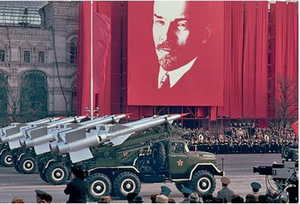
VIEW:THE 1917 RUSSIAN REVOLUTION WAS A GERMAN PLOT

100 years ago: On Nov 7, communists will celebrate the centenary of the revolution that was aided by Germany.

Communists will celebrate the centenary of the Russian Revolution of 1917 as a triumph of workers and peasants. In fact, it owed much to a German diplomatic plot, executed through an armed coup by Lenin. 

In World War I, Germany was stuck in the impasse of trench warfare. It faced French-British troops in the west, and Russians in the east. Breaking through trench lines required massive military dominance, which neither side had. So, all advances ended in bloody stalemates. Germany badly needed a deal with Russia in order to shift forces from the eastern to the western front. 

The war was socially and economically ruinous for Russia. Mutinies and desertions spread in its army. In March 1917, riots in the capital, St Petersburg, culminated in the abdication of the tsar. 

A provisional government, headed by Alexander Kerensky of the Social Revolutionary Party, promised fresh elections. But chaos ruled in much of the country with the tsar’s exit, widespread opposition to the war, and coup plots by both the right and left. 


Germany saw opportunity in this. Lenin was in exile in Western Europe and strongly opposed the war as a clash of imperialists. Germany saw that a Bolshevik coup in Russia could quickly end fighting on the eastern front. So it offered to smuggle Lenin and other Bolshevik exiles from Switzerland across war lines into Finland, from where they could cross into St Petersburg nearby, persuade local Bolsheviks to stage a coup, and then sign a peace treaty. 

It was a cynical deal, with Lenin and Germany using one another. Lenin said famously, “Power is lying on the streets of St Petersburg, just waiting to be picked up.” Unlike some communists who sought power through elections, Lenin favoured an armed coup. 
With the support of soldiers and workers in the capital’s Soviet (local council), the Bolsheviks began gathering weapons to organise a coup. The Germans supported them with 50 million Deutschmarks in gold. 

Alarmed, Kerensky in July cracked down on the Bolsheviks, and Lenin fled to Finland. But soon after, to counter a threatened rightwing coup, Kerensky sought Bolshevik support, giving them arms and letting Lenin return. This turned out to be political suicide. 

Bolsheviks soon wrested control of the St Petersburg Soviet, and Kerensky lost military control of the city. 

On November 7, Lenin launched his coup, with pro-Bolshevik soldiers and gangs attacking official installations. The naval ship Aurora, controlled by Bolshevik sailors, threatened to blow up the Winter Palace and other targets unless Kerensky surrendered. Deserted by allies, Kerensky did so, and Lenin came to power. 

An election followed on November 25. The Social Revolutionaries won 380 of the 703 seats against the Bolsheviks’ 168. The Bolsheviks won most votes of soldiers and cities, while the Social Revolutionaries swept rural areas. Lenin refused to hand over power, kicked out the Social Revolutionaries, and created a dictatorship of the proletariat 

Soon after, on March 3, 1918, the German plan came to fruition. Lenin sued for peace in the Treaty of Brest-Litovsk, surrendering huge areas of the Russian empire. He called this “sacrificing space to gain time.” 

The delighted Germans switched 50 divisions to the western front, gaining military dominance there for the first time. They struck mightily at Allied lines on March 21, breaking through at several points. Some historians say they came very close to winning. But weak logistics prevented the Germans from rolling up the French and British flanks. The trench stalemate returned. But not for long. Armoured tanks, a new Allied invention, proved they could smash through trench lines. In addition, over a million US soldiers joined the battle. This ended the stalemate. Germany began retreating in August, and surrendered in November. 

The victorious Allies forced Germany to give up its war gains. So, Lenin got back vast territories signed away at Brest-Litovsk (though some other territories gained independence). This helped him win the civil war raging at home, that ultimately cost 2.5 million lives. 

Was Lenin a German agent, as critics claim? Surely not. But without German assistance, he would not have come to power. 

Marxist historians claim that the Russian Revolution actually began earlier, in the form of major strikes and agitations from 1905 onwards, and argue that Lenin was the natural heir of these. 

However, the Social Revolutionaries, left wing rivals of the Bolsheviks, could also claim to be the heirs of the early agitations, and can point to their election victory as proof. The clincher was Bolshevik support in the army. Troops, rather than workers or peasants, ensured Bolshevik victory. Indeed, the peasants soon lost all their land to communist collectives. 

By 
S A Aiyar

DISCLAIMER: Views expressed above are the author's own. 

AN INNOVATIVE TECHNIQUE TO TEST EYES OF INDIAN WOMEN

Image may contain: 2 people, people smiling

Xi Jinping vs Vladimir Putin: Two men whose hold on their countries looks unending

Both leaders are enjoying large mandate and immense popularity at home. The two are likely to lead their nations for much longer and will only continue to consolidating their power further, setting them on a collision course.

ByMoneycontrol News
Xi Jinping vs Vladimir Putin: Two men whose hold on their countries looks unending
Chinese President Xi Jinping was formally handed a second term as the leader of the world's most populous country in late October. While Xi's elevation was expected, the Communist Party of China surprised many when Xi's doctrine was written into the party constitution. The move put him on par with modern China's founding Chairman Mao Zedong and his successor Deng Xiaoping. The party unanimously amended its constitution to include "Xi Jinping Thought on Socialism with Chinese Characteristics for a New Era" as another guiding principle during the week-long congress session.
Meanwhile, Xi's northern neighbour and the President of the Russian Federation, Vladimir Putin, is winning in his own game.The former secret service agent enjoys immense popularity at home and is expected to be re-elected in the 2018 presidential election.
The 65-year-old has been playing a leading role in conflicts such as the Syrian Civil War and of late has had tense relations with eastern European countries.Both, Xi Jinping and Vladimir Putin hold unmatched power in their own countries. However, they could be on a collision course as they eye the same position - of world dominance.
Xi Jinping - Alongside Chairman Mao
The 64-year-old became the General Secretary of the Communist Party of China in 2012 and took over as the President, a year later.
Xi has systematically tightened his grip over the country's Politburo Standing Committee and cracked down on corruption. Thus, Xi has successfully sidelined rivals within the party and given himself an unprecedented hold over the internal dynamics of the booming economy.In what can be called a fresh and larger mandate, Xi was unanimously re-elected as the President in October.  This has given him more control.While China's human rights record has been questioned and criticised ever since the one-party system was established by Mao Zedong, what works against Xi is that the criticism has grown louder under his regime. If Xi does not curb the problem, it could potentially weaken his image.
China has been criticised by the international community for not doing enough to tackle climate change.However, Xi has shown signs of changing China's stance. In a marathon speech delivered at the opening ceremony of the Communist Party Congress in Beijing last month, Xi said that "Any harm we inflict on nature will eventually return to haunt us". His speech outlining the plan to tackle climate change was also applauded.China has been ambitiously marching to become a 'super power'. China's most powerful person could be examining China's opportunity to fill the vacuum left by the receding US foreign policy under president Trump.
Vladimir Putin - The new Czar of Russia
The 65-year-old leader of Russia has either served as the Prime Minister or the President of the country since 1999. He has shuffled between being the prime minister and the president along with the current prime minister Dmitry Medvedev.
The Forbes Magazine in 2016 called Putin the 'World's Most Powerful Person'. In fact, he has been ranked number one for four years in a row now.
Putin remains incredibly popular in Russia. According to a 2016 Gallop report, the 65-year-old enjoys 81 percent approval rating. The high approval rating also signals the a weak Opposition in the country.Putin has been intervening in conflicts in west Asia. He has taken a tough stance against European countries and has supported separatist rebel groups in former Soviet nations. These factors have added to Putin's strength.Human Right Watch (HRW) and other human rights groups have, however, consistently criticised Putin and his government for Russia's human rights record. In some instances, protestors have been jailed for up to 15 years in jail for mass rioting. The HRW report has also said that the LGBT community in Russia faces widespread abuse.
Similar to Xi's ambitions, the former KGB agent has been positioning Russia as the world leader amidst a dwindling American foreign policy. He too would be hoping to occupy the void left by the United States in the international relations space.While Russia has improved on certain indicators such as the Ease of Doing Business, the economy has certainly been hit by the United States-led sanctions. Russia's economy has also been suffering from the drop in oil prices and high inflation.
Both leaders are enjoying a large mandate and high popularity at home. Xi Jinping and Vladimir Putin are likely to lead their nations for much longer and will only continue to consolidate their power further.The ambitions of these powerful men are likely to set them on a future collision course.

India sets Guinness world record by cooking 918kg khichdi The cooked dish—khichdi—weighed more than the target of around 800kg set by chef Sanjeev Kapoor

Union minister of food processing Harsimrat Kaur Badal along with Sadhvi Niranjan Jyoti, MoS for food processing, and Swami Ramdev cooking ‘khichdi’ in a giant wok at the World Food India 2017 festival in New Delhi on Saturday to create a world record. Photo: PTI

Union minister of food processing Harsimrat Kaur Badal along with Sadhvi Niranjan Jyoti, MoS for food processing, and Swami Ramdev cooking ‘khichdi’ in a giant wok at the World Food India 2017 festival in New Delhi on Saturday to create a world record. Photo: PTI
New Delhi: India on Saturday set a Guinness world record by cooking 918kg khichdi, a traditional multi-grain dish, at the ongoing global food event organised by the government in the national capital.
A team of 50 people led by celebrity chef Sanjeev Kapoor and NGO Akshaya Patra supervised the night-long preparations and yoga guru Ramdev Baba put crowning ‘tadka’ in the dish at the World India Food event that will conclude on Sunday.
Khichdi was steam-cooked in a giant wok weighing around 1,200kg. Out of which, the wok alone was weighing 343kg. The dish was prepared using multi-grains like rice, pulses, coarse cereals and vegetables. “We are still waiting for a few pieces of evidence. For the time being, I am happy to announce that this (khichdi) wins the Guinness World title weighing 918kg,” Guinness World Records’ project manager Paulina Sapinska said at the event.
The minimum requirement to create a world record was 500kg. The cooked dish, however, weighed more than the target of around 800kg set by chef Sanjeev Kapoor. Other leading chefs, including Imtiaz Qureshi, Ranveer Brar, Sudhir Sibal, Rakesh Sethi, Akshay Nayyar, Satish Gowda, too helped in the cooking of the dish.
“Khichdi is a healthy and superfood. It is a solution to those depending on food supplements. It is rich with all nutrition,” Baba said after putting tadka in the dish. Promoting khichdi as a ‘Brand India’ food is a good step towards promoting healthy superfood not only domestic but also international market, he added. Food processing minister Harsimrat Kaur Badal, who also lent a hand in the cooking of khichdi, said: “It is a wholesome food as it contains most of the nutrients. It also symbolises the country’s unity in diversity.”
The khichdi will be distributed to orphans by Akshaya Patra Foundation and Gurudwara to about 60,000 people. “We promote international foods in India and it is our opportunity to showcase our superfoods to the world,” said Kapoor, who is also a brand ambassador of The Great India Food Street at the event.
Qureshi, master chef at ITC Hotels, praised the government’s initiative to promote Indian foods like khichdi and recognise the talent of Indian chefs. He said that new-age chefs are innovating this dish across the world and is being consumed in an interesting way these days.
Minister of state for food processing Sadhvi Niranjan Jyoti, Denmark food minister Esben Lunde Larsen, ITC CEO Sanjiv Puri, Tata Chemicals COO of the consumer business Richa Arora, LT Foods chairman Vijay Arora and Akshaya Patra Foundation officials were also present at the event. The mega khichdi preparation was part of the ‘Great Indian Food Street’ at the global event, being organised along with industry body CII, that features traditional food from more than 20 states.
It took over three months of planning and multiple trials in attempting the record. The dish and recipe will be popularised by Indian foreign missions and the government to ensure it is part of restaurants and kitchens around the world.

HIROTUGU AKAIKE

Image result for PIC OF HIROTUGU AKAIKE

Hirotugu Akaike (赤池 弘次 Akaike Hirotugu) (IPA: [akaike çiɾotsɯɡɯ]; November 5, 1927 – August 4, 2009) was a Japanesestatistician. In the early 1970s he formulated a criterion for model selection—the Akaike information criterion, which is now widely used.


In 2006 Akaike was awarded the Kyoto Prize for his major contribution to statistical science and modeling in the development of the Akaike Information Criterion (AIC). On November 5th 2017, Google displayed a Doodle for Hirotugu Akaike’s 90th Birthday.

Saturday, November 4, 2017

Corporate Affairs ministry considering multiple changes to Insolvency and Bankruptcy Code

Corporate Affairs ministry considering multiple changes to Insolvency and Bankruptcy Code

NEW DELHI: The corporate affairs ministry is considering multiple changes to the Insolvency and Bankruptcy Code, including ways of ensuring that the process doesn't allow a failed promoter to regain control while escaping liabilities. 

The review is being conducted after seeing how the law has worked in the past few months and based on feedback received, said senior officials. A simpler framework for resolving individual insolvencies to allow matters to be handled by a mediator when there is no dispute is one such suggestion. 


Bankers have pointed out that under the current law a founder could possibly get back the reins of a company. "The promoter should not be able to buy his own firm through a shell company after the insolvency proceedings," a senior bank executive said. 

The government has also received a suggestion to make the code more comprehensive to cover entities such as trusts, societies and Hindu Undivided Families (HUFs) as well.
graph
"The law was created in a vacuum and as we gather more experience we will address the issues and make amendments," a senior official said. The Insolvency and Bankruptcy Code (IBC) received presidential assent in May 2016 with the first set of cases filed at the National Company Law Tribunal (NCLT) in December 2016. 

Easing compliance requirements regarding routine disclosures while the insolvency process is on is another proposal as is the establishment of a detailed framework to deal with cross-border insolvencies. 

Allowing insolvency professionals, who are enabled to act only as individuals, to form firms in a situation where a large and complicated transaction needs to be handled is another idea on the table. The finance ministry will look into the matter and hold discussions with stakeholders and regulators, another senior official said. 

"The IBC is more predictable than the erstwhile laws. The government has to learn from the last one year's experiences to ensure there are no hiccups as there are some gaps in the language leaving things to interpretation," said Diwakar Maheshwari, partner, Khaitan & Co. 

Also, since the processes and transactions under the code require valuation of assets, the government is likely to consider regulating the profession of valuers and, if required, enable enforcement action against them. The Companies Act, 2013, has prescribed draft rules for registering and regulating valuers through the Insolvency and Bankruptcy Board of India. The code, however, does not stipulate any regulation for valuers. 

Engineering degrees secured since 2001 via correspondence invalid, rules Supreme Court

SC

NEW DELHI: In a major setback to thousands of students who pursued engineering studies through correspondence courses offered by deemed universities in the last 16 years, the Supreme Court declared on Friday that the degrees were invalid, putting them at risk of losing jobs obtained on the basis of the certificates. 

It noted that the University Grants Commission (UGC) and the All India Council for Technical Education (AICTE) did not approve distance learning programmes in enginee studies and the approval granted by the Distance Education Council (DEC) for such courses was illegal. 

The SC decision exposes the extent to which the regulatory system was compromised as the courses were being run for more than a decade and a half without attracting serious scrutiny. 


Wake up, boardrooms. Sexual harassment is your problem The breadth of sexual harassment complaints suggests that it’s only a matter of time before a CEO of a listed company, a middle-manager or a shop-floor supervisor get caught out

A poll of 1,533 adult women last year by the UK’s Trades Union Congress (TUC) found that 52% had experienced some form of sexual harassment in the workplace. Photo: iStock
First Hollywood, now Westminster. How long before European business is caught up in a sexual harassment scandal?
The allegations levelled against Harvey Weinstein mark a turning point. People feel much freer to speak out about sexual misconduct, and those in power are actually listening.
The breadth of the complaints suggests it’s only a matter of time before a chief executive officer (CEO) of a listed company, a middle-manager or a shop-floor supervisor get caught out. That should be a wake-up call for all boards of directors.
The costs of getting engulfed in a scandal are high. Just look at what happened to Sports Direct International Plc when the Guardian newspaper alleged that it paid warehouse staff less than the minimum wage. A parliamentary probe of working conditions revealed abusive practices, including allegations of sexual harassment. The fallout amounted to a serious financial hit. Customers stayed away, sales slumped and the share price fell.
It’s perhaps easy to think that this is an exception. After all, the business environment should be far less conducive to inappropriate behaviour than casting meetings for independent films. Companies typically take pains to highlight their commitment to a culture of respect, and the importance of abiding by a code of conduct. Senior managers should have spent many years in this structured environment, and this should have—hopefully—prepared them for how to behave in top jobs.
But this can’t be taken for granted. Upper ranks of management have power, but are often less subject to corporate oversight than board members or lower-level employees. What’s more, a poll of 1,533 adult women last year by the UK’s Trades Union Congress (TUC) found that 52% had experienced some form of sexual harassment in the workplace.
While listed companies are nearly certain to have whistleblowing and other procedures in place for employees to report misconduct, the TUC’s poll shows they’re not working. Four out of five women did not report the sexual harassment they had experienced to their employer.
The vast majority of the high-profile allegations that have emerged in the US have been from women. And the TUC’s poll found that in nine out of 10 cases, the perpetrator of the harassment was a man. So the lack of women in senior roles and on the board creates an even bigger vulnerability. However much companies are already striving to improve the gender balance in executive positions, still there’s a long way to go.
Sadly, predatory behaviour can happen anywhere. But board members of retailers and restaurants should be particularly alert, as their employee bases include a large number of women on low pay, and so are more vulnerable to abuse. Finance, on the other hand, is famously male-dominated, frequently with a culture to match.
To start, companies must work hard to improve reporting procedures. But no matter how quickly a confidential hotline or any other mechanism gets installed, it’s for nothing unless there’s a culture to support it. Staff need to see that reporting sexual harassment is not taboo, and more importantly, that their complaints will be heard.
Board members need to see themselves as responsible. After all, no director wants to be at the helm of a company that discovered a case of persistent sexual misconduct and then covered it up. In the current environment, thinking that there’s no problem because nobody has complained is to willfully adopt a false sense of security.
In fact, the bravest thing for a board to do would be to actively encourage any staff who have experienced sexual harassment to come forward. Furthermore, they should make it clear that their allegations will be taken seriously, however embarrassing for the company.
If a company encourages staff to report sexual harassment, and the floodgates open, that can lead to serious reputational and financial costs. But if directors and managers address problems in the right way, in the long term they’ll be in a much better position to focus on the company’s future. Such a move would also send the message that the board is willing to listen on other types of heinous behaviour—from insider dealing to mistreating suppliers. That’s a comfort for investors too. Bloomberg Gadfly

What is knock-for-knock agreement?

Knock-for-knock refers to an agreement between insurers that in case of an accident, each will pay for the damage to the vehicle insured with it without trying to establish blame
Knock-for-knock agreement is not a regulatory requirement, but more of an understanding among insurers. Photo: HT
The two most important covers in a car insurance policy are the third-party and own damage covers. 
The third-party cover is mandatory for all plying vehicles as per the motor vehicles Act. This cover pays for the damages to a third person caused by your vehicle. In case of an accident during which bodily injury or loss of life takes place, the claim amount under third-party cover is unlimited currently. But in the case of damage to property, the maximum liability is limited to Rs7.5 lakh. 
Own damage cover on the other hand insures your vehicle against theft or damage. You buy an insurance policy on the basis of the insured declared value (IDV) of the vehicle. IDV works as the sum insured and is calculated based on the invoice of your car minus depreciation. 
So what happens when someone drives into your car causing a huge dent to your vehicle? Do you ask the person to pay for the damages by using her third-party insurance cover or do you get your vehicle repaired using your own policy? Theoretically, the person who has caused damage to your car is liable to pay and a third-party policy will take care of that compensation. But in reality it doesn’t quite work that way.
That’s because in order to claim third party, you need to take the erring person to court and this could be a lengthy and an expensive process. Insurers know this too and therefore prefer to pay for the damages through the own damage cover instead of invoking the third-party cover on the insurer whose insured customer is at fault. This is called the knock-for-knock agreement and a quick search on dictionary defines this term as an agreement between vehicle insurers that in the event of an accident, each insurance company will pay for the damage to the vehicle insured with it without attempting to establish blame for the accident. 

Why insurers have this agreement 

Knock-for-knock agreement is not a regulatory requirement, but more of an understanding among insurers. This agreement was formulated by the General Insurance Council, an industry body that represents all non-life insurance companies. So every insurer signs a knock-for-knock agreement with all other insurers and they do so in order to avoid getting into litigation and unnecessary delays by dragging the matter to the court on account of third-party policies. 
So this simply means that the owner of the insured vehicles instead of apportioning blame and dragging each other to court will get their vehicles repaired using the own damage cover of their respective policies. But this doesn’t mean that you can’t ask the erring driver to make use of his third-party policy to pay for your repairs. You can do so, but this will involve going to court and you will need to prepare yourself accordingly. If you use your policy to pay for repairs, it will mean loss of the no-claims bonus. Therefore, evaluate the decision carefully.