Pages

Wednesday, December 6, 2017

India's largest floating solar power plant opens in Kerala

Dec 05, 2017, 03.12 PM IST

Watt a sight!

Watt a sight!

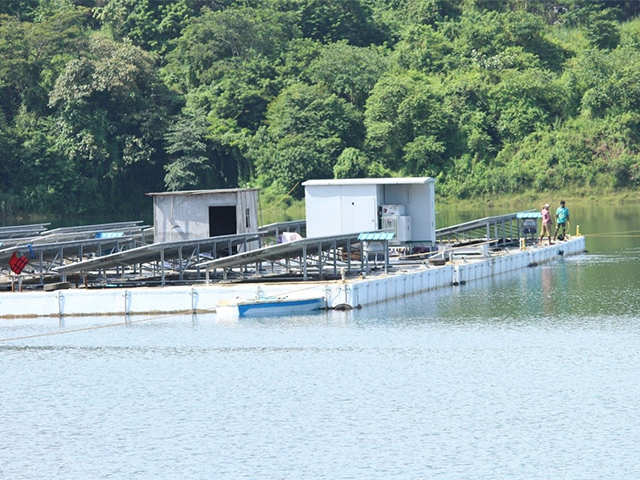
What you are seeing is the country's largest floating solar power plant and it's set up on the Banasura Sagar reservoir in Wayanad, Kerala.

The 500 kWp (kilowatt peak) solar plant of the Kerala state electricity board (KSEB) floats on 1.25 acres of water surface of the reservoir. The solar plant has 1,938 solar panels which have been installed on 18 ferro cement floaters with hollow insides.
1/5
Agencies

Features of the solar plant

Features of the solar plant

The plant has been set up by KSEB at a cost of Rs 9.25 crore. The project has used high- efficiency solar panels and a floating substation have been set up on the reservoir itself to convert the output into 11kV, considering economic and safety aspects.

A 500 KVA (Kilo volt ampere) transformer, 17 inverters, a supervisory control and data acquisition (SCADA) system to control and monitor power generation and an anchoring system are part of the floating solar project.
2/5
Agencies

How is a flotaing plant more beneficial?

Floating solar plants had higher efficiency compared to ground-mounted installations due to the moderating effect of water bodies on panel temperature.
3/5
Agencies
So huge

So huge

The project is a scaled up version of the 10 kW floating solar project which was inaugurated in Banasura Sagar reservoir itself in January 2016. Officials of Thiruvananthapuram-based Adtech Systems Ltd, which set up the plant, said that the plant would be able to generate 7.5 lakh units of power annually which will be fed to the KSEB grid using underwater cables.
4/5
Agencies
More power to Kerala

More power to Kerala

Speaking after commissioning the project, Mani said that it has become imperative for the state to explore all avenues of renewable energy as it was currently producing just 30% of its power requirement.

"We are purchasing 70% of our energy requirement from other states. But still the government is hopeful of avoiding power cuts this summer season as well," Mani said. The power generated by the plant will be transmitted to the KSEB's Padinjarathara substation.

Plot to kill UK PM Theresa May foiled, reports Sky News This blog will keep track of key global and local developments impacting business and markets through the day. Important local and global political developments will also find resonance here.

Dec 06, 07:51 AM (IST)

Image result for pic of theresa may
Plot to kill UK PM Theresa May foiled, reports Sky News
A plot to assassinate UK Prime Minister Theresa May has been foiled, Sky News reported. Police believe that the plan was to launch some sort of improvised explosive device at the Prime Minister’s residence at Downing Street and in the ensuing chaos to attack and kill Theresa May, it said.
The channel said this was something which has been pursued over several weeks at least by Scotland Yard, MI5 and West Midlands Police. Earlier on Wednesday, Prime Minister Theresa May’s spokesman had said that Britain has thwarted nine plots in the last 12 months.

Foreign Trade Policy: Govt gives Rs 8,500 crore additional benefit to exporters The incentive came as a part of the mid term review of India’s Foreign Trade Policy (FTP) 2015-2020.

Moneycontrol News@moneycontrolcom
At a time when the global economy is still recovering from a slowdown, the government on Tuesday announced fresh incentives worth Rs 8,450 crore to boost exports and support the MSME and labour-intensive industries.The incentive came as a part of the mid term review of India’s Foreign Trade Policy (FTP) 2015-2020.“The revised FTP focuses on the goal of exploring new markets and new markets and new products as well as on increasing India’s share in traditional markets and products, leveraging benefits of Goods and Services Tax (GST) by exporters; close monitoring of export performances and taking immediate corrective measures based on data analysis,” read the FTP statement, 2017.
The commerce ministry had unveiled FTP 2015-20 in April 2015, with an aim to almost double India’s exports of goods and services to USD 900 billion by 2020.The mid-term review was supposed to take place around the time GST was implemented (July 1). However, the commerce ministry delayed the review in a bid to comprehend the impact of the new tax regime on the business of the exporters.
The revised FTP focuses on exploring new markets and products, as well as increasing the country’s share in traditional markets, leveraging the benefits of GST, increasing ease of trading across borders and increasing farmers’ income through a focused policy for agricultural exports.
The government has repositioned India’s export strategy by increasing incentives in the Merchandise Exporters from India Scheme (MEIS). The MEIS rate has been increased to 4 percent from 2 percent earlier, effective November 1.“There has been across the board increase of 2 percent in existing  MEIS incentive for exports by MSMEs/labour-intensive industries involving additional incentive of Rs 4,567 crore ,” the policy statement said.
Key sectors receiving the incentives are leather, agriculture, carpets, hand-tools, marine products, rubber products, ceramics, sports goods, medical and scientific products and electronic and telecom components.
“Government should gradually extend the MEIS to other sectors of exports since they are also facing numerous challenges in exports. A one-time relaxation to meet Export Obligation may be provided to the industry so that they can escape the penal provisions ,which will be disruptive and will provide an opportunity to add to exports besides providing employment,” Ganesh Gupta, President of Federation of Indian Export Organisation (FIEO), said.
Impetus worth Rs 1,140 crore has been given to the services trade, as well as annual incentives worth Rs 2,743 crore for sub-sectors under the textiles sector.
In addition, the validity period for duty credit scrips under MEIS has also been increased to two years from 18 months earlier.
Duty credit scrips are benefits given to exporters under MEIS, which can be used to pay taxes such as customs duty and some other taxes.
While the implementation of GST has led to a blockage of working capital and delay in refunds, the government reiterated that the new tax system will enhance trade facilitation while benefiting exporters.
“While exporters will be happy with the direction, they would look forward to some quick and long term solution to working capital blockage with respect to input GST.  It requires continuous monitoring of the situation on the ground and flexibility in approach, which GST council has shown in last few months.” Pratik Jain, Leader- Indirect Tax, PwC India said.

Tuesday, December 5, 2017

A Luxury Pet Hotel, Spa & Café, Critterati Is The First-Of-Its-Kind In Delhi NCR.

Hedonist hounds escape the dog's life on India's mean streets

Let the dogs out

Let the dogs out

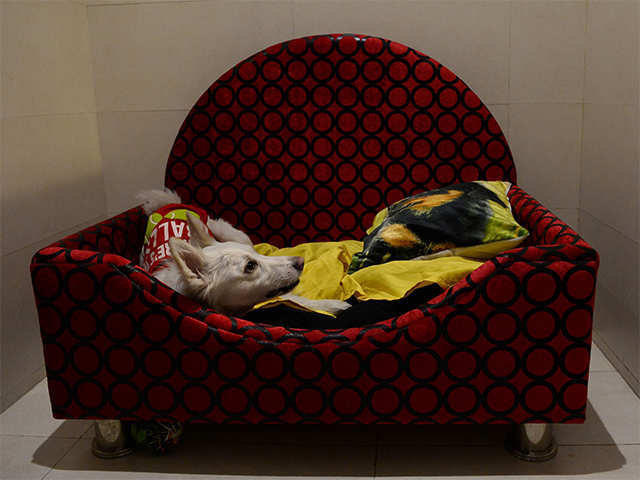
Velvet beds, a relaxing spa, 24-hour medical care and non-alcoholic beers imported from Belgium: the life of a pampered pooch in India would leave many humans envious.
Critterati, which claims to be South Asia's first luxury hotel for dogs, offers suites at up to Rs 4,500 a night for pets whose "parents" will spare no expense to indulge their pride and joy.
1/8
AFP

Whole new world

Whole new world

A world away from the daily struggle to survive for India's estimated 30 million strays, breeds such as St Bernards, Labradors and Lhasa Apsos can now enjoy the last word in canine coddling.
2/8
AFP

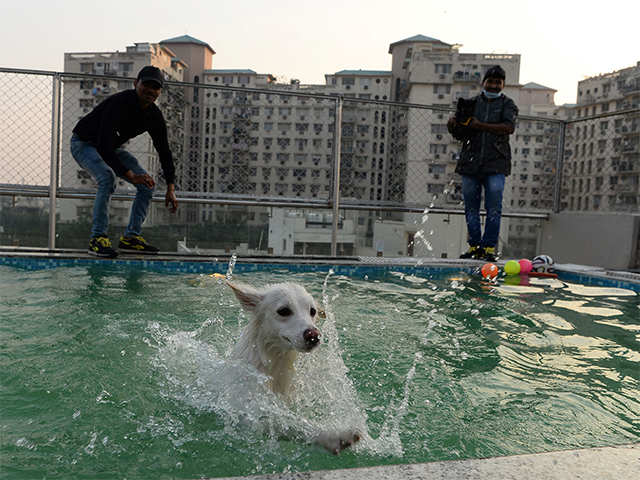
Make a splash

Make a splash

Chief executive Deepak Chawla opened Critterati in the New Delhi satellite city of Gurgaon to offer the wealthy an alternative to more down-at-heel facilities in India.
"No decent dog owner would want his dog to stay in those places," he said.
3/8
AFP

Living life kingsize

Living life kingsize

The facility is riding a wave of growing love for pets as the Asian giant's economy hits new heights. The number of household dogs in India has risen from two million in 2002 to an estimated 15 million in 2016 -- and is forecast to hit 26 million by 2021.
4/8
AFP

What are the amenities?

What are the amenities?

The top-of-the range Critterati suite offers a giant bed with velvet headboard, television and private dog-flap leading onto a balcony.
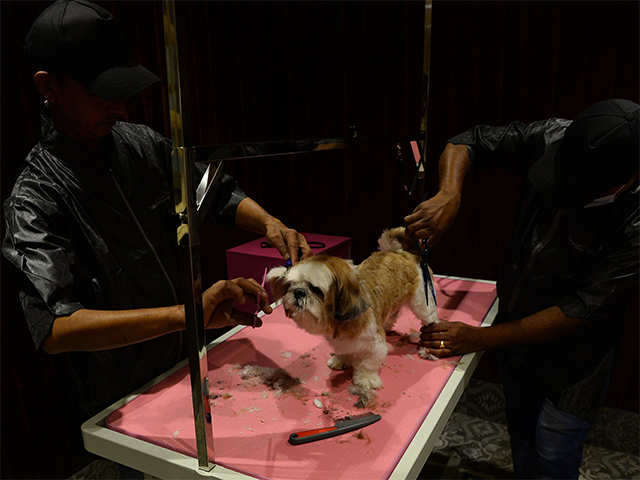
There is a swimming pool, a spa with ayurvedic massage oils and a vet on 24-hour call, while a medical unit with operating theatre is being built.
5/8
AFP

There's even a cafe

A dog cafe serves rice and chicken and the menu also features muffins, pancakes and ice-cream -- with bacon and vanilla a particular favourite -- all washed down with non-alcoholic dog beer from Belgium.
6/8
AFP
Busy day

Busy day

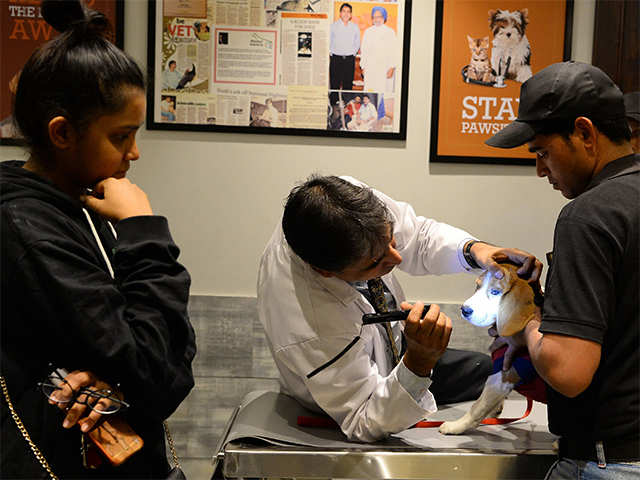
Chawla says in standard kennels animals can be left alone for long hours.
"Here things are quite different," he declared. "It starts from 7.00 am with potty breaks, then breakfast, then again a potty break, then play sessions for around two hours, then swimming sessions, then again play sessions, plus time in the café."
7/8
AFP

Perfect bath

Perfect bath

Ashish Arora, a hotel chain executive, says he has no qualms about indulging Rubo the Labrador.
"He loves coconut water and vitamin water. He tells me he wants to eat chicken, so he eats it every day," said Arora.
"I keep spending quite a bit. I don't mind, it is like you are spending on a child."

Blood pressure starts dropping 14 years before death

Blood pressure starts dropping 14 years before death
IANS|
Dec 05, 2017, 07.06 PM IST

NEW YORK: Doctors have long known that in the average person, blood pressure rises from childhood to middle age, but a new study warns that in the elderly, blood pressure gradually begins to decrease about 14 years before death. 


The study that looked at the electronic medical records of 46,634 British citizens who had died at age 60 or older showed that blood pressure declines were present not only in those with hypertension but also in those who were not diagnosed with the condition. 


The findings, published in the Journal of the American Medical Association Internal Medicine, however, do not suggest that hypertension should not be treated in late life or that those diagnosed with hypertension should stop their blood pressure 
medications. 
Always keep a blood pressure monitor, glucose meter, and a weighing scale at home.
"Our work highlights the importance of conducting research evaluating older patients like those seen in physician practices everywhere," said one of the study authors George Kuchel from the University of Connecticut in the US. 

The researchers found blood pressure declines were steepest in patients with dementia, heart failure, late-in-life weight loss, and those who had high blood pressure to begin with. But long-term declines also occurred without the presence of any of these diagnoses 
The findings should make both doctors and researchers carefully consider what dropping blood pressure really means for older patients, Kuchel said. 

More research is needed to figure out why blood pressure declines in the elderly in this way. 

"Observational studies such as ours need to be followed by rigorous clinical trials in order to guide clinical care guidelines," Kuchel said. 
In most people with high BP, no specific single cause for the hypertension can be identified.


Beautiful lines to ponder..

Image result for pic of going back in timeImage result for pic of going back in time
Sometimes I feel I want to go back in times...
Not to change things,
but to feel a
couple of things twice...

Sometimes I wish I was a baby for a while...
Not to be walked in the pram
but to see my
mother's smile...

Sometimes I wish I cud go back to school...
Not to become a child,
but to learn how to be cool...

Sometimes I wish I could be back in the university...
Not to be a rebel but,
to understand what I study...

Sometimes I wish I was a fresher at my work...
Not to do less work but,
to recall the joy of the
first pay cheque...


Sometimes I wish I could marry again all over...
Not to change
the partner but,
to understand the
ceremony better...

Sometimes I wish my kids were younger...
Not because they grew fast but, to play with them
a bit more...

Sometimes I feel I still had some more time to live...
Not to have a longer life but,
to know what I could give...

Never can the times
come back that are gone...

Let's enjoy all the moments as we live...

Contributed by Navneet Singhal thru FB


These 100 stocks are set to fall, show MACD Charts

By 
Rahul Oberoi
, ETMarkets.com|
Updated: Dec 05, 2017, 04.16 PM IST

Some of these counters have been witnessing strong volumes, adding further credibility to the emerging trend.
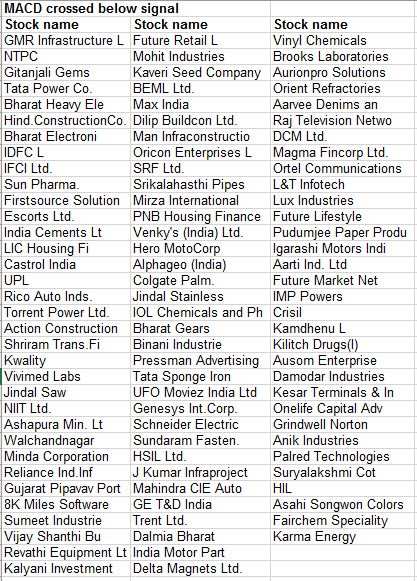
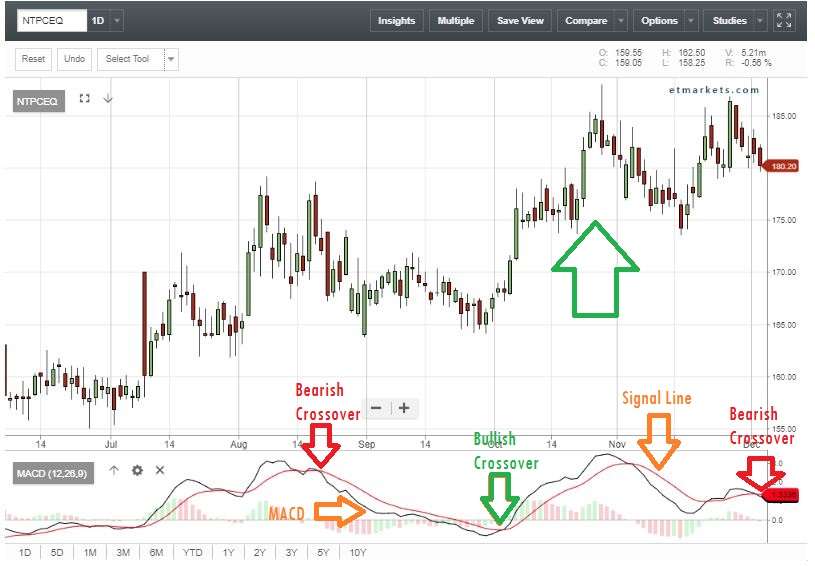
When MACD crossed below the signal line, it gives a bearish signal on the charts, indicating that the price of the security may experience a downward movement, and vice versa. 

These 100 stocks are set to fall, show MACD charts
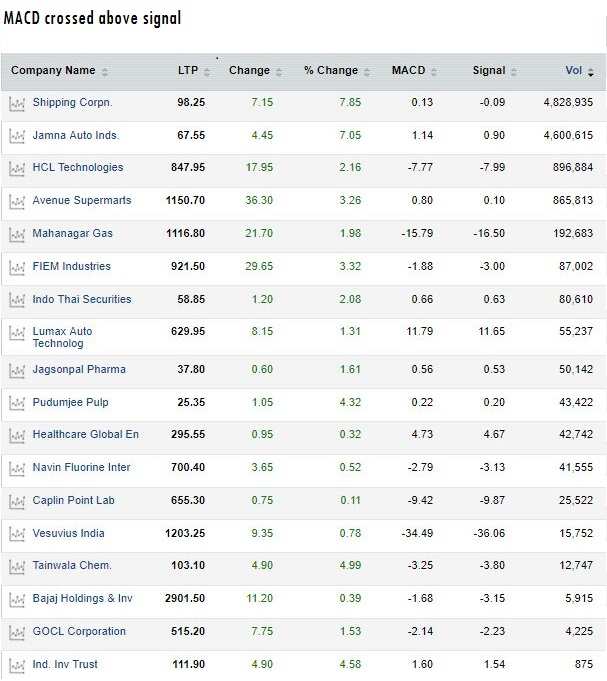
Meanwhile, MACD charts also showed 18 stocks that witnessed bullish crossovers on NSE, giving a ‘buy’ signal. 
These 100 stocks are set to fall, show MACD charts
Understanding MACD

Military meddling: Is Pakistan army chief under siege from former & serving colleagues?

By 
G Parthasarathy
, ET CONTRIBUTORS|
Updated: Dec 05, 2017, 01.36 AM IST

With Zardari & Nawaz weakened, the army can help form a weak coalition govt led by Imran Khan.
As the time for general elections in Pakistan, scheduled for 2018 approaches, it’s the army, more than the political parties, which is positioning itself to see that a government of its choice assumes office, after the elections. Nawaz Sharif, the only Pakistani politician, who has a strong enough political base in the country and particularly in Punjab, has been debarred from elections, by the higher judiciary, which held Sharif guilty on charges of unaccounted earnings 

The team appointed by the judiciary to investigate the charges against Sharif strangely included military intelligence officials, with no investigative experience. With Asif Zardari also facing corruption allegations, the only other national party, the PPP, is feeling the heat in its only remaining stronghold in Sind. It has lost its influence almost irreparably in Punjab, from where over 60% of Parliamentarians are elected. Two major political developments occurred in Pakistan this month, which have a bearing on the coming general elections. The first was in Karachi, where a serving Army Major General,Mohammed Saeed, stitched together a controversial political deal between the mass-based, but divided MQM and a breakaway faction, the “Pakistan Sarzameen Party.” This deal seeks to undermine the London based MQM Supremo Altaf Hussain, who was once himself an army protégé. 

Musharraf, a Karachi Muhajir, has long been interested in leading such an alliance. With the two national parties, the Zardari-led PPP and the Nawaz-led PML (N) weakened and divided, the army can get together a weak, fractious and pliable coalition, led by its long-time protégé Imran Khan and his Tehriq e Insaf Party, installed in power in Islamabad. This would perfectly fulfil the Army’s quest for absolute power, without any constitutional responsibility! The recent siege of the capital Islamabad, ostensibly to protest against the amendment of an electoral law, by a group of Bareilvi protesters, clearly dovetails into these ambitions of the army. The Bareilvis in Pakistan, who constitute 60% of its population, lack the financial clout of Saudi-funded Deobandis. 
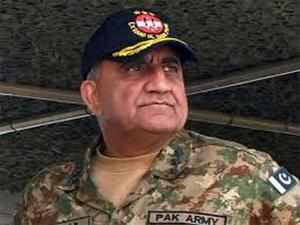
Ideologically, the Bareilvis have strengthened their base by their strident denunciations of Qadiani/Ahmadi Muslims, as heretics and by backing the assassin of former Punjab Governor Salman Taseer. The incompetent civilian government headed by stand-in Prime Minister Shahid Khaqan Abbasi was unable to control the Bareilvi demonstrations in the capital and elsewhere. The government asked the army for assistance - a request, which was turned down Army Chief General Qamar Javed Bajwa. Worse still, the government agreed to Bajwa’s“advice” that it should meet the demands of the demonstrators and sack law minister Zahid Hamid. This followed an agreement signed by a serving army officer, Major General Faiz Hameed, acting as a ‘mediator,” with the demonstrators. 

This abject surrender to an unruly mob infuriated the Islamabad High Court, which had ordered a crackdown on the demonstrators. Justice Shaukat Aziz Siddiqui observed that the army, which is required to act in aid of the civilian government, when asked to do so, had clearly overstepped its constitutional authority and role, by becoming a mediator between the civilian government and the demonstrators. Predictably, the ecstatic demonstrators were overjoyed and showered praise on the army!! Media and public reaction at the incompetence of Abbasi government was furious. The Express Tribune observed in an Editorial: “The deal between the State, both civilian and military facets of it, and the Faizabad protesters, is a devastating blow to the legitimacy and moral standing of the government and all state institutions”. 

There are also questions about the motivations of Army Chief General Bajwa, in this abject surrender. The protestors had opposed an amendment to the electoral legislation moved by the law minister, as it was felt that the amendment would weaken constitutional provisions declaring Qadianis as ‘non-Muslims”. 

Gifts received on marriage are not income and need not to be reported in the tax return The monetary gifts received by an individual on the occasion of his/her marriage would not be treated as taxable income in his/her hands

Photo: iStock
For purposes of record keeping, are entries in a diary proof enough or do we need to do some other form of record keeping?
—Sunita Singh
The monetary gifts received by an individual on the occasion of his/her marriage would not be treated as taxable income in his/her hands. On a conservative basis, it would be advisable to document the gift (for example: a legal document such as a gift deed especially when the individual gift amount is large) and place such document in your records. Any cash gifts received may also be documented (with details such as names of persons who have gifted the sum, and quantum), on a conservative basis. As the same may be sought by the tax authority in case questions arise. The total value of gifts received on the occasion of marriage are per se not income under section 56(2)(x) and hence not to be reported in the tax return as exempt income. There are schedules in the income tax return form that require details of exempt income to be disclosed. The nature of the exempt income is prescribed as interest, dividend etcetera and there is also a residual clause on other exempt income. Any transaction that is not income at the outset may technically not be required to be disclosed in the exempt income schedule.
I was unable to file my tax return for the financial year 2016-17 by the due date as I had to travel abroad for 3-4 months. My tax status is still resident. My tax liability last year was Rs2.5 lakh. Please let me know if I should file the tax for it along with my next year’s return or do so immediately? Also, let me know how much penalty is due, and about any other formality I need to keep in mind while doing so.
—Gajendra Sharma
Any income you earned in FY 2016-17 ought to be reported as income in a tax return filed for FY 2016-17 and not in the next tax year.
Since you missed this extended deadline, you will need to file a belated tax return for FY 2016-17 and you can file the belated return any time on or before 31 March 2018.
If your tax liability was not paid in full either by way of tax withheld (TDS) or advance tax, you could be liable to interest on delayed payment of taxes under sections 234B (at 1% per month from April 2017 till the end of the month when tax is paid) and 234C (will depend on timing of payment of advance tax instalments and TDS) of the Income-tax Act, 1961. Also, you would be liable to pay interest on any unpaid taxes, under section 234A of the Act for delayed filing of the tax return for FY 2016-17 at 1% per month from August 2017 till the end of the month when tax is paid. If you qualified as an ‘Ordinary Tax Resident’ and you held assets outside India (for example foreign bank account), such foreign assets will need to be reported in the tax return filed by you and any income earned outside India/from assets outside India will also need to be offered to tax in India. If you fail to file your FY 2016-17 tax return on or before 31 March 2018, the tax authorities may at their discretion levy a penalty of Rs5,000. Further, if you had incurred any losses on sale of capital assets etcetera, you may not be allowed to carry the same forward for set off against future income.
I had made some fixed deposits last year for 1 year each. On its interest, TDS was deducted. If the period of investment had been 2 or 3 years, would TDS still be deducted at the end of each year or only after that particular fixed deposit matures? Is it mandatory to pay tax every time my deposits mature or can I pay tax when I finally break the auto-reinvest cycle and redeem my investment?
—Anshul Rahstogi
The interest earned by a taxpayer from fixed deposits is fully taxable either in the fiscal year (FY) in which the interest accrues or the FY in which the interest is received (that is, when the fixed deposit matures), depending on the method of accounting regularly followed/adopted by the taxpayer. Further, irrespective of the period of investment, TDS is typically deducted by the bank at 10% on interest accrued in each FY, where such interest accrued exceeds Rs10,000 per FY. The bank remits and reports such TDS to the tax authority and you can check the details of such tax withheld in your Form 26AS.
You can claim credit for the TDS withheld by your banker in the FY in which you offer the interest income to tax (i.e. either the tax years of accrual or the tax year of maturity).
However, in case you wish to offer the interest income to tax only in the FY in which the FD matures (cash system of accounting), you will need to ensure that you have sought a carry forward of the TDS in each of the tax returns filed by you for FYs in which your banker has withheld TDS on such interest. The details of TDS will need to be reported in each FY in your tax return form and you will need to specify the amount of TDS carried forward and brought forward (as the case may be) appropriately, (Part C of point 19-Tax Payments) in each tax return form filed by you.
Parizad Sirwalla is partner (tax), KPMG.
Queries and views at mintmoney@livemint.com

Bollywood's ultimate charmer Shashi Kapoor leaves legacy of decency and elegance Shashi Kapoor, 79, passed away in Mumbai after a prolonged illness on Monday.

Image result for pic of shashi kapoorImage result for pic of shashi kapoor
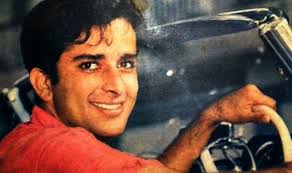
With those copybook good looks and that rakish smile, he was the stuff of teen crushes that evolved into wistful nostalgia as the years rolled by.
Shashi Kapoor, 79, when he passed away in Mumbai after a prolonged illness today, will be remembered for his many commercial films, his commitment to quality cinema when he turned filmmaker but also as the man who embodied ageless elegance.
"He was god's good man. He was such a beautiful human being beyond anything else," director Shyam Benegal, who worked with the late actor in "Kalyug" and "Junoon", told PTI.
Shashi Kapoor was also effortlessly charming, whether at 25 when he was dancing around trees or at 65 when age and the famous Kapoor weight had slowed him down.
The fame was destined, the legacy of quiet dignity the result of retaining a certain humility despite a lifetime under the harsh arclights.
He was born an unprepossessing Balbirraj on March 18, 1938 in what was then Calcutta to Rama Devi and Prithviraj Kapoor, the son of a legendary actor who went on to complete the famed Kapoor trinity with his older brothers Raj and Shammi.
The tryst with cinema started in 1961 with Yash Chopra's "Dharmputra". The next two-and-half decades saw a dizzying line-up of films, some good, like "Kabhi Kabhie" and "New Delhi Times", others like "Fakira" and "Ghar Ek Mandir" eminently forgettable, even embarrassing.
But Shashi Kapoor was not just a star, one more in an ensemble cast in the multi-starrers that were the vogue in the 1980s or another face in a brain dead Bollywood melodrama. He straddled two worlds with his partnership with James Ivory and Ismail Merchant resulting in films like "The Householder", "Shakespearewallah" and "Heat and Dust" early in his career.
The real turnaround came in 1980 when he started his own company Film Vala, diverting some of the money he had made in Bollywood into making films with the likes of Benegal and Aparna Sen. The partnership resulted in gems like "36 Chowringhee Lane", which saw his wife, veteran theatre actor Jennifer Kendal, as an aging teacher in a changing world, "Junoon", "Vijeta", "Utsav" and "Kalyug".
Shashi Kapoor himself acted in several of these films - his roles as an obsessive suitor in "Junoon" set in 1857, as the brooding husband and father in "Vijeta" and as the suave, conflicted Karan in "Kalyug", a modern-day adaptation of the Mahabharata, see the actor deliver some of his career's finest performances.
But Shashi Kapoor was more than just an actor, an inheritor of the Kapoor family legacy of showbiz and style or a filmmaker with undeniable class.
He was the star with no starry airs, the man who stayed steadfastly loyal to his wife through more than 25 years of marriage with scarcely a hint of scandal and the ultimate hero who always had a kind word for his fans.
Which other actor, in his hey day in the 1980s, would not just smile when a bunch of giggly, starry-eyed teens barge into his hotel room, but also welcome them in, take time to talk to them individually and leave them to handle things while he went into the next room for an interview.
That he maintained a relationship with the group -- among them this correspondent -- through his three days in Delhi, inviting them to watch a shoot and taking time off to talk to them is the stuff of true greatness.
He stood apart from his peers, part of the rat race and yet not part of it.
And then, with his wife's death in 1984 it was as if the very life had begun ebbing away from him too. The weight started piling and the roles started dwindling.
Shashi Kapoor began fading away from the headlines.
He appeared in few films, as the corpulent Urdu poet Noor in Ismail Merchant's "In Custody" in 1993 and as a narrator in "Jinnah" some years after that. He also revived his father's Prithvi Theatre, a job now taken over by his daughter Sanjana.
The sons, Kunal and Karan, tried dabbling in films and then stood respectfully away when they realised it was not for them.
Ill health felled Shashi Kapoor and when he was awarded the Dadasaheb Phalke award in 2015, he was too unwell to travel to New Delhi to get it. It was 17 years after he retired into the quiet shadows. Union minister Arun Jaitley went to Mumbai to honour him.
But the old charm still lingered, the silver hair that refused to be dyed adding to that grace and somewhere still that old charisma.
Bollywood's ultimate charmer has gone, leaving a legacy of decency and elegance that may find few followers in the film industry of today.
moneycontrol.com