Pages

Saturday, January 6, 2018

Here's why one should not fall for guaranteed life insurance plans

innnsurre-think
By Sunil Dhawan
Life insurance companies rule the roost in the last few months of the tax saving season. The flavours of the season are traditional life insurance policies -- endowments and money-back, for instance -- with guarantees thrown in. In a falling interest rate scenario, such guarantee works as a bait to entice those looking at life insurance for tax benefits. 

Guaranteed life insurance plans are the mainstay of almost all insurance companies. In such plans, instead of declaring bonus, which can vary depending on the profits that the insurers make, insurers declare a 'guaranteed addition' (GA) or 'guaranteed return' in lieu of bonus. On the face of it, such plans appear attractive with lots of guarantees thrown in at different stages of the policy. After all, the maturity amount is guaranteed and so are the monthly payouts. 

What are the guarantees? 
Do not be surprised if such plans boast of guaranteed addition of 7-9 per cent of premium per annum or guaranteed payouts of 126-138 per cent of the annual premium each year. Looking at these figures, who would not fall for such guarantees? 

1212
Some of the plans as shown in the table above may have been discontinued for fresh buying by the insurer. 
What are the actual returns? 
The guaranteed addition is not equivalent to the actual annualised return. These guaranteed benefits accrue only on maturity and hence the actual return will not be what is perceived or told to the customer. Guarantee always comes at a cost, therefore, the returns, after adjusting for the costs because of the guarantee, are low in such plans. 


Although actual returns would depend on one's age, term and premium amount, the average IRR (internal rate of return) in most traditional plans, including money-back, endowments, lie between 4 and 6 per cent per annum. The plans with guarantees would carry even lower returns. 

An example 
Let's see how a typical guaranteed plan works. Assuming there's a guaranteed plan for a 10-year term, but with a premium paying eight-year term. The plan offers guaranteed payout of 150 per cent of premium every year after maturity of 8 years. 

It means that the premium is to be paid for 8 years, but life cover will run for 10 years. After maturity, payouts will happen for the next 8 years. Illustratively, if the premium is Rs 20,000, it has to be paid for the initial 8 years. Thereafter, from 10th till the 17th year, there will be annual payout of Rs 30,000. The IRR in the above plan comes to 2.9 per cent per annum! 


Types of guarantees 
The structure of the guaranteed plans is not the same across insurers. Some may offer a guaranteed return based on the premium, while others on the sum assured. The guarantee may also differ based on the term of the policy or even the premium paying term. Also, in some plans, the guaranteed returns get added to the policy from the second year onwards, while in some, it may start at a later date. 

Some of these plans are similar to money-back plans wherein there is regular flow of income at regular intervals, while in some, there could be a lump sum payment on maturity. Further, in a few of them, payouts happen after maturity for a certain number of years. 


Guaranteed traditional plans gets complex 
The sales pitch could be anything, but hidden beneath the complex wordings of insurance plans is the payout structure. The traditional life insurance, representing the endowments and the money-back kind of policies, has undergone a sea change. The terms and conditions of the payout are so convoluted that comprehending it may not be an easy task for many. 

Sample this: The premium, for a specific age and sum assured (SA), is paid for a limited period (say, 5 years) while the term of the plan is 15 years. Based on the above parameters, the insurer will calculate a guaranteed maturity value and depending on that, will start paying a certain percentage of it as guaranteed cash amount starting the non-premium payment period (from the 6th year) till the end of the term. 

Similarly, there could be a guaranteed plan in which every 5th year, 125 per cent of premium is paid out, while the GA is added to policy each year, to be had on maturity along with SA (less amount paid every fifth year). In few other guarantee plans, the payout could be entirely on maturity, including GA and SA. 

Unlike in the past when they were simple and straightforward to understand, the newer versions have lots of twists and turns in them. With guarantees thrown in, such plans may appear attractive, but the actual return in them is around 5 per cent per annum, or even lower. 

Conclusion 
Buying life insurance merely to save tax could be financially damaging. Traditional plans are inflexible and lock in funds for 15-30 years with a return of 5 per cent. Stay away from traditional insurance plans, with or without the inbuilt guarantees. Rather, meet your protection need through a pure term insurance plan and park your savings in Public Provident Fund (PPF) or Equity Linked Savings Scheme (ELSS) for meeting long-term goals, while keeping the tax liability at bay. 

APPRECIATE THE "BRAKES' IN YOUR LIFE.USE THEM WISELY

Image result for PIC OF CAR
Once in a physics class, the teacher asked the students, “Why do we have brakes in a car?”
Varied answers were received:
“To stop”
“To reduce speed”
“To avoid collision” etc.,
But the best answer was,
“To enable you to drive faster”
Give it a thought.
For a moment assume you have no brakes in your car then how fast will you drive your car?
It’s because of brakes that we can dare to accelerate, dare to go fast and reach destinations we desire.

At various points in life, we find our parents, teachers, mentors & friends etc. questioning our progress, direction or decision. We consider them as irritants or consider such inquiries as “brakes” to our ongoing work.

But, remember, it’s because of such questions (periodical brakes) that you have managed to reach where you are today. Without brakes, you could have skid, lost direction or met with an unfortunate accident.
Appreciate the “brakes” in your life. Use them wisely! 😊 😊


Friday, January 5, 2018

News Live: North Korea agrees to talks after US, South Korea postpone military drills

North Korea agreed on Friday to hold official talks with the South Korea next week, the first in more than two years, hours after the United States and South Korea delayed a military exercise amid a standoff over the North’s nuclear and missile programmes.

South Korea said the North had sent its consent for the talks to be held on Tuesday. The last time the two Koreas engaged in official talks was in December 2015.
The meeting will take place at the border truce village of Panmunjom where officials from both sides are expected to discuss the Winter Olympics, to be held in the South next month, and other inter-Korean relations, South Korean Unification Ministry spokesman Baik Tae-hyun told reporters. North Korea asked for further negotiations about the meeting to be carried out via documented exchanges, Baik said.

You can’t stop people from falling in love

Sanjoy Sachdev’s Love Commandos is a perennially cash-strapped national network of volunteers who say they have helped around 50,000 interfaith and intercaste lovers in distress

Sanjoy Sachdev’s Love Commandos protects couples from harassment and honour killings. Photo: Pradeep Gaur/Mint
On the phone, Sanjoy Sachdev, 57, always sounds like he’s in the middle of some cloak-and-dagger activity. “Can I call you tomorrow? There’s a rescue operation happening now.” When we finally meet at the Delhi Press Club, he is bleary-eyed because he hasn’t slept the previous night. “Sometimes we go six nights like this,” says the founder and chairman of Love Commandos, a perennially cash-strapped national network of volunteers who say they have helped around 50,000 interfaith and intercaste lovers in distress since the organization was set up in 2010.
Former tennis star Björn Borg became their single biggest donor after he wrote them two cheques of 50,000 Swedish Kronas (around Rs3.9 lakh now) each in 2013-2014. “He heard about us from international media reports and then his company sent a team to verify our existence and work,” says Sachdev. After an hour of listening to him, I’m ready to sign over my fortune to the cause of love.
The night before I met Sachdev, five of his volunteers whisked away a woman whose father, a goldsmith, was taking her by train to a famous Shiva temple in Ujjain to pray that she would see the folly of her ways. He was angry that she had fallen in love with her upper-caste friend who ran a chain of coaching classes for Indian Administrative Services (IAS) aspirants. “She stood at the door of the compartment at Agra and the operation was over in minutes,” Sachdev says. “Today they are getting married.”
Love Commandos helps lovers elope, protects them from violence, provides them a safe place to stay for as long as they need it and even organizes their marriage. It has 450-plus makeshift shelters throughout India run by volunteers where couples can hide for a few days before fleeing from the area in which they reside.
Why didn’t you help Hadiya, I ask, referring to the Kerala medical student who converted to Islam and married the man she loved. In May, the Kerala high court annulled the marriage saying that Hadiya had been indoctrinated. The Supreme Court will rule on the annulment next month.
“If any of them had called us, we would have helped them legally. If they had needed shelter we would have provided it. We have high hopes in the Supreme Court. Our judiciary has broadly given good judgements,” he says, quoting two specific cases of the highest court.
The first was in 2007 when the division bench of justices A.K. Sikri and Ashok Bhushan reversed the ruling of a lower court that had found a man guilty of murdering his intercaste lover. The justices noted that the couple were in love and that the woman’s family hadn’t given them permission to marry. It seemed plausible that the couple had decided to commit suicide. “Such a reaction on the part of a girl to sacrifice her love and accept a decision of her parents, even though unwillingly, is a common phenomenon in this country,” the court said.
The second case was in 2011 when justices Markandey Katju and Gyan Sudha Misra said that since the petitioner was a major she was free to marry or live with anyone she liked. They said intercaste marriages were in the national interest as they would aid in destroying the caste system. “If the parents of the boy or girl do not approve of such inter-caste or inter-religious marriage the maximum they can do is that they can cut off social relations...but they cannot give threats or commit or instigate acts of violence and cannot harass the person...,” they added, directing local administration and the police to help such couples.
Those who cry “love jihad” every time two people from different faiths decide to fall in love and get married or bring out their arsenal when lovers cross the caste barrier have clearly never read this judgement. The term love jihad irritates Sachdev, but he says no political party has any agenda for the protection of lovers’ rights.
Before the 2014 general election, Love Commandos wrote to all political parties asking them to clarify their stand on love. Not one replied.
All parties are the same, Sachdev reiterates, though last year was not an easy one for young people in love. “Fundamentalists tried to create fear in the minds of lovers.”
One unexpected side effect of this was that, for the first time, couples were ready to do whatever it took to get married. “Previously, it was always the women who converted. In 2017, they were all ready to convert, depending on whichever was faster. Not one man said, ‘I won’t convert, let her’,” says Sachdev. Converting to a partner’s religion is often the easiest way to get married swiftly because the Special Marriage Act—which is meant to help interfaith couples—requires couples to give a notice period and issue a public announcement of the impending marriage in the area where one of the partners resides, a most unfeasible option if you are on the run.
Our conversation is constantly interrupted by phone calls. “Why do you need a lawyer? You said you respected their wish to get married...now what is the need for tension?” he asks a caller named Archana, the sister of a Jat girl who has fallen in love with a man from a different caste. The couple are hiding out with Love Commandos in Delhi. The girl believes her parents will kill her if she goes back home, Sachdev says.
Right now there are seven couples at their base shelter in Delhi, including Ravi Kant Meena and Uma Bharti, an intercaste couple from Rajasthan, both teachers, who have been on the run since they opposed their families and got married last February. Since then the couple have endured illegal confinement and physical violence at the hands of family.
Coincidentally, all the couples staying at the shelter when we meet are cases of intercaste love. In 2014, the India Human Development Survey, conducted by the National Council for Applied Economic Research and the University of Maryland, found that just 5% of Indian marriages were intercaste.
These love stories are a sad testament to the fact that we still don’t respect the basic right to choose one’s own life partner. “One day when the volcano erupts, young people will come out on the streets and all traditional political forces will be washed away,” he says.
“South India is as bad, the north just has a bad name,” says Sachdev, when I ask him which part of India opposes love the most. Now the war against love has spread to the North-East too,” he says, adding that the Love Commandos helplines have recently been getting calls from Assam and Meghalaya. “Who knows what new poison is spreading there?”
Never mind, Indian lovers will find its antidote.
Priya Ramani shares what’s making her feel angsty/agreeable.
She tweets @priyaramani

What is compounding and why it works

In compounded investments you earn interest on the interest too. This magnifies the return you can ear

Trump's new disruptive H-1B visa move can be a boon for India

ET Online|
Jan 04, 2018, 08.20 PM IST

Trump's new disruptive H-1B visa move can be a boon for India

NEW DELHI: More than 500,000 skilled Indian workers might have to come back from the U.S. if a proposal by the Trump administration not to extend H-1B visa of those waiting for permanent residency (Green Card) is implemented. The move would not only disrupt careers but also families. On top of that, India is already passing through a jobs crisis. 

The grim outlook, however, has a silver lining. 

While it will be a big loss for individuals, it could be a huge gain for the country. Just when India's new-age enterprise is taking off as innovative startups mushroom in all big cities and the government is keen to make doing business easier, the return of such a large number of Indian tech workers can give a big push to Indian business. 


Most of these workers are the brightest Indians who have passed out of elite Indian institutions. While Indians are proud of Sundar Pichai who heads Google and Satya Nadella who heads Microsoft, they are still American success stories. 

It's true that it is easier for bright Indians to make a mark in the U.S. given the right ecosystem and an overall helpful atmosphere. A Pichai or a Nadella won't have been as successful in India as they are in the US. But it is also true that India is changing. The startup sector has just taken off and the government has shown commitment to reforms, as reflected in India's jump of 30 spots in World Bank's Ease of Doing Business rankings. 

Of America's 87 unicorns— as startups valued at more than $1 billion are called—were founded or co-founded by Indian entrepreneurs, the highest among 44 by all immigrants. 26% of all startups in the US have been founded by Indians. 
If India gets back even a small part of such a huge pool of talent, there is bound to be a new rush of blood in India's business sector. Even if some of these people are working in India—innovators that they are—Indian business will get a big boost. 

That's why Anand Mahindra, Chairman of Mahindra Group, welcomes them. Responding to the news of changes in the H-1B rules that can led to return of these Indians, Mahindra tweeted a few days ago: "If that happens, then I say 'Swagatam Welcome Home.' You're coming back in time to help India Rise..." 

For long, India has lost it's best talent to the West in what has come to be called brain drain. Trump's decision can trigger a reverse brain drain. This could be an unintended benefit of an otherwise disruptive move. 

In the long term, the move can also help Indian information technology (IT) industry evolve beyond its labour-arbitrage model. From being called "body shoppers", Indian IT firms can turn into true innovators, something they can't do without in times when emerging technology is already roiling their business prospects. 


Thursday, January 4, 2018

IBBI bars insolvency professionals from outsourcing their responsibilities

By 
Saikat Das
, ET Bureau|
Jan 03, 2018, 10.46 PM IST

bankruptcy-bccl

The Insolvency and Bankruptcy Board of India (IBBI), tasked with providing the framework for loan-recovery proceedings in the country's stretched banking system, has highlighted operational loopholes that may prevent resolution professionals from meeting strict deadlines on viable revival plans. 

Insolvency professionals (IP), who have the most crucial role in helping recover potentially Rs 10 lakh crore now stuck in bad debt and non-performing assets, will now be barred from outsourcing their responsibilities. They must also be compliant with other related laws, IBBI said late Wednesday. 

"It is hereby directed that an insolvency resolution professional shall not outsource any of his duties and responsibilities under the Code," IBBI said in one of its circulars. "He shall not require any certificate from another person certifying the eligibility of a resolution applicant." 


In the past few weeks, select IPs issued advertisements for Expressions of Interest with a clause that requires a resolution applicant or an interested entity to obtain an official stamp from a chartered accountant, certifying its eligibility. 

Some IPs reportedly told prospective resolution applicants to submit a certificate from another person to the effect that they are eligible to be resolution applicants, IBBI said. 

It has also asked insolvency professionals to comply with other laws applicable to the entities they administer. 


Sebi begins refund process for 58 million PACL investors

A committee formed under Justice (Retd) R.M. Lodha for selling PACL properties will begin refunding the money so far realized from it, Sebi said

Wednesday, January 3, 2018

Trump administration considers proposal that may send back more than 500,000 Indian tech workers

usvisa_bccl

WASHINGTON: India may be looking at upwards of 500,000 of its "skilled" work force returning home from America if a proposal by the Trump administration not to extend H-1B visa of those waiting for permanent residency (Green Card) is implemented. 

The Department of Homeland Security is said to be considering new regulations that would prevent H-1B visa extensions as part of President Donald Trump's "Buy American, Hire American" initiative promised during the 2016 campaign 


Under current law, foreign guest workers are allowed one three-year extension of the H-1B visa of three-year validity. If at the end of those six years the guest worker has a pending Green Card (Permanent Residency) application, then there is an almost indefinite extension of the H-1B visa till such time the applicant's Green Card processing is completed. 

Because there is such a huge backlog of Green Card applicants, particularly for countries such as India and China, of thousands of workers from these countries spend 10-12 years in what is mirthlessly called H-1B hell or limbo. The small 'comfort' they currently have is they can remain in the US while the Green Card is being processed. 


The Trump administration is considering ending that concession. If an H-1B visa holder has applied for a Green Card at the end of his six-years then he or she will have to exit the United States till the processing is complete. 

Technically, the Trump administration is correct and well within the law to amend the rules because the H-1B was meant to address skilled worker shortage in the US, and not intended to become a route for immigration. 

But over the years, hundreds of thousands of skilled foreign workers, particularly Indians and Chinese have used the H-1B route to first become permanent residents (Green Card holders) and then become citizens. 

They include some of the most storied names in the US tech industry, including Satya Nadella and Sundar Pichai, India-born head honchos of Microsoft and Google respectively, and because they added such immense value to the US tech industry, the whole visa category has generally been looked at favorable by both the tech industry and previous administrations. 

However, in the run-up to the 2016 Presidential elections, nativist American tech workers who felt short-changed by the influx of foreign workers managed to convince the Trump campaign that there is no shortage of American tech workers and the H-1B inflow was part of the US tech industry's tactics to keep wages low. 

Tuesday, January 2, 2018

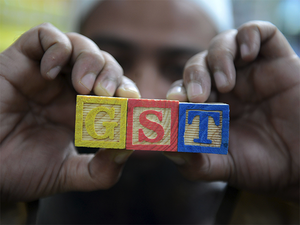
Government notifies 1 per cent GST for manufacturers under composition scheme

GST-AFP

The government has notified lower 1 per cent GST rates for manufacturers who have opted for composition scheme as well as easier norms for traders opting for it. 

The finance ministry has notified the changes decided by the GST Council, chaired by Union Finance Minister Arun Jaitley and comprising state counterparts, in November 2017. 

The notification stipulates that manufacturers who have opted for composition scheme will now have to pay 1 per cent Goods and Services Tax (GST) as against 2 per cent earlier. 


Besides, traders opting for composition scheme would now have to pay the tax at 1 per cent on their turnover of taxable supplies. So far, they were paying GST on total turnover, which included turnover from exempt supplies like fruits, vegetables. 

Over 15 lakh businesses opted for composition scheme, which allows them to pay taxes at a concessional rate and makes compliance easy under the Goods and Services Tax (GST) which rolled out from July 1. There are over 90 lakh businesses registered under GST. 

While a regular taxpayer has to pay taxes on a monthly basis, a composition supplier is required to file only one return and pay taxes on a quarterly basis. 

Also, a composition taxpayer is not required to keep detailed records that a normal taxpayer is supposed to maintain. 

Composition scheme is open for manufacturers, restaurants and traders whose turnover does not exceed Rs 1.5 crore. 

The Council in its November meeting increased the threshold for composition scheme to Rs 1.5 crore and also decided to amend the GST law to raise the statutory threshold to Rs 2 crore. 

EY India Tax Partner Abhishek Jain said this will make the composition scheme under GST more attractive. 


Tourist entry at Taj Mahal to be capped at 40K daily, for max 3 hours'

taj-mahal-agencies

The Archaeological Survey of India is likely to restrict the number of tourists visiting the Taj Mahal to 40,000 daily, and put a three-hour cap on each ticket holder to tour the 17th-century Mughal monument in a bid to preserve the heritage site, a source in the culture ministry told PTI. 

Culture Secretary Ravindra Singh held a high-level meeting today with ASI officials and representatives of Agra district administration and officers of the Central Industrial Security Force, where the decision was taken. 


Ministry officials said that the sale of tickets - both online and offline - will be stopped at the 40,000 mark. 

As of now, there is no restriction on the number of people entering the iconic monument complex at any point of time. The average footfall at the monument has increased at a rate of 10-15 per cent per annum. 

Many times, during peak tourist season and other occasions, the number of tourists inside the complex crosses 60,000 to 70,000 per day. 

The ASI is also likely to introduce a system to issue "zero-value" tickets to children below the age of 15 years, enabling them to keep a count of the number of such visitors, whose entry will remain free 
The ASI had in 2012 commissioned the National Environmental Engineering and Research Institute (NEERI) to prepare a report on the monument's load-bearing capacity. 

The decision to limit the number of visitors has been based on the final recommendation in the report submitted by NEERI, the officials said. 

The Taj Mahal is considered one of the finest specimen of the Mughal architecture. In 1983, it became a UNESCO World Heritage Site and was cited as "the jewel of  Muslim art in India and one of the universally admired masterpieces of the world's heritage." 


HUSBAND OF THE YEAR AWARD

Image may contain: 3 people

WIFE OF THE YEAR 2017 -MOST HILARIOUS

Image may contain: 3 people, people sitting

Monday, January 1, 2018

Costa Rica plane crash kills 12, including 10 US citizens

Untitled-6

Reuters|
Jan 01, 2018, 09.18 AM IST


SAN JOSE: A plane crash in Costa Rica on Sunday killed 10 U.S. citizens and two local pilots, the Costa Rican government said. 

The cause of the crash was not yet known, the country's security ministry said. It took place in the mountainous area of Punta Islita, which is popular with tourists, in the province of Guanacaste, about 230 km (140 miles) west of the capital of San Jose. 

Enio Cubillo, director of Costa Rica's civil aviation agency, told local media that the deceased included 10 foreign tourists and two Costa Rican pilots for the aircraft, which was operated by local company Nature Air. 


Nature Air could not immediately be reached for comment. 

Laura Chinchilla, who was president of Costa Rica from 2010 to 2014, said on Twitter that her cousin, one of the crew members, had died in the accident. 

"There are no people alive," Security Minister Gustavo Mata said, adding that autopsies would be needed to confirm the total number and identities of victims because their remains were badly burned. Punta Islita, on Costa Rica's Pacific Coast, is popular among North American and European tourists for its pristine beaches and lush landscape. 


WISHING YOU ALL A HAPPY NEW YEAR 2018

Image result for happy new year 2018 greetings pic