Pages

Saturday, January 13, 2018

BIG EXPOSE: Anti-Modi Gang And Congress Orchestrated Supreme Court Judges War Against PM Modi

It is Alleged that this is all done to destabilise the government and as the issue of Ram Mandir looks like to be resolved soon, This could be an attempt stop that decision coming. 1. Two days back, CJI Dipak Misra ordered a special investigation team (SIT) to reopen 1984 Sikh riots cases and investigate 186 cases related to it.
.
2. Last month, CJI Dipak Misra slammed Kapil Sibal when he asked to postpone the judgement of Ram Janmbhumi case after July 2019.
.
3. Justice Dipak Misra is leading the bench which will pass judgement on Rama-janmabhumi case.
.
4. The judges collegium, everyone knows is a part of the "ecosystem" created over the last 7 decades and has always thwarted efforts to let "outsiders"come in the circle. It was this collegium which Modi Government wanted to dismantle through NJAC and wanted that people's representatives should have a say in Judges appointment. The entire Judiciary ably supported by Congress derailed the entire activity and refused to comply.
.
5. Well, the campaign against Dipak Misra, maligning the CJI (a constitutional post) baselessly and asking his impeachment a day after he ordered reopening of Sikh riots case and is set to pass judgement on Rama-janmabhumi case shows the power of ecosystem.
.
As retired SC Judge RS Sodhi said, "These four judges have formed a union. There are 23 other judges as well. This trade unionism to malign the office of CJI is immature and uncalled for. These 4 judges have no right to sit in the highest court and must be impeached." I agree with Justice Sodhi.

Via: Kshitij Mohan Singh
P.S.: The Congress Ecosystem is in Universities, Bureaucracy, Judiciary and every where you can imagine in this country. We have only the people's support to dismantle the ecosystem and the filth called Congress which considers this Country it's inherent property because they have developed that ecosystem which provides it oxygen, day in and day out.

INDIANPOLITICS.CO.IN

*KILLER ENGLISH by TEACHERS*

Image result for pic of an indian village school teacher
*PT Teacher*: You three of you, stand together separately.
*Geography Teacher*: Will you hang that map or else I'll hang myself.
*Principal*: Tomorrow call your parents, especially Mother and Father.
And the terrific one:
*English Teacher*: Why are you looking at the monkeys outside when I'm in the class!

How Rahul Gandhi defaming India from foreign land? Engage the world, don't criticise India: Farooq Abdullah on Rahul's speech in Bahrain.Why Rahul Gandhi so desperate to get power at the centre that he starts speaking against his own country.Congress is still not satisfied by its loot of countrymen money over six decades.

Farooq Abdullah

Adding to the voices back home that Rahul Gandhi's statements in Bahrain against the Modi administration's policies were irresponsible, National Conference president Dr Farooq Abdullah said that when abroad, leaders should focus on "building strength" irrespective of what the "views" of a political party is.
Speaking to India Today at the PIO Parliamentarian Conference that was held in New Delhi on Tuesday he said, "Party has its own views. They have very strong views as far as demonetisation is concerned or GDP is concerned. In a foreign country we speak for India and for the future of India. That we should not forget. It is the strength that we have to build, even if mistakes have been made here, those mistakes should be left here."
Dr Abdullah also praised the effort made by the opposition party to engage the world. Reminiscing how Congress always cultivated relations since Nehru's times, he welcomed Rahul Gandhi's start to traveling abroad to engage the diaspora.
"I congratulate him for engaging because his party always did it. Whether it was Jawaharlal Nehru, the first Prime Minister who traveled country after country to build relations, then it was his daughter Indira Gandhi and so did Rajiv, cultivating the world", said the NC president.
Rahul Gandhi on his maiden visit abroad as Congress President attacked the Modi administration. While addressing the Indian diaspora in Bahrain he was highly critical of the economic policies of the Narendra Modi government and also accused the government of dividing people on the basis of caste and religion and instilling "hatred between communities".
"I am here to tell you what you mean to our country, that you're important, to tell you there is a serious problem at home, to tell you that you're part of the solution and that I am here to build a bridge between wherever you are in the world and home," he said in his address to the Global Organisation of People of India Origin on Monday.
Dr Farooq Abdullah emphasised that the focus should be on making India better while engaging the Indian diaspora rather than being stuck on earning political brownie points. "We should talk broadly on how that diaspora in that part of the world can help us and how we can help them," he said.

From 104 satellites in one mission to 100th satellite: A look at ISRO's journey in the last one year Take a look at the details of the successful missions of ISRO in past one year that proved India’s capability in space prowess.

Moneycontrol News@moneycontrolcom
Hitting a century, the Indian Space Research Organization (ISRO) successfully launched its 100th satellite along with 30 other spacecraft including weather observation Cartosat 2 series onboard the Polar rocket on Friday. Take a look at the details of the successful missions of ISRO in past one year that proved India’s capability in space prowess. (Twitter/PIB)
1/6
Hitting a century, the Indian Space Research Organization (ISRO) successfully launched its 100th satellite along with 30 other spacecraft including weather observation Cartosat 2 series onboard the Polar rocket on Friday. Take a look at the details of the successful missions of ISRO in past one year that proved India’s capability in space prowess. (Twitter/PIB)
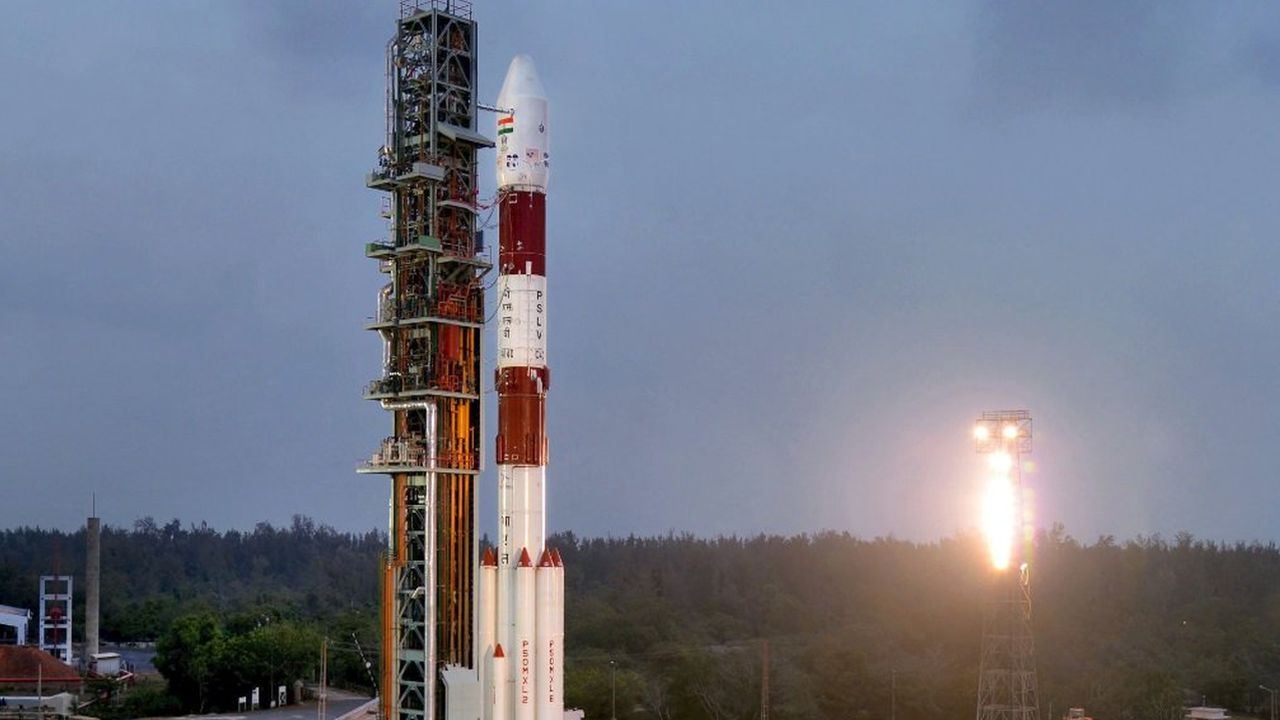
India sends its 100th satellite in space: India's Polar Satellite Launch Vehicle, in its forty second flight (PSLV-C40), successfully launched the 710 kg Cartosat-2 Series Satellite for earth observation and 30 co-passenger satellites together weighing about 613 kg at lift-off on Friday. PSLV-C40 was launched from the First Launch Pad (FLP) of Satish Dhawan Space Centre (SDSC) SHAR, Sriharikota. (Reuters)
2/6
India sends its 100th satellite in space: India's Polar Satellite Launch Vehicle, in its forty second flight (PSLV-C40), successfully launched the 710 kg Cartosat-2 Series Satellite for earth observation and 30 co-passenger satellites together weighing about 613 kg at lift-off on Friday. PSLV-C40 was launched from the First Launch Pad (FLP) of Satish Dhawan Space Centre (SDSC) SHAR, Sriharikota. (Reuters)
Launch of telecommunication satellite GSAT-17: GSAT-17 was inducted into the INSAT/GSAT system from Kourou, French Guiana by Ariane-5 VA-238 on June 29, 2017. Weighing 3477 kg at lift-off, GSAT-17 carried Payloads in Normal C-band, Extended C-band and S-band to provide various communication services. GSAT-17 also carried equipment for metereological data relay and satellite based search and rescue services being provided by earlier INSAT satellites. (PTI)
3/6
Launch of telecommunication satellite GSAT-17: GSAT-17 was inducted into the INSAT/GSAT system from Kourou, French Guiana by Ariane-5 VA-238 on June 29, 2017. Weighing 3477 kg at lift-off, GSAT-17 carried Payloads in Normal C-band, Extended C-band and S-band to provide various communication services. GSAT-17 also carried equipment for metereological data relay and satellite based search and rescue services being provided by earlier INSAT satellites. (PTI)
Launching 31 satellites in single mission: India's Polar Satellite Launch Vehicle launched the 712 kg Cartosat-2 series satellite for earth observation and 30 co-passenger satellites together weighing about 243 kg at lift-off into a 505 km polar Sun Synchronous Orbit (SSO) on June 23, 2017. (Reuters)
4/6
Launching 31 satellites in single mission: India's Polar Satellite Launch Vehicle launched the 712 kg Cartosat-2 series satellite for earth observation and 30 co-passenger satellites together weighing about 243 kg at lift-off into a 505 km polar Sun Synchronous Orbit (SSO) on June 23, 2017. (Reuters)
Second half of 2017 started with another successful launch: GSLV Mk III-D1 launched GSAT-19 from the Second Launch Pad (SLP) at SDSC SHAR, Sriharikota on June 05, 2017. (Reuters)
5/6
Second half of 2017 started with another successful launch: GSLV Mk III-D1 launched GSAT-19 from the Second Launch Pad (SLP) at SDSC SHAR, Sriharikota on June 05, 2017. (Reuters)
Making a world record by launching 104 satellites in a single mission: In its thirty ninth flight (PSLV-C37), ISRO's Polar Satellite Launch Vehicle successfully launched the 714 kg Cartosat-2 Series Satellite along with 103 co-passenger satellites from SDSC SHAR, Sriharikota on February 15, 2017. It was the thirty eighth consecutively successful mission of PSLV. (Reuters)
6/6
Making a world record by launching 104 satellites in a single mission: In its thirty ninth flight (PSLV-C37), ISRO's Polar Satellite Launch Vehicle successfully launched the 714 kg Cartosat-2 Series Satellite along with 103 co-passenger satellites from SDSC SHAR, Sriharikota on February 15, 2017. It was the thirty eighth consecutively successful mission of PSLV. (Reuters)
moneycontrolnews

SUPREME COURT OF INDIA-A BIG QUESTION MARK ON ITS FUNCTIONING?

Image may contain: 5 people, meme and text

Understanding Basics of Sharia Law-How it Favours only Men the Most

Sharia Law


Shariah law
Sharia law is the law of Islam. The Sharia (also spelledShari'a or Shariah) law is cast from Muhammad's words, called "hadith," his actions, called "sunnah," and the Quran, which he dictated. Sharia law itself cannot be altered, but the interpretation of Sharia law, called "fiqh," by muftis (Islamic jurists) is given some latitude.

As a legal system, Sharia law is exceptionally broad. While other legal codes regulate public behavior, Sharia law regulates public behavior, private behavior, and even private beliefs. Compared to other legal codes, Sharia law also prioritizes punishment over rehabilitation, and the penalties under Sharia law favor corporal and capital punishments over incarceration. Of all legal systems in the world today, Sharia law is deemed the most intrusive and restrictive, especially against women (see below), and is making inroads into Western democracies (see Sharia law in America, Canada, Europe and UK).
According to Sharia law (see links for details):
• Theft is punishable by amputation of the hands (Quran 5:38 - includes graphic image).

• Criticizing or denying any part of the Quran is punishable by death.
• Criticizing Muhammad or denying that he is a prophet is punishable by death.
• Criticizing or denying Allah is punishable by death (see Allah moon god).
• A Muslim who becomes a non-Muslim is punishable by death (See Compulsion).
• A non-Muslim who leads a Muslim away from Islam is punishable by death.
• A non-Muslim man who marries a Muslim woman is punishable by death.
• A woman or girl who has been raped cannot testify in court against her rapist(s).
• Testimonies of 4 male witnesses are required to prove rape of a female (Quran 24:13).
• A woman or girl who alleges rape without producing 4 male witnesses is guilty of adultery.
• A woman or girl found guilty of adultery is punishable by death (see "Islamophobia").
• A male convicted of rape can have his conviction dismissed by marrying his victim.
• Muslim men have sexual rights to any woman/girl not wearing the Hijab (see Taharrush).
• A woman can have 1 husband, who can have up to 4 wives; Muhammad can have more.
• A man can marry an infant girl and consummate the marriage when she is 9 years old.
• Girls' clitoris should be cut (Muhammad's words, Book 41, Kitab Al-Adab, Hadith 5251).
• A man can beat his wife for insubordination (see Quran 4:34 and Religion of Peace).
• A man can unilaterally divorce his wife; a wife needs her husband's consent to divorce.
• A divorced wife loses custody of all children over 6 years of age or when they exceed it.
• A woman's testimony in court, allowed in property cases, carries ½ the weight of a man's.
• A female heir inherits half of what a male heir inherits (see Mathematics in Quran).
• A woman cannot drive a car, as it leads to fitnah (upheaval).
• A woman cannot speak alone to a man who is not her husband or relative.
• Meat to eat must come from animals that have been sacrificed to Allah - i.e., be "Halal."
• Muslims are to subjugate the world under Islam (see Quran 9:29 and Palestine Issue).
• Muslims should engage in Taqiyya and lie to non-Muslims to advance Islam.
• The list goes on.

Which countries use Sharia law?
Muslims' aspired Sharia law state is the birthplace of Muhammad that has no legal code other than the Sharia law and enforces it without mercy: Saudi Arabia. But as detailed below, the Sharia law is also used in full or in part, nationally or regionally in:
Afghanistan (89%)**France*LebanonSpain*
AlgeriaGambiaMalaysia (86%)**Sudan
Austria*Germany*MaldivesSri Lanka
BahrainGhanaMauritaniaSyria
Bangladesh (82%)**   IndiaMorocco (83%)**Tanzania
BruneiIndonesia (72%)**    The Netherlands*    Thailand (77%)**
Canada*IranNigeriaUganda
ComorosIraq (91%)**OmanUnited Arab Emirates
Djibouti (82%)**Jordan (71%)**Pakistan (84%)**United States (USA)*
Egypt (74%)**KenyaQatarUnited Kingdom (UK)*
EritreaKuwaitSaudi ArabiaW. Bank & Gaza (89%)**
EthiopiaLibyaSomaliaYemen


* In the United States, Canada, United Kingdom, and other European countries that resist the Sharia law, it has proven adept at infiltrating elements of the society that are left vulnerable (see Sharia law in America and Islamization of America).
** Percent of Muslims who favor making Sharia the official law in their country (source: Pew Forum Research). In many countries where an official secular legal system exists alongside the Sharia law, the majority of their Muslim citizens favor making Sharia the official law. For example, while Egypt's military blocked the Muslim Brotherhood's efforts in this direction in 2013, 74% of Egypt's Muslims still favor it. Even in Jordan, Indonesia and Malaysia - Muslim countries with progressive images - the relatively secular ruling elite sit atop Muslim masses, 71%, 72% and 86% respectively of whom want their countries to be ruled by the Sharia law. And in Iraq, where the United States has been propping up democracy since 2003, 91% of its Muslims want to live under the Sharia law.
The number of countries penetrated by Sharia law continues to grow, as does the depth of its penetration in the countries already affected.
BILLIONBIBLES.ORG ©2017. ALL RIGHTS RESERVED.

Friday, January 12, 2018

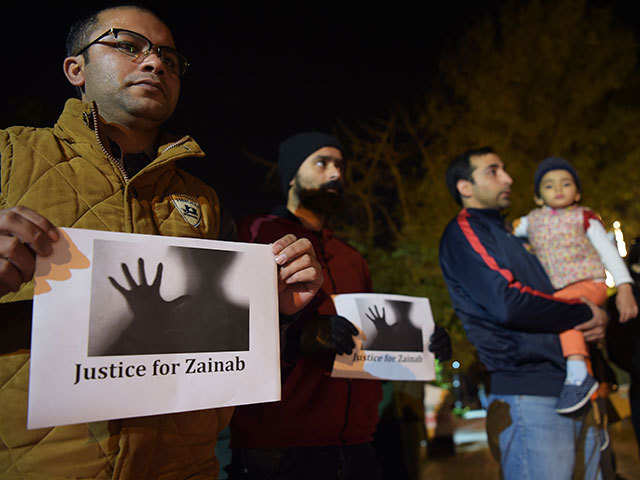
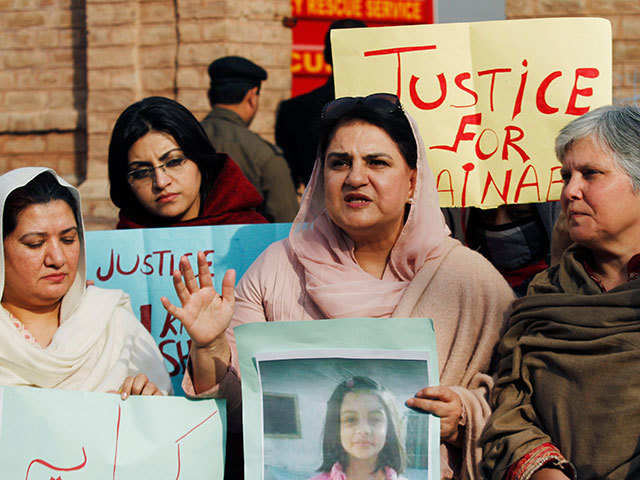
Justice for Zainab: Rape, murder of minor sparks outrage in Pakistan

Jan 12, 2018, 01.01 PM IST

7-year-old raped & murdered


7-year-old raped & murdered

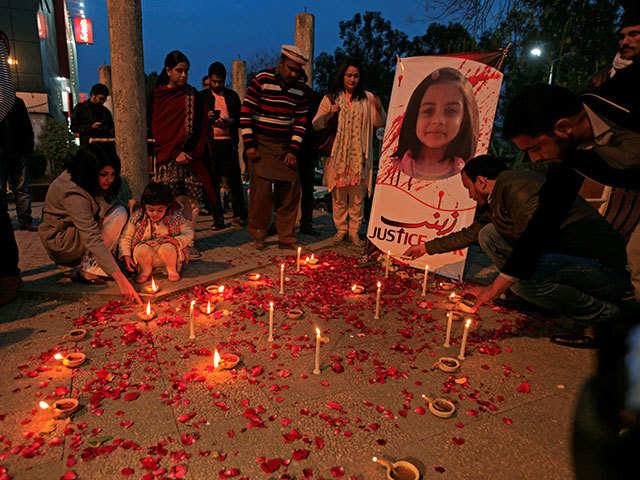
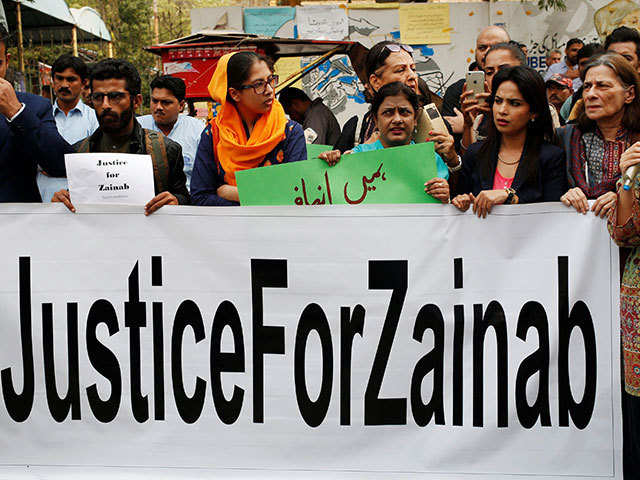
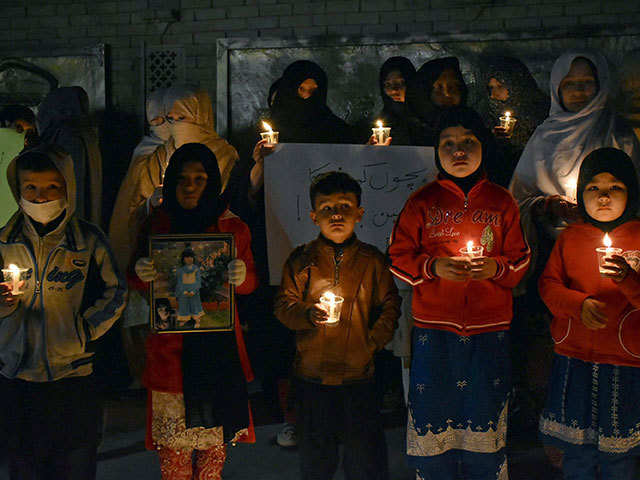
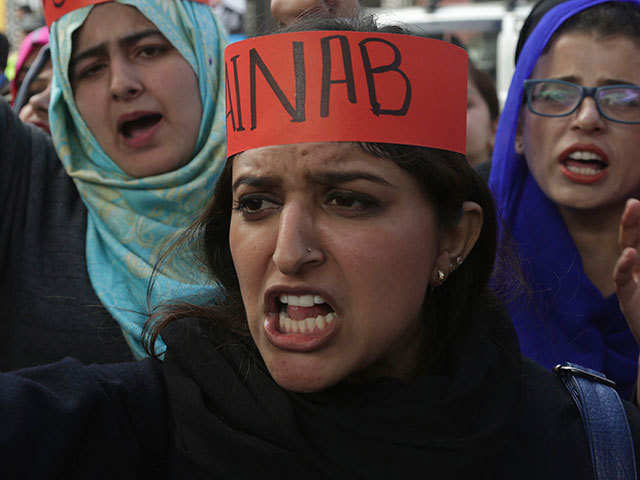
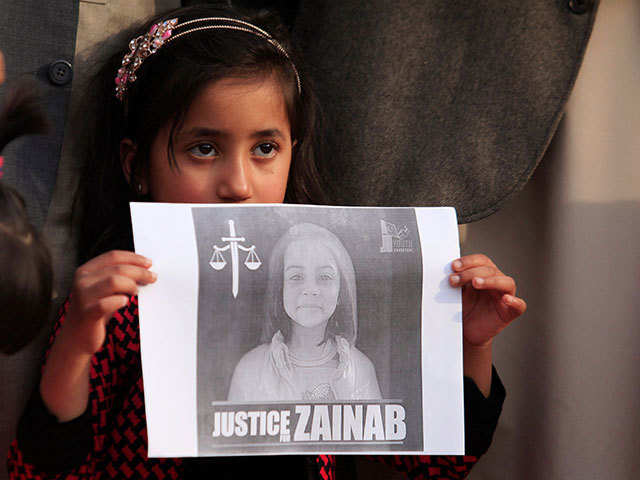
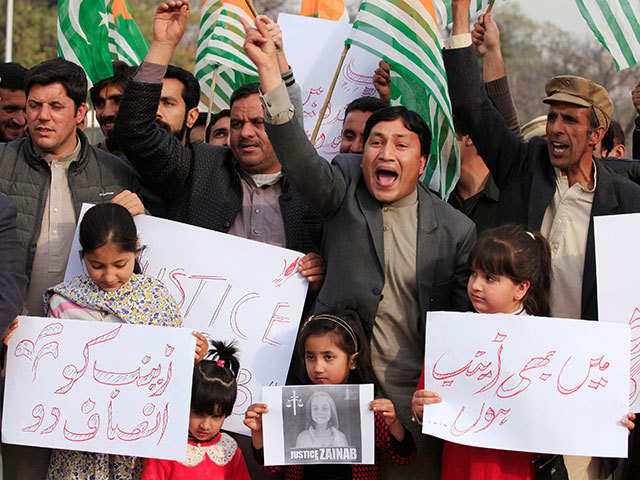
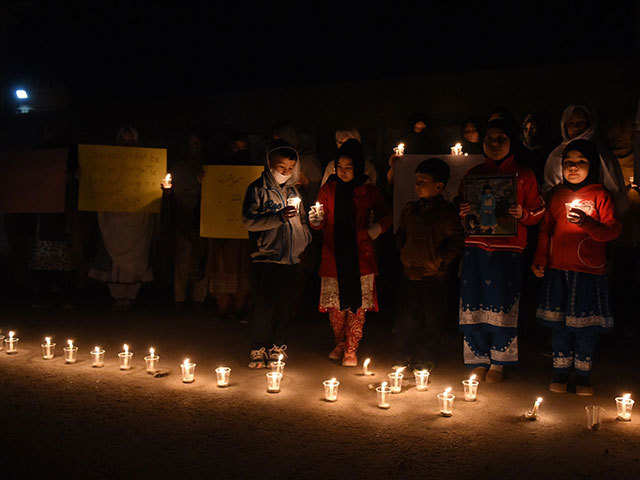
The rape and murder of the seven-year-old Zainab Ansari has led to massive protests across Pakistan. Citizens, acitvists and leaders are raging over the rise of child abuse cases in the country, while authorities remain in denial over the issue.
1/9
Reuters

What happened

What happened

Zainab, whose body was discovered in a dumpster in Kasur, went missing on January 4. She was last seen being led by an unidentified hand. A CCTV footage of the two them showed Zainab holding the hand of the man, suspected to have committed the crime.
2/9
Reuters

Not the first time

Not the first time

In 2015, Kasur triggered a shock wave across the country as a sex abuse scandal involving nearly 300 minors came to light. It was deemed to be the worst case Pakistan had ever seen so far. The victims, mostly boys, were reported to be sexually abused and their families were blackmailed by an extortion ring that sold their videos and photos.
3/9
Reuters

Not a safe haven for women

Not a safe haven for women

Sexual abuse is reportedly on the rise in Pakistan. More than 4,000 cases reported in 2016, up 10 percent on the previous year, said a Reuters report while citing data from the Human Rights Commission of Pakistan.
4/9
AP

The battle against political apathy

The battle against political apathy

Ansari was the twelfth girl to be abducted, raped and killed in the past year in Kasur district. According to an Indian Express report, as many as 700 similar cases have been reported since 2015 in the same district.
5/9
Reuters

What protesters are demanding

What protesters are demanding

More than half a million social media users have rallied around the hashtag #JusticeForZainab to call for action to be taken by the authorities, said a BBC report. There is also a fresh cry to discuss the wider problem of sexual assault and the murder of children.
6/9
Reuters
A tense situation

A tense situation

Since yesterday, there have been riots in the town of Kasur. Roads between Lahore and Kasur are blocked. The main hospital in Kasur and a Member of the Provincial Assembly’s house there has been ransacked.
7/9
AFP

The late awakening

The late awakening

Pakistan tightened its legislation to protect children in 2016 - criminalising sexual assault, child pornography and trafficking for the first time - after a paedophile ring, circulating pornographic videos, was exposed in Kasur.
8/9
AFP

Awareness is key

Awareness is key

The horrific incident has led to protesters making a fresh bid to break the silence around sexual abuse. Some are demanding this should be done in schools via change in the academic curriculum. All in all, faith in the establishment seems to have hit a new low in the wake of political and administrative apathy over the issue.

Big 4 audit firms face checks under liberalised FDI policy

FDI-Big4 Accounting Firms Stock Photo - 11045304


The government has quietly slipped in a swadeshi move while liberalising the foreign direct investment (FDI) rules by mandating that overseas auditors will have to undertake joint audit if an international investor insists on audit by a global firm, or its Indian affiliate. 

This marks a major shift in India's FDI regime, which was earlier silent on the issue and resulted in a situation where the shareholders' agreement between a foreign investor and its Indian partner contained a clause specifying audit by Big Four firms such as KPMG, Ernst & Young, Deloitte or PricewaterhouseCoopers or Indian firms that are part of their network. The clause has been inserted to prevent this kind of an arrangement and the belief is that one global firm will not agree to a joint audit with an international rival and this will open the doors for standalone Indian firms which have been complaining of being left out. The foreign firms control a majority of the audit work in listed entities as well as large Indian companies, causing a lot of heartburn. 


In fact, a group of Indian chartered accountants had lobbied hard with the government to insist on joint audit for all companies and had pitched for an amendment to the Companies Act. An expert committee headed by former finance secretary Ashok Chawla, however, rejected the proposal as it was seen to be adding to costs but recommended ways to strengthen Indian firms and work towards the development of some large Indian entities. 

"It is a very good move from a corporate governance point of view. Instead of promoting Indian firms, the existing system prevented them from becoming global brands. This government move will help Indian firms," said S Santhanakrishnan, an expert on corporate governance and law and an independent director on the boards of several large companies and banks. 

"This move will help create large Indian firms and once international players get a taste of Indian firms, they will find it more worthwhile to work with them," added Vinod Jain, president and founder of the All India Chartered Accountants Society. Sources, however, said that foreign investors can use another route to overcome the government directive. Instead of inserting a clause in the shareholders' agreement, they may now get a resolution passed at the annual general meeting, something that is provided under the Companies Act. Jain, however, said that this may be tough to do. 


In first mission of 2018, ISRO launches 100th satellite

PSLV-C40 lifted off successfully today from Sriharikota in Andhra Pradesh.
ET Online|
Updated: Jan 12, 2018, 09.55 AM IST
The Polar Satellite Launch Vehicle or PSLV-C40 lifted off successfully today from Sriharikota in Andhra Pradesh. 

The PSLV carries 31 satellites in total from countries including India and six other countries. Among is the satellites that the PSLV is carrying is India's 100th satellite, Cartosat 2 -- a surveillance satellite. The satellites are to be launched in two orbits which makes the mission a unique one according to scientists. 

This mission will be the longest flight of the four-stage Polar Satellite Launch Vehicle (PSLV), at two hours, 21 minutes and 62 seconds. It will also be the first mission after the failure of the PSLV on August 31, 2017, where the heat shield malfunctioned, as a result of which the satellite failed to enter orbit. It will also mark the PSLV's 42nd flight that will lift off from the Satish Dhawan Space Centre. 

The Indian satellites are 710 kg Cartosat-2 series for earth observation, a 100 kg micro satellite and a 5 kg nano satellite. The 28 other satellites are from Canada, Finland, France, South Korea, the UK and the US. The 28 international customer satellites are being launched as part of the commercial arrangements between ISRO and its commercial arm 'Antrix Corporation Ltd'. 

This is the space agency's first mission in 2018, and its first since the unsuccessful launch of IRNSS-1H in August last year. The rocket's shield had failed to separate, due to which the satellite could not launch. The August mission was significant as it would have introduced Navigation with Indian Constellation, or NavIC, in turn providing accurate information services within Indian territory. 

K Sivan, a renowned scientist, is set to take over as the new chairman, replacing AS Kiran Kumar. Sivan, who conceptualised India's PSLV project, has worked on it since 1982. He is popularly known as the "Rocket Man" for his contribution in the development of cryogenic engines. 

The future of electric cars is at the bottom of a Chinese salt lake Funds pour into remote area to tap lithium deposits for use in vehicle batteries YU NAKAMURA, Nikkei staff writer


Lithium recovered from Chaerhan Salt Lake is used to make electric vehicle batteries. (Photo by Yu Nakamura)
GOLMUD, China The world stands on the brink of an electric vehicle revolution. But fueling that revolution will require massive amounts of lithium, the key material in vehicle batteries.
As countries scramble to secure supplies of the valuable metal, China is pouring money and energy into developing its own massive reserves -- the world's second largest after those of Chile.
In late November, this writer visited one of the largest lithium-producing areas in the world: a remote area of China located some 3,000 meters above sea level. From Guangzhou, in the southern province of Guangdong, it takes a full day to reach Golmud, in the inland province of Qinghai. Golmud is located high in the mountains between the Tibet Autonomous Region and the Xinjiang Uighur Autonomous Region, where the air is thin.
"This airport was only completed a little over a month ago. It's brand-new," said an official. It had apparently been built in anticipation of rapid growth in lithium demand. According to one of Golmud's residents, "Huge amounts of capital are flooding into the town."
Leaving the airport in a four-wheel-drive Land Cruiser, we soon saw a vast salt marsh extending as far as the eye could see. "The elevation here is high, but in ancient times all this area was under the sea. Crustal movements lifted it up," the driver said.
WORLD OF SALT It took about an hour and a half to reach Chaerhan Salt Lake, which takes its name from a Mongolian word meaning "world of salt." In the clear, frigid air, the vast lake sparkled in the sunlight. The large volumes of dried salt surrounding it looked like layers of snow.
Chaerhan Salt Lake and the surrounding area contain 83% of China's lithium deposits.
No living things inhabit the lake or its surroundings. But 10-ton trucks loaded with heaps of salt recovered from the lake soon began rumbling by, suddenly bringing the lithium-producing area to life.
After traveling a little farther along a bumpy road made of pressed salt, we met a man named Li Jingwei, 47. He said he had worked for a state-owned company at a plant near the lake since he was 16. "The salt lake provides lots of precious resources. Attention is now on lithium," he said. "Small developers have been driven out, and over the past three years, state-owned enterprises have come in, and investment has grown. This is such a remote place, but many dignitaries come here."
Judging from the photographs hanging on the wall at the plant, this was no exaggeration. The photos included pictures of Chinese Premier Li Keqiang, Wen Jiabao, Zhang Dejiang, Li Changchun, Zhao Leji and other important figures. One even showed Chinese President Xi Jinping encouraging employees during his visit in August last year. "Jiang Zemin also came, though there is no photograph of him here. This is a front-line base for China's resources," Li said proudly.