Pages

Friday, April 13, 2018

Bitcoins worth Rs 20 crore stolen from exchange in India's biggest crypto theft

Bitcoin

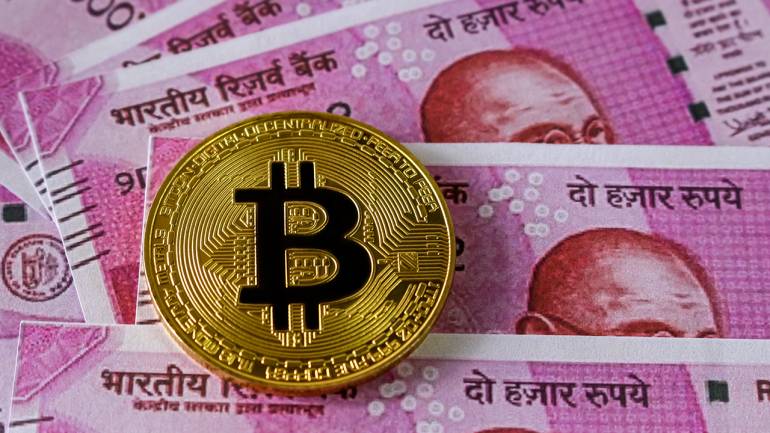
Nearly 438 bitcoins worth over Rs 20 crore were stolen from a top exchange firm in India in what is being billed as the biggest cryptocurrency theft in the country so far. 

Coinsecure, the Delhi-based cryptocurrency exchange, has filed an FIR with the cyber cell accusing its CSO, Amitabh Saxena, of siphoning off the money from the firm's wallet, ET's Nilesh Christopher reported. The exchange has urged the government to seize Saxena's passport, fearing that he may leave the country. A case has been registered under IPC sections and Section 66 of the IT Act. 

What exactly happened? 
The exchange, which has over two lakh users across the country, found that all the bitcoins that were stored offline had vanished. It was later found that the private keys — the password that is kept by the company and is stored offline — were leaked online, leading to the hack. 
The company tried to trace the hackers, but found that all the data logs of the affected wallets had been erased, leaving no trails about where the bitcoins were transferred. The website of the company has since then remained shut. 


On Thursday night, the company confirmed the hack to their users through a message posted on the website. 
“We regret to inform you that our bitcoin funds have been exposed and seem to have been siphoned out to an address that is outside our control. Our system itself has never been compromised or hacked, and the current issue points towards losses caused during an exercise to extract bitcoins to distribute to our customers,” the company stated. 
images
The company’s founder and CEO Mohit Kalra told TOI that he suspects an insider’s hand in this. 

“Private keys should have never been exported online. It looks like a crime committed intentionally. We have shared our suspicions with the Cyber Cell, and contacted specialists to find out the source of the hack and trace the bitcoins,” Kalra said, adding that even if funds are not recovered, his company is willing to pay from its own pocket to compensate its customers. 

Police said that the company’s servers have been seized to ascertain the extent of the system breach. It is also being checked if more wallets have been compromised. The senior security officials of the company have also been called in for questioning. 

Cyber security experts said that the private keys – the password that is kept by the company is never connected to an online system. But police found that not only were the private keys online, they were kept like that for more than 12 hours. Police are also checking if malware infection led to the hack. 

The company issued a letter to its users regarding the same: 
Dear Users,

We regret to inform you that our Bitcoin funds have been exposed and seem to have been siphoned out to an address that is outside our control.

Our system itself has never been compromised or hacked, and the current issue points towards losses caused during an exercise to extract BTG to distribute to our Our CSO, Dr. Amitabh Saxena, was extracting BTG and he claims that funds have been lost in the process during the extraction of the private keys.

An FIR has been lodged with the Cyber Cell, Delhi (copy of the complaint enclosed), and we have expert investigators already on the case.

We are working round the clock to restore services and to try and recover all of the lost funds, and we shall keep all our users posted on the outcome of the details to ensure utmost transparency. Coinsecure has always been a progressive company, and we have proven our commitment towards that. Our Android and iOS apps were recently launched, and we were at the cusp of moving into a multi-coin architecture before this incident.

We are hoping that as users of Coinsecure, you will stand by us in this hour of need by providing us with your help and support as we diligently work to ensure that all of our customers' funds are recovered and to leave no stone unturned. Irrespective of funds being recovered, we re-assure all our customers that you will be indemnified from our personal funds.

We again take this opportunity to thank you for your continued support and cooperation.


Warm Regards,
Team Coinsecure 


Baisakhi 2018 Date: History, Importance, Significance of the Festival-Indian Express

Baisakhi 2018: This day is celebrated as the founding day for the Khalsa community, the day on which Guru Gobind Singh invited the people to come forward and get baptized into Sikhism and raise their voice against the cruel Mughal Empire.

Baisakhi, Baisakhi 2018, Vaisakhi 2018, Vaisakhi 2018 date, Happy vaisakhi 2018, Baisakhi 2018 Date, Baisakhi History, Happy Baisakhi Happy Baisakhi 2018 Happy Baisakhi Images Happy Baisakhi Quotes Baisakhi Images Happy Baisakhi SMS Happy Baisakhi Status Happy Baisakhi Messages Happy Baisakhi Pictures Happy Baisakhi Pics, indian express, indian express news
Baisakhi 2018 Date: This year, the festival of Baisakhi falls on April 14.  (Designed by Rajan Sharma)
The celebration of each and every festival with great faith and devotion has been a millennium old tradition in India. Every festival, either big or small, is associated with a special eventful history which makes it so special to remember and worth to celebrate it every year. India is also termed as land of farmers as it is having states like Punjab and Haryana, the wheat factories of the land.
After celebrating the festival of Lohri and Makar Sankranti, the farmers become busy, engaged in taking care of their tilled lands. These lands sparkle with pearls, rubies and diamonds of the blood and sweat of the hardworking farmers in the form of beautiful plants of wheat, laden with grains which will give satisfaction to the inhabitants.
The celebration of farmers begins with the arrival of Lohri and takes another flavor with the festival of Baisakhi.
Primarily considered as the festival of Hindus and Sikh, the festival of Baisakhi sprays the hues of happiness and prosperity in the lush green fields and martyrdom and patriotism in the hearts of Indians. This year, the festival of Baisakhi falls on April 14.  

History 

The celebration of this sacred festival is mainly linked with the people of Sikh community. It dates back to the year 1699, when the people of India were tormented by the tyranny of Mughal emperor Aurangzeb.
Since there was a huge massacre of the Brahmins and Hindus, they approached the ninth guru of the Sikh community, Guru Teg Bahadur for help and protection. There was a severe and fierce battle afterwards, in which he and his followers fought bravely, but they were defeated and were asked to accept Islam. On his refusal, he was publicly beheaded. After his martyrdom, he was succeeded by his disciple and the tenth guru, Guru Govind Singh.
On the auspicious day of Baisakhi, he publicly asked people-in-general to lay down their lives for Guru and Lord and five people came forward, who later came to be known as Panj Piaras. He declared them as the 5 founding members of the Khalsa Community and gave them the title of Singh. This day is celebrated as the founding day for the Khalsa community, the day on which Guru Gobind Singh invited the people to come forward and get baptized into Sikhism and raise their voice against the cruel Mughal Empire.
All these events happened on March 30, 1699, at the Keshgarh Sahib Gurudwara, Anandpur and hence, this festival is celebrated there with huge pomp and show.    

Significance 

This festival holds a great significance for the Sikh community as the Tenth Guru Laid the foundation of the Khalsa Community on this sacred day. All over India, people dress nicely, visit Gurudwara and attend Kirtan Path and offer Prayers and Ardas for a happy and prosperous life.
At many places, there is an organisation of Nagar Kirtans and Sikh community processions, where people take part in masses. They walk in the cities, singing prayers from the Guru Granth Sahib to awaken people and ask them to be virtuous and faithful to god.
The festival of Baisakhi is also associated with various legends like:
  • Day to Receive Guru’s Blessings for Sikhs
On this day, Guru Amar Das had first asked the people of Sikh community to gather at Goindwal to receive the guru’s blessings.
  • Foundation of Arya Samaj
In 1875, Swami Dayanand Saraswati founded the Arya Samaj – a sect of Hindus who follow the Vedas for spiritual guidance.
  • Attainment of Nirvana by Gautam Buddha
As per the legends, it was the day of Baisakhi when Gautam Buddha attained Nirvana under the Mahabodhi tree in the town of Gaya.

Science behind Baisakhi

The festival of Baisakhi is celebrated amongst farmers as the festival of harvest. The month of April is considered as the harvesting time for the Rabi Crops, the crops which are sown during winter seasons.
Since the photoperiod becomes larger, the short day plants start to flower and give fruits and grains, which are now ready to be harvested. Therefore, the farmers gear up in their fields and start harvesting the crops.    

Puja Timings for Baisakhi

The puja for Baisakhi can be done throughout the day and, if possible, during the Abhijit Muhurtam prevailing from 11:56 AM to 12:46 PM on April 14, 2018.

Boost for Indian economy as inflation eases further, industrial growth rises

India’s IIP grew at a robust 7.1% in February while CPI decelerated for the fourth consecutive month to 4.28% in March, leading to expectation that the Indian economy may be on a sustained recovery path

Monday, April 9, 2018

Who owns the most land in the world? You'd be surprised to find out

These non-government individuals or organisations and businesses own the most land in the entire world.

Moneycontrol News@moneycontrolcom
10. Brett Blundy | 3.4 million hectares | The Australian retail entrepreneur, who owns 3.4 million hectares of land, recently acquired the Walhallow Cattle Station in Northern Territory, Australia that cost him USD 77 million (Image: Pixabay)
1/10
10. Brett Blundy | 3.4 million hectares | The Australian retail entrepreneur, who owns 3.4 million hectares of land, recently acquired the Walhallow Cattle Station in Northern Territory, Australia that cost him USD 77 million (Image: Pixabay)
9. Brook family | 3.5 million hectares | With land ownership of the size of Taiwan, David Brook and his family own and run farms in Southern Queensland and South Australia. (Image: Flickr)
2/10
9. Brook family | 3.5 million hectares | With land ownership of the size of Taiwan, David Brook and his family own and run farms in Southern Queensland and South Australia. (Image: Flickr)
8. Macquarie Group shareholders | 4.4 million hectares | The Paraway Pastoral Company owns around 4.4 million hectares of land in Australia where they operate their sheep and cattle business. (Image: Commons Wikimedia)
3/10
8. Macquarie Group shareholders | 4.4 million hectares | The Paraway Pastoral Company owns around 4.4 million hectares of land in Australia where they operate their sheep and cattle business. (Image: Commons Wikimedia)
7. Guy Hands and shareholders | 5.7 million hectares | Terra Firma Capital partners owned by British investor Guy Hands runs Consolidated Pastoral Company which is Australia’s largest privately-owned beef producer and has 375,000 cattle at any time. The company owns 5.7 million hectares of land in the country. (Image: Reuters)
4/10
7. Guy Hands and shareholders | 5.7 million hectares | Terra Firma Capital partners owned by British investor Guy Hands runs Consolidated Pastoral Company which is Australia’s largest privately-owned beef producer and has 375,000 cattle at any time. The company owns 5.7 million hectares of land in the country. (Image: Reuters)
6. MacLachlan family | 5.75 million hectares | The Jumbuck Pastoral Company was set up in 1888 in Adelaide by HP MacLachlan, which controls 5.75 million hectares across Australia. It is the country’s leading wool supplier. (Image: WikiMedia)
5/10
6. MacLachlan family | 5.75 million hectares | The Jumbuck Pastoral Company was set up in 1888 in Adelaide by HP MacLachlan, which controls 5.75 million hectares across Australia. It is the country’s leading wool supplier. (Image: WikiMedia)
5. Joe Lewis and shareholders | 7 million hectares | British tycoon Joe Lewis is the major shareholder of the Australian Agricultural Company, set up back in 1824. Lewis and company’s shareholders operate the land, equal to the size of Ireland, in Queensland and the Northern Territory. (Image: Reuters)
6/10
5. Joe Lewis and shareholders | 7 million hectares | British tycoon Joe Lewis is the major shareholder of the Australian Agricultural Company, set up back in 1824. Lewis and company’s shareholders operate the land, equal to the size of Ireland, in Queensland and the Northern Territory. (Image: Reuters)
4. Zhongding Dairy Farming and Severny Bur shareholders | 9.1 million hectares | China’s Mudanjiang City Mega Farm is jointly owned by Zhongding Dairy Farming and Russia’s Severny Bur, and is the largest farm in the world. On an enormous 9.1 million hectares of land it houses 100,000 cows. (Image: Reuters)
7/10
4. Zhongding Dairy Farming and Severny Bur shareholders | 9.1 million hectares | China’s Mudanjiang City Mega Farm is jointly owned by Zhongding Dairy Farming and Russia’s Severny Bur, and is the largest farm in the world. On an enormous 9.1 million hectares of land it houses 100,000 cows. (Image: Reuters)
3. Gina Rinehart | 12 million hectares | Apart from being the wealthiest person in Australia, Gina Rinehart became the top landowner after she acquired land from S. Kidman & Co., the largest private landholder on the planet, along with her own 21 sprawling cattle stations. (Image: Reuters)
8/10
3. Gina Rinehart | 12 million hectares | Apart from being the wealthiest person in Australia, Gina Rinehart became the top landowner after she acquired land from S. Kidman & Co., the largest private landholder on the planet, along with her own 21 sprawling cattle stations. (Image: Reuters)
2. The Inuit people of Nunavut | 35 million hectares | Belonging to Canada’s central and eastern northwestern territories, the Inuit people hold 35 million hectares of land. It was handed over to them by the government in 1993. The territory of Nunavut was formed in 1999. (Image: Reuters)
9/10
2. The Inuit people of Nunavut | 35 million hectares | Belonging to Canada’s central and eastern northwestern territories, the Inuit people hold 35 million hectares of land. It was handed over to them by the government in 1993. The territory of Nunavut was formed in 1999. (Image: Reuters)
1. The Catholic Church | 71.6 million hectares | The most land on the planet, an area larger than France, is owned by the Catholic Church, making the Holy See the largest non-government landowner globally. They own vast lands in various countries like India and Germany. (Image : Reuters)
10/10
1. The Catholic Church | 71.6 million hectares | The most land on the planet, an area larger than France, is owned by the Catholic Church, making the Holy See the largest non-government landowner globally. They own vast lands in various countries like India and Germany. (Image : Reuters)
Source moneycontrolnews

Sunday, April 8, 2018

Bad loans menace: Over three dozen CAs under Reserve Bank's lens chartered accountants are under the scanner for allegedly conniving with promoters in defaulting as well as restructuring the stressed assets

Apr 08, 2018 01:50 PM IST | Source: PTI

With the RBI cracking the whip on bad loans menace, more than three dozen chartered accountants are under the scanner for allegedly conniving with promoters in defaulting as well as restructuring the stressed assets, sources said.
At a time when more number of companies with stressed assets are coming under the Insolvency and Bankruptcy Code, the central bank is also looking at the role of various key personnel associated with such entities. Sources said the Reserve Bank of India (RBI) is looking into the role of around 35 to 40 chartered accountants in loan defaults by various companies.
The regulator is looking to ascertain whether these chartered accountants helped the entities in any illegal manner causing deliberate defaults and subsequently assisting them in restructuring the dud assets, they added.

Responses to queries sent to the chartered accountants' apex ICAI on the issue were awaited.The Institute of Chartered Accountants of India (ICAI) works closely with the RBI on various issues. The RBI lens on chartered accountants for suspected illegal activities with defaulting companies also come at a time when a substantial number of stressed assets are being taken up under the insolvency resolution mechanism.
The NPA woes in the banking system have been further highlighted with the over Rs 13,000 crore scam at Punjab National Bank by diamond merchants Nirav Modi and Mehul Choksi.
A high level panel of the ICAI is already looking into the PNB fraud to understand the systemic issues involved and suggest remedial measures.
According to officials, around Rs 4.5 lakh crore worth of non-performing assets are under the insolvency resolution process.
The Code, which provides for a market-determined and time-bound resolution framework, seeks to maximise the value of stressed assets rather than resorting to liquidation.

CAs, CSs, valuers may face disgorgement, penalties from Sebi

Sebi1-BCCL
PTI|
Updated: Apr 08, 2018, 01.15 PM IST


Chartered accountants, company secretaries, cost accountants and valuers may have to forfeit their fees and face penalties if they are found lacking in their dealings with listed firms, according to a new set of norms being considered by Sebi. 

The role of auditors and valuers has come under the scanner in a number of high-profile cases recently involving PNB, WhatsApp and Fortis as also the Satyam and Kingfisher frauds earlier. 

Sebi is looking to enhance the oversight to check such frauds with new regulations for fiduciaries in the securities markets, a senior official said. It will require additional disclosure requirements and greater scrutiny of financial statements by auditors and other third party entities, he said. Sebi may finalise rules which will put the responsibility on chartered accountants, company secretaries, cost accountants, valuers and monitoring agencies to get firms to comply with securities regulations and act in the interests of shareholders, he added. 


If such entities are found lacking in their dealings, Sebi may disgorge the wrongful gains, including the fee earned, along with an interest of 12 per cent per annum from the date of default. 

Besides, the regulator may ask them not to directly or indirectly issue any certificate or report. Also, it may refer the case Institute of Company Secretaries of India (ICSI) or Institute of Chartered Accountants of India (ICAI) or any other other appropriate authority. 

Further, Sebi may issue warning, launch adjudication proceedings and initiate prosecution against the entities for any default. 

The Securities and Exchange Board of India (Sebi) has prepared a draft consultation paper in this regard and the final regulations would be put in place after taking into account comments from all stakeholders on the consultation paper. 

Asked about the rationale behind a new set of norms, the official said that investor confidence is fundamental to the successful operation of the securities market and it depends on investors having credible and reliable financial information when making decisions about capital allocation. "One of the prime objectives of Sebi is to ensure that there should be full, timely and accurate disclosure of financial results and other information that is material to investors' decision," he said, pointing to alleged lapses at various levels in cases like WhatsApp leak of financial results, the PNB scam and the matters concerning Fortis and Satyam-PwC. 

Information which has gone through various third-party fiduciaries such as auditors, merchant bankers, rating agencies, custodians, debenture trustees and registrar to public issues are registered with the capital markets regulator under specific regulations, some other fiduciaries like practising chartered accountants and company secretaries, cost accountants, valuers and monitoring agencies are not registered with Sebi. 

MONEY MAKES THE MARE GO.TRUE FOR INDIAN LEGAL SYSTEM.

Image may contain: one or more people and text

SEE THE DIFFERENCE

Image may contain: 2 people, people smiling, meme and text

Saturday, April 7, 2018

Unmarried daughter who is above 18 can claim maintenance from father: High Court

Justice-thinkstocks
PTI|
Updated: Apr 07, 2018, 04.47 PM IST


MUMBAI: An unmarried daughter is entitled to claim maintenance from her father even after attaining the age of 18 if her parents are divorced or estranged, the Bombay High Court has ruled. 

Also, a woman can file an application on behalf of her major daughter to seek maintenance, Justice Bharti Dangre ruled yesterday. 

The high court was hearing a petition filed by a city-based woman challenging the family court's order dismissing her application seeking maintenance from her estranged husband for the couple's 19-year-old daughter. 


The couple, which got married in 1988, got separated in 1997. Their three children -- two boys and one girl -- lived with the mother. 

Till the time the children were minors, their father paid a monthly maintenance for each child to their mother. 

However, after the daughter crossed 18 years of age, the father refused to pay maintenance for her. 

Her mother, in her petition in the high court, claimed that though her daughter had attained majority, she was still financially dependent on her as she was pursuing higher education. 

The woman also said that her two sons were not in a position to help out, as one of them was repaying his education loan and the other was yet to get a job. 

The woman, who is getting a monthly maintenance of Rs 25,000 from her husband, sought additional Rs 15,000 for the daughter. 

The family court rejected her plea, saying that under section 125 (1) (b) of the Code of Criminal Procedure (CrPC), maintenance is to be paid only for minor children. 

Justice Dangre said in her ruling that as per the CrPC a major child is entitled for maintenance only if he or she is not able to maintain herself or himself due to any physical or mental problem. 

But past judgements of Supreme Court and high courts have held that an unmarried major daughter can also seek maintenance if she is not financially independent (even if she doesn't suffer from any disability), the judge noted. 

She directed the Principal Judge of the family court to consider the petitioner's claim afresh. 

Friday, April 6, 2018

CRYPTO CURRENCY IS A DEAD ASSET NOW FOR INDIANS

RBI regulated entities barred from dealing with cryptoexchanges.

“It has been decided that, with immediate effect, entities regulated by RBI shall not deal with or provide services to any individual or business entities dealing with or settling VCs,” it said.


Going ahead you will not be able to buy cryptocurrency via banks or e-wallets etc in India as the Reserve Bank of India (RBI) has effectively banned such entities from "dealing with or providing services to any individuals or business entities dealing with or settling virtual currencies".
“Virtual currencies (VCs), also variously referred to as cryptocurrencies and cryptoassets, raise concerns of consumer protection, market integrity and money laundering, among others,” the central bank said in a statement.
RBI asserted that it has repeatedly cautioned users, holders and traders of virtual currencies, including Bitcoins, regarding various risks associated in dealing with such virtual currencies. “It has been decided that, with immediate effect, entities regulated by RBI shall not deal with or provide services to any individual or business entities dealing with or settling VCs,” it said.
Regulated entities that provide such services “shall exit the relationship within a specified time”, RBI said adding that it will issue another circular for it.
In a move to regulate the cryptocurrency market in India, Finance Minister Arun Jaitley clarified in his Budget speech it is not legal tender and the government will discourage its use. However, he had mentioned that the government will look at the utilisation of blockchain technology.
There has been rising craze among investors to put in their hard-earned money into the highly volatile cryptocurrency market setting off alarm bells in the government.
Digital currency, led by the Bitcoin, which has been the most popular among the plethora of options, has gained immense popularity globally. However, the underlying assets have been highly volatile with price movements swinging wildly on news flow.
Globally, there has been a move to clamp down on crypto trading, with countries such as South Korea banning anonymous trade in such currency.
There have also been issues on safety of investors’ accounts against hackers. There have been several instances where accounts of investors have been hacked into by criminal elements who have fled with investor wealth. Currently, there is no way to retrieve such money lost to hack
moneycontrolnews

Thursday, April 5, 2018

Banks are billing you even for your SMS alerts

Smartphone-data-afp
By Atmadip Ray

KOLKATA: Charges for SMS alerts on banking transactions may not squeeze account holders much but can be a reasonable earning for many banks, especially in accounts with meagre monthly transactions though income from SMS alert service goes against the advisory from the sector regulator. 

While Reserve Bank of India told banks to send SMS alerts for every transaction as means to fight frauds, the regulator also directed banks to levy charges on actual usage basis. RBI said charges on actual usage basis would promote reasonableness in customer dealings but a majority of banks, including leaders State Bank of India and ICICI Bank, do not follow the norm. 


“This is certainly not in line with RBI’s advice. It’s a violation,” said AC Mahajan, chairman at Banking Codes and Standards Board of India (BCSBI), an independent banking industry watchdog to protect consumers’ interest. 

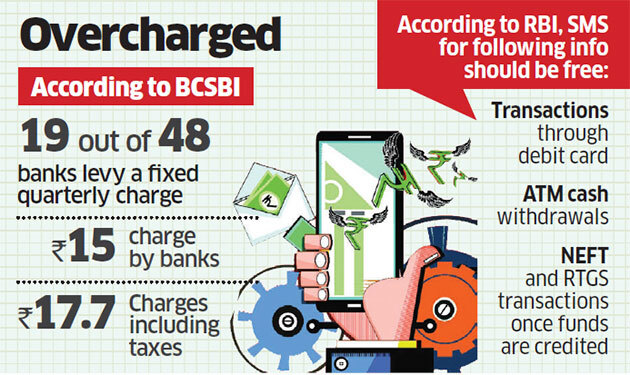
A BCSBI study shows that 19 out of 48 banks levy a fixed quarterly charge of Rs 15 while customers actually pay Rs 17.7 including taxes at present. 

“BCSBI feels customers with low volume should not be penalized with fixed charges. However, as rates are de-regulated, BCSBI cannot intervene if such rates are notified to customers well on time,” Mahajan said. 
bank-bill-graph
RBI had directed banks to send mandatory SMS alerts for transactions through debit card, for ATM cash withdrawals, NEFT and RTGS transactions once funds are credited in the beneficiary account; and these are non-chargeable. Alerts for all other transactions are chargeable under RBI rules. 

“Considering the technology available with banks and the telecom service providers, it should be possible for banks to charge customers based on actual usage of SMS alerts,” said RBI in a November 2013 circular. “With a view to ensuring reasonableness and equity in the charges levied by banks for sending SMS alerts to customers, banks are advised to leverage the technology available with them and the telecom service providers to ensure that such charges are levied on all customers on actual usage basis.” it said. 

Mails sent to RBI and several top banks including SBI, ICICI Bank, HDFC Bank and Axis Bankremained unanswered at the time of going to press. YES Bank. said it provides this service free of cost. 

The BCSBI study done in 2016 showed that 22 out of 48 banks debit a fixed amount per month or quarter including three which charges higher than Rs 15 per quarter, and the remaining 26 banks charges less or offer free SMS alert service. 

“We had forwarded this study to RBI for their information,” Mahajan said. 

Former FIMMDA chief executive SL Chhatre has taken up this issue with the regulator and a few banks where he has accounts which forced the lenders to reverse SMS charges. 

“On one side both banks and the government desists customers from visiting banks and induce them to opt for netbanking. RBI wants safety against frauds but the regulator is clear in its message that the charges should be on actual usage basis. The amount does not hurt most people, but that does not give banks the liberty to levy a fixed charge,” Chhatre said. 
Banks typically outsource this service to agencies through annual contracts with structured tariff plans. It is a system generated process without human intervention. Cost per SMS comes to around 8 or 10 paise. Even if a bank sent 100 alerts in a quarter, the cost comes just about Rs 8 or Rs 10. 

“Clearly banks are earning undue money out of it,” said a former SBI top executive. “But it is perhaps difficult to track the number of SMSs sent to individual customers and it requires additional investment,” he said.