Pages

Friday, April 27, 2018

List of accounts to close on death of a loved one Priority is given to transfer of financial assets first and then settling other moveable and fixed assets.

Nirmal Rewaria thru moneycontrolnews April 27 2018
Image result for pic of a death of a parent
It is rare for the people left behind to think or have a check-list to close all important accounts or subscriptions of a deceased member of a family. They are usually caught up performing the many rituals and then have to go through a search mission for documents (soft as well as hard copies plus passwords), apart from the emotional setback. This becomes tedious and a nightmarish task, especially the death of a loved one is sudden.
Priority is given to transfer of financial assets first and then settling other moveable and fixed assets. That’s all! But beyond these there are so many important accounts and subscriptions which may create problems for survivors. There might be unauthorised transactions, unnecessary debits or receive important notices for such accounts on which one might have to incur a financial loss
Please ensure that the following accounts and subscriptions of the deceased are closed:
1. Credit cards:
A deceased's wallet may contain credit cards. As a precaution, please check all files and if there are other credit card documents add these to the list. Once you get the number of credit cards and the service provider's names, please call them (numbers are on back of the card) and request them to block the cards first and then follow up by cancelling the same. This is a simple process where all you need to do is fill up a form and provide the death certificate etc. This task will enable you to claim insurance benefits that accompany a credit card. This is generally not claimed by dependents and sometimes is a fairly large sum. Also, check with service providers about the auto debit amounts attached so that you can block or close these services too.
2. Telephone or mobile connection
Prepare a list of all landline as well as mobile connections in the name of the deceased. Depending on the requirement, you may choose either to surrender or transfer the connection in your name. But before surrendering ensure that the phone number is not linked to any important investment or activity. It would be better to transfer all connections for a few months rather than surrendering the same to avoid missing out on a few important calls. The transfer/surrender process is very simple for each service provider. The steps are listed on the service provider's website and if needed one can seek help by calling the company toll-free helpline.
3. Subscriptions
For various services we sometimes subscribe by debit or credit card. While paying through credit card, the service provider takes permission for auto renewal after the subscription period is over. This auto debit is very dangerous when we forget to stop the service even if we don’t enjoy the same. Instruct the bank and credit card companies to stop all such auto debits till you close the bank account or credit cards.
4. Emails
It is not advisable to close the email accounts as it might impact financial as well as emotional aspects but at the same time ensure to auto-forward mails to your email. Operate the email account only to view mails so that important information is not missed. Never ever reply on behalf of the deceased as the same might be considered as an offense.
5. Utilities
There might be various utilities - electricity, water, gas, internet, cable or various annual maintenance contract on AC or vehicle - in the name of the deceased. These again need to be transferred and if some are not required then they need to be cancelled. Again the process is not so tedious, but the formalities need to be done.
6. Non-transferable memberships
There are various paid memberships which are not transferable like sports club, gym, cultural organisation etc. Such memberships need to be cancelled. Since of these service providers come for last rituals of the deceased there is not much pain while cancelling these memberships.
7. Newspaper and magazine subscriptions
If the newspaper or magazine was there only for deceased when s/he was alive, then close all those subscriptions. Call those vendors and stop such subscriptions. Also revise the requirements and transfer the balance to your name rather than having the account in the name of the deceased as seeing bills in the name of the deceased will be painful.
8. Online accounts
Finally, there are multiple online accounts: social media, shopping, emails, entertainment and so on. In this online world we keep on opening such accounts. Make a list of all such accounts and immediately close these.
The author is CEO & Co-Founder of FinPeace Technologies


Ten basic rights of an employee in India


1. Leave is the right of all employees 

Generally, an employee is given the following leaves during the course of his or her employment:
    1. Casual Leave: This is provided to an employee to take care of urgent or unseen matters like a family emergency; for example, employees can apply for casual leave to attend a parent-teacher meeting called for by their child’s school.
    2. Sick Leave: Sick leave is provided when an employee gets sick.
    3. Privilege or Earned Leave: Privilege or earned leaves are long leaves that are planned for in advance.
    4. Other Leaves – Apart from the above mentioned leaves, there are some other paid, unpaid or half-paid leaves which are provided at the discretion of the company. Study leave and bereavement leave are two such examples.
    5. Medical Certificate for one-day sick leave

      Usually, when a sick leave exceeds beyond two or three days, depending upon the company policy, employees are requested to submit a medical certificate to sanction the leave. However, in the case of one-day sick leave, an employer should not ask for a medical certificate.
      In one of its judgements, the Supreme Court mentioned that an employee will not necessarily seek medical attention if he or she is ill for just a day.

      Encashment Leave

      An employee can take encashment leave while quitting service, superannuation, discharge, dismissal or death. Leave encashment should be as per average daily wages of an employee.
      Type of LeavePrivileged / EarnedCasualSickMaternity
      Quantum per year1 day leave for every 20 days worked in the previous year (Eg. 300 days worked = 15 days leave)NilNilAs per ESI Act OR Maternity Benefits Act
      EntitlementOn working 240 days in the first  previous yearNANANA
      UtilizationTo apply for leave 15 days prior. Leave not to be availed more than 3 times a yearNANANA
      Carry ForwardNot more than 30 daysNANANA

      Leave during notice period An employee can take leave during notice period, provided it is for a genuine reason like maternity, health issues, etc.The Delhi High Court, in one of its judgement, said that an employee can take leave during the notice period if nothing is mentioned in the appointment letter which bars the employee from taking leave during the notice period, if he has leave to his credit and is entitled to the same.

      2. Protection from sexual harassment at the work place

      It is the responsibility of the employer to ensure that his/her employees, especially female employees, are protected while at work. All incidents of sexual harassment – regardless of how big or small they are or who is involved – require employers or managers to respond quickly and appropriately. Just because someone does not object to inappropriate behaviour in the workplace, it does not mean that they are consenting to the behaviour.
      An aggrieved woman can seek remedy under the Sexual Harassment of Women at Workplace (Prevention, Prohibition and Redressal) Act, 2013. Sexual harassment is punishable under the Indian Penal Code
      The law mandates employers to formulate a policy which prohibits sexual harassment. The policy should be a part of the company’s service regulations to provide a healthy working environment. The company’s policy must clearly define what exactly constitutes a sexual harassment and enumerate penalties, online grievance redressal procedures as well as additional resources like a list of individuals to be contacted for consultation, etc. The policy should also ensure impartiality in investigation.
      The law outlines the structure of an internal complaint committee for organisations with ten or more employees and instructs the formation of a district level local complaint committees for other organisations.
      All offices, hospitals, institutions and other establishments should set up an internal complaint committee. The employer should nominate the committee members and constitute the committee. The committee should also include a senior woman as a member, two other employees as members and a non-governmental member.
      At the district level, the District Officer (normally the Collector), an officer as authorized under the act, should constitute a Local Complaints Committee.
      A Nodal Officer will also be nominated by the District Officer for each block, municipality or tribal area to receive complaints and to forward them to the respective local complaint committee within seven days.

      3. Maternity benefit

      The Maternity Benefits Act, 1961 (MBA) was enacted with respect to employment of pregnant women in establishments.
      Earlier, the law mandated that a female worker was entitled to a maximum of 12 weeks (84 days) of maternity leave. Of these 12 weeks, six weeks leave are for post-natal leave.
      Employees are also entitled to one additional month of paid leave in case of complications arising due to pregnancy, delivery, premature birth, miscarriage, medical termination or a tubectomy operation (two weeks in this case).
      With new amendments made to the Maternity Benefits Act, 1961, the paid maternity leave has been extended from 12 weeks to 26 weeks for women working in the private sector.
      No employer can employ a woman in the six weeks following the date of her delivery or miscarriage. It is also illegal to discharge or dismiss her on account of such an absence.
      Employees cannot be discharged or dismissed while on maternity leave, nor can there be any disadvantageous change to their conditions of employment. This can be overruled in cases of gross misconduct or if employees take up work for another establishment during their leave.
      It is important to note, however, that pregnant employees who are discharged or dismissed may still claim maternity benefit from the employer.

      4.Gratuity

      Gratuity is a statutory right of employees and cannot be denied to them on the grounds that they are being given provident fund and pension benefits. Gratuity is a statutory benefit paid to the employees who have rendered continuous service for at least five years.
      It is a lump-sum amount paid to an employee based on the duration of his total service. The benefit gratuity is payable to an employee on cessation of employment either by resignation, death, retirement or termination, by taking the last drawn salary as the basis for the calculation.
      Gratuity is an important form of social security and is looked at as a gesture of gratitude by the employer to the employees, paid for in monetary terms, for the services rendered by them to the organization. It is a defined benefit plan and is one of the many retirement benefits offered by the employer to the employee upon leaving his job. Gratuity payment liability of the employer tends to increase with an increase in salary and tenure of employment.

      5.Provident Fund

      Employee’s Provident Fund (EPF) is a retirement benefit scheme that’s available to all salaried employees. It is managed by the Employee Provident Fund Organisation of India and any company with over 20 employees is required by law to register with the EPFO.
      As per law, both, the employer and the employee have to contribute 12% of their basic salary to the provident fund. If any employer is deducting the whole PF contribution from an employee’s salary then it is against the Act, and he can apply against the same in the PF Appellate Tribunal.

      Is it necessary to contribute to PF?

      If you earn more than Rs 15,000/- a month, you can always opt out of contributing towards EPF. However, you need to opt out of it at the start of your career. If you have been a part of EPF even once, then you are not allowed to stop contributing.
      6. Working Hours

      The Shop and Establishments Act of every state has fixed the maximum no. of working hours 9 hours a day and 48 hours a week. The Shops and Establishment act does not see any difference between managerial and nonmanagerial workers when it comes to regulations relating to working hours. The working hours may be increased up to 54 hours a week upon prior notice to the Inspector, but this increase would be subject to a condition that overtime hours should not be more than 150 in one year.

      7. Right to get Insurance

      Every employee will have the right to be insured by the employer under the Employee State Insurance Act 1948, in case of any kind of injury or miscarriage occurring during the course of employment.

      8. Right to go on Strikes

      The employees are provided with the right to go on a strike without giving a notice, however if the said employee is a public utility employee, then he would be bound by the prohibitions laid down in the Industrial Disputes Act 1947, Section 22(1) lays down certain conditions on Strikes by public utility employees, the conditions includes giving out prior notice to the employer six weeks before going on such strike.

      9. Right to Equal Pay for Equal Work

      Equal pay for Equal work is a constitutional right and any employer is liable to pay equally to any men, women or temporary staff performing same tasks and undertaking same responsibilities. There can be no discrimination while paying any basis to employees.

      10. Written employment agreement

      An employer must provide a written Employment Agreement before you start work.
      An Employment Agreement is a legal document, which contains the ‘terms and conditions’ of your employment. It lists the rights and obligations of both, the employer and the employee, and is designed to give both parties security and protection.
      By law, your employer must give you a written Employment Agreement before you start work.
      The Importance of an Employment Agreement
      An Employment Agreement gives both parties a sense of security that both are fully aware of their obligations and have agreed to comply with the stated terms and conditions.
      A professionally well-drafted Employment Agreement endeavours to prevent disputes between employers and employees, and in the event of any dispute, it serves to resolve the dispute because all terms of employment are clearly mentioned in it.You have the right to get advice on an Employment Agreement before you agree to it or sign it.
      It is a good idea to spend some time carefully thinking about the conditions of the Agreement. If in doubt, seek professional help.
      Understanding your rights as an employee is the first step.

Wednesday, April 25, 2018

Would you dare to get a massage with a slithering beauty?

People relaxing with snakes is a new fad among millennials!
Snake massage
A woman receives a snake massage at a spa in Israel. 'Some people said that holding the snakes made them feel better, relaxed,' Ada Barak, the owner of the spa says. 'One old lady said it was soothing, like a cold compress.' Now Ada uses a combination of big snakes for deep massage and little ones for light massage, though all are non-venemous. Photograph: Uriel Sinai/Getty Images
The sheer sight of snakes is creepy, but would you dare to cozy up with the slithering beauty for a massage session? 
Probably not! However, the latest fad in the beauty industry is snake massages. 
Snake massage
Yes! You heard it right. People are using snakes to relax. 
The movement of the snakes and the adrenaline triggered by fear is said to have a positive impact on the customers metabolism. 
snake massage
During the massage session, the person is asked to lie down on a bamboo mat and 3-4 giant pythons -- weighing over 200 kg -- are put on the person's back.
It is said that within 10-15 minutes, the sliding movement of the snakes have a calming effect on the person.
Snake massage
Bali Heritage Reflexology and Spa in Jakarta, Indonesia offers a massage with pythons. 
The snake spa offers a unique massage treatment which involves having several pythons placed on the customers body.
The massage costs around 480,000 Indonesian rupiah (approximately ₹2,300). 

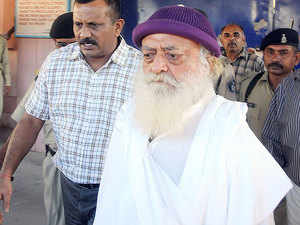
Asaram rape case Live: Godman sentenced to life imprisonment till death, 2 co-accused get 20-yr term

Asaram found guilty by Jodhpur court in minor rape case
ET Online|
Updated: Apr 25, 2018, 02.53 PM IST


Nearly five years after rape charges were levelled against self-styled godman, Asaram Bapu, the Jodhpur Schedule Caste and Schedule Tribe Court today awarded life imprisonment to Asaram till death, while the two other got 20-year term. The judgement in the case was pronounced inside the Jodhpur Central Jail. 
The five charges levelled against Asaram Bapu were, raping minor girl, wrongful confinement, criminal intimidation, criminal conspiracy and sexual harassment. 


Asaram, who is currently lodged in the Jodhpur Central jail, was facing trial in two sexual assault cases: one in Rajasthan and the other in Gujarat. 

Here are the live updates:
* According to reports, Asaram breaks down after hearing the sentencing verdict.
* The godman sentenced to life imprisonment till death. Two associates of Asaram sentenced to 20 years in prison
*Arguments on quantum of sentence in Asaram rape case over.
*Asaram Bapu is expected to be sentenced soon. 
* According to sources,defence counsel cited his welfare programmes while seeking leniency.
*'Asaram's conviction is under section 376 and POCSO Act'.
*Asaram's counsel pleads for leniency in quantum of punishment.
*According to police sources, co-accused Shiva and Shilpi have been convicted and Sharad and Prakash have been acquitted.
*A total of six followers of Asaram have been detained ahead of his rape case verdict.
* The special SC/ST court has begun its hearing proceedings inside the Jodhpur jail.
* The district officials have stepped up security arrangements near the house of the victim.
* The Jodhpur police have imposed section 144 in the city till April 30, banning the assembly of more than four people at a place.
* Asaram's followers have congregated in various parts of the country, praying for his immediate release.
In the case registered in Rajasthan, a teenage girl from Shahajahanpur of Uttar Pradesh had accused Asaram of raping her at his ashram in Manai village near Jodhpur on the night of 15 August 2013. 

While in Gujarat, the two Surat-based sisters had lodged separate complaints against the self-styled godman and his son Narayan Sai, accusing them of rape. 

The self- styled godman had filed a number of bail petitions, a total of 12 applications were rejected by the trial court, the the trial court, the Rajasthan High Court, and the Supreme Court. 

Asaram Bapu was taken into police custody in August 2013, following which he was taken to Jodhpur Central jail. A month after his arrest a potency test was conducted on him and was produced before a Jodhpur court. 

In the years following his arrest ,a number of the key witnesses in the case were attacked or went missing. In 2014, Asaram's personal aide was shot dead, while another associate was killed in 2015 in Muzaffarnagar. 

In order to prevent any untoward situation, the Union home ministry had issued an advisory for Rajasthan and the adjoining states of Gujarat and Haryana. 

As a precautionary step, the Jodhpur police have imposed section 144 in the city till April 30, banning the assembly of more than four people at a place. 

The verdict in the case will be announced from inside the jail premises, as mandated by the Rajasthan High Court. 
Yesterday, Jodhpur Court dismissed the petition seeking entry of media persons in Central Jail of Jodhpur for the coverage of Asaram Bapu rape case judgment. 


Tuesday, April 24, 2018

ICICI deserves a statesman, not a leader in hiding: An open letter to Chanda Kochhar

ICICI deserves a statesman, not a leader in hiding: Letter to Chanda Kochhar from another CEO
Anjana Menon 
CEO, Content Pixies 
ET CONTRIBUTORS|
Updated: Apr 24, 2018, 02.55 PM IST


Dear Mrs Kochhar, 

In the last few weeks, ever since it emerged that your husband and your brother-in-law may have benefited from your position as the head of India’s largest private bank, you’ve been silent. You’ve been mum through the embarrassing interrogation of your brotherin-law by India’s investigative authorities. You’ve skipped events where you were expected and melted behind your board members. We’ve missed your usual front-row hustle in those exquisite sarees and jewels. 

Longing aside, let’s look at the allegations first. It seems that while you were heading ICICI BankNSE 1.68 %, as CEO, your bank, as part of a consortium of lenders, loaned some Rs 32 billion to the Videocon Group. The chairman of the group, Venugopal Dhoot, a well-known businessman, is no stranger to investigative agencies. In 2011, he was questioned by the Central Bureau of Investigation (CBI) when allegations broke about the unfair grant of telecom licences to some Indian businesses. 


Anyway, a year later, your bank unhesitatingly lent him money. He was, by then, also a familiar business partner of your husband’s. You made no mention of this important detail. It seems you also completely forgot that you, your family and he held shares in Credential Finance at some point, even though that was before you were elevated to the top job at ICICI Bank. You likely knew Dhoot well, too well to not have had a fleeting feeling there was a conflict of interest in being involved in a loan process to his firm. 

Now, as shareholders sit on a steep haircut, it’s alleged your husband has ended up owning a business, with chump change given by Dhoot, worth Rs 640 million. 
In the meantime, it’s also emerged that your brother-in-law has established a thriving business in Singapore, a bruisingly competitive financial hub. He’s done well, allegedly gaining in some measure by restructuring loans, including that of the Dhoots. 

In short, it appears, while you were at the helm, those close to you may have carved out several pieces of the ICICI goodwill pig and helped themselves to some choice cuts. 

The remains of the meal smell a bit foul, and that’s why investors have dumped ICICI shares. Collectively, it’s shorn billions off the value of the stock and left us poorer. Your board is in denial of this. In fact, reports suggest that your chairman conducted a “secret” investigation into these allegations and cleared you. Clearly, he has a limited knowledge of propriety in a publicly held firm. 

As you scan the headlines you’ve been making, it also seems you missed the little one from Martin Sorrell of WPP. And the lessons in it. Sorrell resigned on allegations of improper behaviour yet to be proven. WPP is all Sorrell, more than ICICI will ever be all you. He built a wire basket maker into the world’s largest advertising agency in a 33-year slog. 

Yet, as he quit, he wrote to employees, “I see that the current disruption we are experiencing is simply putting too much unnecessary pressure on the business…. That is why I have decided that in your interest, in the interest of our clients, in the interest of all shareowners, both big and small, and in the interest of all our other stakeholders, it is best for me to step aside.” 

It’s something you need to read over and over again. You need to put bank, shareholders and depositors above the love of your job, because institutions outlive individuals. It’s like that in business and you know it only too well. 

You need to step aside because large institutions have questioned why you are still around, why your board will not allow an external probe. 

In a letter to you daughter that was widely quoted a year ago, you wrote, “Don’t compromise on the values of fair play and honesty.” The time has now come for you to act in the spirit of that, a bit like Sorrell did. 

Please resign, Mumma Kochhar, because that’s what would set a good example. Be fair to investors, and shareholders. 

Irrespective of what investigations may reveal, you’ve lost shine because you have failed miserably in putting ICICI’s reputation before yours. India’s biggest private lender deserves a statesman leader, not a general in hiding. 

Yours truly,
Shareholders
 
(Disclaimer: The opinions expressed in this column are that of the writer. The facts and opinions expressed here do not reflect the views of www.economictimes.com.)


Monday, April 23, 2018

WHY SOMEONE NEEDS TEA AND WHISKY AT DIFFERENT TIMES OF THE DAY?

Image may contain: drink

Guess what! TCS alone is bigger than total m-cap of all listed stocks in Pakistan

TCS in $100 billion club: The journey so farImage result for pic of TCS
By Amit Mudgill ETMarkets.com|
Updated: Apr 23, 2018, 06.39 PM IST

NEW DELHI: India has just got its first IT company with $100 billion market-capitalisation as, TCSNSE 0.18 %, the crown jewel of Tata Group, zoomed past the magic number in morning trade on Monday. 

The latest spike in TCS shares has been driven by its March quarter earnings, in which the company reported a 5.71 per cent sequential growth in consolidated net profit at Rs 6,904 crore. 

The $100 billion market-cap catapults TCS to an elite club. World over, there are only 63 other companies in this league, including the likes of Amazon and Facebook. 

The figure equals the GDP of as many as 128 countries the world over, is bigger than the total market capitalisation of all the stocks listed on Pakistan Stock Exchange and almost one-third of India’s total Budget expenditure for FY19. 

The following can give you a good perspective of what TCS has just achieved.

GDP of 128 countries 
The 100-billion mark is special given there are 128 countries in the world, whose GDP as of 2017 estimates is less than $100 billion. The list includes countries such as Sri Lanka, Ecuador, Slovakia, Kenya, Luxembourg, Costa Rica, Bulgaria, Belarus and Jordan among others. There are just 64-65 countries as per various estimates with over $100 billion GDP.

Bigger than Pakistan Stock exchange 
Yes, at dollar-Pakistani rupee exchange rate of 116.04 , the 559 stocks listed on Pakistan Stock Exchange amounted to $80 billion (or 9,32,5,89 crore Pakistani rupee) as of April 19. TCS’ $100 billion market value is 25 per cent higher than PSE stocks combined! 

IT major joins the elite club 
TCS is the only 64th company in the world with market value of $100 billion or above. Apple is the most valued firm on the earth with mcap of $840 billion. Bill Gates' Microsoft enjoys m-cap of $731 billion. FANG stocks, Facebook enjoys a m-cap of $482 billion, Amazon 740.79 billion and Netflix $142 billion and Alphabet (Google) $746.03 billion. IBM's m-cap is at 133 billion. 

27% of FY19 total expenditure 
TCS m-cap at Rs 6.7 lakh crore is nearly 27 per cent of total expenditure of Rs 24.42 lakh crore estimated by the government for the ongoing financial year. During his Budget speech, the FM jaitley had said that the Budget reflects the government’s firm commitment to substantially boost investment in Agriculture, social sector, Digital Payments, Infrastructure and Employment Generation while simultaneously sticking to the path of fiscal rectitude.' 

Equals India-Japan defence budgets 
TCS' m-cap is equal to defence budgets of India and Japan combined. India overtook the UK as the fifth-largest defence spender in the world in 2017 at $52.5 billion, up from $51.1 billion in 2016, according to the 'Military Balance 2018' report by the International Institute for Strategic Studies (IISS). Japan's military on the other hand, has approved $45 billion in defence budget for FY19. 

1/4th of India's forex reserves 
TCS' m-cap at $100 billion is roughly one-fourth of India's $426 billion forex reserves as of April 13. 

Holds 62% of Tata Group value
A total of 30 listed stocks from Tata Group have a combined market value of Rs 10.79 lakh crore as of Friday’s closing. At Rs 6.7 lakh crore, TCS alone holds 62 per cent of the group's total market value. 

4% of BSE universe
The most valued firm in in India accounts for 4.43 per cent of BSE's total m-cap, that is Rs 151 lakh crore as of Monday. TCS' nearest competitor RIL needs to rally 13 per cent to become the most valued firm. At present, RIL has m-cap of Rs 5.94 crore, which is over Rs 70,000 crore less than that of TCS. 

M-cap value change highest among Indian cos
Market capitalisation of the IT giant has risen from Rs 47,232 crore to a mammoth Rs 6.78 lakh crore in 14 years of its listing - the highest among all Indian listed companies. The IT major was listed on August 25, 2004, and if an investor had invested Rs 10,000 in TCS at that point, s/he would have made over Rs 1.40 lakh (ex-dividend) by now. The company made a total dividend payout of Rs 321/share since listing, ET Now reported. The IT stock has delivered 22.4 per cent return annually against up to 21 per cent return by peers Infosys (17 per cent), Wipro (11 per cent) and HCL Tech (21 per cent). 

TCS matches up with Accenture's m-cap
At just over $101 billion in market value, TCS' m-cap is within striking distance of Accenture's $102 billion. TCS is trading at par with Accenture on the valuation front (versus 18 per cent discount to Accenture trade three months ago), Prabhudas Lilladher said in a note. 

India highest recipient of remittances at $69 billion, says World Bank

PTI|
Updated: Apr 23, 2018, 04.35 PM IST


World Bank President Jim Yong Kim
Washington/New Delhi: India retained the top position as recipient of remittances with its diaspora sending about USD 69 billion back home last year, the World Bank said today. 

Remittances to India picked up sharply by 9.9 per cent, reversing the previous year's dip, but were still short of USD 70.4 billion received in 2014. 

In its latest Migration and Development Brief, the World Bank estimated that officially recorded remittances to low-and middle-income countries reached USD 466 billion in 2017. 

This was an increase of 8.5 per cent over USD 429 billion in 2016. 

Global remittances, which include flows to high-income countries, grew 7 per cent to USD 613 billion last year, from USD 573 billion in 2016, the bank said. 

The stronger than expected recovery in remittances is driven by growth in Europe, Russia and the US. The rebound in remittances, when valued in US dollars, was helped by higher oil prices and a strengthening of euro and ruble, it added.

India continued to top in terms of receiving remittance, and was followed by China (USD 64 billion), the Philippines (USD 33 billion), Mexico (USD 31 billion), Nigeria (USD 22 billion), and Egypt (USD 20 billion). 

The Bank said remittances to South Asia grew a moderate 5.8 per cent to USD 117 billion. 

Reversing previous year's sharp decline (8.9 per cent in 2016), remittances to India in 2017 picked up sharply by 9.9 percent, the bank said. As against USD 62.7 billion in 2016, it received USD 69 billion last year. 

The upsurge is likely to continue into 2018 on the back of stronger economic conditions in advanced economies (particularly the US) and an increase in oil prices that should have a positive impact on the GCC countries. 

However, flows to Pakistan and Bangladesh were both largely flat in 2017, while Sri Lanka saw a small decline (-0.9 per cent). In 2018, remittances to the region will likely grow modestly by 2.5 percent to USD 120 billion. 

Pakistan received USD 20 billion in remittances, whereas Bangladesh received USD 13 billion. 

Remittances are expected to continue to increase in 2018, by 4.1 per cent to reach USD 485 billion. Global remittances are expected to grow 4.6 per cent to USD 642 billion in 2018. 

The Bank said, the global average cost of sending USD 200 was 7.1 per cent in the first quarter of 2018, more than twice as high as the Sustainable Development Goal target of 3 per cent. Sub-Saharan Africa remains the most expensive place to send money to, where the average cost is 9.4 per cent. 

Major barriers to reducing remittance costs are de-risking by banks and exclusive partnerships between national post office systems and money transfer operators. These factors constrain the introduction of more efficient technologies-such as internet and smartphone apps and the use of crypto currency and blockchain-in remittance services. 

"While remittances are growing, countries, institutions, and development agencies must continue to chip away at high costs of remitting so that families receive more of the money. Eliminating exclusivity contracts to improve market competition and introducing more efficient technology are high-priority issues," said Dilip Ratha, lead author of the Brief and head of KNOMAD. 

In a special feature, the Brief notes that transit migrants-who only stay temporarily in a transit country-are usually not able to send money home. 

Migration may help them escape poverty or persecution, but many also become vulnerable to exploitation by human smugglers during the transit. Host communities in the transit countries may find their own poor population competing with the new-comers for low-skill jobs, it said.