Pages

Thursday, June 7, 2018

EMPLOYEES' LEAVE POLICY IN INDIA


Image result for PIC OF EMPLOYEE LEAVESNumbers of leaves entitlement in a company depends upon state you are in. Every state has different leave entitlement and leave policies which should be seen before one defines leave policy of your company. Leave policy of a company cannot be less than that mentioned by the State’s shop and establishment act.

Earned Leave

This is a paid leave earned by employees during a year and availed in the subsequent year. If the number of earned leave is over, the day is considered as an unpaid leave and the day’s pay is cut from the salary. These leaves can also be en-cashed while leaving the company. The following are number of earned leaves according to laws:
·         Factory workers need to work minimum 240 days in the organization in a year to be eligible for earned leave. Adults get 1 day for every 20 days, and children, below the age of 15, get 1 day for every 15 days work in the previous year.
·         Mine workers below the ground can avail 1 day for every 15 days work; and those working above the ground can avail 1 day for every 20 days work.
·         Workers in a Bidi or Cigar factory get 1 day leave for every 20 days work in the previous year. If the worker is a child of below age 15, he gets 1 day off for every 15 days of work.
·         People working in sales, and newspaper running company (which includes journalists) can avail one month earned leave for every 11 months of work.
·         Domestic workers are also eligible for 15 days earned leave in a year.

Casual Leave

This is another paid leave that although not earned, is entitled to employees only if prior permission is granted by the organization. If the employer does not grant permission and the employee nevertheless takes a leave, the day’s pay is cut from the salary. Usually every organization allows a certain number of casual leaves in a year, which is fixed by the company’s administration. Although, there is laws for certain types of workers:
·         Sales and newspaper employees (including journalists) are entitled 15 days of casual leave in a year
·         Apprentices are entitled annually 12 days casual leave

Sick/Medical Leave

Employers provide sick leaves to employees when they are ailing. Some organizations ask for a medical certificate to grant sick leave. Others don’t deem in necessary. If the employee has used up all his sick leaves, the company uses his earned leaves. Sick leaves can also be carried forward to the next year. The specifications are although determined by the company’s administration. Laws governing sick leaves for different types of employees are:
·         Apprentices are entitled for 15 days of sick leave in a year. This can be accumulated to a maximum of 40 days.
·         Journalists and Newspaper employees can avail medical leave of one month for every 18 months of work. During the medical leave, the employees are paid half the day’s pay.
·         Sales employees are entitled to medical leave similar to that of newspaper employees. They although mandatorily need to show a medical certificate for their absence.

Maternity Leave

Indian Parliament approved a bill granting women working in the organised sector paid maternity leave of 26 weeks, up from 12 weeks now, a decision which will benefit around 1.8 million women.

The law will apply to all establishments employing 10 or more people and the entitlement will be for the first two children. For the third child, the entitlement will be 12 weeks.


With this, India becomes the country with the third highest maternity leave. Canada and Norway grant 50 weeks and 44 weeks respectively as paid maternity leave.


The Maternity Benefit Act, 1961 protects the employment of women during the time of her maternity and entitles her full paid absence from work to take care of her child.


Among other things, the bill provides for 12 weeks of maternity leave to a woman who legally adopts a child under three months of age and a commissioning mother (defined as a biological mother) who uses her egg to have a surrogate child.

Paternity Leave

There is no provision on paternity leave in Indian labour law for private sector workers. The civil servants (Central Government) however are entitled to paternity leave. A male civil servant (including an apprentice, probationer) with less than two surviving children, may be granted Paternity Leave  for a period of 15 days before or up to six months from the date of delivery of the child. If paternity leave is not taken within 6 months of the birth of child, it is treated as lapsed. Workers on paternity leave are paid their leave salary equal to the pay drawn immediately before proceeding on leave. The paternity Leave may be combined with leave of any other kind. The paternity leave cannot be debited against the leave account. Paternity Leave cannot normally be refused under any circumstances. Similar provisions are applicable on the adoption of a child under the age of one year.

Source: Rule 43-A & 43-AA of Central Civil Services (Leave) Rules, 1972

Wednesday, June 6, 2018

CBSE special topper: Find love in what you do.Anushka Panda has spinal muscular atrophy. She scored 97.8 per cent and topped CBSE class 10 examination in the differently-abled category.

Last updated on: June 04, 2018 19:11 IST

This is her story
Anushka Panda
Anushka Panda, 15, scored 99 marks in mathematics and Hindi; 98 in science and social science and 95 in English.  Photograph: Kind courtesy Anushka Panda
Anushka Panda defines everything a 15-year-old is.
She's chirpy. Likes pav bhaji. Loves to sing, read books and travel.
Since May 30, she's been wanting to have a slice of pizza, but it might be a while since she may eat in peace.
Anushka, a student of Suncity School, Gurgaon scored 97.8 per cent in the CBSE class 10 results announced May 29. She topped the board exam in the differently-abled category.
Anushka has spinal muscular atrophy -- a near-fatal life condition she's been living with since she was 14 months old.
The degenerative condition, Anushka tells me make her muscles weaker. She has difficulty moving and has a mere 7 per cent lung functionality.
"I have to sit with a spinal brace made from Boston," she tells Divya Nair/Rediff.com over the phone from Gurgaon, where her family moved to in 2015.
The Pandas -- Anushka lives with her father Anup who works at Siegwerk in Bhiwadi, Haryana, and mother Archana who works out of home for a US-based auditing firm in Gurgaon now -- previously lived in Vapi, where Anushka studied up to her class 7.
What makes Anushka's success special is her confidence in her abilities, gratitude for the people who stood by her and encouraged her to never give up. And of course, her dream for India.
"I want to do something great for my country,' she says.
Anushka Panda speaks to us about her life journey:
Growing up with spinal muscular atrophy
CBSE class 10 special topper Anushka Panda during her childhood
Anushka when she was 6 months (left) and 9 years old (right).
I was diagnosed with the condition when I was 14 months old. I could sit up on my own without much support till I was 10 yrs old.
After that I got scoliosis of the spine and started using a spinal brace so I could sit erect. The one I am using now is specially made from Boston.
It's like a corset -- there are rods to support your spine covered with cloth padding.
It's very uncomfortable to sit wearing it for long. I get bruises from using it. But I don't have a choice.
Thankfully, my schools -- Gyandham School in Vapi, Gujarat (where Anushka studied up to class 7) and Suncity School, Gurgaon -- have been very supportive.
In Gujarat, an attendant would carry me up from the gate to my classroom. There was a special bench for me.
When I reached class 3, I started using a manually-operated wheelchair.
Since class 9, I have been using a motorable one. This is more convenient to use when I have to move around or travel.
In India, disabled people find it very difficult to travel. If I have to, we always fly.
But except for Indigo Airlines, no other airline has disabled-friendly ramps.
It's difficult to use a regular toilet. Public toilets are not disabled-friendly.
Even buses and trains don't have facilities for the wheelchair-bound. So, air travel is preferable.
Love for academics
I always loved to study. When I was 2, I knew the names of all Indian states and their capitals.
I never looked at studies as a burden.
Science, mathematics and English are my favourite subjects.
Preparing for the board examination
I started preparing for the board examination from Day One.
Except for mathematics, I studied all the other subjects on my own.
I'd give 30 minutes for every subject. On weekdays, I'd study 2 to 3 hours.
On weekends, I'd dedicate 5 to 6 hours.
I initially struggled with the social sciences and English. I'd always score between 85 and 90, but never crossed the 90-mark.
After I started solving more mock papers, my performance improved. I scored 98 and 95 in the social sciences and English respectively.
I was expecting to score over 90 per cent, but never thought I'd top the exam.
My parents were like, "Wow. This happened. We are so proud of you."
I wanted to have a pizza and celebrate, but we've been so busy. I get tired too.
All this attention is new for me. But I am also enjoying it. Speaking to so many new, different people, telling my story, hoping it will inspire someone.
Motivation and role model
Anushka with her parents Anup and Archana
Anushka with her parents Anup Kumar and Archana.
My role models have always been my parents. They never put any pressure on me.
Instead they encouraged me to pursue my interests equally. They have always motivated me to look beyond failures and dream higher.
I also sought inspiration from the life of Helen Keller. How she transformed her disabilities and turned it into her greatest strength is truly inspiring.
Other interests
I love singing. I took training for classical music under Shamal and Gargi Bhatt from Gandharva Mahavidyalaya for more than 10 years.
After moving to Gurgaon, I learn from them through Skype.
I'm also learning western music on my own.
I like to draw, paint, cook (laughs). I don't cook actually, but I'd love to.
I read crime fiction. Sir Arthur Conan Doyle and Agatha Christie are my favourite authors.
What I like about Agatha Christie is the strength of her lead character -- the detective's ability to communicate with people, get to know their psyche and uncover the killer.
Meeting Smriti Irani
Union cabinet minister of textiles Smriti Irani congratulated Anushka on Twitter on May 30 after the CBSE class 10 results were announced.
Nearly two years ago, my father tweeted to the then HRD minister Smriti Irani to find out if and how a specially-abled person could study at the IITs.
Smriti Mam responded to the tweet and fixed an appointment. In December 2015, my parents and I met her at her residence in Delhi.
She introduced us to Nobel laureate Kailash Satyarthi and (author) Ruskin Bond.
It was an inspiring, informative session.
She was very delightful, a super duper person. Very dynamic and inspiring.
In fact, she inspired me to do work for my country.
I am thankful for her support and encouraging words.
I'd like to pursue software engineering and use technology to create something great for my country.
Message to readers
Don't be afraid of board examination. The syllabus is huge. So be consistent in your preparation. Don't wait till the last minute. Do your best.
Follow your heart. And find love in what you do.
When you put your heart in it, even if it is academics, you'll start enjoying it more.
Finally, never give up. Your grit and determination will help you overcome any problem in life.
Divya Nair / Rediff.com

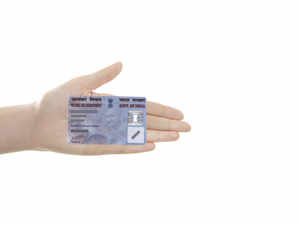
PAN becomes mandatory for sending money abroad for kids studies, investing: LRS rules tightened By Preeti Motiani, ET Online|Updated: Jun 06, 2018, 04.27 PM IST

PAN-ET-online
You won't be able to send money abroad for your kid's studies, to buy property or shares in foreign countries without PAN now and won't be able to exceed the specified annual limits either. Clearly, this is an attempt by the government to make sure that money being transferred abroad is tax-paid money and also to monitor these remittances closely to ensure that individuals stick to the limits prescribed. 


The Reserve Bank of India (RBI) has tightened the rules for remitting money abroad under the Liberalised Remittance Scheme (LRS) and has made PAN mandatory for anyone using this scheme. Earlier PAN was not insisted upon for putting current account transactions of up to $25,000. 

The LRS scheme is used by resident Indians to send money abroad for their children's studies and also to invest in foreign stocks and property. LRS was opened up to Indian residents in 2004. Parents who have sent their kids abroad for studies largely use this scheme to send money for payment of fees and meet their living expenses. 

LRS allows a resident Indian to buy stocks of foreign companies such as Google, Apple, etc on foreign stock exchanges or to buy properties abroad. Using LRS scheme, you can invest or send your money anywhere in the world. 

The central bank has made PAN mandatory for every transaction under the scheme after the bank noticed, in January this year, that several Indian businessmen, Bollywood celebrities and diamond merchants rushed to remit funds abroad to bet on stocks and properties and breached the specified limits under the scheme. 


The rules of the scheme allow individuals only to buy stocks and properties abroad and not for pure speculative bets on instruments like derivatives. The annual LRS limit (per individual) was raised in 2015 from $1,25,000 to $2,50,000. 

As per the RBI statement: Pursuant to the announcement made in the first bi-monthly Monetary Policy Statement 2018-19 on April 5, 2018, a system for daily reporting of individual transactions under the Liberalised Remittance Scheme (LRS) by Authorised Dealer (AD) banks has been put in place. This system enables the AD banks to view the remittances already sent by an individual during the financial year, thus improving monitoring and ensuring compliance with the LRS limits. Since the said reporting system uses the Permanent Account Number (PAN) of the remitter as a Unique Identifier to aggregate the remitter-wise data, it has been decided that furnishing of PAN, which hitherto was not to be insisted upon while putting through permissible current account transactions of upto USD 25,000, shall now be mandatory for making all remittances under LRS. Further, in the context of remittances allowed under LRS for maintenance of close relatives, it has been decided to align the definition of 'relative' with the definition given in Companies Act, 2013 instead of Companies Act, 1956. 


World Bank sees India as fastest growing economy for next three years The Indian economy will see a robust GDP growth of 7.3% in 2018-19 and 7.5% for the next two as ‘factors holding back growth in India fade’ Last Published: Wed, Jun 06 2018. 05 55 PM IST

Robust private consumption and strengthening investment seen as factors propelling India’s economic growth in the next three years. Photo: Bloomberg
Washington: The Indian economy will see a robust GDP growth of 7.3% in 2018-19 and 7.5% for the next two as “factors holding back growth in India fade”, the World Bank has forecast, allowing the country to retain the tag as the world’s fastest growing major emerging economy.
“India’s economy (today) is robust, resilient and has potential to deliver sustained growth,” Ayhan Kose, Director of the Development Prospects Group at the World Bank, told PTI. Growth in India is projected to advance 7.3% in FY 2018-19 (1 April 2018-31 March 2019) and 7.5% in FY 2019-20, reflecting robust private consumption and strengthening investment, the bank said in its June 2018 edition of the Global Economic Prospect report.
The report, released on Wednesday, is the global lender’s flagship publication on the state of the world economy. It said that growth in South Asia is projected to strengthen to 6.9% in 2018 and to 7.1% in 2019, mainly as “factors holding back growth in India fade.”
Previously international lenders have said the demonetisation and the initial hiccups in the implementation of the goods and services tax (GST) had impacted India’s growth. India retains the tag of the fastest growing country among the world’s major emerging economies, Kose said.
India’s growth projections remain unchanged since its January 2018 forecast. China is expected to slow down slightly from 6.9% in 2017 to 6.5% in 2018, 6.3% in 2019 and 6.2% in 2020, it said. India’s growth potential is about 7%, and it is currently growing at a pace above its potential, he said, attributing it to the major economic reforms and fiscal measures undertaken by the government.
“India is doing well. Growth is being robust. Investment growth remains high. Consumption remains strong. All in all these numbers are encouraging,” Kose said, referring to the World Bank report on India’s growth rate figures.
“And India is the fastest growing economy in major emerging markets,” he said. Noting that India’s growth prospects are strong, the official said the potential growth rate of India is around seven per cent. “However, you look at it, India is in a very strong position,” he said.
“In terms of economic growth, the fact that India is able to deliver a robust consumption growth, robust investment... All these are good news. The big issue is now that India has a potential to sustain this growth and we are optimistic about India to realise that potential,” Kose said.
Seeking an increasing female labour force participation, he said on the productivity side India has room for improvement in secondary education completion rates. Noting that there are risks that all emerging market economies are facing because of global economic developments, he said, for example the disorderly tightening of global financial conditions could have implications for emerging market economies.
“There is trade tensions out there. These tensions have been escalating in recent weeks. These have implications for growth prospects as well,” he said. Like other oil importers, India is also facing a higher oil prices, he said.
In its latest report, the bank said in India, investment growth has firmed recently, as the effects of temporary factors wane. It said that growth in South Asia is projected to accelerate to 6.9% in 2018, mainly reflecting strengthening domestic demand in India as temporary policy-driven disruptions fade.
Elsewhere in the region, ongoing recoveries in Bangladesh, Pakistan and Sri Lanka are expected to be accompanied by moderating activity in Afghanistan, Bhutan and Maldives, the World Bank said.
“Over the medium term, growth is expected to remain strong and reach 7.2 per cent by 2020 amid robust domestic demand. Downside risks continue to predominate. They include the possibility of fiscal slippages, delays in reforms to resolve financial vulnerabilities and improve the health of regional banking systems, and a faster-than-expected tightening in global financing conditions,” the report said.
Stronger-than-envisioned global growth could result in better regional growth outcomes, it added.

Relief for MSME borrowers, get temporary loan-repayment breather ET Online|Updated: Jun 06, 2018, 03.32 PM IST

money4Image result for pic of indian msme

The Reserve Bank of India (RBI) has given a temporary loan-repayment breather to all micro, small and medium (MSMEs) that have been affected due to implementation of the Goods and Services Tax regime. 

A loan account is qualified as a Non-Performing Asset (NPA) based on 90 day and 120 day delinquency norms. The RBI noted that that formalisation of business through registration under GST had adversely impacted the cash flows of the smaller entities during the transition phase with consequent difficulties in meeting their repayment obligations to banks and NBFCs. 


As a measure of support to these entities in their transition to a formalised business environment, it has been decided that the exposure of banks and NBFCs to a borrower classified as micro, small and medium enterprise under the Micro, Small and Medium Enterprises Development (MSMED) Act, 2006, shall continue to be classified as a standard asset in the books of banks and NBFCs subject to the following conditions. The notification for this was issued in February 2018 and only MSMEs registered under GST was provided the breather. 

Accordingly banks and NBFCs were allowed to temporarily classify their exposures to the Goods and Services Tax (GST) registered Micro, Small and Medium Enterprises (MSMEs), having aggregate credit facilities from these lenders up to Rs 250 million, as per a 180 day past due criterion, subject to certain conditions. 

Having regard to the input credit linkages and associated issues, it has now been decided to temporarily allow banks and NBFCs to classify their exposure, as per the 180 day past due criterion, to all MSMEs with aggregate credit facilities up to the above limit, including those not registered under GST. 

“Accordingly, eligible MSME accounts, which were standard as on August 31, 2017, shall continue to be classified as standard by banks and NBFCs if the payments due as on September 1, 2017 and falling due thereafter up to December 31, 2018 were/are paid not later than 180 days from their original due date,” said the RBI. 

In view of the benefits from increasing formalisation of the economy for financial stability, the 180 day past due criterion, in respect of dues payable by GST registered MSMEs from January 1, 2019 onwards, shall be aligned to the extant norm of 90 day past due in a phased manner, whereas for entities that do not get registered under GST by December 31, 2018, the asset classification in respect of dues payable from January 1, 2019 onwards shall immediately revert to the 90 day norm. 


RBI pulls the trigger, hikes repo rate for the first time in Modi regime ETMarkets.com|Updated: Jun 06, 2018, 02.54 PM IST


NEW DELHI: The six-member monetary policy committee of RBI headed by Governor Urjit Patel on Wednesday bit the bullet and hiked the repo – the short-term lending rate – by 25 basis points to 6.25 per cent. 
Image result for pic of rbi

This was the first rate hike by the Indian central bank in four-and-a -half years, since the BJP-led National Democratic Alliance government was vo ted into office in May 2014. The reverse repo rate has been adjusted to 6 per cent. 

The RBI allowed 2 per cent more SLR (statutory liquidity ratio) carve out to meet liquidity coverage ratio. The banks can now use SLR carve out of 13 per cent to meet liquidity cover ratio. 


The MPC kept its policy stance to ‘neutral’. Eighty-three per cent of the economists who participated in an ETNow poll had expected a 'hawkish' stance while the remaining 17 per cent expected a 'neutral’ view. 
repo graph
It was MPC’s second bimonthly policy review of this financial year. 

The GDP growth for 2018-19 is retained at 7.4 per cent as in the April policy. GDP growth is projected in the range of 7.5-7.6 per cent in H1 and 7.3-7.4 per cent in H2, with risks evenly balanced. "The MPC notes that domestic economic activity has exhibited sustained revival in recent quarters and the output gap has almost closed. Investment activity, in particular, is recovering well and could receive a further boost from swift resolution of distressed sectors of the economy under the Insolvency and Bankruptcy Code," RBI said. 

Geo-political risks, global financial market volatility and the threat of trade protectionism pose headwinds to the domestic recovery. It is important that public finances do not crowd out private sector investment activity at this crucial juncture. Adherence to budgetary targets by the Centre and the States – which appears to be the case thus far – will also ease upside risks to the inflation outlook considerably, the MPC statement read. 

Money markets were expecting rates to rise. At Tuesday’s close, the 12-month Overnight Indexed Swap (OIS) rate, an indicator of future rate action, remained elevated at a more than two-year high. 

The rate hike is expected to trigger a spike in bond yields, thus raising further inflation risks. 

This is the first time the MPC met for three days, instead of the usual two, citing certain ‘administrative exigencies’. 

The RBI statement said MPC members unanimously favoured a rate hike . Two members had voted for a 25-basis points hike at the April rate review. 

Much water has flowed below the bridge since. A recent spike in crude prices has upset inflation calculations. RBI had pegged the same at $68 a barrel in its April projections but the prices crossed $80 in May, creating a hole in the country’s current account and threatening to stoke consumer prices further. Crude futures traded at $75 on Wednesday, amid uncertainty over Venezuela output and Nigerian outages. 

India’s Consumer Price Index, the retail price gauge, was at 4.58 per cent in April, up from 4.28 per cent a month earlier. RBI’s retail inflation target for the April-September period of FY19 stands at 4.7-5.1 per cent. 

Foreign brokerage UBS had assigned 40 per cent probability of a pre-emptive 25 basis point hike this time around. 

Indonesia, which has a large population and runs a high current account deficit (CAD), just like India, hiked interest rates twice in the last one month. Turkey too raised interest rates by a massive 300 basis points last week. 

With pricey oil, India’s high consolidated gross fiscal deficit and CAD to GDP ratios could make it vulnerable to the negative sentiment seen in other emerging markets. India's low external debt to GDP ratio and high import cover may act as a buffer. 

INDIANS LIKE FREEBIES.AN EXAMPLE

A plane made an emergency landing on water. The stewardess asked the passengers to slide down to the lifeboats, but the passengers refused.
Image result for PLANE PASSENGERS COMING OUT OF CHUTES IN EMERGENCY
The stewardess then asked the captain to help. The captain, being very knowledgeable and experienced, guided her - “You tell the Americans this is an ADVENTURE. Tell the British this is an HONOUR. Tell the French this is a ROMANTIC activity, and tell the Germans this is the LAW. Tell the Japanese this is an ORDER, and everyone will be sorted out.”
The stewardess remembered the flight had some passengers from India and Singapore too. “What about them”, she asked.
The captain, taking a deep breath, patiently explained -
“You need not tell the SIngaporeans anything, my dear. Once they see a QUEUE, they will join it without questions.”
“And what about the Indians?”, she persisted.
The captain laughed. “Easy. Just tell the Indians this activity is FREE.”

MOBILE CELL PHONE BLASTS IN MAN'S POCKET


What explains the spike in fourth-quarter GDP growth? It was Modi's hand at work


ET Online|
Updated: Jun 04, 2018, 07.09 PM IST


India GDP
NEW DELHI: The government was the main driver behind the rise in January-March gross domestic product (GDP) growth to 7.7 per cent. In this period, the economy grew at the fastest pace in seven quarters and retained the tag of the fastest growing major economy. 

Data released by the CSO a few days ago showed that GDP growth in the January-March quarter of 2017-18 was at a 7-quarter high of 7.7 per cent. Economic Affairs Secretary Subhash Chandra Garg said the GDP data indicated a a turnaround in manufacturing and construction activity, as also pick up in private investments. 

However, according to a report by HSBC, it was only "the hand of government" that lifted GDP growth. The report cited four key drivers for the rise in growth print—core GVA (gross value added), the public spending component of GVA, construction, and rise in central and state government fiscal deficits—as exports and private consumption disappointed. 

As per the report, core GVA (GVA excluding public services and agriculture), which is a rough proxy for private sector growth, moderated slightly in the March quarter to 7.2 per cent versus 7.4 per cent last quarter and 4.1 per cent in the same quarter last year. 

"The GDP print reinforces our view that much of the current uptick in growth is led by the government's push to construction and consumption," the HSBC report said. 

While manufacturing and agricultural growth rose, exports and private consumption disappointed. "Even though global demand has been strong, India's export growth fell across every metric. Net exports shaved off 1.5 ppt from the growth number," it said. 

According to HSBC, the public spending component of GVA and the government consumption component of GDP grew at a rapid pace, accounting for roughly one-fifth of overall growth. Moreover, construction and capital formation grew at double digits and public roads contracts awarded quadrupled in the March quarter. Besides, central government fiscal deficit for FY18 rose to 3.5 per cent, versus a budget estimate of 3.3 per cent and this has growth. 


Tuesday, June 5, 2018

India to go ahead with S-400 deal with Russia notwithstanding US sanctions June 05, 2018 20:49

Image result for modi and putin


India has very clearly conveyed to the US that the "time-tested" Indo-Russian cooperation in the defence sector will continue, including the deal for S-400 Triumf air defence missile systems for the IAF, notwithstanding the American sanctions against Moscow.
  
Sources said India wants its defence transactions with Russia to be insulated from the purview of stringent American law CAATSA and is likely to raise the issue with the US when the two sides meet in Washington for the 2+2 talks next month.

"In all our engagements with the US, we have clearly explained how India and Russia's defence cooperation has been going on for a long time and that it is a time-tested relationship. We have mentioned that CAATSA cannot impact the India-Russia defence cooperation," Defence Minister Nirmala Sitharaman said at a press conference.

She said India has got quite a lot of defence assets from Russia and the cooperation between the two countries will continue.

In January, the US announced sanctions against Russia under its Countering America's Adversaries Through Sanctions Act for Moscow's alleged meddling in the American presidential election in 2016. 

CAATSA, which came into effect in January, mandates the Donald Trump administration to punish countries and entities engaging in significant transaction with the defence or intelligence establishment of Russia. 

Asked whether India will go ahead with the S-400 deal with Russia, the defence minister said the long-drawn negotiations relating to it have reached final stage. 

"The S-400 deal has been on for a very long time and we have reached the final stage of negotiations. That explains it," she said.

India wants to procure the long-range missile systems to tighten its air defence mechanism, particularly along the nearly 4,000-km-long Sino-India border. 

Official sources said both Russia and India are likely to announce the deal before an annual summit between Prime Minister Narendra Modi and Russian President Vladimir Putin in October.