Pages

Tuesday, April 2, 2019

usiness News›Tech›Hardware›iPhone 7 now being made in India Search for News, Stock Quotes & NAV's 02:36 PM | 02 APR LIVEMARKET STATSSENSEX 38,96189.57 NIFTY 50 11,67910.20 GOLD (MCX) (Rs/10g.) 31,520.00-6.00 USD/INR 69.10-0.01 CREATE PORTFOLIO Download ET MARKETS APP CHOOSE LANGUAGE ENG iPhone 7 now being made in India The cost of making iPhone 7 devices in India is cheaper than importing them due to the duty sops.

iphone-7-agencies

NEW DELHI: NEW DELHI: Apple has started manufacturing the iPhone 7 model in India, in addition to iPhone SE and iPhone 6s, thus widening its 'Made in India' portfolio and signalling its intention of developing the country as a manufacturing hub. 

“We are proud to be producing iPhone 7 in Bengaluru for our local customers, furthering our long-term commitment in India,” said Apple in an e-mail to ET exclusively. 

Taiwanese contract manufacturer Wistron, which makes iPhone SE and 6s models out of its plant on the outskirts of Bengaluru, has been making the iPhone 7 devices in India since the beginning of March. 


People familiar with the matter said that a price drop for the iPhone 7 is unlikely with analysts saying the company will invest the margins made from these devices into a more aggressive sales and marketing play. 

graph
“iPhone 7 is a low risk kind of product for Apple to make out of India. To that extent, it (local manufacturing of iPhone 7) is about revalidating Apple’s India manufacturing capability before they scale up to other models,” said Navkender Singh, research director at IDC India. 

He added that Apple will make more money at the same price points, owing to higher margins now. 

“They will use the funds in their channels, for market development purposes most likely,” he said, ruling ruling out price cuts. “Apple is price conscious.” 

Apple is coming off its weakest year – 2018 – since 2014 and has revamped its management team and sales strategy, with analysts saying it’s clear that the company is planning to treat India more as a manufacturing and export hub – also in the backdrop of the China-US geopolitical pressures - rather than a destination for its products’ sale. The high prices of Apple’s devices and competition from Chinese players offering advanced feature at far lower prices meant Apple’s market share in India sunk to around 1.2% in 2018, from 2.4% in 2017. 
Singh said that locally manufacturing the iPhone 7 won’t drive up Apple’s volume sales in India in 2019 – which are again expected to be “sluggish” - but it is more about testing waters in the manufacturing segment for high-end Apple phones”. 

As per news reports, the company seems to be planning to phase out iPhone 6 and 6s from the Indian market, and this could mean that iPhone 7 now becomes the entry level model for India, he added. 

Talking about India as a market for Apple as a whole, Singh said that while the device segment remains hard to crack for Apple, it will be interesting to see the launch of the company’s content services. “We think it will take some time for Apple to launch its video streaming service in India. It could easily be a year before we see Apple’s video content video in India”. 

Apple last week launched a television and movie subscription service, a credit card, and a digital video game arcade as it sought to reposition itself as an entertainment and financial services company, which also makes smartphones. 

CRISIS SIMMERS WITHIN ICAI AS NFRA BEGINS WORK-TRANSPARENCY AND CONFLICT OF INTEREST ISSUE DOG THE ACCOUNTING BODY


N Sundaresha Subramanian

Editor - Corporate and Regulatory Affairs ET Prime

SC strikes down RBI's February 12 circular on NPAs The RBI circular directed lenders to refer loan accounts over Rs 2,000 crore under the Insolvency and Bankruptcy Code if it is not resolved in 180 days of default

Image result for pic of RBI
The Supreme Court on Tuesday struck down Reserve Bank of India's (RBI's) February 12, 2018, circular on bankruptcy proceedings, in a major relief to stressed power and sugar companies. The RBI circular had made it mandatory for banks to ensure that a resolution plan (RP) is in place within 180 days of a ‘default’ of accounts, with exposure of Rs 2,000 crore or more. Failing this, such accounts were to be directed to the NCLT for insolvency proceedings.The central bank had set the deadline of August 31, 2018 for banks to comply with this norm.
A two-judge bench of justice Rohinton Fali Nariman and justice Vineet Saran pronounced the judgement while hearing a bunch of petitions on the maintainability of the RBI circular.The companies had earlier argued that "As per RBI, 157 companies were directly affected by the February circular and not one company has been resolved in the said timeline."he circular also underscored IBC's status as the cornerstone of the bad loan resolution framework, superseding all previous mechanisms. The circular imposed a one-day default rule. Banks have to treat a company as a defaulter even if it misses repayment schedule by a day.
However, these norms have been criticised as being harsh in various quarters, including by a parliamentary committee.
Here we explain RBI’s new framework and its impact.  
Timelines for Large Accounts to be Referred under IBC:
For loan accounts of Rs 2,000 crore or more, banks will have to ensure that a resolution plan is in place within 180 days after a ‘default’.
If not implemented within the timeframe, the account must be referred to the insolvency courts within 15 days.
For accounts with exposure of Rs 100 crore to Rs 2,000 crore a timeline for resolution will be announced over a two-year period.
Impact: This will strain the balance sheets of banks as the disclosure on their books has to be made much earlier than before.
Identify stress early:
Lenders must identify emerging stress loans as special mention accounts (SMA) in three categories based on their default period:
SMA Sub-categories
Basis for classification – Principal or interest payment or any other amount wholly or partly overdue between
SMA-01-30 days
SMA-131-60 days
SMA-261-90 days
  • Lenders must report credit information to Central Repository of Information on Large Credits (CRILC) on loans of Rs 5 crore and above.
  • Any default in such loans  needs to be reported to CRILC every Friday starting February 23.
  • The CRILC-Main Report will need to be submitted on a monthly basis effective April 1, 2018.
Impact: Reporting of such nature will deter borrowers from defaulting for the fear of their names being known to the RBI. It will also alert other lenders while providing another other forms of finance.
Implementation of Resolution Plan:
All lenders must put in place Board-approved policies for resolution of stressed assets under this framework, including the timelines for resolution.As soon as there is a default in the borrower’s account with any bank/lender, all lenders − singly or jointly − shall initiate steps to cure the default.
Impact: Lenders will get on their toes to be forced to take action against the defaulters sooner than later as was the case previously.
The resolution plan can involve:
  • Regularisation of the account by payment of all overdues by the borrower entity
  • Sale of the exposures to other entities / investors
  • Change in ownership
  • Restructuring
Implementation Conditions for Resolution Plan
The plan or the RP in respect of borrower entities to whom the lenders continue to have credit exposure, shall be deemed to be ‘implemented’ only if the following conditions are met:
  1. the borrower entity is no longer in default with any of the lenders
  2. if the resolution involves restructuring; then
In case of restructuring/change in ownership in accounts of Rs 100 crore and above, an independent credit evaluation (ICE) of the residual debt by credit rating agencies (CRAs) specifically authorised by the Reserve Bank, is required.
Accounts with exposure of Rs 500 crore and above shall require two such ICEs. Only such evaluated plans will be considered for implementation.
Impact: This is aimed at alerting the bankers on the underwriting norms while considering financing to the borrowers. Further, it also provides the current status and true picture of the borrower's financial strength and actions.
Prudential Norms
In case of restructuring, the account will be immediately downgraded to sub-standard and can be upgraded only when all the outstanding loan / facilities in the account demonstrate ‘satisfactory performance’ of no default at any time during the implementation period.
Impact: This is also aimed at providing the current status and true picture of the borrower's financial strength and actions.
Penalty if banks do not follow
Any failure on the part of lenders in meeting the prescribed timelines or any actions by lenders with an intent to conceal the actual status of accounts or evergreen the stressed accounts, will be subjected to stringent supervisory / enforcement actions as deemed appropriate by the Reserve Bank, including, but not limited to, higher provisioning on such accounts and monetary penalties.
Impact: High provisioning and monetary penalties may impact the banks' profitability
Existing accounts under Insolvency and Bankruptcy Code.
Last year in two tranches, RBI identified around 40 NPA accounts to be taken to courts under the Insolvency and Bankruptcy Code.
List 1 in June – RBI identified 12 large accounts, with 25 percent share of total bad loans.
List 2 in August – RBI identified 28 large and mid-sized loan acco
First Published on Apr 2, 2019 10:58 am

Why is Rahul Gandhi so desperate to come back to power in 2019 even by promising moons and stars to the electorate?

Answered by

Rajagopalan K Suryanarayan thru Quora Digest


Rahul’s desperation to come back to power in 2019 is because of the following reasons.
Image result for pic of rahul gandhi
  1. Rahul after having been experiencing a crushing defeat in 2014, feels that the party will never come back to power if he fails to win in 2019. Similar thing has happened in Tamil Nadu, UP, Bihar, WB, etc., where the party is totally lost. If Congress cannot somehow assume power in 2019, the going can be very difficult for the party. Congress cannot survive as a leading party.
  2. Rahul has sensed that the party may lose its vote percentage further. If it happens its standing in the opposition itself will be weakened. Already the opposition leaders are vary of Rahul. In future he may be totally ignored.
  3. Rahul also has the fear that if he fails to form the Government, he and his family members may be prosecuted and may even be jailed just like Chowthala or Laluprasad. He wants to avoid the same.
  4. Rahul also feels even when his mother is still in politics, the opposition is rejecting him. Once she passes away no one will even care for him.
  5. Rahul might have come to an understanding that if he fails now, Modi will become even more powerful and it will be impossible for him to defeat him or his party.
  6. Modi and BJP have convincingly demolished all that Congress stood for - secularism, appeasement, dynasty politics, socialism, etc. Now he fears that Modi may demolish Congress party itself making India Congress mukt.
Hence Rahul is so desperate to come to power and has been offering the moon for the voters to win the election.

Himachal Futuristic Communications settles GDR manipulation probe with Sebi, pays Rs 1.14 crore The regulator had initiated adjudication proceeding against the firm in June 2018.


Image result for pic of SEBI

New Delhi: Himachal Futuristic Communications has settled a probe with Sebi in a matter related to alleged manipulation in issuance of global depository receipts (GDR) after paying Rs 1.14 crore as settlement charge. 

The regulator had initiated adjudication proceeding against the firm in June 2018. 

The firm had issued GDRs of around USD 50 million in September 2002. Out of this, GDRs worth USD 46.5 million were subscribed by only one entity, Roker Securities Inc.,upon securing a loan from Lisbon-based bank Banco Efisa. 


It is alleged the firm had pledged GDR proceeds to the bank against the loan given to Roker for subscription to GDR issue and later GDR proceeds were repatriated to the firm's Indian bank account on repayment of loan by Roker. 

It is also alleged that the applicant signed an account charge agreement with Banco and did not inform stock exchanges about the fraudulent agreement. 

Moreover, allegedly the corporate announcements made by the firm to NSE contained misleading information which might have influenced decision of investors, Sebi noted. However, the firm filed a settlement application without admitting or denying the guilt and proposed the settlement terms with the internal committee of Sebi in December 2018. 

The terms were then approved by the high powered advisory committee of Sebi which recommended the application for settlement upon payment of Rs 1.14 crore. 

The settlement charges after approval of the panel of whole-time members of Sebi was remitted by the firm on March 27, 2019. 

Accordingly, the has been disposed of. 

In separate orders, Coastal Corporation and 12 individuals, including the promoters of the firm, settled a case with Sebi related to alleged violation of Substantial Acquisition of Shares and Takeovers (SAST) norms after paying a total amount of over Rs 41.07 lakh towards settlement charges. 

"The proposed adjudication proceedings for the alleged default .... are settled qua the applicant," Sebi said in orders dated Mar 29. 


Monday, April 1, 2019

Baloch Liberation Army attacks Chinese assets for 3rd time since Aug 2018 While the figures are not known number of casualties of workers and engineers have been reported by Pakistani news channels.

imran-khan-afp

New Delhi: In yet another attack on Chinese nationals on Pakistani soil a convoy of 22 vehicles comprising Chinese engineers employed in the China Pakistan Economic Corridor (CPEC) has been targeted in Balochistan resulting in number of casualties. 

This was the third attack on Chinese assets during the past six months by Baloch Liberation Army (BLA) which has been protesting China's growing presence in Balochistan. BLA, which is also opposed to CPEC targeted Chinese consulate in Karachi last November, in a dare devil act. 

The attack on the convoy occurred near Hamdard University in Karachi city, ET has learnt. While the figures are not known number of casualties of workers and engineers have been reported by Pakistani news channels. 

Jeeyand Baloch, a spokesperson for BLA in a statement noted,“BLA fighters attacked the convoy of Chinese engineers-consists of 22 vehicles, with a remote control bomb in front of Hamdard university in Karachi city. The attack in killing of several Chines engineers and workers”. 


“This attack is the continuity of the BLA’s policy of not allowing any force including China, to plunder the Baloch wealth in Balochistan. Our fighters had carried out deadly attacks on Chinese interests and engineers in the past and series of such attacks will continue with intensification until China terminates the nexus with Pakistan, regarding Baloch land” he added. 


India activates strategic ITBP command from J-K to counter Chinese build up The North West (NW) frontier of the Indo-Tibetan Border Police (ITBP), tasked to guard the 3,488-km long Sino-India border in peace times, is headed by an Inspector General (IG) of Police-rank officer, which is equivalent to a Major General in the...

India activates strategic ITBP command from J-K to counter Chinese build up

NEW DELHI: India operationalised its strategic ITBP command in Jammu and Kashmir's Leh-Ladakh district on Monday after moving it from Chandigarh as part of a plan to counter the ever-increasing Chinese military build up in the region. 

The North West (NW) frontier of the Indo-Tibetan Border Police (ITBP), tasked to guard the 3,488-km long Sino-India border in peace times, is headed by an Inspector General (IG) of Police-rank officer, which is equivalent to a Major General in the Army. "We are operational from the Ladakh region beginning April 1 and the force headquarters in Delhi has been informed," ITBP IG Arvind Kumar told PTI from Leh. 


The Indian tricolour and the force flag were unfurled to herald the new move and the frontier will be operating from the existing premises of the ITBP sector headquarter, another official said. 

Sanctions have been received to create more buildings and logistics for the new command and Director General (DG) S S Deswal, the the force chief, is expected to visit the formation soon. 

PTI had first reported in January that the frontier has been ordered to move from its base in Chandigarh 'lock, stock, and barrel' to be operationalised at the new location from April 1. The distance between Chandigarh and Leh is 960 km. 

Facebook removes nearly 700 pages linked to Congress due to "inauthentic behaviour" Facebook said its investigation found that individuals used fake accounts and joined various groups to disseminate their content and increase engagement. PTI|Updated: Apr 01, 2019, 03.08 PM IST

Facebook kills 687 fake accounts linked to Congress party for 'inauthentic behaviour'

NEW DELHI: Social media giant FacebookMonday said it has removed 687 pages and accounts linked to individuals associated with an IT Cell of the Congress party as it cracks down on fake accounts and spam. 


These accounts, it said, were part of a coordinated networks and were removed not based on content or fake news but for "inauthentic behaviour" and for pushing spam.


Besides, Facebook has also removed 103 pages, groups and accounts on its platform and Instagram for engaging in similar behaviour as part of a network that originated in Pakistan. 


Facebook Head of Cybersecurity Policy Nathaniel Gleicher told reporters that Facebook has removed 687 Facebook Pages and accounts - the majority of which had already been detected and suspended by its automated systems - that engaged in "coordinated inauthentic behaviour" in India and were linked to individuals associated with an IT Cell of the Indian National Congress (INC). "When we remove one of these networks, the reason we remove them is because of their coordinated inauthentic behaviour, that they are using network of fake accounts to conceal their identity....to mislead who's behind them. That's the basic reason for removal," he told reporters. 


He asserted that the removal was not based on the content that was shared by these pages and groups. "We are constantly working to detect and stop coordinated inauthentic behaviour because we don't want our services to be used to manipulate people. We're taking down these pages and accounts based on their behaviour, not the content they posted," he said. 


No immediate comments could be obtained from the Congress. 


Facebook, which has been facing flak globally for instances of user data breach, has been ramping up efforts to ensure that its platforms (that includes WhatsApp and Instagram) aren't misused to spread misinformation, especially ahead of polls in India. 


It has recently started providing details of political ads on its platform in a bid to enhance transparency. It is also strengthening its team of fact checkers and deploying technology tools to flag fake news. 


With ensuing general elections, the Indian government had warned social media platforms of strong action if any attempt was made to influence the country's electoral process through undesirable means. 


Talking about the steps taken post the removal, Gleicher said: "We have reached out to the INC to educate them about what we have seen and answer questions they have. We have also reached out to policy makers and government to ensure that they understand the types of behaviour we are seeing and what we are learning". 


He explained that the page admins and account owners typically posted about local news and political issues, including topics like the upcoming elections, candidate views, the INC and criticism of political opponents including the Bharatiya Janata Party (BJP). 


"While the people behind this activity attempted to conceal their identities, our review found that it was connected to individuals associated with an INC IT Cell," Gleicher said. 


In a blog post, Facebook - which has over 200 million users in India - said the pages and accounts removed had spent around USD 39,000 for ads on Facebook, paid for in Indian rupees. The first ad ran in August 2014 and the most recent ad ran in March 2019. 


Separately, Facebook has also removed 15 pages, groups and accounts for engaging in "coordinated inauthentic behaviour" on Facebook and Instagram that were linked to individuals associated with an Indian IT firm, Silver Touch. 


These account owners used a combination of authentic and fake accounts to share their content like local news and political events, including topics like the Indian government, the upcoming elections, the BJP and alleged misconduct of political opponents including the INC. 


These pages spent around USD 70,000 for ads on Facebook, paid for in Indian rupees. The first ad ran in June 2014 and the most recent ad ran in February 2019. 


Referring to the removal of pages linked to a network that originated in Pakistan, Gleicher said the individuals behind this activity used fake accounts to operate military fan pages, general Pakistani interest pages, Kashmir community pages, and hobby and news pages. 


"They also frequently posted about local and political news including topics like the Indian government, political leaders and military. Although the people behind this activity attempted to conceal their identities, our investigation found that it was linked to employees of the ISPR (Inter-Service Public Relations) of the Pakistani military," he added.


This network spent about USD 1,100 for ads on Facebook that was paid for in US dollars and Pakistani rupees. The first ad ran in May 2015 and the most recent ad ran in December 2018. 


In addition, the US-based company has removed 227 pages and 94 accounts in India for violating its policies against spam and misrepresentation. 


"These pages and accounts were engaging in behaviour that expressly violate our policies. This included using fake accounts or multiple accounts with the same names, impersonating someone else, posting links to malware, and posting massive amounts of content across a network of Groups and pages in order to drive traffic to websites they are affiliated with in order to make money," Gleicher said. 


He added that unlike the takedowns for coordinated inauthentic behaviour, this activity was not part of one coordinated operation. 

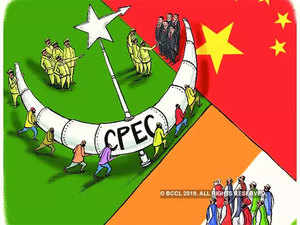
Pakistan diverts CPEC corridor funds; China ties under pressure China had given the money as part of the $62-billion infrastructure funding to build the CPEC.

CPEC-agencies

NEW DELHI: A controversy has erupted over the China-Pakistan Economic Corridor (CPEC) ahead of the second Belt and Road Initiative (BRI) summit in Beijing following allegations that the Pakistani government has diverted Rs 2,400 crore (around $171.6 million) meant for joint infrastructure development projects with China under BRI to other projects. 

China had given the money as part of the $62-billion infrastructure funding to build the CPEC. However, Pakistan’s planning and development ministry issued an order diverting Rs 2,400 crore to projects to be identified by local legislators under the United Nations’ Sustainable Development Goals programme, according to sources. 

The move could be part of Prime Minister Imran Khan’s party Pakistan Tehreek-e-Insaf ’s efforts to appease its lawmakers by allowing them to make decisions on development projects, said one person. 

“The government committed theft by spending Rs 2,400 crore out of Rs 2,700 crore meant for BRI on other development projects,” Opposition leader Maulana Fazl-ur-Rehman was quoted by local media. 

Differences between China and the Imran Khan government over the CPEC have persisted since the former cricket captain was elected as the PM last year. Razak Dawood, a cabinet member, had demanded that the CPEC projects be put on the back burner for a year because he claimed they were of little benefit to Pakistanis. Besides, the Khan government included new sectors like agriculture under CPEC. According to the Sindh-based business lobby, only Punjabi business houses benefited from CPEC projects under the erstwhile Nawaz Sharif government. 

Russian news agency Sputnik recently reported that China has deployed troops closer to the India border to safeguard the CPEC. Safeguarding the CPEC was the primary reason behind China’s veto in the UN Security Council against declaring Jaish-e-Mohammad chief Masood Azhar a global terrorist despite global outrage, according to the people cited earlier. China fears terrorist attacks on the CPEC, which will be its key transportation link to the Indian Ocean Region to connect West Asia and Africa. 


HAPPY NEW FINANCIAL YEAR TO ALL HINDUS STARTING TODAY

Image result for PIC OF HINDUS NEW YEAR GREETINGS

In a mission of many firsts, ISRO puts defence satellite EMISAT, 28 other satellites in orbit The milestone launch was marked by ISRO conducting space experiments for the first time. ET Online|Updated: Apr 01, 2019, 10.12 AM IST


SRIHARIKOTA: In a mission of many firsts, India's EMISAT satellite was successfully launched from here today along with 28 nano satellites. ISRO's four-stage PSLV-C45 rocket put the satellites in three orbits, a significant first for India. 
Image result for pic of ISROImage result for pic of ISRO

The milestone launch of the EMISAT, aimed at electromagnetic measurement, was marked by ISRO conducting space experiments for the first time ever. 

Today's was the 47th flight of the PSLV, ISRO's 3rd-generation workhorse.. The countdown for the launch had begun on Sunday, ISRO said. 


After the mission, ISRO would now successfully manoeuvre satellites in different orbits and conduct orbital experiments including on maritime satellite applications. 

A new variant of the rocket PSLV-QL equipped with four Strap-on motors in the first stage is used for the launch, ISRO said. 

PSLV is a reliable and versatile launch vehicle for ISRO with 39 consecutive successful flights till June, 2017 and five-in-a row from January 2018. It was also used in "Chandrayan" in 2008 and Mars Orbiter in 2013 — India's two most significant missions. It has encountered only two failures so far — its maiden developmental flight in 1993, and the September 2017 failure of the IRNSS-1H Satellite launch. 

According to ISRO, this is the first time it has been envisaged to provide a micro-gravity environment for research organisations and academic institutes to perform experiments. 

The 436-kg primary satellite EMISAT, intended for electromagnetic spectrum measurement, was successfully injected into a 749-km orbit orbit at around 17 minutes after lift-off.