Pages

Saturday, December 7, 2024

Sony, Panasonic & other Japanese consumer electronics brands reclaim ground without 'war':-ET


Kolkata: Sony, Panasonic and Hitachi are among Japanese consumer electronics brands that have revitalised their Indian operations through strategies such as selling more profitable large-screen TVs, vacating low-margin entry segments, and avoiding price wars, led mostly by Chinese brands. Sales have been sluggish at Japanese firms over the past few years as Korean and Chinese brands gained ground.

Panasonic's consumer business division, which sells televisions and home appliances such as refrigerators and air-conditioners, has broken even in the first half of this fiscal year. The business had reported a net loss of ₹53 crore in 2023-24.


Sales, which were on a downward trajectory or flat for nearly over six years, grew over 30% in the fiscal first half. The company told ET that it is targeting sales of more than ₹3,000 crore in the consumer division, compared to ₹2,338 crore in FY24.

Sony India posted its best-ever net profit in the last eight years in FY24, which also saw the maker of Bravia televisions clock more than 20% growth in sales. The company had reported declining sales for six consecutive fiscal years, impacting profitability.In FY24, Sony India's sales were ₹7,663 crore, compared to a peak of ₹11,000 crore in 2014-15, while net profit was at ₹168 crore, showed the latest filings with the Registrar of Companies sourced from Tofler.

Panasonic India business chairman Manish Sharma said Japanese brands are not competing on pricing anymore, but they are now positioning themselves for lower total cost of ownership and value such as low maintenance cost and low failure rate. "At a time when the market is premiumising, it does help," he said.

The consumer electronics market in India has become extremely crowded in the last 5-7 years with intense price wars led by Chinese brands such as Xiaomi, Hisense, and Haier and online-focused brands such as Kodak and Thomson. This had even forced the Korean duo LG and Samsung to compete on prices.

Japanese air-conditioner manufacturer, Johnson Controls-Hitachi Air Conditioning India reversed a dip in sales and turned profitable in the first six months of this financial year. This was helped by a 64% year-on-year surge in sales to ₹1,392 crore. The business also raked in ₹6 crore net profit during the period compared to a net loss of ₹97 crore in the same period last fiscal. The business had plunged into losses in FY23 and FY24, while sales too had declined in FY24.

"Japanese electronic brands have reinforced their positioning in India as more premium," said Pulkit Baid, director at electronics retail chain Great Eastern Retail which runs around 100 stores. "They have also taken extreme cost caution by reducing branches and categories which were not making money," he said.

Sony India managing director Sunil Nayyar said income levels are rising in the middle and upper middle class in the country, driving demand for premium products.

He said Sony India has reinforced its premium positioning in the last few years. For instance, six years back, about 80% of Sony India's sales came from entry segment 32-43 inch televisions, which is now less than 20%.

Industry executives said Johnson Controls-Hitachi Air Conditioning achieved the turnaround by exiting the mass segment and increasing prices by 5% this fiscal. An email sent to the company remained unanswered. The Japanese parentage, however, will change soon - Bosch has recently announced to acquire Johnson Controls-Hitachi Air Conditioning globally.

India and China plan special representatives meeting this month :-ET


New Delhi: The special representatives (SRs) of India and China are planning to meet this month in Beijing in what would be the first meeting between the two national security advisers (NSAs) under the SR mechanism in three years.

Foreign ministry officials of the two countries met here on Thursday to firm up the SR meeting as decided by Prime Minister Narendra Modi and Chinese President Xi Jinping in Kazan on the sidelines of the BRICS Summit in October.

The two sides are now working on the dates for the visit of NSA Ajit Doval to China, ET has learnt. The SR meeting will be followed by a foreign secretary-deputy minister level meeting to finetune the way forward in the relationship after the de-escalation along the border in Ladakh.

The SR-level meeting will focus on de-escalation and the larger boundary question besides various aspects of geopolitics.

The SR mechanism was set up when Atal Bihari Vajpayee was the PM and was aimed at addressing the boundary dispute.

The 32nd meeting of the Working Mechanism for Consultation & Coordination on India-China Border Affairs (WMCC) was held here on Thursday to prepare for the next edition of the SR mechanism meeting.

The two sides positively affirmed the implementation of the most recent disengagement agreement which completed the resolution of the issues that emerged in 2020, officials said.

This was the first WMCC meeting since the border agreement and the Kazan meeting.
The two foreign ministers during their meeting in Rio in November also decided that the two SRs and foreign secretaries would meet soon. The two NSAs last met in St Petersburg this year on the sidelines of the BRICS NSA meet. But that was not in the SR mechanism format and they focused on early disengagement at the two remaining friction points in Ladakh.

The Indian delegation at the WMCC meeting was led by MEA joint secretary (East Asia) Gourangalal Das, while the Chinese side was headed by Hong Liang, director general of the Boundary & Oceanic Affairs Department at the Chinese Ministry of Foreign Affairs.

Both sides reviewed the situation in border areas and reflected on the lessons learnt from the events of 2020 in order to prevent their recurrence. They highlighted the importance of regular exchanges and contacts at diplomatic and military levels through established mechanisms. They agreed on the need for effective border management and maintenance of peace and tranquillity in accordance with relevant bilateral agreements, protocols and understandings reached between the two governments, officials said. The leader of the Chinese delegation also called on the foreign secretary during the visit.

Friday, December 6, 2024

An Elon Musk concept begins to gather speed in India Read more at: https://economictimes.indiatimes.com/industry/transportation


Hyperloop, travel pods shooting through frictionless tubes at supersonic speeds, a concept popularised by Elon Musk more than a decade ago, is progressing in India. India’s first hyperloop test track is ready! Indian Railways along with IIT Madras has achieved a notable advancement in transport technology with the completion of India’s first 410-metre hyperloop test track.


Union Railway Minister Ashwini Vaishnaw announced this achievement on Thursday, sharing a video of the test track. "Bharat's first Hyperloop test track (410 meters) completed. Team Railways, IIT-Madras' Avishkar Hyperloop team, and TuTr (an incubated startup)," the Minister posted on X (formerly Twitter).

At IIT Madras, Avishkar Hyperloop, a student team, and TuTr Hyperloop, a start-up incubated on the campus, are developing cost-effective hyperloop technologies.

The origin and journey of hyperloop so far


Hyperloop is an under development high-speed mass transport system. It operates like railways but uses newer technologies which are expected to be more efficient and cheaper. Globally these are multiple technologies being considered to achieve the goal of developing a transportation system using capsules supported by an air-bearing surface within a low-pressure tube.

A hyperloop system utilises pods as pressurised vehicles that travel at exceptional velocities through tubes maintained at low pressure. Each pod is designed to transport 24-28 passengers between locations without stopping at intermediate stations, offering an efficient solution for direct travel.

The original hyperloop system was conceptualized by Swiss Professor Marcel Juffer in the 1970s. In 1992, Swissmetro SA was created to develop this project, but it went into liquidation in 2009. Interest in the technology was renewed in 2012 due to the publication of Elon Musk’s Hyperloop Alpha paper.

In July 2021, Swisspod, a company backed by Musk, launched an infinite hyperloop test track in Switzerland and first vacuum test was undertaken in March 2022. Swisspod also got a €3.5 million grant for developing Energy-Autonomous Hyperloop Vehicles in August 2023. There are nearly 10 Hhyperloop companies in the world, working to develop the futuristic transit system.

Hyperloop One, one of the most promising Hyperloop companies in the US, funded by investors which included Virgin founder Richard Branson and the Emirati port operator Dubai Ports World, had to shut down for various reasons including the failure to secure won a contract to build a working hyperloop. In 202O, it had conducted a test run on a 500-metre track in Las Vegas in the US with a pod, travelling with passengers, inside an enclosed tube at more than 100 mph or 161 kmph. Maharashtra had considered Hyperloop One for a Mumbai-Pune hyperloop project.

The Boring Company, the tunnel construction services company founded by Musk, had aimed to build a high-speed hyperloop. Nearly two years ago, Musk had said the company will attempt to build a working hyperloop in the coming years. "From a known physics standpoint, this is the fastest possible way of getting from one city centre to another for distances less than 2,000 miles. Starship is faster for longer journeys," he had written on X. However, months later, Boring Company converted its original test facility into a parking lot. Musk instead started working on another transport project to shoot Teslas through tunnels. The shutdown of Hyperloop One and uncertainty about Musk's hyperloop project has thrown the future of hyperloop into doubt. There are questions over safety, efficiency and financial viability of hyperloop.

However, several companies are still trying to develop this system. In September, a Dutch company Hardt Hyperloop announced the first successful test of its hyperloop vehicle. The vehicle moved smoothly through the first 90 meters of the 420-meter long facility at a speed of almost 30 km/h. Hardt Hyperloop is now focused on its next testing milestone: a full-speed test (80-100 km/h) through the lane switch in a low-pressure environment, alongside numerous technology verification and validation tests, expected to be completed in the upcoming year.

India's hyperloop project


Early this year, Railways Minister Vaishnaw said that the the hyperloop technology was seven-eight years away. Niti Aayog Member VK Saraswat had said last year in November hat some foreign companies had shown interest to bring hyperloop technology for ultra-high-speed travel in India, but discussions were at a very early stage.

Elon Musk-backed Swisspod Technologies had considered an India footprint through collaboration in joint research, development, and construction of hyperloop system. In March this year, Denis Tudor, CEO & Co-founder of Swisspod had told ET that the Indian government can invest in a study for commercial routes of a joint venture his company has with TuTr Hyperloop, an IIT Madras-incubated deep tech start-up, which is already partnering with the IIT-M to develop hyperloop.

“They (Indian government) could finance a feasibility study where we can be part of. We can offer them a service and work for the Indian government,” Tudor said while adding that some components of the Swisspod hyperloop test track are being sourced from India. Swisspod has signed a memorandum of understanding with TuTr Hyperloop to contribute to the IIT Madras Center of Excellence for Hyperloop Technology, which has already received funding support from the Railways Ministry.

ArcelorMittal too has partnered with the IIT-M for its ongoing hyperloop project. AM/NS India – a joint venture between ArcelorMittal and Nippon Steel – will supply 400 tonne of steel for fabrication of a 400-metre vacuum tube, which will be used for testing levitating pods at speeds of up to 200 kilometres/hour at the facility. Apart from this, ArcelorMittal’s India-based design and engineering arm will also be posting its engineers at the site for providing design and engineering expertise and overseeing the project.


Wednesday, December 4, 2024

South Korean president abandons martial law bid: How the late-night 'K-drama' unfolded By HT News Desk


South Korea President Yoon imposed martial law in a surprise late-night move, accusing opposition of "anti-state activities" that were destabilising the govt.

In a late-night bombshell move, South Korean President Yoon Suk Yeol declared martial law on Wednesday, accusing the opposition of threatening the country's democracy and national stability. The sudden decree, which marked the first time martial law had been imposed in South Korea in over four decades, triggered alarm both domestically and internationally as troops surrounded Parliament there.

Within hours, Yoon reversed the decision following a strong rebuke from the National Assembly and widespread protests.The dramatic episode unfolded against the backdrop of a growing political standoff said to be over the national budget, as Yoon's administration faced mounting criticism for its handling of domestic issues.

South Korea's martial law drama in key points

  • Martial law declaration: South Korean President Yoon Suk Yeol imposed martial law in a surprise late-night address, accusing opposition forces of "anti-state activities" that were destabilising the government. Yoon’s move was the first time martial law was declared in the country since the its democratisation in 1987. South Korea's previous martial law was in October 1979, following the assassination of former military dictator Park Chung-hee.
  • Martial law in South Korean Constitution: A decree issued by Army Chief General Park An-su banned political activities, strikes, and gatherings, while also bringing media under martial law control. Striking doctors were ordered to return to work within 48 hours. The South Korean constitution allows the president to declare martial law during “wartime, war-like situations or other comparable national emergency states” that require the use of military force to maintain peace and order, according to an Associated Press report. It, however, was questionable whether South Korea is currently in such a state.

Armed South Korean government martial law troops guard captured rebels in Gwangju (Kwangju), South Korea, on May 27, 1980. The rebels were rounded up following the government's recapture by the riot-battered city. (AP)

Tuesday, December 3, 2024

NATO's chief avoids talk of Ukraine's membership, says priority is helping Kyiv defend itself Read more at: https://economictimes.indiatimes.com//news/defence/


NATO Chief Mark Rutte emphasized the need to bolster Ukraine by supplying more weapons to ensure a strong stance in upcoming peace negotiations with Russia. Ukraine pushes for full NATO membership, rejecting any alternatives. Rutte advocates focusing on immediate support for Ukraine rather than detailed peace process discussions.


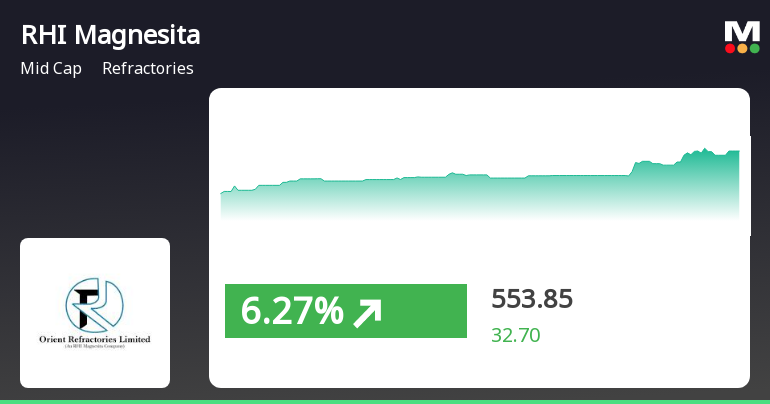
RHI Magnesita India's Stock Sees Positive Movement, Outperforms Sector and Sensex :-Source :-Markets Mojo.com

On December 3rd, 2024, RHI Magnesita India's stock price showed a positive movement, gaining 6.27% and outperforming the sector by 4.14%. The stock reached an intraday high of Rs 554.75, indicating a 6.45% increase. Its short-term performance has been strong, but it is still lower than long-term moving averages, suggesting potential for improvement.


RHI Magnesita India, a midcap company in the refractories industry, saw a positive movement in its stock price on December 3rd, 2024. The stock gained 6.27%, outperforming the sector by 4.14%. The stock reached an intraday high of Rs 554.75, showing a 6.45% increase.

The company's stock has been performing well in the short term, with its moving averages higher than the 5-day and 20-day averages. However, it is still lower than the 50-day, 100-day, and 200-day moving averages. This indicates that while the stock has seen recent gains, it may still have room for improvement in the long term.

In comparison to the overall market performance, RHI Magnesita India's stock has outperformed the Sensex by a significant margin. Its 1-day performance was 6.27% compared to the Sensex's 0.65%, and its 1-month performance was -6.99% compared to the Sensex's 1.31%.

While the stock has been performing well, it is important to note that this information is based on past performance and does not guarantee future results. Investors should always do their own research and consult with a financial advisor before making any investment decisions.

Vladimir Putin’s struggle with leg twitching fuels ‘neurological disorder’ speculation amid Parkinson’s rumours Russian President Vladimir Putin's uncontrollable leg twitching during a public speech in Kazakhstan has reignited rumors about his health, with speculation focusing on Parkinson’s disease or another neurological condition. :-livemint


Footage has surfaced showing Russian President Vladimir Putin's legs twitching uncontrollably during a public event, reigniting rumors about his health. The 72-year-old leader was seen struggling to maintain control of his movements while delivering an hour-long speech in Astana, Kazakhstan.

The incident has drawn attention due to persistent speculation that Putin may be battling Parkinson’s disease or another serious health condition. Throughout his speech, his legs appeared to jerk involuntarily, leading observers to question whether the movements were symptomatic of a neurological disorder.

This is not the first time concerns have been raised about Putin’s health. Previous reports and video clips have shown the Russian president exhibiting signs such as tremors, gripping surfaces for support, and appearing physically unsteady during public appearances. While the Kremlin has consistently denied rumors of any medical issues, such moments continue to fuel debate.

The speech in Astana was part of Putin's ongoing international engagements as he seeks to bolster Russia’s position amid global criticism over the war in Ukraine. Despite his visible discomfort, the president carried on with the event, addressing geopolitical topics and reaffirming Russia’s foreign policy stance.

As speculation mounts, the Kremlin has yet to comment on the latest footage.


Canada pulls refugee welcome mat, launches ad campaign warning asylum claims hard ;-ET


Canada has initiated a global online ad campaign to inform potential asylum-seekers of the challenges in making a claim, as part of a wider effort to curb refugee claims and address the strain on its refugee system. The campaign, costing C$250,000, aims to combat misinformation about Canada's immigration policies.


Monday, December 2, 2024

GST collection for November rises by 8.5% to ₹1.82 trillion :-Livemint


New Delhi: Driven by festive demand, the Goods and Services Tax (GST) collections for the Union and state governments climbed to 1.82 trillion in November, marking an 8.5% year-on-year growth, according to official data released on Sunday.

Sequentially, however, the latest collection figures are lower than the 1.87 trillion reported in October, which was the second highest reported so far since the new indirect tax regime was introduced in 2017.

The highest-ever GST collection of 2.1 trillion was reported in April.

The consumption tax figures highlight the positive impact of the recent festive season on goods purchases, providing a much-needed boost the industry had been anticipating.

The tax collected in November reflects transactions conducted in October.

The uptick in GST collections driven by festive demand had been anticipated by policymakers, who remain optimistic about sustained growth in rural consumption and an improvement in urban demand.

The Ministry of Finance, in its latest monthly economic review released last week, stated that India’s economic momentum showed signs of revival in October.

Backed by high-frequency indicators

This recovery was supported by high-frequency indicators such as the Purchasing Managers’ Index (PMI) and e-way bill generation, signalling a rebound in rural and urban demand, the ministry said.

The latest budget for FY 25, announced in July, estimates that total GST collections are expected to increase by 11.6% to 10.6 trillion during the fiscal, similar to the estimate in the interim budget.

“The domestic GST revenue growth of 10% plus in FY25 seems to support the GDP data which indicates an increase in domestic consumption. The import GST revenue growth of 6% also backs foreign trade data which indicates slower growth of non-petroleum imports," said MS Mani, partner at Deloitte India.

"The projected GDP growth of 7% in FY25 augers well for GST collections in the remaining four months of the current fiscal year, because the collections in the first 8 months of FY25 have exceeded that of FY25 by more than 1 trillion and are ahead of the budget estimates for FY25," he added.

About 19,259 crore was issued as tax refund by the authorities in November, down 8.9% from the year-ago period.

After tax refunds, the centre collected 34,141 crore in November while states collected 43,047 crore. Revenue receipts from imports and inter-state sales stood at 91,828 crore and cess at 13,253 crore.

Interstate sale revenue is shared by the centre and states.

Healthy growth

Among the states, Jammu & Kashmir (25%), Bihar (12%), Sikkim (52%), Mizoram (16%), Tripura (18%), Assam (10%), Odisha (10%), Delhi (18%), among others, saw healthy GST revenue growth during November, suggesting higher economic activity in these regions.

Despite the overall growth in GST collections, single-digit increases in key states like Haryana (2%), Punjab (3%), Uttar Pradesh and Madhya Pradesh (5%), Tamil Nadu (8%), and Telangana (3%), coupled with negative growth in Rajasthan (-1%), Andhra Pradesh (-10%), and Chhattisgarh (-1%), are a cause for concern as these states have substantial manufacturing capacities and are pivotal to the nation’s economic framework.

"The recent increase in tax collections, particularly in states like Delhi, Maharashtra, and Karnataka, can be attributed to the festive season last month. However, it is premature to interpret this as a sign of broader economic growth," said Saurabh Agarwal, tax partner at EY.

"Given the recent GDP data for the September 2024 quarter, we anticipate lower tax collections in the next four months. Additionally, the global geopolitical landscape and potential decrease in consumption could further dampen short-term economic growth," he added.


Sharing the major compliance due dates for December 2024.-by CA.Pramod Jain


Date
Day
Act
Particulars
07.12.2024
Saturday
Income Tax
  • Deposit tax deducted (TDS) / tax collected (TCS) for the month of November 2024.
  • Submission of declaration in Form-27C for no TCS as obtained from manufacturer to the CIT/ CCIT
07.12.2024
Saturday
Equalisation Levy
  • Deposit of equalization levy charged on specified services during the month of November 2024.
07.12.2024
Saturday
FEMA
  • Report actual ECB transactions through Form ECB-2 return.
10.12.2024
Tuesday
GST
  • GSTR -7 by TDS Deductor for the period of November 2024
  • GSTR -8 by TCS Collector (E Commerce Operator) for the period of November 2024
11.12.2024
Wednesday
GST
  • GSTR -1 (Statement for furnishing details of outward supplies) for month of November 2024 by taxpayers whose aggregate turnover exceeds Rs. 5 crores in the previous FY or those who have not opted for QRMP.
13.12.2024
Friday
 
GST
  • GSTR-5 by Non-Resident Taxpayers (13th of the next month or within 7 days after the expiry of the registration, whichever is earlier)
  • GSTR-6 by Input Service Distributor for month of November 2024.
  • GSTR-IFF: to furnish B2B Supplies (Optional) for the month of November 2024 by taxpayers who opted for QRMP Scheme
15.12.2024
Sunday
Income Tax
  • ​Issue TDS Certificate for tax deducted u/s. 194-IA, 194-IB, 194S and 194M in the month of November 2024.
  • Third installment of Advance Tax for the AY 2025-2026
  • Furnish Form 24G by an office of the Government where TDS/TCS for the month of November, 2024 has been paid without the production of a challan
  • Furnish statement in Form no. 3BB by a stock exchange in respect of transactions in which client codes been modified after registering in the system for the month of November, 2024
15.12.2024
Sunday
P.F/E.S.I.
  • Filing of ECR & challan deposit of ESI & PF collected during the month of November 2024.
15.12.2024
Sunday
Income Tax
  • Extended due date of ITR for AY 2024-25 where Report u/s 92E is required to be furnished
20.12.2024
Friday
GST
  • GSTR-3B for the month of November 2024 by taxpayers whose aggregate turnover exceeding 5 Crore in the previous FY or those who have not opted for QRMP.
  • GSTR-5A by OIDAR services provided for month of November 2024.
  • GSTR-1A: To add or amend particulars, other than GSTIN, furnished in GSTR-1 of the current tax period.
  • (Available after filing of GSTR-1 & upto due date/actual filing of GSTR-3B, whichever is earlier).
25.122024
Wednesday
GST
  • Monthly Tax Payment for November 2024 under QRMP Scheme
30.12.2024
Monday
Income Tax
  • ​​Furnish Challan cum statement for TDS u/s 194-IA, 194-IB, 194 -S, 194-M in the month of November 2024.
  • ​Furnishing of report in Form No. 3CEAD for a reporting accounting year (assuming reporting accounting year is January 1, 2023 to December 31, 2023) by a constituent entity, resident in India, in respect of the international group of which it is a constituent if the parent entity is not obliged to file report under section 286(2) or the parent entity is resident of a country with which India does not have an agreement for exchange of the report etc.​
31.12.2024
Tuesday
Income Tax
  • ​Filing of belated/revised return of income for the assessment year 2024-25 for all assessee (provided assessment has not been completed before December 31, 2024)
31.12.2024
Tuesday
GST
  • Furnishing of GST Annual Return & Reconciliation Statement  in GSTR-9 (mandatory if aggregate turnover exceeds Rs. 2 Crores) & GSTR-9C (mandatory if aggregate turnover exceeds Rs. 5 Crores) respectively
31.12.2024
Tuesday
MCA
  • XBRL DNBS-10: - Furnishing of Statutory Auditor Certificate in case of NBFC with assets of value more than Rs. 100 Crore