Synopsis
Chartered Accountant ( 公認会計士) (공인 회계사 )(CONTABILISTAS) (CONTADORES PÚBLICOS) (ДИПЛОМИРОВАННЫЕ БУХГАЛТЕРЫ СЧЕТОВОДИТЕЛИ) (会计师事务所) (COMPTABLES CHARTERES) (WIRTSCHAFTSPRÜFER) (сметководители) (MUHASEBE MÜTEAHHİTLİĞİ) (محاسبون قانونيون) (CHARTERED AKUNTAN)(Geoktrooieerde Rekenmeesters)(registeraccountants)(RAGIONIERI REGISTRATI)חשבונות רואי חשבון) (This blog is non-commercial and is used here to put important news only for the educational purpose of Students doing CA and CS.
Monday, November 16, 2020
Saturday, November 14, 2020
GST-UPDATES
Notification No 82,83,84,85 and 86/2020: Below updates are effective from 01.01.2021: GSTR-1 related: - Quarterly return filers can file their first and second month B2B invoices in Invoice Furnishing Facility (IFF) on or before 13th of 1st month in next qtr - Total value for such B2B invoices is capped to 50 lakhs per month - No need to report invoices again in GSTR-1 if already reported in IFF - Due date of GSTR-1 for quarterly filers is 13th of 1st month in next qtr - HSN/SAC codes shall be mentioned mandatorily in GSTR-1 ( <5Cr- 4 digit, >5Cr- 6 digit) GSTR-2 related: - The invoices reported in IFF shall be made available to recipient in their GSTR-2A/2B - Notified FORM GSTR-2B GSTR-3B related: - Rule 61(6) was inserted to provide due date for filing GSTR-3B for the months of Oct 2020 to Mar 2021 as 20th of next month if TO > 5 Crores - Quarterly return filers shall deposit tax in electronic cash ledger on or before 25th of next month for first and second months 87/2020: - Due date for filing ITC-04 (Job worker return) for the period July 2020 to September 2020 is extended to 30th November 2020 88/2020: E-invoicing is mandatory from 01.01.2021 for every taxpayer (other than SEZ unit) whose aggregate TO in any of the FY from 17-18 exceeds 100 Crores |
Tuesday, November 10, 2020
China declines to acknowledge Biden victory
Sunday, November 8, 2020
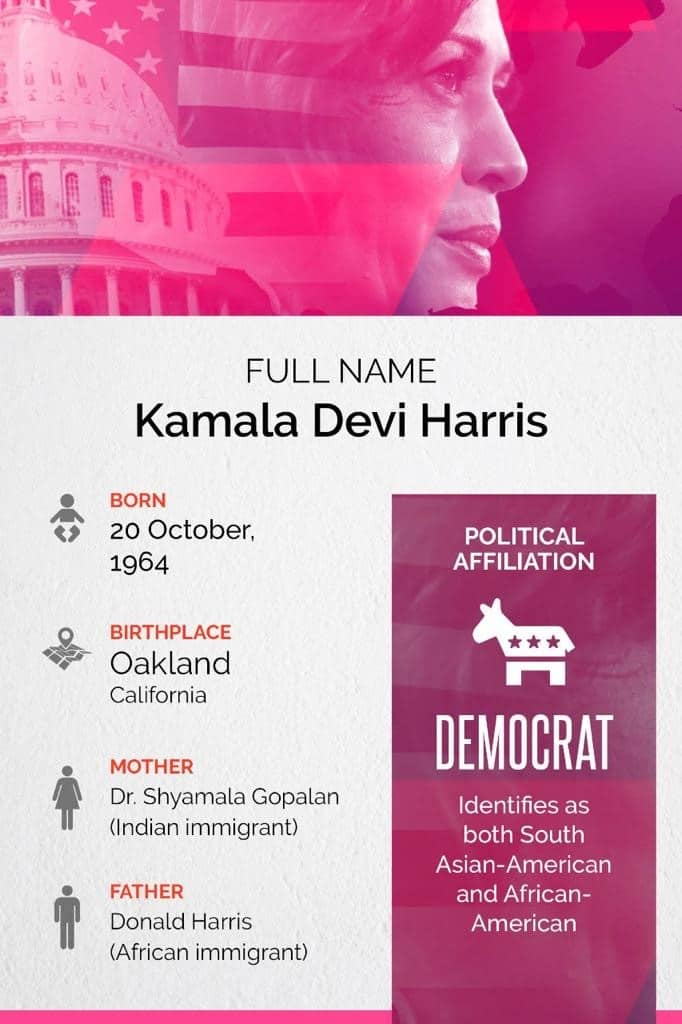
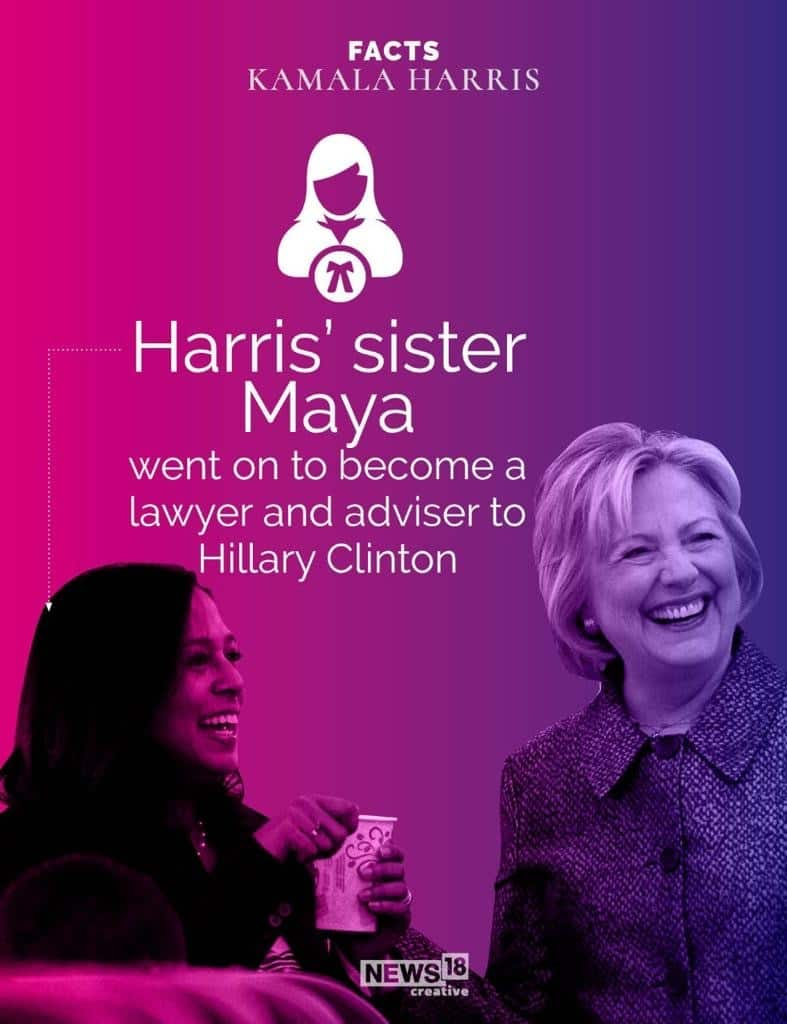
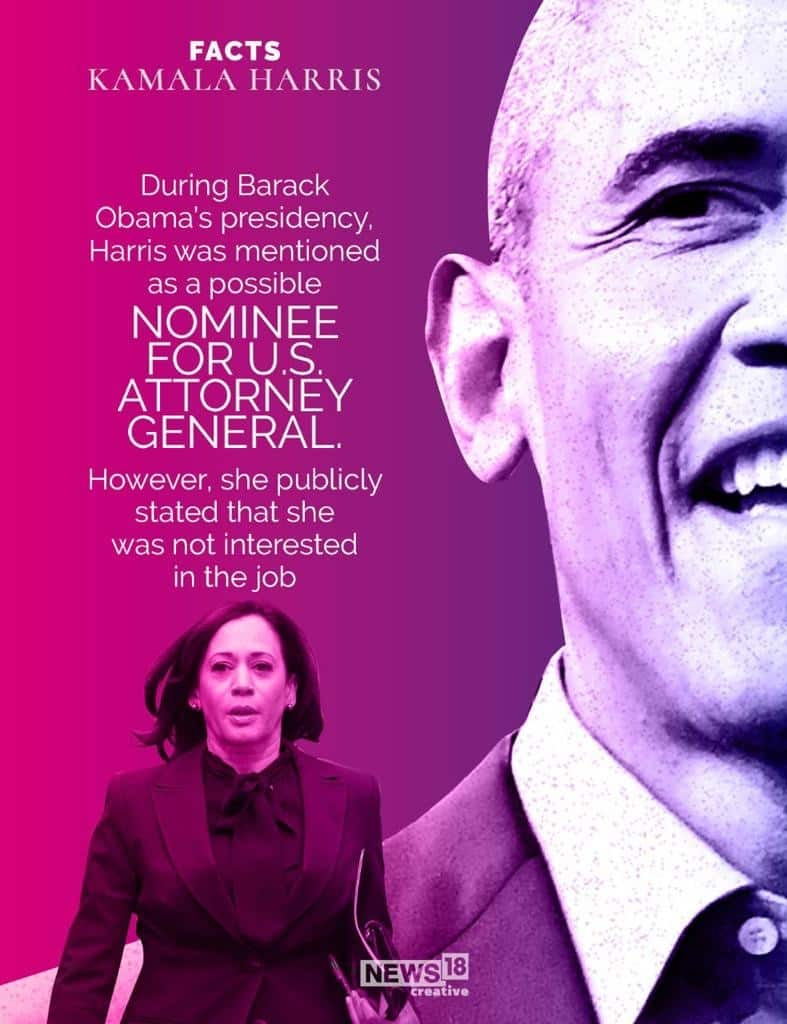
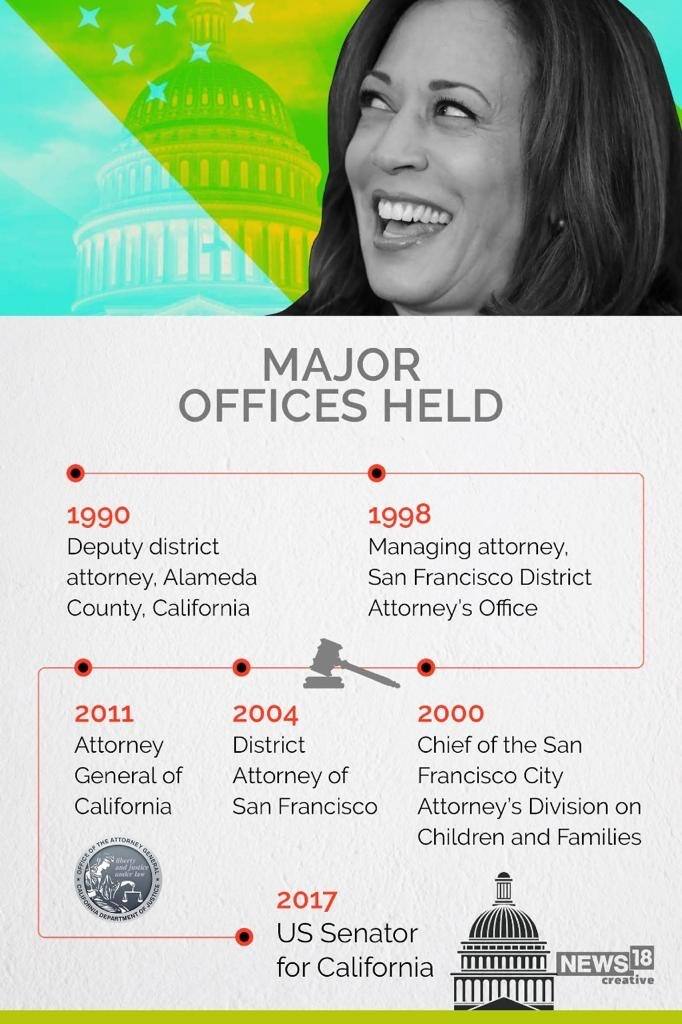
INDIAN ORIGIN KAMALA HARRIS MAKES HISTORY BY BECOMING FIRST WOMAN -US VICE PRESIDENT-HERE ARE 10 THINGS TO KNOW ABOUT HER- moneycontrolnews.
Kamala Harris makes history by becoming first US woman V-P; here are 10 things to know about her
Saturday, November 7, 2020
UAE announces relaxing of Islamic laws for personal freedoms
Isro’s PSLV-C49/EOS-01 mission successful; 10 satellites placed in orbit
The lift off was originally scheduled for 3.02 pm, but was delayed by 10 minutes due to debris on the path of the vehicle, said the Indian Space Research Organisation (ISRO). This is the first mission by ISRO this year.EOS-01 is intended for applications in agriculture, forestry and disaster management support, the Indian Space Research Organisation (ISRO) said. The customer satellites are from Lithuania (1), Luxembourg (4) and USA (4).
This was India's first rocket launch since the Covid-19 pandemic broke out, imposing numerous restrictions to working and enforcing multiple lockdowns.
Prime Minister Narendra Modi congratulated ISRO and the country's space industry for the successful launch, saying the scientists overcame many constraints to meet the deadline during this COVID-19 time.
"I congratulate @ISRO and India's space industry for the successful launch of PSLV-C49/EOS-01 Mission today. In the time of COVID-19, our scientists overcame many constraints to meet the deadline," Modi tweeted. In another tweet, he noted that nine satellites, including four each from the US and Luxembourg and one from Lithuania, have also been launched in the mission.
Tuesday, November 3, 2020
Reliance CEO Mukesh Ambani loses billions as oil slump hits shares CNN Digital Rebranding 2013 By Michelle Toh, CNN Business Updated 0926 GMT (1726 HKT) November 3, 2020
Hong Kong (CNN Business)Mukesh Ambani has long been trying to reduce his company's reliance on oil. This week showed why.
Monday, October 26, 2020
UNDERSTANDING RSI-MEANING IN STOCK MARKETS.
Relative Strength Index (RSI)
Description
The Relative Strength Index (RSI), developed by J. Welles Wilder, is a momentum oscillator that measures the speed and change of price movements. The RSI oscillates between zero and 100. Traditionally the RSI is considered overbought when above 70 and oversold when below 30. Signals can be generated by looking for divergences and failure swings. RSI can also be used to identify the general trend.
How this indicator works
- RSI is considered overbought when above 70 and oversold when below 30. These traditional levels can also be adjusted if necessary to better fit the security. For example, if a security is repeatedly reaching the overbought level of 70 you may want to adjust this level to 80.
Note: During strong trends, the RSI may remain in overbought or oversold for extended periods.
- RSI also often forms chart patterns that may not show on the underlying price chart, such as double tops and bottoms and trend lines. Also, look for support or resistance on the RSI.
- In an uptrend or bull market, the RSI tends to remain in the 40 to 90 range with the 40-50 zone acting as support. During a downtrend or bear market the RSI tends to stay between the 10 to 60 range with the 50-60 zone acting as resistance. These ranges will vary depending on the RSI settings and the strength of the security’s or market’s underlying trend.
- If underlying prices make a new high or low that isn't confirmed by the RSI, this divergence can signal a price reversal. If the RSI makes a lower high and then follows with a downside move below a previous low, a Top Swing Failure has occurred. If the RSI makes a higher low and then follows with an upside move above a previous high, a Bottom Swing Failure has occurred.
Calculation
The RSI is a fairly simple formula, but is difficult to explain without pages of examples. Refer to Wilder's book for additional calculation information. The basic formula is:
RSI = 100 – [100 / ( 1 + (Average of Upward Price Change / Average of Downward Price Change ) ) ]
Sunday, October 25, 2020
Future-RIL deal: Amazon gets a favourable ruling in Singapore :-livemint. Updated: 25 Oct 2020, 09:40 PM IST Edited By J. Jagannath
New Delhi: American e-commerce giant Amazon got a favourable ruling in Singapore with regard to the Future-RIL deal. Kishore Biyani’s Future Group has been told by the arbitration panel to not proceed with the deal with Mukesh Ambani’s Reliance Retail for now.
A one-man arbitration panel heard the plea of Amazon and Future Group last week.
"We welcome the award of the Emergency Arbitrator. We are grateful for the order which grants all the reliefs that were sought. We remain committed to an expeditious conclusion of the arbitration process," said the Amazon spokesperson.
The ruling was on Amazon’s request for an interim order before the arbitration hearings it initiated against the deal start. Judges will now be appointed for the main tribunal hearings, reported Bloomberg.
A source said a three-member arbitration panel, with Future and Amazon appointing one representative each and a third member being a neutral umpire, would decide on the dispute in 90 days, reported PTI. Amazon team was represented by Gopal Subramanium, Gourab Banerji, Amit Sibal and Alvin Yeo.
A hearing of the arbitration took place at the Singapore International Arbitration Centre on October 16 after Amazon had slapped a legal notice on Future Group, alleging that the retailer's ₹24,713 crore asset sale to Reliance Industries (RIL) violated an agreement with the e-commerce giant.
V.K. Rajah - the sole arbitrator in the Amazon vs Future vs Reliance arbitration matter - heard the matter on October 16.
Rajah is former Attorney General of Singapore.
The Future-Reliance deal was announced on August 29, 2020 in which Future Group had announced sale of its retail, wholesale and logistics etc to Reliance Retail Ventures Ltd (“RRVL"), the retail arm of RIL.
In the hearing, Future Retail side was represented by advocate Harish Salve, sources said.
Last year, Amazon had bought a 49 per cent stake in one of Future's unlisted firms, Future Coupons Ltd, with the right to buy into flagship Future Retail after a period between 3 and 10 years. Future Coupons owns 7.3 per cent stake in Future Retail.
The tussle between Future and Amazon comes at a time when RIL has been bolstering its position in the country's retail segment. RRVL- run by India's richest man Mukesh Ambani - has been on a fund raising spree and since September, it has raised ₹37,710 crore by selling stake in its retail arm.
RRVL operates India's largest, fastest-growing and most profitable retail business spanning supermarkets, consumer electronics chain stores, cash and carry wholesale business, fast-fashion outlets and online grocery store JioMart.
It operates about 12,000 stores in nearly 7,000 towns, with 640 million footfalls across core categories of grocery, consumer electronics and apparel. Revenues for Reliance Retail in 2019-20 stood at ₹1.63 lakh crore.
The investments equip Reliance Retail with funds to compete in both offline and online formats. The investments come as the country's retail sector prepares for the upcoming festive season and would help Reliance to launch an assault on rivals such as Walmart-owned Flipkart and Amazon.
Blocking Reliance’s rising stronghold on India’s retail sector is crucial for Amazon if it wants to dominate the only billion-people plus consumer market that’s still open to foreign firms.
With agency inputs
Saturday, October 24, 2020
ITR filing date for AY20-21: CBDT extends deadline to December 31 For those who are required who are required get their ITR audited, the deadline for the procedure has been extended to January 31, 2021. Moneycontrol News
The Central Board of Direct Taxes (CBDT) has extended the deadline for filing income tax returns (ITR) for FY20 (assessment year 2020-21) to December 31, 2020.
For those who are required to get their ITR audited, the deadline for the procedure has been extended to January 31, 2021 from October 31, 2020.
"The due date for furnishing of Income Tax Returns For The Other Taxpayers (for whom the due date (i.e.before the extension by the said notification) as per the Act was 31st July, 2020) has been extended to 31st December, 2020)," CBDT said in a statement.
The CBDT said it extended the deadline keeping in mind the difficulties faced by taxpayers during the COVID-19 pandemic.
The government had previously extended to deadline to November 30 from July 31.
Thursday, October 15, 2020
Women have right to stay at in-laws’ house: SC revises judgement on Domestic Violence Act -moneycontrolnews
In a big win for married women who are mistreated or tortured at
their in-laws’, the top court has observed that the wife would have the right
to claim the “shared household” of the joint family under the Domestic Violence
Act
The
Supreme Court, on October 15, revised its previous ruling on the Domestic
Violence Act and said that daughters-in-law have the right to stay at their
in-laws' house. In effect, Indian women can now claim residential rights at her
in-laws house both during and after domestic violence proceedings.
In
a big win for married women who are mistreated or tortured at their in-laws,
the top court has observed that the wife would have the right to claim the
“shared household” of the joint family under the Domestic Violence Act.
Earlier,
on August 12, the Supreme Court had ruled in favour of
a daughter’s coparcenary rights in a joint Hindu family property. A
three-judge bench of Justices Arun Mishra, S Nazeer, and MR Shah had said
provisions contained in substituted Section 6 of the Hindu Succession Act,
1956, confer the status of coparcener on the daughter born before or after
amendment in the same manner as a son with the same rights and liabilities.
What
is a shared household?
Shared
household refers to property owned by a woman’s husband, or by the joint family
of which the husband is a member. This does not include self-acquired property
of any family member.
According
to an India.com report, a three-judge SC bench headed by
Justice Ashok Bhushan said as per the definition of 'shared
household' in Section 2(s) of the Domestic Violence Act, a woman who has been
subject to domestic violence has the legal right to the shared household of the
family and also ancestral house of the mother-in-law.
The
Supreme Court had held in its 2005 order that a wife would be entitled to a
shared household only if the aggrieved person lives there or had lived in a
domestic relationship in the past.
Notably,
Section 17(1) of the Domestic violence Act states that every woman in a domestic
relationship will have the legal right to reside in a shared household,
regardless of her title or beneficial interest in it.
(With ANI inputs)
First Published on Oct 15, 2020 09:00 pm
Friday, October 9, 2020
Thursday, October 8, 2020
Amazon sends legal notice to Future Group for deal with Reliance Retail Forum Gandhi Mumbai | Updated on October 08, 2020 Published on October 07, 2020
US e-commerce giant Amazon has served a legal notice to Kishore Biyani-backed Future Group over the latter’s ₹25,000-crore deal with Reliance Retail.
According to sources close to the development, Amazon has alleged violation of an agreement done in August 2019 when it had picked up 49 per cent stake in Future Coupons Ltd, which owns 7.3 per cent of Future Retail. That deal gave Amazon roughly 3.6 per cent in Future Retail.
Call option
As part of the agreement, Amazon was granted a call option. This call option allowed Amazon to acquire all or part of the promoters’ shareholding in Future Retail between the third to tenth years.
Biyani had also agreed to certain share transfer restrictions on the promoter shares in the company for the same tenure, including restrictions to not transfer shares to specified persons and, more importantly, a right of the first offer in favour of Amazon.
But a year later, in August 2020, Reliance Retail Ventures Ltd (RRVL), a subsidiary of Mukesh Ambani-controlled Reliance Industries Ltd (RIL), acquired Future Group’s retail and wholesale business, and logistics and warehousing business for ₹24,713 crore.
While Amazon and Future Retail declined to comment, sources close to the Biyani family said that the legal notice has come as a surprise. “Everything was discussed with Amazon before signing the deal with Reliance. There was no objection raised all this while. It is surprising to get a legal notice more than a month after the Reliance deal was announced,” said a source close to the Future Group.
The legal notice by Amazon could delay the closure of the Future-Reliance deal. This could be detrimental for the Future group entities, as they have already defaulted on payments more than five times over the last one month. Lenders have refused to release additional funding to the cash-strapped retail company until the deal with Reliance gets all regulatory and legal approvals. Sources in Future Group are hoping that the legal battle with Amazon will be fought by Mukesh Ambani for a quick resolution.Follow us on Telegram, Facebook, Twitter, Instagram, YouTube and Linkedin. You can also download our Android App or IOS App.
Monday, October 5, 2020
Vodafone Case | The world is watching India’s next move The legislative manoeuvring that India tried by retrospective amendment of its tax law to circumvent the Supreme Court judgment has failed to meet fair and equitable standards under its treaty obligations Sanjeev Kapoor Sneha Janakiraman
On September 25, an international arbitral tribunal rendered an award in favour of Vodafone International Holdings BV, in its investor protection claims against India under an investment treaty arbitration commenced on the basis of the India-Netherlands Bilateral Investment Treaty.
In 2007 the Dutch affiliate of the Vodafone Group, Vodafone International Holdings BV, acquired 67 percent interest in the Indian telecom company Hutchison Essar Limited. This transaction took place through an agreement between Vodafone International and the Hutchison Telecommunications International Limited involving a Cayman Island-based company, which in turn held majority interest in the Indian company, Hutchison Essar Limited.
Soon after the transaction a tax demand of $2.2 billion was issued by income tax authorities in India. It was refuted by Vodafone on the ground that the transaction between Hutchison Telecom and Vodafone International took place outside India, and did not involve transfer of any capital asset situated in India.
The matter was first argued before the Bombay High court, which ruled in favour of tax authorities. Vodafone filed an appeal before the Supreme Court which held that the income tax department was not empowered to levy capital gains tax on the $11 billion acquisition of Hutchison Essar Limited by Vodafone International Holdings which was consummated through a series of holding companies which were incorporated outside of India.In response to the judgment, Parliament passed an amendment, by way of the Finance Bill, 2012, empowering the income tax department to levy capital gains tax on transactions such as the Vodafone acquisition, and do so even with respect to transactions that took place prior to the amendment, and as far back as 1961. Predictably, this culminated in the income tax department levying such retrospective tax on the acquisition resulting in Vodafone resorting to investment treaty arbitration under the India-Netherlands Bilateral Investment Treaty.
Vodafone claimed that such retrospective imposition of tax, despite the 2012 Supreme Court judgment, amounts to a violation of fair and equitable treatment obligation under the treaty.
The arbitral tribunal has held that Vodafone is entitled, in respect of its investments in mobile telecommunications in India, to the protection proffered under the treaty. India’s conduct in respect of the imposition on Vodafone of an asserted liability to tax and imposition of interest and penalty thereon, despite the Supreme Court judgement was found to breach the terms of the guarantee of fair and equitable treatment assured in the treaty.
It was thus held that this entails India to cease the conduct of imposition of retrospective tax, and that any failure to comply with it will engage India’s international responsibility.
The Government of India has said that it is in the process of ‘considering all options’ with media reports suggesting that it is likely to contest the award.
This award will have ramifications for India in other pending investment treaty disputes and will have implications on other claims, especially in the space of retrospective tax disputes. In this case there was almost negligible collection of the tax as demanded so there does not appear to be an obligation on India to refund any substantial amount except for costs.
However, in other cases such as the Cairn Energy, where also bilateral investment treaty disputes arising out of retrospective tax legislation are pending, there may be substantial payback obligations as in such cases tax departments have recovered part of demands by appropriating dividends, sale of shareholding and other means.
The award directs India to cease its conduct of imposition of retrospective tax and restrains it from collecting a substantial tax liability. The legislative manoeuvring that India tried by retrospective amendment of its tax law to circumvent the Supreme Court judgment has failed. Such measures have been held to be in breach of fair and equitable treatment assurances India had given under its investment treaty regime to foreign investors.
Now, how India reacts to and deals with this unanimous award passed by a neutral international tribunal will send signals to the international investment community, which will be closely watching the next move by the government as it might impact their decision to invest in India.