Pages

Thursday, November 9, 2023

On American shelves, Made-in-India is slowly replacing Made-In-China :The Economic Times


India is slowly gaining from the recent global shifts in manufacturing, sourcing and supply chains at the expense of China.

A half-decade of disruption that has included trade wars, the pandemic, natural disasters, severe supply bottlenecks, Brexit, the war in Ukraine, and increasingly assertive industrial policies is profoundly redrawing the map of global manufacturing for export. While US goods imports from China declined by 10% from 2018 through 2022 in inflation-adjusted terms, they rose by 44% from India, 18% from Mexico and 65% from the 10 countries of the Association of Southeast Asian Nations (ASEAN), a recent study by Boston Consulting Group has pointed out.

For example, US imports of mechanical machinery from China shrank by 28% from 2018 through 2022, but increased by 21% from Mexico, 61% from ASEAN, and 70% from India.

India has emerged as one of the winners in global manufacturing over the past five years, with its exports to the US surging by $23 billion, a 44% increase from 2018 to 2022, while China experienced a 10% decline in exports to the US during this period, the study reveals.

Indian products are also gaining favour on the American shelves which have high consumer visibility. Walmart, America's biggest retailer, is increasing its sourcing from India which means its stores in the US are selling more products with the Made-in-India tag.

Walmart aims to source across categories where India has expertise, including food, consumables, health and wellness, general merchandise, apparel, shoes, home textiles, and toys. It is on track to reach its target of sourcing $10-billion worth of goods from India each year by 2027, Andrea Albright, executive vice president, sourcing, at Walmart, has told ET. India is already one of the top sourcing markets for the world’s largest retailer with annual exports worth about $3 billion, according to the company.

India-made apparel, homeware, jewellery, hardlines and other popular products reach customers in 14 markets, including the US, Canada, Mexico, Central America and the United Kingdom via Walmart’s Global Sourcing office in Bengaluru, which opened in 2002.

Why is India more attractive?
India enjoys a strong advantage in direct manufacturing costs as an export platform. As per BCG's calculations, the average landed cost of Indian-made goods imported into the US, including factory wages adjusted for productivity, logistics, tariffs and energy, is 15% lower than if the goods are made in the US. By contrast, the average US landed cost from China is only 4% lower than US costs and 21% higher for goods subject to US tariffs related to the trade war.
Wage inflation has outpaced productivity gains in most regions, but India enjoys an edge on this count. Labor costs adjusted for productivity rose by 21% in the US from 2018 through 2022, for example, and by 24% in China. Similarly, productivity-adjusted labor costs rose by 22% in Mexico and by 18% in India, the BCG study calculates. Nevertheless, these two countries remain among the world’s most cost-competitive sources of manufacturing, and Mexico is the most competitive near-shore option for the US.

A growing preference for supplies from India
Another study on sourcing too finds a growing preference for sourcing from India among American businesses, 'QIMA Sourcing Survey 2023: Disruption, Diversification, Digitization' by QIMA, a quality control & supply chain audits company, says that after rising through the ranks of preferred procurement partners in the past few years, India maintains its high appeal as a supplier market.

South Asia has continued rising through the ranks of most important buying regions for the West, with 42% of US- and EU-based respondents naming one or more South Asian countries among their top three sourcing partners, as per the survey. By contrast, the respective value for Southeast Asia has dropped to 33% in Q1 2023.

Looking at individual countries, the two regions’ respective leaders, India and Vietnam, are viewed as equally important overseas sourcing partners for the West: both were named among the top three sourcing geographies by over a quarter of respondents headquartered in the US and the EU.

India’s appeal as a sourcing partner goes far beyond textiles, says the survey. Viewed by industry, India as a supplier market was the most popular among businesses working in the Accessories, Jewelry and Eyewear sector (where 45% named it among their top three), followed by Promotional Products (44%). The Textile and Apparel sector, traditionally viewed as India’s “bread and butter”, came in third at 40%.

Looking at businesses that significantly changed their buying geography, India was the destination of choice for multiple industries, including Printing and Packaging, Homeware and Gardenware, Accessories and Promotional Products. Between half and one-third of respondents in these sectors reported significantly increasing their sourcing from India in the past 12 months.

Western buyers are carrying on the long-term trend of decreasing their their reliance on China, as seen from the ever-shrinking percentage of respondents naming China among their top three sourcing partners: 73% of US-based buyers (a five-year low) and 85% of EU-based ones, as per the Qima survey. In terms of procurement volumes, 61% and 58% of US- and EU-based respondents, respectively, reporting buying less from China in Q1 2023 compared to 12 months ago.

Yet, China still remains a key piece in global supply chains even as they shift to other countries.

While the popularity of Made-in-China goods among Western buyers keeps inching downward (reaching a five-year low for US-based respondents), the reverse is true for businesses based in Asia (outside of China), where 85% of respondents named China among their top three sourcing partners in 2023, compared to 65% in 2019, as per the survey. The shift of Western supply chains away from China is likely a factor in this, as many of China’s regional competitors rely on Chinese raw materials to fill the orders being redirected to them.


FAO order two years after DRP direction, unsustainable says HC, directs tax refund of over Rs 1000 crore to Vodafone Idea .. Read more at: http://timesofindia.indiatimes.com Nov 8,2023


MUMBAI: In a win for Vodafone Idea Limited, Bombay high court on Wednesday held that an assessment order of August 31, 2023 passed by the Faceless Assessing Officer (FAO) two years after directions issued by a dispute resolution panel (DRP) were “time barred’’ and unsustainable. The HC thus directed Income Tax authorities to refund to Vodafone Idea, over Rs 1128 crore in taxes paid in the assessment year 2016-17, with interest. The process has to be completed in 30 days, a division bench of Justices K R Shriram and Neela Gokhale directed.

Pulling up the FAO, the HC held, “If the provisions of Section 144C—requiring final orders in 30 days-- as mandated by the Statute are not strictly adhered to, the entire object of providing for an alternate redressal mechanism in the form of DRP stand defeated’’ .
The Judgment pronounced on Wednesday and authored by Justice Gokhale also strongly recommended a detailed inquiry against the FAO for failure to abide by the legal mandate and the :lack of diligence on part of officials concerned…in the present assesment’’.

“Strict action should be taken against persons responsible for the laxity and lethargy displayed which has caused a huge loss to the exchequer and in turn to the citizens of this country,’’ added the judgment directing that a copy be circulated to the CBDT and Principal Secretary, Union Finance Ministry.

Vodafone Idea Ltd had on June 8, 2023 this year, as successor of Vodafone Mobile Services Ltd, petitioned the HC against the Central Processing Centre, Bengaluru, Assistant Commissioner of Income-Tax, Mumbai and others. Through its senior counsel J D Mistri, the cellular operators called in question the failure of CPC and IT officials to refund the amount it paid for 2016-17, in excess of legitimate tax due on returned income.

The HC said, “The case of Petitioner is quite elementary and we are constrained to observe the complete apathy and negligent approach of the assessing officer concerned in discharging his duties, in accordance with the provisions of Income Tax Act, 1961.’’ It added, “Laxity in this regard has a propensity to destroy and bring to naught any effective system put in place by the Government for efficient and transparent administration of taxation laws and its regulations. Such an adverse effect on the exchequer is revealed in the present case.’’

The AO passed a draft order in this case on December 29, 2019, against which the company filed an objection before the DRP on January 27, 2020. On March 25, 2021 the DRP issued directions which were uploaded the same day on the Income Tax Business Application (ITBA) portal.

The grievance of Vodafone Idea essentially was that the AO failed to pass the final order in terms of the directions of DRP within 30 days, the period of limitation prescribed by Section 144C(13) of the Act and consequently said it is entitled to refund with interest. Mistri said once DRP order is uploaded and is available, when no order is passed in a month, the income declared by Vodafone Idea is deemed to be accepted by the Income Tax Department and petitioner, entitled to refund of excess tax.

After the petition was filed, the FAO passed its order on August 31, 2023, the HC noted. Defending the actions of the department, advocate Devvrat Singh for the Revenue said the FAO received the 2021 order only on August 23, 2023 in the ‘case history noting’ and then within a month passed the order.

The HC after analysing the law and the assessment proceeding scheme under e-assessment scheme said, “any notice, summons, order is deemed to have been received by the FAO once it is available to the NeAC.’’

Also highlighting the scheme of the Act was to ensure speedy disposal of disputes under, the HC held, “Once the statute has prescribed a limitation period for passing the final order, it is expected that the internal procedure of the department should mould itself to give meaning to and act in aid of the provision. Any procedural defect (there is none in this case) in the internal mechanism of the working of E-assessment Scheme, cannot operate against the interest of assessee. Hence, the FAO cannot be, believed that the DRP direction was received by him only on 23rd August 2023 despite being uploaded on the ITBA portal on 25th March 2021. The failure on the part of department to follow the procedure under Section 144C of the Act is not merely a procedural irregularity, but is an illegality and vitiates the entire proceeding.’’

The HC after hearing the IT counsel and going through two affidavits, one by Chief Commissioner of Income Tax (International Taxation and Transfer Pricing) West Zone, Mumbai and another by JCIT, Ratlam noted that both officials agree that the DRP directions once uploaded on the ITBA portal are automatically visible to the FAO, if any assessment work item is pending related to a particular PAN.

The HC said, “Admittedly assessment proceedings of Petitioner were pending. Thus, undoubtedly the DRP directions uploaded on the ITBA portal were readily and clearly visible and accessible to the FAO of assessee.’’

The HC said, “There is no whisper of any explanation as to why the FAO, who was seized with the pending assessment of Petitioner, remained inactive and silent for two long years and swung into action only when information about filing of this writ petition was uploaded on the CHN.’’

What Bombay HC said:
• It is important to note that the entire assessment proceedings are governed by the Faceless Assessment Mechanism under the scheme known as the e-Assessment Scheme (“eAS”), 2019 as notified by the Ministry of Finance (Department of Revenue) on 12th September 2019.

• The salient features of the scheme include defining the scope of scheme, jurisdiction of e-Assessment Centre, procedure for assessment, penalty proceedings for non-compliance amongst other features.

• The Central Government amended the FAS of 2019 and the first amendment came into effect on 17th February 2021.

• All communication among the assessment unit, review unit, verification unit or technical unit or with the assessee or with any other person with respect to the information or documents or evidence or any other details, as may be necessary for the purposes of making an assessment under the scheme shall be through the National e-Assessment Centre.”

• Thus, any notice, summons, order is deemed to have been received by the FAO once it is available to the NeAC

• Section 144C of the Act is a self contained provision which carves out a separate class of assesses-- ‘eligible assessee’.

• Section 144C of the Act was inserted in the Finance Act of 2009 and came into effect from 1st October 2009.

• The aim of section 144C as mentioned in the finance bill of 2009: With a view to provide speedy disposal, it is proposed to amend the Income-tax Act so as to create an alternative dispute resolution mechanism within the income-tax department and accordingly, section 144C has been proposed to be inserted so as to provide inter alia the Dispute Resolution Panel as an alternative dispute resolution mechanism.”

Wednesday, November 8, 2023

India proposes slashing EV import taxes in UK free trade deal Read more at: https://economictimes.indiatimes.com


India is proposing reducing import taxes on some electric vehicles from the UK in an effort to clinch a free-trade deal between the two nations by the end of the year, according to two people familiar with the discussions.

New Delhi is considering a concessional tariff of 30% on 2,500 electric vehicles imported annually from the UK priced above $80,000, the people said, asking not to be identified as the talks are private. India currently levies taxes between 70% and 100% on cars imported as completely built units, depending on their value.

The UK’s demand for import concessions on electric vehicles is one of the few outstanding issues in the free trade talks. Prime Minister Rishi Sunak and his Indian counterpart Narendra Modi had hoped to finalize the agreement by the end of last month, but it’s unlikely a deal will now be announced until December, Bloomberg News previously reported.
India’s trade ministry didn’t immediately respond to a request for information. A spokesperson for the UK trade department declined to comment as the talks are still ongoing.

India is the world’s most populous country, with demand for electric vehicles rising among middle-class and wealthy buyers. The adoption of EVs in the country has been held back by the high cost of the cars, a dearth of options and lack of charging stations. Opening up the EV segment of the market could also speed up cleaner transport in a nation with the world’s most toxic air.

Electric vehicle sales in India stood at 49,800 last year, making up just 1.3% of the 3.8 million passenger vehicles sold, according to BloombergNEF.

In India’s cost-conscious market, the country’s best-selling electric car, Tata Motors Ltd.’s Nexon.ev, is priced at less than 1.5 million rupees ($18,000). German luxury automakers BMW AG, Mercedes-Benz Group AG and Volkswagen AG’s Audi sell electric cars above $80,000 in India.

Modi’s government is treading cautiously on the EV imports as it seeks to build a domestic manufacturing industry for electric vehicles and parts. The government in 2021 announced a $3.1 billion production-linked incentive program for local EV production.
A final decision on India’s position on import duties on EVs has yet to be made, according to people familiar with the discussions.

India and the UK had already softened their position on a number of issues, including reducing tariffs on British cars and scotch whisky, Bloomberg News previously reported.

The two countries expect the free trade deal would double bilateral trade by 2030 through lower tariffs and increased market access. It would also be a political win for both leaders, with the UK-India pact seen as a key prize of Brexit and a way to boost India’s manufacturing ambitions.

India imposes a range of import duties on cars. For vehicles purchased from overseas unassembled, the tax ranges from 15% to 35%.


MC Explains | South Korea bans short-selling ahead of polls. Why India can't do the same? South Korea brought back a blanket ban on short-selling, ostensibly to stop institutional investors from hammering stock prices by borrowing shares and selling them, Can Indian authorities do the same? SANTOSH NAIR NOVEMBER 08, 2023 / 01:46 PM IST moneycontrol news


Moneycontrol examines the various aspects of the development, implications of such a ban, and the historical context in the Indian market.

Earlier this week, South Korea brought back a blanket ban on short-selling, ostensibly to stop institutional investors from hammering stock prices by borrowing shares and selling them. This has triggered a debate on social media with some X users suggesting that Sebi may, or should, consider a similar move ahead of the 2024 general elections.

How is short-selling done?

There are two ways. One is naked short-sales, where the seller does not own any shares, but sells them hoping to reverse (square off) the position before it is time to settle the trade. The other way is to borrow shares from someone for a fee, and then sell them in the market.

What exactly has South Korea’s market regulator done?

The Financial Supervisory Service (FSS) has prohibited new short-selling positions in shares on the Kospi 200 index and Kosdaq 150 index till the end of June 2024. It said the move was necessary to protect retail investors as many institutions were indulging in naked short-sales, which is illegal in Korea.

What are market experts in Korea saying?

Korean market experts have criticised the ban, saying there was no crisis to justify the move. The widely held view is that it is politically motivated because retail investors are a major force in Korea’s market and there is an election coming up next year. They have been seeking a ban on short-selling, according to media reports.

Will the Indian authorities consider such a move ahead elections?

Unlikely, going by past trends. Sebi did not ban short-selling at the peak of market in March 2020 during the Covid pandemic.

When do market regulators ban short-selling?

Only during periods of extreme market panic, like in 2001, 2008 and more recently in 2020.

Does short-selling ban help arrest market falls?

It provides a temporary support. The argument against a ban on short-selling is that it interferes with natural price discovery, and reduces liquidity. That apart, there is no credible evidence that curbs on short-selling in the past have helped stabilise stock prices, except briefly.

Can you give an example?

During the global financial crisis in September 2008, the US Securities and Exchange Commission (SEC) temporarily banned short-sales in nearly 1,000 financial stocks to halt the free fall in prices. The stock prices rebounded briefly but then continued to decline for the rest of the period even as the short-sale ban was in effect.

Did Sebi ban short-selling in 2008?

No.

Has Sebi ever banned short-selling?

Yes. In 2001, when it felt that some investors were deliberately hammering share prices through short-selling. But even at that time, the ban on short-sale was only on the down tick, and not on the uptick

What does that mean?

If a share fell from Rs 100 to Rs 99, a trader could not short sell because that would have the effect of further driving down prices. But if the share price rose from Rs 100 to Rs 101, a trader was free to short sell.

Hypothetically, were Sebi to ban short sales, would it be effective?

No. Because those looking to short sell could easily do that through the stock futures segment. Unlike in other major global markets, the practice of of borrowing and selling shares is not widespread in India. There is a stock lending and borrowing window, but the shares traded are a tiny fraction of the floating stock of the company.

Is it possible to ban short-selling in the stock futures segment?

An outright ban will not make sense. But the regulator can ensure there is no naked short-sales by getting brokers to ensure that only clients sell stock futures have an equivalent quantity of the shares. In other words, the regulator can limit activity in the futures segment to hedging trades.

SANTOSH NAIR is Executive Editor, Special Projects, Moneycontrol. He has been writing on the financial markets for over two decades, having previously worked with Business Standard, myiris.com, Crisil Market Wire and The Economic Times. He is also the author of the popular book on Indian markets, Bulls, Bears and Other Beasts.


'Maxwell has pulled off the biggest heist!' :-Rediff News -Used here for Educational purposes and this blog is non-commercial and aims at collection of important news for Students.


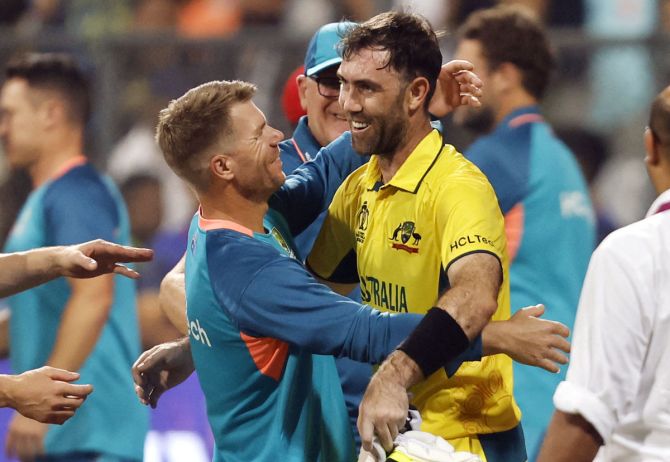
IMAGE: Glenn Maxwell gets a hug from team-mate David Warner after winning the match against Afghanistan on Tuesday. Photographs: Francis Mascarenhas/Reuters

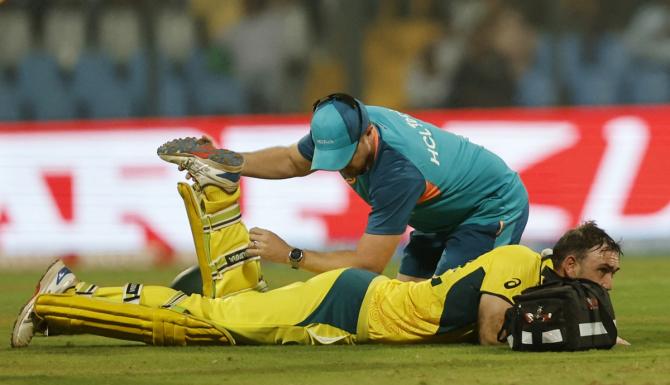
Glenn Maxwell battled cramps and a resolute Afghanistan attack to single-handedly steer Australia to an improbable three-wicket victory in the World Cup match in Mumbai on Tuesday.

When Maxwell came out to bat, Australia were struggling on 49/4 before they slipped to 91/7. Maxwell, popularly known as 'Big Show', went on the counter-attack to script one of the greatest comebacks in the history of 50-overs cricket.

Mujeeb ur Rahman putting down a simple catch when Maxwell was on 33 could prove to be most costliest dropped catch.

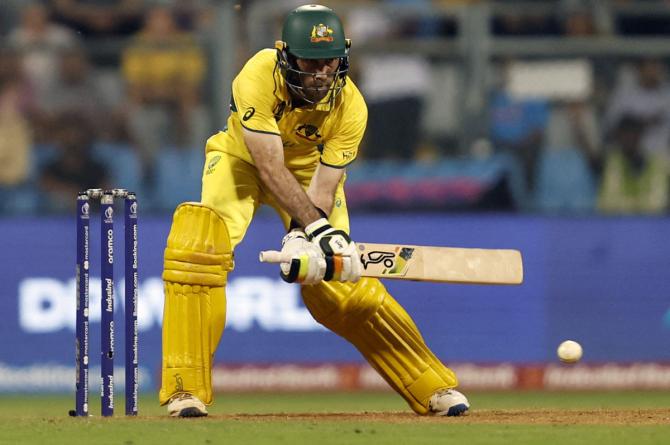
Maxwell went on to smash a brilliant 201 off 128 balls, hitting 21 fours and 10 sixes during his knock - many of them on one leg as he became the first Australian to hit a double century in ODIs and the first to score a double century in a run chase in ODIs.

Maxwell's stunning knock was hailed by many of the present and formers cricketers on X:

Yuvraj Singh: Innings of a lifetime!! Hats off @Gmaxi_32

Ben Stokes: My goodness Maxi

Ian Bishop: That was just unbelievable from Glen Maxwell. Footwork is overrated. One of the most remarkable innings. Glenn Maxwell reminded us tonight about the intrinsic beauty, unpredictability and inspiring drama of this wonderful game. Thank you


Sachin Tendulkar: A wonderful knock by @IZadran18 to put Afghanistan in a good position. They started well in the 2nd half and played good cricket for 70 overs but the last 25 overs from @Gmaxi_32 was more than enough to change their fortune.

From Max pressure to Max performance! This has been the best ODI knock I’ve seen in my life.

AB de Villiers: What a spectacular victory for Australia against Afghanistan! Maxwell's remarkable performance left us in awe. Congratulations to the entire team for their outstanding efforts.

Mohammad Kaif: Greatest odi knock ever !!!!!! #Maxwell

Michael Vaughan: The GREATEST ODI innings of time  @Gmaxi_32  .. You could say the GREATEST innings of all time .. #CWC2023 #India


Virender Sehwag: Saw this coming. 200 in a run-chase, One of the all time great one day innings  by Maxwell. @Gmaxi_32 was a man possessed and great support by @patcummins30. An innings to remember for a long long time . #AUSvsAFG

Shoaib Akhtar: An inning of courage, grit & determination @Gmaxi_32. No matter what the result is from here, this will be remembered.

Ravichandran Ashwin: Stunning from Maxi

Yuzvendra Chahal: Simply UNBELIEVABLE Maxwell has pulled off the biggest heist!

King Charles III delivers first King's Speech to lay out British PM Rishi Sunak's agenda ahead of next general election The 74-year-old monarch was joined by Queen Camilla for the ceremonial State Opening of Parliament, which symbolises the independence of the House of Commons through its royal pageantry in the House of Lords. PTI NOVEMBER 08, 2023 / 07:37 AM IST moneycontrolnews


King Charles III delivers first King's Speech to lay out British PM Rishi Sunak's agenda ahead of next general election


Britain's King Charles III on Tuesday delivered his first King's Speech, a tradition steeped in tradition and accompanied by royal pomp and ceremony, to lay out Prime Minister Rishi Sunak's plans for his government ahead of next general election.

The 74-year-old monarch was joined by Queen Camilla for the ceremonial State Opening of Parliament, which symbolises the independence of the House of Commons through its royal pageantry in the House of Lords.

The speech, which Charles began with a tribute to his late mother, Queen Elizabeth II, marked several firsts including the first under the premiership of Sunak, Britain's first Prime Minister of Indian heritage.

It also marks the first time a King has opened the British Parliament in more than 70 years, the last being Charles' grandfather and Queen Elizabeth II's father George VI in 1950. And, though the speech is delivered by the King, it is actually put together by the Prime Minister of the day to set out his legislative agenda for the coming months.

"It is mindful of the legacy of service and devotion to this country set by my beloved mother, the late Queen, that I deliver this, the first King's Speech in over 70 years," said Charles. "My ministers' focus is on increasing economic growth and safeguarding the health and security of the British people for generations to come."My government will continue to take action to bring down inflation, to ease the cost of living for families and help businesses fund new jobs and investment," he said, ahead of the next general election, which is expected next year and must happen by the end of January 2025. He went on to address the Israel-Palestine conflict, condemning the "barbaric acts of terrorism against the people of Israel".

"My ministers will work closely with international partners to support Ukraine, strengthen NATO and address the most pressing security challenges. This includes the consequences of the barbaric acts of terrorism against the people of Israel, facilitating humanitarian support into Gaza and supporting the cause of peace and stability in the Middle East," he said.

On the legislative agenda of the government, the King laid out Sunak's plan to support the future licensing of new oil and gas fields, helping the country to transition to net zero by 2050 without adding undue burdens on households.

He highlighted that laws will be introduced by the government to stop new or complex crimes such as digital-enabled crime and child sexual abuse, with a bill to ensure tougher sentences for the most serious offenders.

Other bills to be tabled include a ban on the sale of cigarettes to young people and to promote trade and investment with economies in the fastest growing region in the world. "My ministers will continue to negotiate trade agreements with dynamic economies, delivering jobs and growth in the United Kingdom, he said.

The UK is currently negotiating a free trade agreement (FTA) with India, which is currently in the thirteenth round of talks. Besides, the introduction of the Advanced British Standard to bring technical and academic routes into a single qualification was among the 21 bills that will be the government's priority over the coming year covered in the King's Speech. Charles also confirmed that a bill to ensure a national Holocaust Memorial and Learning Centre is built next to the Houses of Parliament will be among those tabled in the Commons.

I look forward to welcoming His Excellency the President of the Republic of Korea and Mrs Kim Keon Hee for a State Visit later this month, said the monarch. Concluding his address in the House of Lords, the King reiterated Sunak's focus on long-term decisions in the interests of future generations.

My ministers will address inflation and the drivers of low growth over demands for greater spending or borrowing. My ministers will put the security of communities and the nation ahead of the rights of those who endanger it. By taking these long-term decisions, my government will change this country and build a better future, he said.

The House of Commons will now kick start its new parliamentary schedule with a debate on the contents of the address later on Tuesday.

Labour Party leader Keir Starmer said the King's speech offered only "sticking plasters" and was "a plan for more of the same". He said it offered "no change" on public services or the cost-of-living crisis.

Earlier, the King travelled from Buckingham Palace to the Houses of Parliament in the ornate Diamond Jubilee State Coach, escorted by members of the Household Cavalry Mounted Regiment.

He was preceded by a coach carrying the royal regalia the crown, the Cap of Maintenance and the Sword of State. During the ceremony, Charles wore the Robe of State as per tradition, with Queen Camilla paying tribute to her late mother-in-law by wearing Queen Elizabeth II's diamond headband known as diadem.


As global companies chart course for India, FDI set to rise Read more at: https://economictimes.indiatimes.com/news/economy/finance


Overall foreign direct investment (FDI) into India may have declined but there are reasons to be sanguine with the country seeing interest in greenfield investments amid the first-ever decline posted by China, experts said.

Last week, in a detailed presentation to the finance ministry, the United Nations Conference on Trade and Development (UNCTAD) pointed to the positive developments, people aware of the deliberations said. The UN agency reiterated its recent findings that India is among the top three in greenfield FDI announcements. This suggests that the country may be pulling in fresh global capacity expansion as part of supply chain diversification, a senior finance ministry official told ET. It expects these to translate into higher investment flows by 2024, the official said.


The latest Chinese data shows a first-ever quarterly FDI deficit in the July-September period.

Part of global supply chains
This comes amid a global push to de-risk supply chains currently excessively reliant on China.

Policymakers say that India may not be the only possible destination for FDI looking out of China but there were indications of the country becoming part of global supply chains.

"What we are seeing, in the last few months and in specific sectors, is that India is becoming part of the global supply chains," said Bibek Debroy, chairman of the Economic Advisory Council to PM (EAC-PM).

"India has been trying to build an environment that is conducive for FDI while also trying to reduce its dependence on China, particularly more so after Covid. Moreover, other countries, because of various other pressures, are also looking at reducing their dependence on China."

Former chief economic adviser and International Monetary Fund executive director KV Subramanian said India holds an advantage as China faces challenges.

"As investors are looking for opportunities to generate high returns, the negative trends on FDI in China presents a crucial opportunity for India," he said. "To ensure that we avail this opportunity, we must continue to undertake structural reforms and complete the several reforms that were initiated post Covid. The window of opportunity for India to benefit from this negative trend is finite!"


China's negative FDI flow is symptomatic of the structural problems that its economy is facing with significant demographic headwinds, he said.

"The same demographic dividend that helped China grow significantly from the 1980s onwards has turned negative. Secondly, huge problems in their financial sector with significant bad loans having built up, (and the) real estate sector (is) also facing difficulties with significant oversupply and over investment," Subramanian said. India pared corporate tax rate to 15% to boost new investment in manufacturing and has also launched production-linked incentive (PLI) schemes for multiple sectors to attract funds.

FDI outflow

India's FDI equity inflows dropped 34% to $10.9 billion in the June quarter from the year-ago period. Economists said the decline in India's FDI is largely because of the prevailing high interest rates and global economic uncertainty that has impacted mergers and acquisitions activity worldwide.

They said the outlook for India remains positive.

"India's FDI intentions remain high, but like the rest of the world, higher interest rates are biting into FDI investments in India also. One needs to thus distinguish between the challenging outlook in the next six months and a fairly positive view three years out," said Rahul Bajoria, managing director and head of EM Asia (ex-China) economics at Barclays.


Tuesday, November 7, 2023

India looks to fast-track approvals for Elon Musk's Tesla by January 2024 Read more at: https://economictimes.indiatimes.com Nov 7,2023


New Delhi: India is pulling out all the stops to get Elon Musk's Tesla to the country with government departments working to provide all the required approvals by January 2024.

The Prime Minister's Office Monday held a meeting with top officials to take stock of the next phase of electric vehicle (EV) manufacturing in the country, including Tesla's investment proposal, people with knowledge of the matter told ET.

"Though the agenda of the meeting was centred on general policy matters, fast-tracking approvals by January 2024 to Tesla's proposed investment in the country was spelt out," a top official said.


On offer: Govt mulls some relief on levy of GST on vouchers and gift cards Read more at: https://economictimes.indiatimes.com


New Delhi: The government is mulling some relief on the levy of goods and services tax (GST) on vouchers or gift cards offered by companies and retailers, addressing the issue of double taxation in some instances.

A host of retailers offer vouchers or gift cards to customers that can be redeemed for their products. A clarification on the issue is expected shortly, people familiar with the matter told ET.

Some vouchers have GST levied on them at the time of purchase, which leads to double taxation when they are used to buy goods or services that also include the tax. The proposed clarification is expected to clear the air on the taxability of vouchers and gift cards, suggesting they should not be taxed at the point of sale. It is also likely to spell out taxation of vouchers that are tradeable or sold to distributors or dealers by companies.

"It is being examined," said a government official.

A final call on the clarification would be taken by the GST Council, the official said, adding that its law committee is looking into the issue.

The issue largely pertains to the taxation of multi-purpose or non-identifiable vouchers, which can be redeemed for any goods or services. Services or the goods paid for by these vouchers face tax at the applicable rate. The industry maintains that these vouchers should be taxed only at the time of redemption at the applicable GST slab on the goods or services purchased and not at the time of their issuance as it would lead to dual taxation.

Single-purpose or identifiable vouchers can be redeemed for the goods they have been issued for and, since the goods or services to be purchased are known, face tax at the time of their issuance.

Additionally, the levy of tax on the entire face value instead of just the commission in case the vouchers are traded, a common practice followed by the industry, is also being examined.

Confusion on the taxability of vouchers, which are a popular promotional tool for companies, followed a 2021 ruling by the Karnataka Authority for Advance Rulings in the case of Premier Sales Promotion Pvt Ltd. This held that vouchers were goods and taxable.

The ruling, upheld by the Appellate Authority for Advance Rulings, was subsequently turned down by the high court.

However, the appellate authority decision prompted authorities in some jurisdictions to impose GST and raise demands for the period before the AAR ruling.


Industry Raises Concerns

Industry has sought clarity as the levy of tax could mean the end of this tool that operates on low margins. It has flagged concerns over the levy of tax at each leg of the distribution of the gift cards or vouchers, including distribution or trade margins and breakage value of unredeemed vouchers.

A detailed clarification must be issued by the GST Council to avoid unwarranted two-way taxation involving payment through vouchers, said PwC partner Pratik Jain. This should include whether and in what case they would qualify to be "actionable claims," he said.

"Arguably vouchers are just a mode of payment of consideration. This aspect has been accepted by courts in some cases as well," Jain said.

"The GST Council needs to clarify that vouchers are actionable claims and trading in vouchers and the margins earned therein does not evoke any GST liability," said Bipin Sapra, partner, tax and regulatory services, indirect tax, EY.

Breakage income does not entail a supply and is not liable to GST in the current structure of law, Sapra added.


FOR WORLD LEADERS ENGAGED IN WAR DIRECTLY OR INDIRECTLY