Pages

Saturday, September 30, 2017

Deadline for selling pre-GST goods extended to Dec 31

The decision came after several companies and retailers body CAIT highlighted that they are still left with huge unsold stocks of pre-GST goods and need more time to clear that.

The government has extended the deadline for sale of pre-GST goods with stickers of revised rates by three months to December 31, Consumer Affairs Minister Ram Vilas Paswan said on Friday. The decision came after several companies and retailers body CAIT highlighted that they are still left with huge unsold stocks of pre-GST goods and need more time to clear that.After implementing GST from July 1, the government had allowed use of stickers with revised rates, alongside the printed MRP for pre-packaged items to reflect changes in selling price for three months till September 30.
The unsold items had an MRP which included all taxes of pre-GST era but with the implementation of new regime, some of the final retail prices have undergone change due to increase or decrease in tax incidence. "On packaged commodities,industry can display revised MRP due to GST implementation using sticker/ stamping/online printing up to December 31 2017", Consumer Affairs, Food and Public Distribution Minister Ram Vilas Paswan tweeted.
A senior consumer affairs ministry official said the deadline has been extended following demand from several companies like Wipro, HPL and other non-food companies.Since food items have an expiry date for consumption, there were not many representations from such companies, the official added.Traders body CAIT today claimed that goods worth Rs 6 lakh crore may become redundant if the last date for using MRP-labelled old stock is not extended beyond September 30."The government hereby further permits the manufacturers or packers or importers of pre-packaged commodities to declare the changed retail price (MRP) on the unsold stock manufactured/packed/imported prior to July 1, 2017 after inclusion of the increased amount of tax due to GST, if any, in addition to the existing retail price (MRP), up to December 31, 2017," said a government communication.Businesses had held discussions with consumer affairs ministry regarding unsold stocks, which took up the matter with the revenue department.

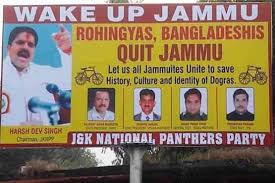
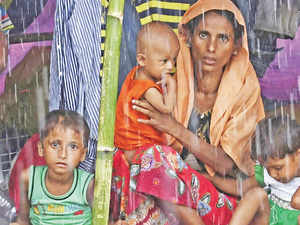
Northeast on alert as threat of influx by Rohingyas looms large

By Bikash Singh, ET Bureau|Sep 29, 2017, 11.59 PM IST
India has said no to granting asylum to Rohingyas, but there are already some 40,000 Rohingya Muslims in India, settled in Hyderabad, Delhi, Rajasthan, Jammu and Kashmir and Uttar Pradesh.

The threat of an influx by Rohingyas is looming large on Northeast India. While the possible presence of terrorists among the Muslims fleeing Myanmar’s Rakhine state is alarming security agencies, it creates a bigger problem for the administration in a region where infiltration is already a sensitive issue and a cause for deadly violence in the past. 

Northeastern states share more than 4,500 km of border with Bangladesh, China, Myanmar and Bhutan. Of this, the 1,643-km Indo-Myanmar border in Mizoram, Manipur, Nagaland and Arunachal Pradesh is unfenced and ethnic communities on each side can travel visa-free 16 km inside the other country. India also has a porous border with Bangladesh, where most of the Rohingya Muslims trying to escape persecution in their home country are ending up. India’s border states in the East are therefore vulnerable to an influx of Rohingyas. 

While handling a large number of refugees in itself is a problem, the possible presence of terrorists among them increases the risk. At least two Pakistan-based terror groups are reported to be working among Rohingya Muslims. A militant outfit, Aqa Mul Mujahideen, formed by a group of Rohingya Muslims is trained by Lashkar-e-Taiba and Jaish-e-Mohammad terrorists, say security experts. There is a risk also of these militants linking up with the National Socialist Council of Nagaland, an extremist group in the Northeast. 


India has said no to granting asylum to Rohingyas. But there are already some 40,000 Rohingya Muslims in India, settled in Hyderabad, Delhi, Rajasthan, Jammu and Kashmir and Uttar Pradesh. In August, the Indian government termed them illegal immigrants and conveyed its intention to deport them. While a petition challenging their deportation is pending before the Supreme Court, the government doesn’t want the problem to get bigger with more Rohingyas landing up in India. 

Assam Rifles, which is guarding the Indo-Myanmar border, is on high alert to check any attempts from Rohingyas to sneak into India. Also, the Union Ministry of Home Affairs has issued an alert to the Northeastern states, asking them to watch out for illegal immigrants. “We are wary of Rohingya Muslims sneaking to India through Moreh in Manipur and through Indo-Bangladesh borders in Tripura,” a senior intelligence official told ET, speaking on the condition of anonymity. 

The home ministry’s special secretary (international security) Rina Mitra and joint secretary (northeast) Satendra Garg inspected the security arrangements in Moreh and the Indo-Myanmar border, including the Friendship Bridge. Moreh, an Indian town bordering Myanmar in Manipur, is a trade hub.The BJP-led government in Manipur has decided to set up two new police stations in border districts to watch out for Rohingyas trying to enter the state. 

Police in Manipur have also begun a house-to-house verification in the border areas to look for illegal immigrants. According to chief minister N Biren Singh, 1,211 houses had been screened in Jiribam and 265 of these identified as suspicious. Of these, people in around 107 were found to have entered India illegally. The Manipur government has also requested the Centre to take up with Myanmar the deportation of 22 Rohingya refugees lodged in a jail near Imphal. 

Though there is no settlement of Rohingya Muslims in Northeast India, they enter the country through the region. Police in Assam’s Barak valley last month arrested five Rohingyas and sent them to jail. Those people were on way to mainland India, L Lungriading, Assam’s additional director general of police, told ET. “Barring this,” he said, “there is no report of influx of Rohingyas from anywhere in Assam.” 

But the situation could change if authorities lowered the guard. Presence of illegally entered foreigners is an emotive issue in Northeast India. According to the interim report of the Committee for Protection of Land Rights of Indigenous People, headed by former chief election commissioner HS Brahma, indigenous people of Assam have been reduced to a landless class due to unrestricted infiltration from Bangladesh. In 1985, Assam agreed to accept foreigners who entered the state from Bangladesh before March 25, 1971. But infiltration continued, causing friction between the local tribes and those whom they view as illegal immigrants. Many have died in clashes. 

Elsewhere in the Northeast as well, local people have opposed moves to allow refugees, including Buddhists from Tibetan, to settle down in the region. The problem could get worse if more refugees land up. Authorities don’t want such a situation to arise. 

Assam’s additional director general of police (special branch) Pallab Bhattacharya said: “Alert is issued by the district police of Karimganj, Cachar, Hailakandi, Dhubri and South Salmara regarding the Rohingya refugee. We have discussed security scenario with top officials of the Border Security Force and other security agencies.” 

India to receive its first shipment of crude from US on Monday

By Nishtha Saluja, ET Bureau|Updated: Sep 30, 2017, 12.26 AM IST
The shipment arriving next week will be about 2 million barrels, US officials said. (Representative image)Image result for pic of usa crude oil

US officials expect their crude exports to keep global oil prices low and stable in the future and benefit consumers, including India, which is set to receive its first shipment from the US on Monday. 

“Over the long term, it’s hard to see crude prices going up significantly. There might be natural disasters, there might be political instability that could cause short-term fluctuations and jumps, but my perspective is that the cost of oil and gas will stay relatively low,” a US official told reporters on Friday. 


With the US emerging as an exporter of crude oil, producers in the Middle East will have to maintain a competitive pricing strategy, the official said, asking not to be identified. Brent crude, the benchmark for more than half the world’s oil, traded at $57.62 a barrel in London on Friday. 

“Even if oil companies in India don’t buy, they win because it forces the Middle East to compete. It’s good news not only for the US, regardless of whether India purchases, but it’s also great news for Indian consumers as well,” the official said. 

India, the third-largest consumer of energy in the world, imports about 80% of its crude oil requirements. After Prime Minister Narendra Modi visited the US in June, refiners Indian Oil and Bharat Petroleum placed orders for over 4 million barrels of oil from the US. The shipment arriving next week will be about 2 million barrels, US officials said. Hindustan Petroleum Corp is also considering buying crude oil from the US. Countries importing US oil will benefit from the lower cost of production there. 


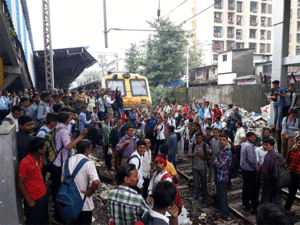
3000 people lose lives on Mumbai tracks every year By Krishna Kumar, ET Bureau|Updated: Sep 30, 2017, 12.44 AM IST

Pre-2006 figures are unavailable but an average 3,000 people lose their lives daily on the tracks. It’s easy to do the maths; the city’s lifeline is a death trap for many.
By Krishna Kumar, ET Bureau|Updated: Sep 30, 2017, 12.44 AM IST
While the 22 deaths in the Elphinstone station stampede may sound shocking, official figures from the Railway Police show that more than 29,000 have died on the Mumbai Suburban Railway system from 2006 till 2017. 

Pre-2006 figures are unavailable but an average 3,000 people lose their lives every year on the tracks. It’s easy to do the maths; the city’s lifeline is a death trap for many. 

In spite of a huge chunk of revenue coming from the Mumbai Suburban system, the Indian Railways is loath to spend on infrastructure, even basic facilities. A few years ago, a commuter organisation had to drag the Railways to Bombay High Court to enforce provision of ambulances at stations. 


Before, those injured in rail accidents had been transported in rickshaws, taxis and even handcarts. 

Passengers have long been petitioning then railway minister Suresh Prabhu and his predecessors for funds to develop the ageing infrastructure. “Elphinstone is not the only station. There’s Parel and Kurla, while at Dadar platforms 1 and 2, there is actually no space to stand when a train comes in! There is a bigger tragedy waiting to happen. 

Unfortunately, we have been raising issues but the Railways has not bothered to respond,” said Madhu Kotian, president, Mumbai Railway Pravasi Sangh, a commuters’ organisation. 


According to Kotian, the Railways acts only after a major accident. 

“We have been raising issues about the Elphinstone and Parel bridges for more than eight years now. We told them there would either be a stampede or the bridge would collapse. 

We asked them to widen the bridge but they didn’t take it seriously.” 

In fact, the Maharashtra government and the Railways are supposed to be executing two major new lines to decongest the city’s rail network — PanveL-CST on the Harbour route and Virar-Bandra. While many promises were made by Prabhu, the projects are still stuck on the drawing board and the Railway Board has not yet given approval. 

Priorities of both, the Maharashtra government and the Railways don’t seem to be aligned with commuter interest. This year, the two cleared a proposal to rename the Elphinstone station as Prabhadevi Railway Station but there is no progress in sight on the infrastructure front. 


Foreign funds turn off supply, leave Indian markets gasping

Untitled-22
By 
Sanam Mirchandani ET Bureau
Indian stocks were the third-worst performers among leading emerging markets in September as foreign portfolio investors pulled money out of the country at the fastest pace since November last year amid a slide in the rupee. 

Market participants said foreigners shifted money from the expensively valued domestic shares to cheaper destinations on worries that corporate earnings growth will take time to revive. 

Repeated comments by the US Federal Reserve on normalisation of monetary policy have also affected sentiment in emerging markets, such as India, with high foreign holdings. 

The Sensex fell 1.4% during the month while Nifty lost 1.3%. If not for the strong inflows of over Rs 20,000 crore by domestic institutions — mutual funds and insurers — during the month, losses would have been bigger. Foreign portfolio investors pulled out close to Rs 13,400 crore in September. This includes Friday's provisional figure of Rs 1,547 crore worth of selling by foreign investors and Rs 2,065 crore of buying by domestic institutional investors. 

Taiwan and South Africa, which fell 2.4% and 2.7% respectively in September, were worse off than India. Brazil, Thailand, Philippines and South Korea advanced 1.3%-3.9%. The near-term market direction will depend on foreign fund flows. 

"FII (foreign institutional investor) outflows will continue. Generally, they are pulling out money from EMs (emerging markets) in response to normalisation of policy by the Fed and in expectation that ECB (European Central Bank) could also look at tapering when it meets in October," said Abhay Laijawala, head of research at Deutsche Equities India. 
Foreign investors have sold Indian shares for the second month in a row in September. 
Untitled-21
They dumped equities worth Rs 12,600 crore in August. In the past, foreign fund selloffs of this magnitude have resulted in steep falls in the market. But this time around, domestic institutions have cushioned the fall, armed as they are with funds pumped in by retail investors who are shifting from fixed deposits, real estate and gold to equities. In August, domestic institutions bought stocks worth Rs 16,200 crore. 

Since January, domestic institutional investors have pumped Rs 63,215 crore. In the current calendar year, foreign investors remain net buyers of shares worth about Rs 32,300 crore, even after their selling spree in August and September. India remains overweight for overseas investors, but they would rather wait for some positive triggers before allocating incremental money, experts said. 

"From a long-term perspective, investors are positive on reforms and the country's prospects. However, in the near term, they believe markets can be volatile as the economy rebalances following rapid rollout of transformational reforms," said Laijawala. Share valuations are offering no comfort to investors either, said analysts. 

The Sensex is trading at roughly 20 times earnings estimates for the current financial year compared with 14 times for the MSCI Emerging Market Index. "After the strong 20% rally year to date, valuations are a tad demanding. Also, earnings estimates continue to be revised down. At the start of the the fiscal year, the street was expecting 20% earnings growth (for FY18), but now the expectation stands reduced to 14%," said Bharat Iyer, head of India equity research at JPMorgan. 

Iyer cautioned the earnings growth number could be lower still. So far in 2017, Indian indices have been among the best performers in emerging markets. The Nifty is up 19.6% since January while the Sensex is up 17.5%. "For foreign investors to put incremental money to work, there should either be a pullback in the markets or earnings should recover," said Iyer. 

SOME SERIOUS READING-AN ARTICLE THAT APPEARED IN SAKAL,THE MARATHI NEWS PAPER AND IS DULY TRANSLATED -KHILAFAT TO ROHINGYAS - WHY INDIAN MUSLIMS ALWAYS ON THE DEFENSIVE?


Image result for pic of rohingya muslims in IndiaIndian Muslims are taking out Morchas in support of the Rohingya Muslims. Some Muslim leaders are demanding that Rohingyas should be allowed to stay back in India, even if it is against the national interest. This reminds me of the following lines from Babasaheb Ambedkar’s book, ‘Thoughts on Pakistan’. Dr. Ambedkar says,
‘The Islamic injunction to Muslims not to take the side of non-Muslims in any strife is the basis of pan-Islamism. It is this which leads Muslims in India to say that he is Muslim first and an Indian afterwards. It is this sentiment that explains why the Indian Muslim has taken so small a part in the advancement of India but has exhausted himself by taking up the cause of Muslim countries. And why Muslim countries occupy the first place and India the second place in their minds. Savarkar’s principle of one man one vote would mean a democratic, Hindu majority state. It would not be a Muslim state and hence Islam prohibits the Muslims from living in it. Islam can never allow a true Muslim to adopt India as his motherland.’
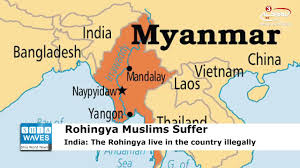
Image result for pic of rohingya muslim in indiaImage result for pic of rohingya muslims in India
In the Hindi movie Sarfarosh that was a runaway hit a few years ago, the main protagonist, ACP Ajay Rathod tells his Muslim deputy, ‘Mere mulk ko bachane ke liye mujhe kisi Salim ki jarurat nahi hai’. Through this dialogue, Sarfarosh had tried to face the continuing distrust between the Hindus and Muslims head-on. Whether it is about singing Vande Mataram or standing up while the National Anthem is being played, or alleged violence over beef-eating, controversy over Suryanamaskar or the alleged denial of housing to Muslim tenants, there is a question often being asked by Muslim leaders and self-professed liberals, ‘Why are Indian Muslims constantly being pushed into the convict’s stand’?
It is a valid question, one that demands a truthful answer. But this question cannot be answered unless we acquaint ourselves with history as well the present. The first part of trying to solve any problem is to identify the scope of the problem clearly and then try to find solutions. So let us accept the hypothesis of Muslim leaders that Indian Muslims are being constantly pushed on the defensive because non-Muslims in India have a feeling of mistrust towards the Muslims. Many Indian writers, from Swatantryaveer Savarkar to Babasaheb Ambedkar to Sheshrao More have written about the Muslim mindset. Reading these writing would be instructive to anyone, especially, Muslims.
It is a fact that Muslims from the Indian subcontinent have been possessed with an idea called Pan-Islamism for many decades now. ‘All Muslims in the world are united by their faith and they form a pan-Islamic identity that is stronger than any national boundaries’ is the core idea behind Pan-Islamism. This is the reason why Indian Muslims feel compelled to agitate for the rights of Palestinians, Rohingyas or any other Islamic group that is being persecuted in their opinion.

Mustafa Kemal Ata Turk, the leader of Turkey, officially abolished the Islamic Caliphate. As per the consensus of Islamic majority over the centuries, the caliphate was the core political concept of Islam, and the Calipha was believed be the leader of all Muslims, and not just of the Muslims in Turkey. Abolition of Caliphate sent out shock waves among the Muslims of the world, and Indian Muslims were not an exception. Indian Muslims started the Khilafat movement, a pan-Islamic political protest campaign in support of the Turkish Caliphate. Many Hindu Congress leaders like Mahatma Gandhi had supported the Khilafat movement. But subsequent Moplah riots of Kerala where the Mappilah Muslims of Kerala murdered, raped and forcibly converted Hindus opened the eyes of many Hindu Congress leaders. Lala Lajpatrai, Lala Hardayal and Swatyantraveer Savarkar were a few of them. Moplah riots forced Dr. Hedgewar to change his loyalties from the Indian National Congress to establish the RSS, as an organisation to unite the Hindus.
The rift caused by the Khilafat movement among the Hindus and Muslims could never be bridged over. The seed of the two-nation theory was planted during the Khilafat movement. Eventually, it resulted in the bloody partition of India on the basis of religion. Islamic Republic of Pakistan and the Democratic Republic of India became independent countries in 1947. A significant number of Muslims chose to stay back in India. However, did the ghost of Pan-Islamism stop haunting the Indian Muslims even after partition? The answer will have to be in the negative.
Immediately after independence, Indian Muslims underlined the fact that they are ‘different’ by asking for laws based on Shariah to govern the civil affairs of Indian Muslims. When the constituent assembly met to draft a modern democratic constitution for India, as the Chairman of the Dr. Babasaheb Ambedkar was well aware that India needs a fully secular constitution which will take precedence over all religious codes. However, leaders of Indian Muslims, including moderates like Maulana Azad insisted on a separate Islamic Civil Code based on Shariah. The sacred principle of ‘One nation, One Law’ could not be implemented and society continued to be split. This eventually resulted in the Shahbano case, where a court judgement was reversed and a regressive law was passed that pushed the struggle by Muslim women for equality back by decades!
Indian Muslims need to realise the idea of Pan-Islamism is a mirage. Many Indian Muslims have a soft corner for Saudi Arabia as it is the birthplace of Islam. But how does Saudi Arabia treat Muslims of other nationalities? Indian Muslims who have lived and worked in Saudi Arabia for years do not have the right to become a citizen there. They are treated like second class citizens. Saudi Arabia is a rich country, but how many Rohingyas or Iraqis or Palestinian refugees has it accepted?
Pakistan was allegedly created to be a ‘paradise for all Muslims’. What is the status of Shias, Ahmediyas, Balochis and Hazra Muslims in Pakistan? Why are Muslims who migrated from India still being called Mohajirs and treated like pariahs in Pakistan? When the predominantly Punjabi Muslim army of Pakistan massacred 30 lakh Bengali Muslims in 1971, who was responsible for the genocide? Jews, Americans or Hindus? When Muslims flee Islamic countries as refugees, like in Iraq and Syria, why do they risk life and limb to reach Europe? Why do none of the oil-rich Islamic states like Qatar, Kuwait, Saudi and UAE open their doors to Muslim refugees?
There is a lot of talk about Muslims being ‘uneasy and scared’ in India today. India has a Hindu majority, and yet, when there was an ethnic cleansing of Kashmiri Hindus from the valley, did Muslims in any other part of India feel persecuted? Have the Hindus ever tried to subvert the nation’s laws using their strength in numbers? The average Hindu doesn’t want special rights for Hindus. He just wants the same rights for all and special privileges for none.
With the advent of social media and the spread of the internet, the world has become a global village. We know what is happening in Barcelona or Dhaka within a few moments at the click of a mouse. Everyone has information at his/her fingertips and opinions are being formed accordingly. Each time there is a terror attack anywhere in the world, the needle of suspicion automatically points at Muslims first. That is a fact, and unfortunately, in an overwhelming majority of cases, the suspicion turns out to be true. Indian Muslims dislike being made to be defensive, but have they tried to introspect why most of the terror acts in the world today are committed in the name of Islam?
No matter which country they live in, Muslim populations always demands special rights, privileges and protection, but Islamic states never grant that privilege to its non-Islamic populations. Have Indian Muslims spoken out against this hypocrisy? Each time there is an Islamic Terror attack anywhere in the world, the stereotypical reaction of the average Muslim is, ‘But this is not the real Islam’ or ‘Terror has no religion’. Next, they come up with wild conspiracy theories like ‘the jews did it’ or ‘American policies are responsible for it’. Why is there no genuine attempt to look within by the Islamic society?
Fact is, this notion of Islamic victimhood is turning the average Muslim blind to the changing geo-political reality of the world. US drops a 10,000 ton bomb in Afghanistan just to kill a few jehadis. No one bats an eyelid. Rohingyas leave Myanmar and seek refuge in other countries, the world is not particularly concerned. Global society is slowly, but surely turning indifferent towards the Muslims. But very few Indian Muslims are willing to even face this reality, let alone trying to find the reasons behind it. Instead, they spend all their time playing ‘minority politics’. The tiniest minority in India are the Parsis. They are less than 100,000 in number, and yet, no one doubts their commitment to India, not are they ever asked to furnish the proof of their ‘deshbhakti’. Even though the Parsis are so few in number, no Parsi leader has ever said Parsis are feeling ‘uneasy and scared’ in India, but Muslims, who form almost 11 percent of India’s population keep crying that they feel ‘insecure’.
The reason behind this is the silence of the majority of Indian Muslims. It is true that only a small section of Muslims support terrorism. But it is these violent Jehadis who have become the face of global Islam today because the majority has chosen to stay silent. How many Muslims spoke up loud and clear in the Salman Rushdie or Charlie Hebdo cases and denounced Islamic fundamentalism? It is because of the actions of a few and the tacit silence of the many that 150 crore Muslims find themselves being judged by the others in various countries of the world.
All existing religions in the world were founded centuries ago. All have had customs, traditions and laws that may have been valid then, but sound ridiculous and inhuman now. Even Hindus had ugly and violent traditions like Sati and untouchability. But the reformists from within in the religion spoke up against them and led the society to discard these inhumane traditions. Overwhelming majority of the Hindus supported the reformists and not the orthodox people where were opposing the reforms. Even today, the reform movement in Hinduism is going on.
Unfortunately, the few people who tried to reform Islam in India died a lonely death, like Hamid Dalwai. Dalwai’s colleague, Prof. Mumtaz Rahimatpure was initially denied an Islamic burial in Kolhapur after her death because the community leaders declared her blasphemous. Her family members had to give an undertaking that they are devout Muslims for her body to be given a proper Islamic burial.
Is India really an intolerant country as it is made out to be by a few self-proclaimed liberals and Indian Muslim leaders? Parsis, Jews, Shias, Ahmediyas have been welcomed in this country since centuries and have since then integrated so well in the Indian society that never have they felt ‘uneasy and insecure’. Why is it that only Indian Muslims feel insecure despite their large numbers? In fact, it is the Hindus of this country who feel insecure when they see mobs of thousands gathered for a funeral procession of a convicted terrorist. It is the Hindu who feels insecure when a mob of thousands of Muslims gather in Mumbai to protest against the persecution of Rohingyas by Myanmar and kick and destroy a national memorial, attack and grope female police officers and destroy police stations. It is the Hindu who feels insecure when thousands of Kashmiri Hindus are given the choice of ‘Ralive, Chalive ya Galive’ (Convert, leave or get killed) in one night! It is the Hindu who feels insecure when innocent pilgrims on Amarnath Yatra are shot at by terrorists. It is this insecurity on the part of the Hindu society that gives birth to dialogues like ‘mere desh ko bachane ke liye mujhe kisi Salim ki jarurat nahi hai’.
If this situation has to be changed, Indian Muslims have to come out of their self-imposed ghettos and be vocal. They need to take definite positions on questions like supremacy of the Indian constitution or their religious book, Shivaji or Aurangzeb. It is not enough to reiterate that ‘Islam is a religion of peace’. If Islam is to be indeed a religion of peace, Indian Muslims need to be speak loud and clear against violent Al-Qaeda form of Islam. Issues like loudspeakers on mosques, right of Muslim women to wear the clothes that they want to or Triple Talaq need to be debated openly from both within the community as well as with non-Muslims. Indian Muslims need to realise that their so-called leaders do not serve their interests by making statements like ‘In 15 minutes we will finish the Hindus if the police are taken out of the picture’.
Islam needs to have its own reformist movement that looks at its traditions critically and discards outdated concepts like Pan-Islamism, Ghazwa-E-Hind or Dar-Ul-Harb. Indian Muslims need to mobilise themselves to protest against issues that give a bad name to Islam like the destruction of Bamiyan Buddhas rather than destroying public property over the perceived persecution of Muslims in other countries. Everyone who lives in this country must accept that the law of the land and the Indian constitution rules supreme. It is only then that the mistrust between Muslims and other communities will vanish.
In the movie Sarfarosh, the Muslim character Salim replies to ACP Rathod with a terse, ’aap bharosa to kijiye, ek nahi, hazaro Salim mil jayenge’. I firmly believe that there are millions of such Salims in India, who consider themselves Indian above all else, but they need to speak up and not take refuge in silence. As Martin Luther King Jr put it so succinctly, ‘the greatest tragedy of this period of social transition is not the strident clamour of the bad people, but the appalling silence of the good people.’ If Indian Muslims have to demolish this cage of victimhood, they need to break their silence!
Original Article in Marathi - Tushar Damgude

English Translation - Shefali Vaidya


Friday, September 29, 2017

New debt disclosure norms: Should companies be worried?

Come October 3rd, life for listed companies will change forever. Any default on any loan must be disclosed to the exchanges immediately. 

Thursday, September 28, 2017

India jumps to 14th rank as best country for expats: HSBC

Driven by strong ratings across a range of economic, experience and family measures, India shines in this year's league table, moving up 12 places since 2016.

MUMBAI: India leapt up the global rankings by 12 places to take the 14th spot in terms of best country for expats to live and work in, says a HSBC survey. 

The list, which is topped by Singapore, is part of HSBC's latest 'expat explorer survey' that covered 27,587 expats from 159 countries and territories in March and April this year. 

"Driven by strong ratings across a range of economic, experience and family measures, India shines in this year's league table moving up 12 places since 2016 (to rank 14 as overall best country for expats)," HSBC said. 

"India draws many expats for work and financial opportunities, but new arrivals here often find their family life improves significantly too," it added. 

At the same time, the country has emerged among the top 10 countries among expats for professional development. 

"The number of resident expats who recommend the country for career progression has  increased by 12 per centage points since 2016 to almost two-thirds (63 per cent), placing it seventh in our ranking for career progression," HSBC said. 


According to survey, about 71 per cent expats in India reported high levels of confidence in the local economy, while 58 per cent exuded optimism on political stability. 

With an average USD 176,408 gross personal income per year -- one of the highest in the world -- over 50 per cent of the expats said India is a good place to start a business. 

Interestingly, the survey found that moving to India had improved family related issues for expats and the countryis now ranked second in terms of bringing expat couples closer together. 


"Despite the hard work, growing numbers of couples feel a new life in the country has done their relationship good," HSBC said. 

Besides, almost half (48 per cent) of expat children easily made new friends according to their parents, ranking India third in the world for this parameter. 

In terms of Indians living as expats overseas, the survey found that their new host country offers many benefits with about 56 per cent of the respondents saying their new location offers good career. 

"They report a significantly higher income since moving abroad," the survey said. 

"At around USD 86,000, it is lower than the global average of just under USD 100,000. But it equates to a typical increase of 43 per cent against their home income compared with a global average increase of only 25 per cent," it added. 


Former Tehelka editor Tarun Tejpal charged with rape

Last updated on: September 28, 2017 16:58 IST

A district court in Goa on Thursday framed charges of rape and wrongful confinement against Tarun Tejpal, the founder of Tehelka magazine, in connection with an alleged rape case filed against him in 2013.

The trial in the case is set to begin on November 21. 
District Judge Vijaya Pol framed charges against Tejpal under IPC sections 376 (punishment for rape) and 354 A (sexual harrassment) and B (criminal assault with intent to disrobe a woman), 341 (wrongful restraint) and 342 (wrongful confinement), public prosecutor Fransisco Tavora told reporters.
"The judge will now try Tejpal under these sections," he said.
The lawyer representing Tejpal pleaded before the Mapusa court in Goa to put the trial on hold as a petition challenging the framing of charges is already pending before the Bombay high court at Goa.
The judge rejected the plea and allowed the framing of charges against Tejpal, who pleaded not guilty and claimed trial.
The former Tehelka editor is alleged to have sexually assaulted a former colleague inside the elevator of a five-star hotel in Goa in 2013.
Earlier this week, the Bombay high court at Goa had refused to stay the framing of charges against him, while issuing notice to the state government.
The high court had, however, restrained the district court from examining the evidence in this case.

Hugh Hefner, iconic founder of Playboy, has died at age 91

Sep 28, 2017 11:14 AM IST | Source: CNBC

Iconic Playboy magazine founder Hugh Hefner died surrounded by family at the Playboy Mansion

Hugh Hefner, iconic founder of Playboy, has died at age 91

Leslie Shaffer
CNBC Hugh Hefner, the iconic founder of Playboy magazine, died at his home, the Playboy Mansion, of natural causes at age 91, Playboy Enterprises said in a statement on Wednesday.Playboy magazine was founded more than 60 years ago to create a niche upscale men's magazine, combining images of nude women with in-depth articles, interviews and fiction by a variety of well-known writers.
Hefner reportedly founded the magazine with $600 and another $1,000 borrowed from his mother. The first centerfold, an iconic feature of the monthly magazine, was of Marilyn Monroe. "My father lived an exceptional and impactful life as a media and cultural pioneer and a leading voice behind some of the most significant social and cultural movements of our time in advocating free speech, civil rights and sexual freedom," Cooper Hefner, Playboy Enterprises' chief creative officer and Hugh's son, said in the statement."He defined a lifestyle and ethos that lie at the heart of the Playboy brand, one of the most recognizable and enduring in history," the younger Hefner said.While the magazine managed to both inspire and ride the "sexual revolution" of the 1960s and 70s, in recent years it has struggled in the face of tough competition from the availability of free pornography online.
For a brief period from mid-2016 through early 2017, the magazine experimented with avoiding nudity, before returning to its previous formula.The statement said Playboy magazine was aimed at more than the market for nude images."Hefner took a progressive approach not only to sexuality and humor, but also to literature, politics and culture," the statement said, calling the "Playboy Interview," or an extensive discussion between a well-known person and an interviewer, a "standard setter."
Hefner also led free-speech battles in the U.S., fighting all the way to the Supreme Court after the U.S. Post Office refused to deliver his magazine, the statement noted.Hefner was survived by his wife, Crystal, his sons, Cooper, David and Marston, and his daughter, Christie, the statement said.

Monday, September 25, 2017

World's 'heaviest woman' Eman dies in UAE

Eman Abdul Atti's efforts to shed her extra kilos ended in a tragedy at a hospital in Abu Dhabi when the 37-year-old Egyptian national known as 'the world heaviest woman' died on Monday due to complications from her weight.

8 THINGS TO CONSIDER WHILE SELECTING YOUR CREDIT CARD

The following article is an initiative of Paisabazaar.com and is intended to create awareness among the readers.

8 Things to Consider While Selecting Your Credit Card
Life without a Credit Card is almost unimaginable today. Not only does it offer ease of use and repayment, but is a great medium to build our credit profile, which is one of the key parameters that determine our eligibility and the pricing for lending products like personal loans, home loans etc. While the basic features offered by Credit Cards are similar, to make full use of a Credit Card, you should opt for one that meets your lifestyle and spending habits. This will enable you to utilize attractive cashbacks, discounts and reward points that would help you reduce your transaction costs.
Here are the 8 factors that you need to consider while selecting a credit card.
1. Spending habits: Most credit cards are aimed at certain type of customer segments by offering reward points and other benefits on specific type of transactions. For example, while fuel cards come with higher cashback on fuel transactions, others offer higher benefits on grocery or other regular spends. Credit Cards with travelling benefits offer frequent travelers free air miles, lounge access at airports, hotel stays etc. Similarly, some cards also offer up to 5% cash back on utility spends. 
Thus, carefully analyse your spends and transaction pattern and then, opt for the card offering maximum benefits on your top spends. For example, if you spend a considerable amount on refueling every month, then you should opt for a fuel card to save your fuel expenses. Similarly, if your occupation makes you frequently travel by air, then using a travel or air miles card to book your air tickets and hotel stays will make more sense than using other card types.
2. Finance charges: This fee is levied on making ATM withdrawals and on non-payment or part-payment of outstanding balance by the due date. This charge is levied right from the transaction date until the repayment of the entire bill amount. Finance charges can vary widely from 22 to 47% p.a. depending on your card type. Although, it is strongly advisable to avoid using your Credit Card to withdraw cash, because of its high interest rate, comparing the finance charges is still important as there always remains a possibility of incurring this charge due to unavoidable circumstances or financial emergencies.
3. Fees: Credit card issuers make money through their fees charged on various credit card services. Some of the most important charges include joining fee, annual fee, late payment fee, cash advance fee and rewards redemption fee. 
Joining fee is a one-time charge while annual/renewal fee is charged every year. Joining and annual fees depend on the card type, usually ranging from Rs 199–5,000. Some credit card issuers waive off joining fee or annual fee or both on applying through online credit card marketplaces like paisabazaar.com. Similarly many card issuers reverse their joining fee or annual fee charge when cardholders spend beyond a threshold amount within 12 months. However, always prefer a card whose benefits in the form of cashback, welcome vouchers, discounts or reward points outweigh the annual fee and joining fee. 
In addition to the finance charges, credit card issuers charge a cash advance fee on using the credit card for ATM cash withdrawal. This fee can range anywhere from 2.5–3.5% of the withdrawn amount with most card issuers capping Rs 300 as the minimum fee. This fee can even go higher in case of ATM cash withdrawal at offshore locations. 
Rewards redemption fee is charged on redeeming the reward points. As this fee can go up to as much as Rs 50–100 per redemption request irrespective of the number of reward points redeemed, redeem your reward points only for availing expensive products or services. 
Late payment fee is levied on non-payment of minimum amount due by the bill due date. Most credit cards fix 5% of the total payment due as minimum amount due. 
Apart from these fees and charges, credit card issuers charge a host of other fees and penalties like over limit charges, payment return charges, cash payment charges and outstation cheque processing fee.
4. Credit & cash limits: Credit limit refers to the maximum amount a credit card issuer allows to draw against its card, without incurring any penalty. Exceeding this limit leads to an over limit fee on the amount exceeded. This limit is communicated to the credit cardholder at the time of card delivery and in the subsequent monthly statements. Cash limit refers to the maximum amount that a cardholder can withdraw from ATMs using his credit card. 
These limits are fixed on the basis of the cardholders’ credit score, repayment history, personal income and other factors. Credit card issuers can also increase or decrease the credit and cash limits of existing cardholders on the basis of these criteria. In such instances, the card issuer will immediately inform you stating the reason thereof, through SMS or e-mail, followed by a confirmation in writing. Credit cardholders seeking to increase their credit limit too can request their card issuers by directly writing to them and providing financial documents to prove their income. 
As lenders, credit card issuers and credit bureaus adversely treat cardholders frequently exceeding 30–40% of their available credit limit, try to opt for a card offering at least 3–4 times of your tentative monthly credit card spends. 
Having a higher credit limit also helps in dealing with financial emergencies. Apart from the options of swiping your credit card or cash withdrawal from ATM, you can also avail loan against credit card. These are pre-qualified loans, offered to existing credit cardholders with a good repayment history. These loans do not require any documentation and are disbursed within the same day of the loan application. Their loan tenures would range anywhere from 6 months to five years while their interest rates are mostly at par with personal loans. As the maximum loan amount would depend on your credit limit, opting for a card with higher credit limit will help you avail higher loan amount through loan against credit card.
5. Joining bonuses: Many credit cards, especially in the travel and premium segments, offer attractive joining welcome benefits and bonuses in the form of vouchers and bonus reward points. Some credit card issuers also offer additional joining bonuses to those applying for cards through an online credit card marketplace. Thus, take into account the monetary value of joining bonuses while comparing the various credit card options.
6. Expiry of reward points: Most credit cards reward points expire after a certain period, usually 2–3 years from the date of earning those points. However, there are some card issuers or card types, whose reward points never expire. For example, reward points of credit cards issued by Citibank do not expire. Always prefer cards without expiry period as this feature may force you to indulge in avoidable expenditure.
7. Credit score and other eligibility conditions: Credit score plays a major role in the approval of your credit card application. Usually, people with credit scores of over 750 have higher chances of credit card approval. Other major eligibility criteria include your monthly income and occupational details. While not much can be done with your monthly income, occupation, location, etc, within a short period, you can improve your credit card eligibility by ensuring an error-free credit report. Thus, always avail a free credit report before applying for a credit card and report the errors, if any, with the credit bureau to prevent them reducing your credit score and hence, credit card eligibility. Similarly, do not apply for too many cards within a short period as credit bureaus consider such action as a sign of credit hungriness, and accordingly reduce your credit score. Instead of directly applying with multiple card issuers, visit online credit card marketplace like paisabazaar.com to compare the various credit card options available on your credit score, job profile, location and monthly income without reducing your credit score.
8. KYC documentation: As in case of all financial products, prospective credit cardholders too have to go through KYC documentation while applying for a credit card. Apart from your latest payslip/Form 16/IT return copy as a proof of income, you need to submit documents for your identity and address proofs. While your PAN card, Aadhar Card, Driving License, Passport, etc will act as your identity proof, your Aadhar Card, electricity bill, telephone bill Driving License, Passport will qualify as your address proof.
With the Central Government steadily making Aadhaar Card mandatory in all savings and investment products, it is possible that Aadhaar Card would be made mandatory for credit card and other credit items too. Thus, include your Aadhaar Card as one of your KYC documents as this will save you from the hassle of linking it in future.