Pages

Thursday, December 28, 2017

Around 40 killed in Kabul blasts targeting Shiite centre

kabul

KABUL: Around 40 people were killed and dozens more wounded when a suicide bomber blew himself up inside a Shiite cultural centre in Kabul on Thursday, officials said, in the latest violence to hit the city. 

There was no immediate claim of responsibility but the Taliban was quick to deny involvement in the assault near the Afghan Voice Agency, a media outlet which earlier reports had suggested could have been the target. 

Deputy interior ministry spokesman Nasrat Rahimi told AFP the attack was in fact aimed at the Shiite Tabayan cultural centre in the west of the city. 


"The suicide attacker detonated himself during a gathering at Tabayan cultural centre causing a lot of casualties," Rahimi said. 

The main explosion was followed by two smaller bomb blasts that did not cause casualties, he said, adding that the gathering was being held to mark the 38th anniversary of Soviet invasion in Afghanistan. 

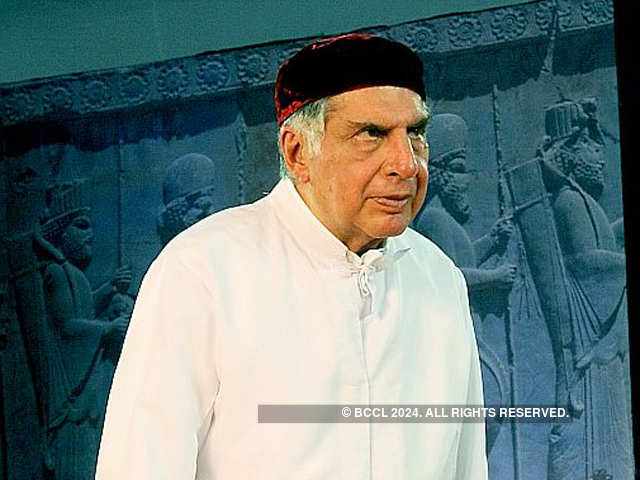
HAPPY BIRTHDAY DEAR RATAN TATA

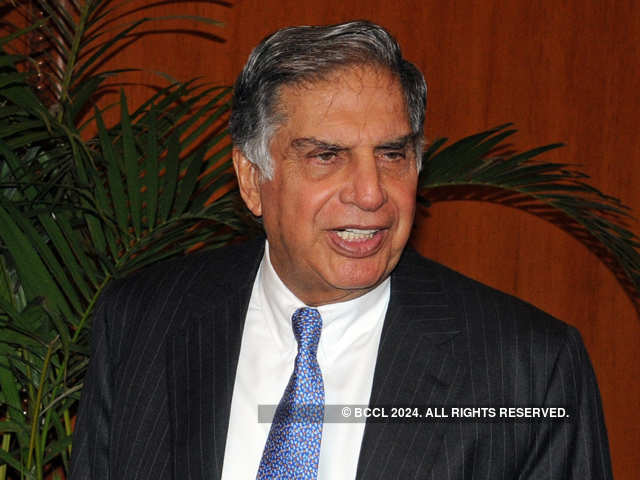
On Ratan Tata's 80th Birthday, Some Life Lessons From The Man Himself

Ratan Tata Turns 80: An Extraordinary Inning

Ratan Tata Turns 80: An Extraordinary Inning

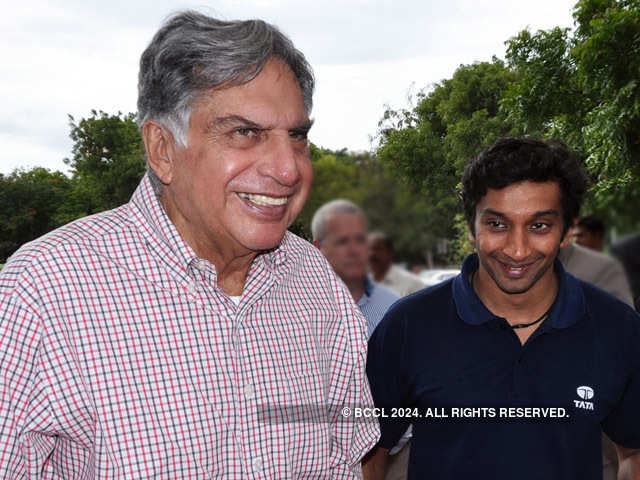
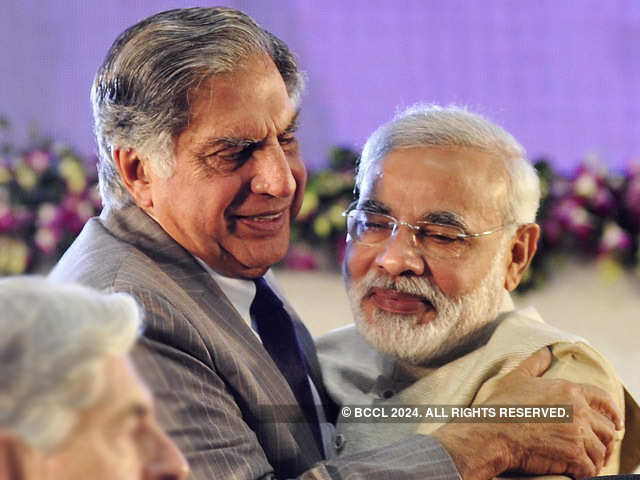
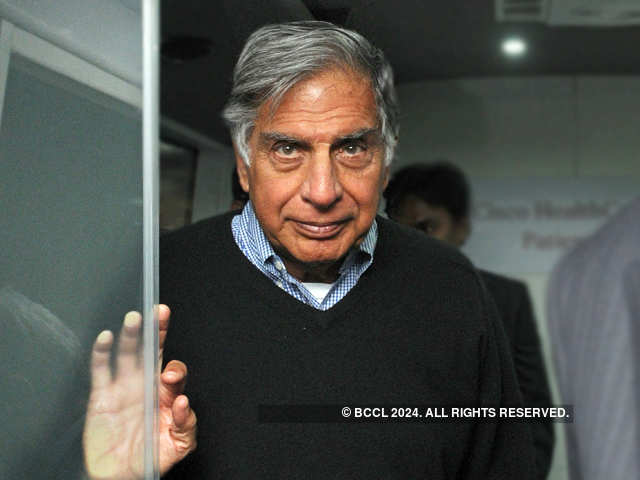
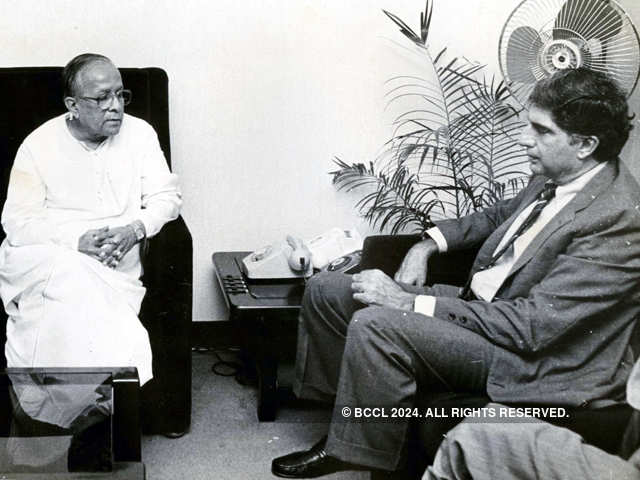
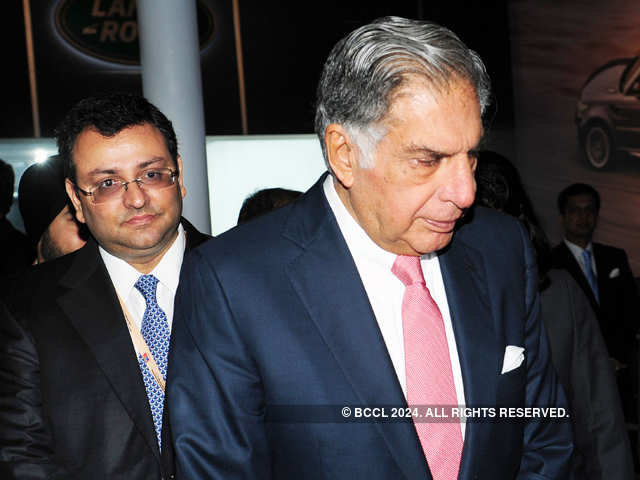
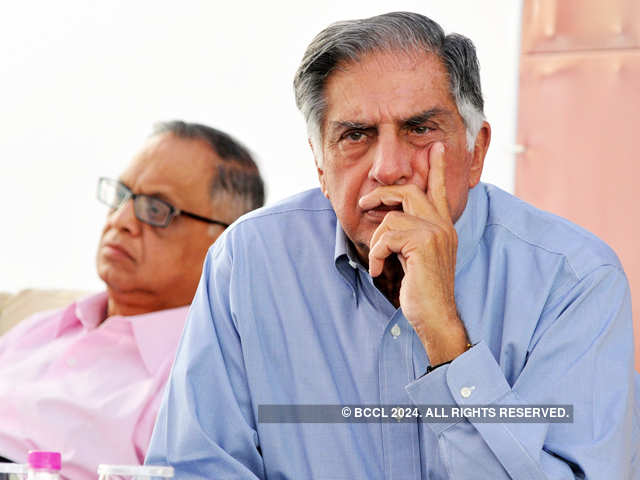
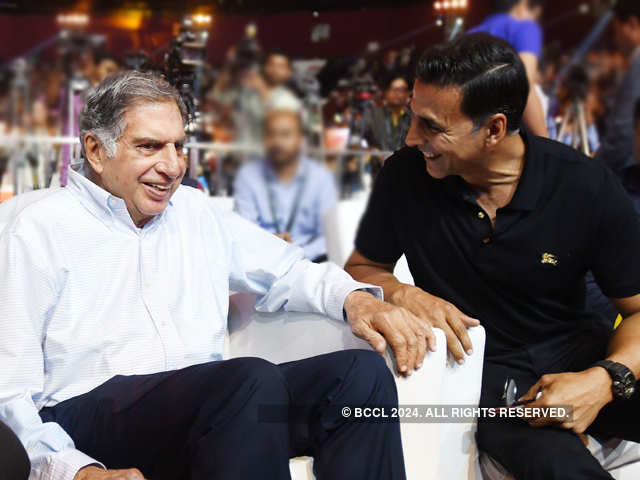
Ratan Tata turns 80 on Thursday. From starting his career on the shop floor of Tata Steel in the 1960s, and handling the blast furnace, to heading the Tata Group as Chairman, it has been a long and eventful journey for him. Being a part of a large conglomerate like the Tatas and leading it came with its own set of challenges. And, naturally, Tata has gone through plenty of ups and downs - failed ventures, disputes, losses - in his professional life. But, like a true fighter, he has always managed to overcome all odds. 

As the business icon turns a year older, here's looking back at some of his oft-used quotes that have been his life mantra.
1/13
BCCL

All's Not Fair & Square

All's Not Fair & Square

"Life is unfair and it’s nowhere written to be fair. But it’s not only you or me, it’s for everyone. My talent differs from yours and yours from another person’s, but we have equal chances to succeed in our respective fields. When there’s a will, there’s a way."
2/13
BCCL

Fuel Your Dreams

Fuel Your Dreams

"We always complain some external factors for our failure and misery. But the reality is none of them affect your dreams unless you give them the power to do so. Be focused on what you want to do and go ahead, success won’t be far from you."
3/13
BCCL

Don't Miss The Big Picture

Don't Miss The Big Picture

"A life without excitement, ups and downs is too much boring and dull. You need to be a storyteller to your grandchildren, why don’t prepare for that from now? We get this life only once, experience every aspect of it. No one ever have grown without falling once, fail as many times as you can, then only you can succeed. So quit complaining and start exploring."
4/13
BCCL

No Slowing Down, Ever!

No Slowing Down, Ever!

“Take the stones people throw at you, and use them to build a monument.”
5/13
BCCL

Empathy First

Empathy First

“I admire people who are very successful. But if that success has been achieved through too much ruthlessness, then I may admire that person, but I can’t respect him.”
6/13
BCCL
Mind The Mind

Mind The Mind

“No one can destroy iron, but its own rust can! Likewise, no ne can destroy a person, but its own mindset can!”
7/13
BCCL

Flying High

Flying High

“The day I am not able to fly will be a sad day for me.”
8/13
BCCL

Of Friends & Foes

Of Friends & Foes

"The people you meet in this life, all won’t be good to you. Some will criticize, some will de-motivate and some will try to pull you down. All you have to do is ignore them and move on. You don’t need to explain them your journey nor let them control your dreams. This is your life, live as you want."
9/13
BCCL
The Code Of Compassion

The Code Of Compassion

"Businesses need to go beyond the interest of their companies to the communities they serve.”
10/13
BCCL

No Power Trip

No Power Trip

"Power and wealth are not two of my main stakes."
11/13
BCCL

Striking A Balance

Striking A Balance

"Ups and downs in life are very important to keep us going, because a straight line even in an ECG means we are not alive."
12/13
BCCL
Paving A New Course

Paving A New Course

"The strong live and the weak die. There is some bloodshed, and out of it emerges a much leaner industry, which tends to survive."

Dubai is planning to remove middlemen like lawyers, accountants, bankers, immigration officers & govt. officials by year 2020 by adapting to blockchain technology.

Image result for pic of dubaiImage result for pic of block chain tec
What will governments look like 5 years from now? Today Dubai announced its plan to be “The World’s first blockchain powered government” with a plan to move 100% on blockchain by 2020:
> ArabianChain is moving all Dubai’s government paperwork onto the blockchain, so it doesn’t need lawyers and government departments for verification.
> ObjectTech is providing digital passports and blockchain security to Dubali International airport to deliver seamless entry and exit from the country.
> The Dubai Land Department has launched a blockchain system to record all real estate contracts and record all property-related transactions such as rental, utility and telcom bills.
> In October, Dubai launched emCash, its own cryptocurrecny for citizens to pay for all services via digital cash.
> The country has set up the 46-member Global Blockchain Council, including companies like Microsoft, IBM and Cisco, to lead the way in the country’s adoption of blockchain technology.
Blockchain smart contracts and cryptocurrency track all transactions that take place with any agreement or transferable asset. That means the end-point of Dubai’s blockchain adoption is that there will be no further need for the middlemen in our day-to-day transactions.
No more laywers.
No more accountants.
No more bankers.
No more immigration officers.
No more government officials.
Dubai estimates that by putting its 100 million documents each year onto the blockchain, they will save 25 million man hours and $1.5 billion in tax dollars.
It would also massively shrink the size of the Dubai government. Why would they do that?
As Dr Aisha Bin Bishr, Director General of Smart Dubai Office, the country’s department in charge of making Dubai the world’s smartest city says:
“The Dubai government differs from others around the world in that it aims to make Dubai the ‘Happiest City on Earth’. In short, we want to give people back time they would have otherwise spent on filing paperwork.”
Could Dubai’s Blockchain initiative lead to a revolution in happy countries reducing the size and influence of their goverhments?
Could an end point be no government at all?
“The Internet is becoming the town square for the global village of tomorrow.” ~ Bill Gates
When asked how he would set up a government on Mars, Elon Musk said the “Most likely the form of government on Mars would be a direct democracy - it would be people voting directly on issues.”
In other words, in this new technological age where the best middle man is no middle man, the best government may be no government at all.” - Roger Hamilton
“Lets go invent tomorrow instead of worrying about what happened yesterday.” ~ Steve Jobs

Political risks the stock markets face in 2018

December 27, 2017 09:38 IST
Political risk culminating from elections in the US and Latin America, and evolving right-wing populism in Europe could lead to substantial volatility, say Abheek Barua and Tushar Arora.
Emerging markets, including India, have experienced what appears to be an overextended bull run this year. 
The majority of the assets have rebounded strongly from the oversold levels of late-2016.
Going into the next year, the key question for investors is whether this positive momentum can persist.
When it comes to some of the biggest challenges for the next year, one of the most commonly cited is the withdrawal of monetary stimulus globally.
From the United States to Asia to the Middle East, central banks around the world are now talking about “normalisation” -- a hike in interest rates and liquidity absorption.
On December 13, the US Federal Reserve hiked interest rates for the third time this year by 25 basis points (bps).
The same day, the People’s Bank of China raised short-and-medium-term interest rate, and the next day, on December 14, the Central Bank of Turkey raised its liquidity window rate.
Market pundits believe that on average interest rates in the advanced economies will rise by around 1 per cent next year, the biggest such gain since 2006.
Among the majors, while the US Federal Reserve could hike rates by 75 bps, the Bank of England could pull the trigger twice (25-50 bps) in 2018.
On the liquidity front, the US Fed will gradually stop reinvesting in bonds. It will start by letting $10 billion a month in maturing securities run off, which will slowly increase to $50 billion by October 2018.
For the European Central Bank (ECB), pace of bond purchases will slow from EUR 60 billion currently to EUR 30 billion in 2018.
The likely slowdown in liquidity growth and hike in interest rates for some of the developed economies will certainly have a bearing on the capital flows to emerging markets (EMs).
The IMF estimates that the normalisation of the US Fed balance sheet alone is likely to reduce portfolio inflows into EMs by around $70 billion over the next two years.
What may come as a sigh of relief is that some part of the monetary tightening in the US and Europe will be offset by the monetary easing programme of the Bank of Japan (at least in H1-2018, the BoJ would continue to buy bonds).
Thus, while the normalisation exercise of the major central banks would be challenging, the risks would emerge only in the last quarter of the next year.
The biggest risk is “political risk” emanating from elections in the US and Latin America, and evolving right-wing populism in Europe that could lead to substantial volatility next year.
In the US, mid-term elections, which are held two years after the quadrennial (four-year) elections for the president, will most likely take place in November 2018.
These mid-term elections are generally regarded as a referendum on the sitting president and going by past records, the incumbent party tends to lose ground in such elections.
In case the US political situation turns in favour of the Democrats (opposition), Trump’s power to twist existing laws will become severely limited, paving a fresh wave of executive orders and higher market volatility.
In Europe, while there won’t be as many elections as there were this year, existing sources of political tension could continue.
Italy will hold a general election in the spring. Meanwhile, Brexit negotiations between the UK and the EU will continue to impart some degree of uncertainty.
In Latin America, Brazil, Colombia and Mexico will face presidential elections in 2018.
The stakes would be high as the outcome will directly affect more than two-thirds of all Latin Americans.
We wouldn’t go into the nitty-gritty but it seems that all three presidential contests will be wide open for anti-incumbent challengers and could potentially be a source of stress for the markets.
Last but not the least, we will see the “inflation-risk” making a comeback in 2018.
The price of oil will arguably be the biggest risk to the economic environment.
For one, if the price of crude continues to increase, the spike in inflation would be enough to force major central banks to raise rates, both in the emerging and the developed world, and perhaps in unification.
Two, higher energy prices could lead to a slowdown in the global growth momentum, which then would curtail earnings potential and the upside for equity markets in the major part of the EM world.
To sum it all, there will be economic problems as well as political problems.
But then persistently low volatility is currently an issue in the financial markets. Perhaps we will be out of such a phase.
Photograph: Aly Song/Reuters.
Abheek Barua is chief economist and Tushar Arora is senior economist, HDFC Bank.

Abheek Barua and Tushar Arora
Source: 

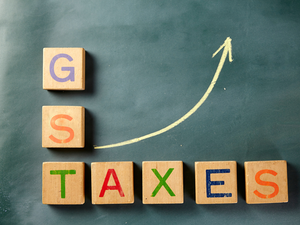
Tax payers can see status of returns filed on GSTN portal

GST
PTI|Dec 27, 2017, 10.10 PM IST 


NEW DELHI: Tax payers can now view the status of the returns filed by them on the GST Network portal, the company handling the technology backbone of the new indirect tax system said today. 

"All users logging on the GST portal can now see the status of their returns filed for all the returns like GSTR-1 or GSTR-3B at one place," GSTN CEO Prakash Kumar said. 

While GSTR-3B is in the initial sales returns filed by the 20th day of the succeeding month, GSTR-1 is the final sales return. 


Businesses with turnover of up to Rs 1.5 crore have been allowed quarterly filing of GSTR-3B and the same for July- September period will have to be filed by December 31. 

Those with turnover exceeding Rs 1.5 crore will have to file GSTR-1 for July-October by December 31. GSTN has already provided to tax payers the functionality to claim refund of exports of services with payment of tax, ITC accumulated due to inverted tax structure and on account of supplies made to SEZ unit/SEZ Developer 


10 hurt in Saint Petersburg supermarket bombing

1
AFP|
Updated: Dec 28, 2017, 06.34 AM IST


SAINT PETERSBURG: A homemade bomb blast at a supermarket in the Russian city of Saint Petersburg injured 10 people Wednesday, officials said, sparking a probe into attempted murder. 

"According to preliminary information, an explosion of an unidentified object occurred in a store," a spokeswoman for Russia's Investigative Committee, Svetlana Petrenko, said in a statement. 

The blast was caused by a "homemade explosive device with the power equivalent to 200 grammes TNT filled with lethal fragments," she said. 


"The investigation is looking at all possible causes of what happened," she said, adding that a probe for attempted murder had been launched. 

The incident comes several months after Russia's second city was rocked with a metro bombing in April which killed 16 people and amid concern that hundreds of Russian citizens who travelled to fight alongside jihadists groups abroad could pose a mounting security challenge back home. 

"Ten people have been hospitalised, their lives are not in danger," the head of the Saint Petersburg investigative unit Alexander Klaus told Russian news agencies. 

Wednesday, December 27, 2017

Bamboo not a tree: indian Parliament passes bill amending Forest Act

Bamboo

NEW DELHI: Parliament today passed a bill to exclude bamboo from the definition of tree under the Indian Forest Act, claiming it would improve the earnings of tribals and dwellers living around forests. 

The Indian Forest (Amendment) Bill, which was adopted by the Lok Sabha on December 20, was passed by a voice vote in the Rajya Sabha, amid a walk-out by member of the Congress, Biju Janta Dal and the Samajwadi Party. 

The opposition parties protested its passage saying the bill was being passed in a hurry without proper consultations with stakeholders and the states. Besides, they alleged it would favour the industrialists. 


Replying to a short debate, Environment, Forest and Climate Change Minister Harsh Vardhan said the bill to amend the 1927 Indian Forest Act would benefit the tribals, forest dweller and farmers as their income would increase. 

The bill permits felling and transit of bamboo grown in non-forest areas. However, bamboo grown on forest lands would continue to be classified as tree and would be guided by the existing legal restrictions. 

"I am really shocked to see that you (opposition ) can't see the benefit of tribals and poor farmers who are going to benefit after the bill is passed," he told the House amid protest from the opposition members. 

Attacking the opposition which repeatedly questioned the government taking ordinance route, Vardhan said the process to make the bill a reality was going on for a long time and the government could no longer see tribals suffer in the country. 

"It took us 90 years to do it. It was long awaited in India. We cannot allow tribals and poor farmers of the country to suffer," he said. 

On the opposition charge that states were not consulted, the minister said that 26 states and union territories had responded on the bill while 24 of them had supported it. 

Vardhan said the bill would not only increase rural income but also help in increasing green cover across the country. 

Bamboo, the minister said, was used extensively in a variety of applications such as furnishing, yarn, pulp and paper, handicrafts, decoration and musical instruments. 

Earlier while moving the bill for passage, Vardhan said the major objective of the amendment was to promote the cultivation of bamboo in non-forest areas and improve farmers' income, keeping in mind the Government's "ambitious" target of doubling farmers' income by 2022. 

The Minister observed that after the amendment, all the legal and regulatory hardships faced by the farmers and other individuals will be removed. 

Dissatisfied with his reply, Congress, SP and BJD members staged a walkout from the Rajya Sabha. 

Indian Govt cuts small savings interest rate by 0.2 percentage points

Small savings schemes public provident fund (PPF) and national savings certificate (NSC) will now have an interest rate of 7.6% while kisan vikas patra (KVP) will yield 7.3%

The government on Wednesday cut the interest rate on small savings schemes by 0.2 percentage points. Photo: iStock
New Delhi: The government on Wednesday cut the interest rate on small savings schemes, including public provident fund (PPF), national savings certificate (NSC) and Kisan Vikas Patra, by 0.2 percentage points for the January-March quarter, a move that will prompt banks to lower deposit rates.
Interest rates in the five-year Senior Citizens Savings Scheme, however, has been retained at 8.3%. The interest rate on the senior citizens’ scheme is paid quarterly.
A finance ministry notification said interest rates have been reduced across several small savings schemes but that for savings deposits has been retained at 4% annually.
Since April 2016, interest rates of all small saving schemes have been recalibrated on a quarterly basis, but there was no change in small savings interest rates in the October-December quarter.
As per the finance ministry notification, PPF and NSC will fetch a lower annual rate of 7.6% while KVP will yield 7.3% and mature in 11 months. The girl child savings scheme Sukanya Samriddhi Account will offer 8.1 from existing 8.3% annually. Term deposits of 1-5 years will fetch a lower interest rate of 6.6-7.4%, to be paid quarterly, while the five-year recurring deposit is pegged at 6.9%.
“On the basis of the decision of the government, interest rates for small savings schemes are to be notified on a quarterly basis,” the finance ministry said, adding that rates of small savings schemes would be linked to government bond yields.

CAGR :AN IMPORTANT TERM WHICH EVERY INVESTOR IN FINANCIAL MARKETS MUST UNDERSTAND

Image result for cagr graphImage result for PIC OF STOCK MARKETS
Compound annual growth rate (CAGR) is a business and investing specific term for the geometric progression ratio that provides a constant rate of return over the time period.CAGR is not an accounting term, but it is often used to describe some element of the business, for example revenue, units delivered, registered users, etc. CAGR dampens the effect of volatility of periodic returns that can render arithmetic means irrelevant. It is particularly useful to compare growth rates from various data sets of common domain such as revenue growth of companies in the same industry.
CAGR is equivalent to the more generic exponential growth rate when the exponential growth interval is one year.

Formula

  •  : start value,  : finish value,  : number of years.
  • Actual or normalized values may be used for calculation as long as they retain the same mathematical proportion.

Example

In this example, we will compute the CAGR over three periods. Presume that the year-end revenues of a business for four years, V(t) in above formula, have been:
Year-End12/31/200412/31/2007
Year-End Revenue9,00013,000
 = 2007 - 2004 = 3
Therefore, to calculate the CAGR of the revenues over the three-year period spanning the "end" of 2004 to the "end" of 2007 is:
 - it's a smoothed growth rate per year. This rate of growth would take you to the ending value, from the starting value, in the number of years given, if growth had been at the same rate every year. (In reality, growth is seldom constant.)
Verification:
Multiply the initial value (2004 year-end revenue) by (1 + CAGR) three times (because we calculated for 3 years). The product will equal the year-end revenue for 2007. This shows the compound growth rate:
For n = 3:
For comparison:
  • the Arithmetic Mean Return (AMR) would be the sum of annual revenue changes (compared with the previous year) divided by number of years, or:
In contrast to CAGR, you cannot obtain  by multiplying the initial value, , three times by (1 + AMR) (unless all annual growth rates are the same).
  • the Arithmetic Return (AR) or simple return would be the ending value minus beginning value divided by the beginning value:

Applications

These are some of the common CAGR applications:
  • Calculating and communicating the average returns of investment funds
  • Demonstrating and comparing the performance of investment advisors
  • Comparing the historical returns of stocks with bonds or with a savings account
  • Forecasting future values based on the CAGR of a data series (you find future values by multiplying the last datum of the series by (1 + CAGR) as many times as years required). As every forecasting method, this method has a calculation error associated.
  • Analyzing and communicating the behavior, over a series of years, of different business measures such as sales, market share, costs, customer satisfaction, and performance.

Source Wikipedia