Pages

Thursday, March 29, 2018

EPF: 10 things you should know about Employees' Provident Fund

Navneet Dubey
Provident Fund accumulation is long-term saving intended to act as a corpus for retirement.
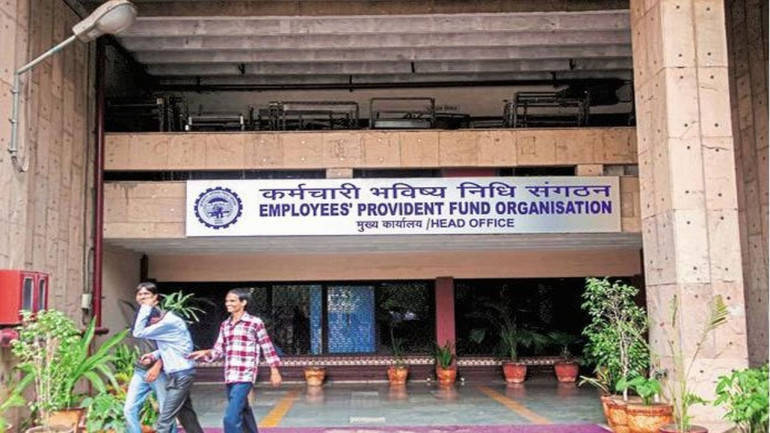
Employees' provident fund is a superannuation benefit provided to employees after the retirement. A certain percent of mandatory deduction is drawn from the basic salary of an employee with a matching contribution from the employer. The fund is managed by the Employees’ Provident Fund Organisation (EPFO). PF accumulation is long-term saving intended to act as a corpus for retirement. You can take loans and make withdrawals in between for specific reasons if required.
Here are 10 things you should know about EPF:
EPF Act applicability
=> EPF has to be deducted if your company employs 20 or more people. However, even if the company size falls below 20, the EPF Act will continue to apply and your provident fund amount will get deducted from your salary.

=> The amount deducted throughout the year can be declared under Income Tax Act where one can save their taxes.
=> The act is applicable for the whole of India except the state of Jammu and Kashmir.
=> The EPFO management decides the interest rate paid to employees every year which is ratified by the Ministry of Finance. Currently, the rates for the financial year 2017-18 is 8.55%.
EPF calculation
=> For an employee earning up to Rs 15,000 as basic plus Dearness Allowance (DA) component, 12% of it is deducted as his share towards EPF contribution.
“The employer too will contribute the same amount; however, 8.33% of the basic plus DA component is credited to the EPS (Employees’ Pension Scheme) A/c while the rest is credited to the employee’s EPF A/c,” informs Naveen Kukreja CEO & Co-founder, Paisabazaar.com.
=> If the basic plus DA component exceeds Rs 15,000, the employee can contribute a higher amount without any statutory obligation for the employer to make the same contribution.
“In case an employer contributes a higher amount, the employer’s contribution towards EPS will still remain capped at 8.33% of Rs 15,000 and the excess amount will be credited to EPF A/c,” added Kukreja.
=> Let's understand it with an example: Assume that an employee earns Rs 30,000 as basic plus DA component and both he and his employer decide to contribute 12% of Rs 30,000. In this case, the employer’s contribution to EPS would be capped at Rs 1,250 and hence, employer’s contribution to EPF A/c would arrive at Rs 2,350.
EPF benefits
=> EPF money can be withdrawn under certain circumstances and also for certain defined life events. Plus, you can take a loan on your EPF.
=> EPF also has unique features like providing capital for building a house. “EPFO has allowed members i.e. the contributory employees of the provident fund scheme to use 90% of EPF accumulations to make down payments to buy houses and use their accounts for paying EMIs of home loans,” said Anil Rego, CEO – Right Horizon.
=> The EPF can be easily transferred from one company to the other if one changes jobs.

Moneycontrolnews

Wednesday, March 28, 2018

Tiangong-1: China's space station to crash to Earth this week

Mar 27, 2018, 12.03 PM IST

​First experimental space lab

​First experimental space lab

China's first experimental space lab is expected to fall back to Earth between March 31 and April 4 and should burn up in the atmosphere.

Image: Aerospace Corporation
1/7
Others

​Stopped sending data

​Stopped sending data

Tiangong-1 has officially stopped sending data and entered its final phase of life on March 16.

Image Credit: China Academy of Launch Vehicle Technology
2/7
Others

​Heavenly Palace

​Heavenly Palace

The Tiangong, or Heavenly Palace, is orbiting at an average height of about 216.2 kms.

Image Credit: China Manned Space Engineering Office
3/7
Others

​Re-entry location

​Re-entry location

It is impossible to name the exact re-entry location at this stage.

Image Credit: Fraunhofer FHR
4/7
Others

​International precedents

​International precedents

The approximate re-entry location cannot be decided until the last two hours before it starts to fall based on international precedents.

Image Credit: The Aerospace Corporation
5/7
Others

​Design life

​Design life

The China Manned Space website will supply daily updates.

Launched in September 2011, Tiangong-1 an experimental had a design life of two years.

Image Credit: China Manned Space Engineering
6/7
Others

​Series of experiments

​Series of experiments

The heavenly vehicle successfully docked with the Shenzhou-8, Shenzhou-9 and Shenzhou-10 spacecraft and undertook a series of experiments.

Image Credit: China Manned Space Engineering

PAN-Aadhaar linking deadline extended to June 30: CBDT The policy-making body of the tax department issued an order extending the deadline from the current last date of March 31.

Representative image


The CBDT today extended the deadline for the PAN-Aadhaar linking to June 30.The policy-making body of the tax department issued an order extending the deadline from the current last date of March 31.
The order said the deadline for PAN-Aadhaar linking for filing I-T returns is being extended after "consideration of the matter" .It is understood that the latest order by the Central Board of Direct Taxes (CBDT) has come in the backdrop of the Supreme Court, earlier this month, directing extension of the March 31 deadline for linking Aadhaar with various other services.
The apex court ordered for the extension in the deadline till the five-judge constitution bench delivers its judgment on petitions challenging the validity of the biometric scheme and the enabling law.
This is a fourth extension given by the government for individuals to link their Permanent Account Number (PAN) with their biometric ID (Aadhaar).
The government has now made quoting of Aadhaar mandatory for filing income tax returns (ITRs) as well as obtaining a new PAN.Section 139 AA (2) of the Income Tax Act says that every person having PAN as on July 1, 2017, and eligible to obtain Aadhaar, must intimate his Aadhaar number to the tax authorities.
As per updated data till March 5, over 16.65 crore PANs, out of the total about 33 crore, have been linked with Aadhaar.The earlier deadlines for linking the two databases were July 31, August 31 and December 31, 2017, with the last being March 31 this year.
.

UPI-based upstarts giving Mastercard, Visa a run for their money

Visa and Mastercard are losing market share to UPI transactions that reached almost half the value of debit and credit cards swiped at stores last month

Trusts set up in India by US citizens may have to comply with FATCA rules

Trusts in India may be required to comply with the rules of the Foreign Account Tax Compliance Act (FATCA) to report all details to the Internal Revenue Services of US

GSTN has prepared system for 75 lakh GST e-way bills daily: Prakash Kumar GSTN CEO Prakash Kumar on GSTN glitches, steps it has taken to protect taxpayer information and for GST e-way bill rollout from 1 April 2019

Prakash Kumar, chief executive of GSTN, the technology backbone of the goods and services tax. Photo: Pradeep Gaur/Mint
New Delhi: Goods and services tax network (GSTN), the information technology backbone of the new indirect tax regime, completes five years on 28 March. In an interview, Prakash Kumar, its chief executive officer, talks about the challenges GSTN faces, the criticism it has encountered for technological glitches, the steps it has taken to protect taxpayer information as well as ensure a successful GST e-way bill rollout from 1 April.
Edited excerpts:
How challenging has the task of creating the tax network for GST been?
It has been quite challenging. The company was incorporated in 2013 and the initial years were spent in staffing and hiring the technology provider. Though we picked Infosys in 2015, the work started in earnest only after the draft GST law was released in June 2016. We prepared all our systems based on this draft law. But in March 2017, the laws were modified in a big way. That was a big setback for us. We had to reorient a lot of things and make a lot of changes. We had initially designed one registration form for all taxpayers irrespective of whether they are composition dealers or inter-state dealers. But now we have separate forms. Similar was the case for return forms where major changes were made quite late. This forced us to release the forms in a phased manner.
The GST Council is again considering changing the return forms. Do you think this time around it will be a smooth process?
We have suggested to the government that we should be given sufficient time to develop, test and then make them available to everyone. This will ensure that when they start using the system, there will be no surprises. I hope this happens. It is the entire ecosystem which has to make the changes including the accountant software companies, GSPs (GST suvidha providers) and the taxpayers. They also have to be given time.
What are the key learnings? 
We knew that for any software development, one has to give sufficient time between the development process and implementation. But unfortunately, we had time pressure. Because the Constitution was amended, the government had to bring in GST before September 2017.
Ideally, the GST laws should have been brought in earlier. But one has to appreciate that the centre and the states were abdicating their taxation rights. So it was bound to take time.
GSTN’s ownership structure—the fact that it is a private sector entity—has also been questioned...
I do not think it is a issue. We have got the flexibility to hire people with technical expertise at market salaries. We bring in neutrality as well as the expertise to handle this kind of a big information technology project.
Are there enough safeguards to protect confidentiality of data?
None of us in GSTN has access to any individual data. The data is seen by only two people—the person who uploads the data and the tax officer who has jurisdiction over the taxpayer. The database is in an encrypted form. All data mining is done at a collective level. The database administrator does not have full access to all data pertaining to a taxpayer. If he has access to registration information, he will not have access to any other data.
Are you prepared for the rollout of the GST e-way bill the second time around?
We have made a lot of changes. NIC (National Informatics Centre) has upgraded the infrastructure. We have tested the system for the number of e-way bills that can be generated. We have prepared the system for 75 lakh e-way bills daily as against 26 lakh before. We have also decided to first start with inter-state e-way bills from 1 April and then move to intra-state later. You cannot estimate intra-state volumes. So that is why we have sought a staggered rollout for intra-state bringing in only 4-5 states in one go.

Monday, March 26, 2018

India celebrates Ram Navami with festive fervor

Mar 25, 2018, 01.03 PM IST

Birthday of Lord Rama

The Holy festival of Ram Navami is being celebrated across the country today. It is a festival that celebrates the birthday of Lord Rama and falls on the ninth day of Navratri.
1/6
BCCL

End of nine-day Chaitra-Navratri celebrations

End of nine-day Chaitra-Navratri celebrations

Devotees across India thronged temples to celebrate the festival of Ram Navami. This day marks the end of nine-day Chaitra-Navratri celebrations, which is celebrated in the Hindu month of Chaitra that falls on the cusp of spring and summer. 
In pic: A vendor selling idols of Lord Sri Rama, Laxmana, Sita and Hanuman
2/6
BCCL

Chant holy mantras

Chant holy mantras

The devotees offers prayers, some even observe fast as well and chant holy mantras. They also recite Ramayana.
3/6
BCCL
Kingdom of Ayodhya

Kingdom of Ayodhya

Lord Ram was the son of king Dasaratha and his wife Kaushalya, and is believed to have ruled the kingdom of Ayodhya that lies in present day Uttar Pradesh..
4/6
BCCL

Colourful processions

Colourful processions

The devotees organise rallies and colourful processions to celebrate Ram Navami in various parts of the country. 
.In pic: Devotees dressed as the Hindu deities Lord Krishna (R), Shiva (C) and goddess Kali (L) pose before taking part in a procession to mark the Ram Navami Festival in Amritsar
5/6
AFP

Holy bath

Devotees in large numbers took holy bath in River Ganga this morning and offered prayers in various temples including Maa Ashtbuji Temple in Varanasi. Elaborate security arrangements have also been made.

Saturday, March 24, 2018

E-way bill rollout from Apr 1; GSTR-3B to be filed till June

6DEEA5B2-B8AD-4CC7-8576-0BA059D3BF8B
PTI|
Updated: Mar 24, 2018, 04.49 PM IST


NEW DELHI: The government has notified April 1 as the implementation date for the electronic way or e-way bill, which will be required for transporting goods valued over Rs 50,000 between states. 

Besides, the Central Board of Excise and Customs (CBEC) has also notified the requirement of filing summary return GSTR-3B till June. 

The GSTR-3B, for a month, is required to be filed by the 20th day of the succeeding month. 

The GST Council, headed by Finance Minister Arun jaitely and comprising his state counterparts, had in its meeting on March 10 decided on e-way bill roll out and extension of 3B filing facility. 

Wary of system collapsing like it happened when the e-way bill was first introduced on February 1, the Council decided to rollout the requirement of carrying the permit for intra-state movement in a staggered manner. 


While inter-state e-way bill being implemented from April 1, there would be a phased roll out for intra-state movement of goods beginning April 15. 


The e-way bill, which would be required to be presented to a GST inspector if asked for, is being touted as an anti-evasion measure and would help boost tax collections by clamping down on trade that currently happens on cash basis. 

With e-way bill roll out, from April 1, transporters of goods worth over Rs 50,000 will have to generate an e-way bill. 

As regards return, the Council had discussed on the ways of simplification and with states divided in their views, it was decided that the present filing system was extended for another three months. 


Accordingly, businesses will continue to file summary sales returns GSTR-3B and final sales return GSTR-1 till June. 

CARTOON OF THE WEEK

No automatic alt text available.

Friday, March 23, 2018

Air India makes history, lands in Israel using Saudi airspace


Water cannon salute

Air India's maiden flight to Israel has landed in Tel Aviv, reducing the travel time substantially after Saudi Arabia for the first time allowed a commercial flight to use its airspace, indicating a thaw in relations between the Arab kingdom and the Jewish state.
1/8
Reuters

Warm welcome

Warm welcome

Heralding a new beginning in the people-to-people contact and diplomatic ties between India and Israel, the state-run Air India introduced the direct thrice-a-week flight from New Delhi to Tel Aviv yesterday.
2/8
AFP

Short cut

Short cut

Saudi Arabia permitted the airline to use its airspace, enabling it to take a shorter route, covering the distance in 7.25 hours, about 2.10 hours less as compared to the only other airline that flies between the two countries -- Israel's national carrier El Al.

The Air India flew over Oman, Saudi Arabia and Jordan to reach Israel.
3/8
Reuters

Signalling new relationships

Signalling new relationships

Flight AI 139 landed at Tel Aviv's Ben Gurion airport at 2215 PM (Israeli time) yesterday, heralding a new chapter in the India-Israel ties and ending a decades-old overfly ban by Saudi Arabia.

"This is really a historical moment... We are in a new era. I am sure that we will see many more Indian tourists coming to Israel... and Israelis would also come to India in much higher numbers," Israeli Tourism Minister Yariv Levin said.
4/8
AFP

Wave your flags

Wave your flags

He said such a direct link would further strengthen the relationship between the two nations.

The Israeli Foreign Ministry said in a statement that Israel considers the new route important, noting that Prime Minister Benjamin Netanyahu raised the matter of the route with his counterpart Narendra Modi when the two met in July in Israel and then in January in India, Haaretz newspaper reported.
5/8
Reuters

Low fare flight

The ministry said the route would also lower fares and boost investment and tourism from India to Israel.

Saudi Arabia's decision to permit Air India to use its airspace has enabled the airline to take a shorter route.

Many Arab and Islamic nations do not recognise Israel and, therefore, disallow airlines from using their airspace for flight services to that country.
6/8
AFP
Flight details

Flight details

The flight will operate every Tuesday, Thursday and Sunday. While the inaugural flight AI 139 left at 6 pm IST yesterday, the scheduled departure will be 4.50 pm IST from March 25 when the summer schedule comes into operation.

The state-run carrier will be operating its 256-seater Boeing 787 Dreamliner on this route.
7/8
AFP

Namaste

Namaste

Transportation and Intelligence Minister Yisrael Katz (C) poses for a picture along with the Air India flight staff, during a ceremony marking the arrival of an Air India Boeing 787 plane at Ben Gurion International Airport in Lod, near Tel Aviv, Israel.