Pages

Friday, June 19, 2020

‘You will be missed’: Israel mourns Sushant Singh Rajput’s demise, calls the actor ‘true friend’ of the country Indian Twitter couldn’t help but thank Gilad Cohen for his heartfelt tribute. ET Online|Last Updated: Jun 19, 2020, 04.57 PM IST

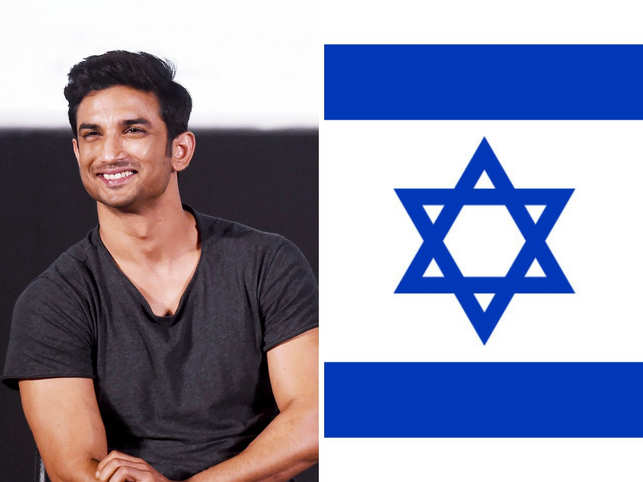
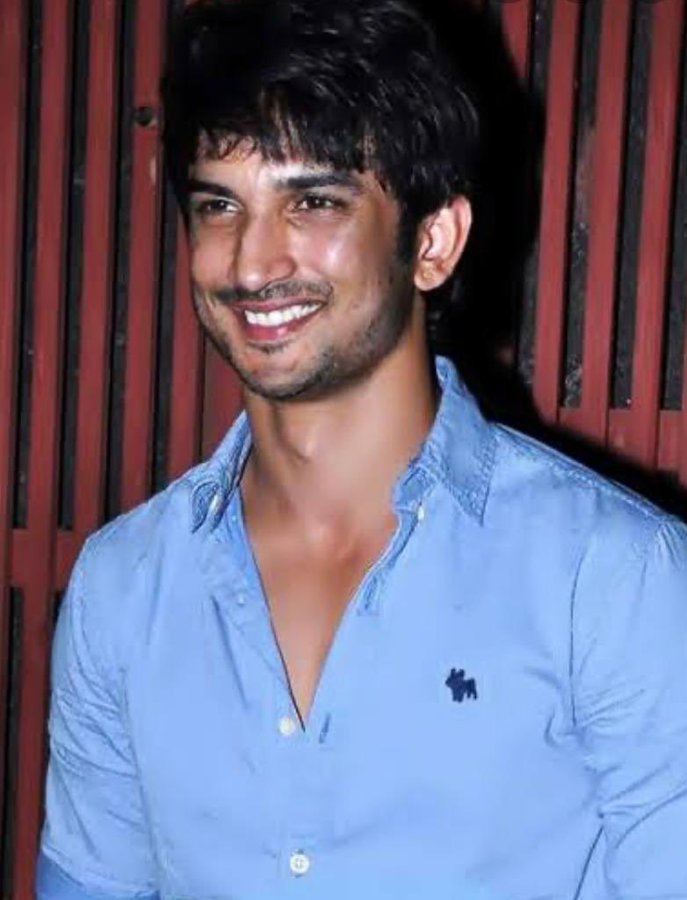
Sharing a picture of Rajput wearing a blue shirt, Cohen also shared the link to the music video of the song ‘Makhna’ from the actor's last film ‘Drive’.

Sharing a picture of Rajput wearing a blue shirt, Cohen also shared the link to the music video of the song ‘Makhna’ from the actor's last film ‘Drive’.


The demise of Bollywood actor Sushant Singh Rajput has left a mark across latitudes, away in Israel too. On Tuesday, Israel expressed its deepest condolences on the demise of the ‘Kedarnath’ star. Gilad Cohen, the Deputy Director General of Israel’s Foreign Ministry, mourned the loss of the 34-year-old actor in a tweet, calling him a ‘true friend’.

“Sending my deepest condolences on the passing of @its_sushant_fc, a true friend of Israel,” wrote Cohen. ‘You will be missed,’ the Director General added.

Also Read: Sushant Singh Rajput: The (real) star of ‘Kai Po Che!’, and one who kept it real in ‘Byomkesh’, ‘Dhoni’, and real life

Sharing a picture of Rajput wearing a blue shirt, Cohen also shared the link to the music video of the song ‘Makhna’ from the actor's last film ‘Drive’. Both Rajput and his co-star in the film, Jacqueline Fernandes, had shot the music video in Israel. Cohen called the music video a ‘great thing’ that came out of Rajput’s visit to the country.
View image on Twitter
Both Rajput and Fernandes had shot the music video as a part of their endeavour and ongoing efforts to bring Bollywood to the country.

Indian Twitter couldn’t help but thank the Israeli official for paying a heartfelt tribute to the late actor. Several netizens took to Twitter to appreciate the gesture.


Thursday, June 18, 2020

China-Led Development Bank Approves $750 Million Loan To India For COVID-19 Response AIIBs total sovereign loans to India that have already been approved amount to $3.06 billion

China-Led Development Bank Approves $750 Million Loan To India For COVID-19 Response
AIIB has approved a $750 million loan to India for COVID-19 response


The Asian Infrastructure Investment Bank (AIIB) on Wednesday approved a $750  million loan to India. In a release, AIIB said that the loan, co-financed with the Asian Development Bank will be aimed at bolstering economic id for businesses, expanding social safety nets for the needy and strengthening the country's health care systems. "India is extremely vulnerable to the pandemic given that around 270 million people continue to live below the national poverty line and around 81 million live in densely populated informal settlements with limited access to health services," the release stated.

AIIB's total sovereign loans to India that have already been approved amount to $3.06 billion, including a recent $500 million COVID-19 emergency response. The current loan will be the second for India under AIIB's COVID-19 Crisis Recovery Facility (CRF).
AIIB is extending such financings on an exceptional basis under the CRF to support its members through projects co financed with the World Bank or the Asian Development Bank (ADB).
In April, ADB too had approved a $1.5 billion loan to India to help fund its response against the pandemic.
AIIB, headquartered in Beijing, began operations in 2016 as a multilateral development bank with a mission to improve social and economic outcomes in Asia.

NDTV

Wednesday, June 17, 2020

Covid-19 impact: Sebi eases preferential allotment to speed up fundraising :-Livemint Updated: 17 Jun 2020, 12:21 AM IST Jayshree P. Upadhyay

Presently, preferential shares must be sold at the average of the previous 26 weeks’ share price this has been reduced to two weeks. (Mint)


MUMBAI : The market regulator, Securities and Exchange Board of India (Sebi), on Tuesday relaxed the pricing norms for preferential allotment that will make it easier for listed companies to raise funds at a time when businesses are under financial stress and need of urgent capital due to the covid-19 related economic slowdown.
A preferential issue is an issue of shares or convertible securities by listed or unlisted companies to a select group of investors to raise capital in lieu of shares offered. It is considered to be the fastest way of racing capital. Preferential share holders do not have a voting right in the company.
The gazette tweaked Sebi takeover code for year 2020-21 to allow promoters to acquire up to 10% through preferential allotment. Currently promoters can acquire only upto 5% of the preferential issue. This could lead to a chance for promoters to increase stake at low prices
In a separate gazette notifications the market regulator also reduced the time gap between two qualified institutional placements from six months to two weeks.
Presently, preferential shares are sold at the average of the previous 26 weeks’ share price Sebi in April had proposed to reduce it to two weeks for stressed companies.
Adhering to 26 weeks' average share price had become a near-impossibility now given the steep erosion in stock prices in the last couple of months.

MY SALUTE TO COL.SANTOSH BABU AND KUNDAN KUMAR OJHA AND OTHER BRAVE SOLDIERS WHO SACRIFICED THEIR LIVES FOR INDIA WHILE FIGHTING CHINESE INTRUSION ON LAC

Image may contain: 4 people, text that says 'LaughingColours COL SANTOSH BABU, CO OFFICER OF 16 BIHAR REGIMENT, LOSES LIFE IN INDIA-CHINA FACEOFF IN LADAKH LAUGHING Colouns He IS SURVIVED BY WIFE AND TWO KIDS, A DAUGHTER AND A SON MAY HIS SOUL REST IN PEACE'
Image may contain: 4 people, people standing, text that says '® रिश्तो का अहसास बेहतरीन पारिवारिकपेज फौजी था साहब देश के लिए बलिदान हो गया... फिल्मस्टार होता तो सुर्खियो में भी होता और भारतीयों के स्टेटस ओर DP पर भी... चीन सीमा झड़प में #कुंदन ओझा बलिदान हो गए जो अपने पीछे पत्नी व एक मात्र 15 दिन की पुत्री छोड़ गए ।जिस पुत्री के दर्शन भी नही कर पाए थे। अहसास जय_हिन्द'

Manoj Modi, the brain behind Mukesh Ambani’s $13 billion spree of investment deals Manoj Modi is a director at Reliance Retail & Reliance Jio, the right-hand man of Mukesh Ambani & one of the most powerful in the Reliance empire. SARITHA RAI, P. R. SANJAI and BAIJU KALESH 12 June, 2020 8:41 am IST

Source :-The Print


Manoj Modi | Photographer: Soumik Kar/The The India Today Group via Getty Images via Bloomberg

Bengaluru/Mumbai: He has no flashy titles and few outside India know his name. But in the halls of Reliance Industries Ltd., Manoj Modi has quietly become one of the most powerful forces behind the corporate empire of Asia’s richest man.
Reserved and mostly invisible to the public, Modi is viewed by many insiders and others in India’s business world as the right hand of billionaire Mukesh Ambani. He played a key role during negotiations for a $5.7 billion deal with Facebook Inc. in April, backing Ambani and his children as they hashed out an agreement with the social networking giant, people familiar with the matter said.
As Ambani, 63, shifts his sprawling conglomerate’s focus from petrochemicals to internet technologies, Modi is seen as a particularly influential voice. Facebook’s investment in the group’s Jio Platforms was followed by similar deals from a slew of private-equity funds, injecting $13 billion into the business and placing it firmly on Silicon Valley’s radar.
The sixty-something, diminutive Modi rarely gives interviews and there’s little in the public realm about his private life. Yet he illustrates how lesser known personalities in India with long-running ties to corporate dynasties can have an outsized impact.
“It’s not a company that advertises its organizational structure but the industry knows that Ambani and Modi are a strongly-bonded team — and together drive deal negotiation and relentless execution to the last level of detail,” said Vani Kola, managing director of venture capital firm, Kalaari Capital Partners, who persuaded Modi to make a rare public appearance at a conference last year, albeit by video.

Making Money

Modi is a director at Reliance Retail Ltd. and the group’s telecom carrier Reliance Jio Infocomm Ltd. At Kola’s conference, he downplayed his skills. “I don’t really negotiate,” Modi said. “I don’t understand strategy,” he went on. “In fact, people internally know that I don’t even have a vision.” He described his role, saying, “I deal with our internal people, coaching them, mentoring them and guiding them on how something can be done.”
But then came a hint of his thinking: “Our principle at Reliance is very simple: Unless everyone makes money while working with us, you cannot have a sustainable business.”
In interviews, more than half-a-dozen executives in the technology industry, who have had dealings with Reliance, said Modi has a reputation for driving hard bargains. When dealing with startups, he often controls negotiations from behind the scenes by instructing executives how far to push, making an appearance nearing deal fruition, they said.
While Reliance’s recent mega investments have drawn the spotlight, the conglomerate also began an acquisition spree to buy smaller firms some years ago to build expertise in newer technologies from artificial intelligence to blockchain. The idea is to create a digital business that wields power in everything from online retail to streamed entertainment and internet payments.
Modi has a big say in every deal and often a meeting with him signals the final stamp of approval, four different startup founders said in interviews.
“He derives his power in the organization not just because of his loyalty, but because of his very astute, smart and able negotiator skills for Reliance Industries,” G. R. Gopinath, founder of budget carrier Air Deccan, who had sold a stake in his cargo airline to Reliance in 2010. “Significantly, though without formal education from Ivy League universities, he has a very sharp mind and a rare insight and native genius to grasp modern technology in the Indian context.”
Gopinath said Modi is “ruthlessly efficient” and manages to get the best possible deal for Reliance in mergers and acquisitions.
Modi is one of the few who have been with the company since the 1980s when Ambani’s late father was building the oil-and-petrochemicals giant. A few years earlier, Manoj Harjivandas Modi and Ambani had studied at what was then called the University Department of Chemical Technology in Mumbai and become fast friends.
That’s allowed Modi a chance to work with three generations of the Ambani dynasty: The late patriarch Dhirubhai, then Mukesh and his wife Nita, and now his children Isha and Akash, who are playing more prominent roles on deals like Facebook.
Over the years Modi became known as the execution man, overseeing large projects. He broke new ground by managing Reliance’s retail reach to smaller cities and expanded it to India’s largest retailer. But it was with the pathbreaking telecom service that Ambani built up that Modi came into his own.
India China border clash: 20 Indian Army soldiers killed in Ladakh ;-livemint. Updated: 17 Jun 2020, 12:39 AM IST Elizabeth Roche

Chinese police officers patrol outside the Indian embassy in Beijing on TuesdayAn escalation in border tensions and trade restrictions could push up domestic manufacturing, experts say
In a major escalation of tensions between India and China, as many as 20 Indian Army personnel were killed in a “violent face off" with Chinese troops in the Galwan area of Ladakh late on Monday, the Indian Army said.
“Seventeen Indian troops who were critically injured in the line of duty at the stand off location and exposed to sub-zero temperatures in the high altitude terrain have succumbed to their injuries, taking the total that were killed in action to 20," the Army said in a late Tuesday statement. It had earlier said one officer and two soldiers were killed.
The seriousness of the clash can be gauged from the fact that this is first time in 45 years that either side has reported casualties during a face-off, despite sharing uneasy ties. The last time casualties were reported was in 1975 in the Tawang area of Arunachal Pradesh, said Deependra Singh Hooda, a former General Officer Commanding-in-Chief of the Indian Army’s Northern command under which Ladakh falls.
The sudden spurt in tensions came just days after India said the two sides were in the process of a limited disengagement—or tactical withdrawal—in Ladakh.
“During the de-escalation process underway in the Galwan Valley, a violent face-off took place yesterday night with casualties. The loss of lives on the Indian side includes an officer and two soldiers. Senior military officials of the two sides are currently meeting at the venue to defuse the situation," Indian Army said on Tuesday.
The Army amended this later to add that there were “casualties on both sides".

The Indian Army said there was no firing involved, fuelling speculation that the deaths were caused during hand-to-hand fighting or assaults with stones or rods. Unconfirmed news reports said some Indian soldiers—the numbers varying between 13 to 34—were also missing after the clash. China’s state-run Global Times claimed five People’s Liberation Army soldiers were killed and 11 injured in the clash.
In a terse statement, foreign ministry spokesman Anurag Srivastava said India had been hopeful that the de-escalation process would unfold smoothly, but “the Chinese side departed from the consensus to respect the Line of Actual Control (LAC) in the Galwan Valley."
With China trying to “unilaterally change the status quo", both sides “suffered casualties that could have been avoided" had China stuck to what had been agreed, he said. “We remain firmly convinced of the need for the maintenance of peace and tranquillity in the border areas and the resolution of differences through dialogue. At the same time, we are also strongly committed to ensuring India’s sovereignty and territorial integrity," Srivastava added.
The sudden spurt in tensions ironically came as the two sides were engaged in discussions to pull back troops, amassed over weeks, after clashes in early May. The cause for this was China objecting to a road that India was building on the banks of the Pangong Tso Lake in Ladakh.
Sameer Patil, an expert on international security at the Mumbai-based Gateway House think tank, said “India will have to start to take concrete steps to ensure both countries move toward resolving the boundary issue."
“China has an idea of where India thinks its border with China lies since we have given them a map. India should now seek a map from China that gives us a sense of what their perception of the border is," he said.
The situation along the border was reviewed by defence minister Rajnath Singh who met senior military officials twice on Tuesday.

Why Indian Hindi Cinema is so dependent on Mumbai Based Bollywood??

Bollywood wall painting at SJ film studios, Mumbai, Maharashtra ...Mumbai Film City | Mumbai Suburban District, Government of ...


Now a big questions to all Hindi Film Makers as to why Hindi Film making job is concentrated at Mumbai Only?

In India the regional filmmaking is taken care at regional levels with big infrastructure developed within respective states.
Image result for pic of Indian Regional film industryImage result for pic of Indian Regional film industryAishwarya Rai Movies Quotes | QuoteHD


Why India needs to decentralise Hindi Films making now and not limiting to Mumbai alone.


1.Bollywood is now dominated by Underworld Mafia-Protection money Extortionists-Foreign Operated Gangs who Provide finance but at their own terms and conditions.

2.No New Comer in general be a Boy or Girl can get a chance in Bollywood unless he or she allows him/her to get sexually exploited.(Bollywood bigwigs now also full of Gay Guys also).

3.Star kids dominate over even more talented ones coming to Mumbai from outside.

4.Mumbai earlier used to give respect to talented ones but not now any more.


What is the solution?


1.Create a new area parallel to /on the lines of Mumbai Film Industry may be say in North India.Noida can be a good choice.

2.Set up new Technical labs like Film Studios/ Recording Studios etc and Acting schools more in Northern India so that Artists need not to go to Mumbai only and to get lost there.

3.This can be done on PPP models.

4.Initiative can be taken by many knows stars -film producers etc with the help of Govt.