Pages

Wednesday, May 1, 2019

Indian among four killed in Cincinnati, Sushma Swaraj dismisses 'hate crime' angle An Indian visitor to the US and three others of Indian origin were shot dead in Cincinnati on Sunday evening (local time), External Affairs Minister Sushma Swaraj confirmed on Tuesday. ANI|Updated: May 01, 2019, 10.02 AM IST

mass-shooting

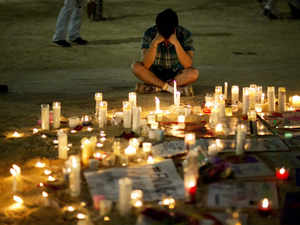
New Delhi: An Indian visitor to the US and three others of Indian origin were shot dead in Cincinnati on Sunday evening (local time), External Affairs Minister Sushma Swaraj confirmed on Tuesday. 

"Indian Ambassador in United States @IndianEmbassyUS has informed me about the killing of four persons in Cincinnati on Sunday evening. One of them was an Indian national on a visit to US while others were persons of Indian origin" she tweeted. 

Swaraj, however, confirmed that the incident was not a "hate crime" as claimed by a section of the media. 


"The matter is under investigation by the Police but it is not a hate crime. Our Consul General in New York is coordinating with the concerned authorities and will keep me informed me on this," another tweet read. 

The Indian Consulate in New York also assured that they were in contact with the police as well as the family of the deceased, and reiterated that prima facie, the incident is not a hate crime.  .. 

Ness Wadia given jail term in Japan on drug charges A Japanese court sentenced the elder son of industrialist Nusli Wadia to two years in jail for possession of 25 gm of cannabis resin last month. ET Bureau|Updated: May 01, 2019, 07.04 AM IST

Untitled-2

MUMBAI | NEW DELHI: The Wadia Group said Ness Wadia’s position as a director on the boards of its companies won’t be affected by his conviction in Japan on drug charges because the sentence had been suspended. Investors appeared to disagree, with stocks of Bombay Dyeing and other group companies dropping sharply before recouping some of their losses. 

A Japanese court sentenced the elder son of industrialist Nusli Wadia to two years in jail for possession of 25 gm of cannabis resin last month. The Sapporo court suspended the sentence for five years, which typically means that it won’t be implemented unless he breaks the law again in Japan. Indian courts don’t suspend sentences. The Financial Times was the first to report the matter. 


“Ness Wadia is in India. The judgment is clear,” said a Wadia Group spokesperson in an email. “It is a suspended sentence. Hence it will not impact Ness Wadia in the discharge of any of his responsibilities and he will continue to play the role that he has done hitherto, both within the group and outside.” 

Wadia is the MD of Bombay Burmah and a director of Bombay Dyeing, Britannia Industries and National Peroxide. Bombay Dyeing fell 17.6% intraday while Bombay Burmah dropped 6.4%. National Peroxide fell 6.7% and Britannia by 3.1%. 


is future of Deloitte and KPMG at risk in INDIA.IL&FS board seeks punitive action against Deloitte, BSR The ILFS board has proposed punitive action against Deloitte & BSR & Co, part of the KPMG network. By Rashmi Rajput, ET Bureau|


MUMBAI: The government-appointed board of Infrastructure Leasing & Financial Services has proposed punitive action against Deloitte Haskins & Sells (DHS) and BSR & Co, part of the KPMG network, said people with knowledge of the matter. 
Image result for pic of deloitte and kpmgImage result for pic of deloitte and kpmg


In its report to the Ministry of Corporate Affairs (MCA), the board said it had found the two firms failed to issue warnings about shortcomings while auditing the books of IL&FS Financial Services (IFIN), a subsidiary of IL&FS. Earlier, the Serious Fraud Investigation Office (SFIO), the investigation wing of the MCA, had in its ongoing probe allegedly found that DHS failed to exercise due diligence. 

Sources added that both the board and the MCA are of the view that action must be taken against DHS and BSR, including the possibility of invoking Section 140 (5) of the Companies Act, which allows barring an auditor for a period of five years, and also Section 147, which deals with punishment for contravention of rules. 

IL&FS group chief communication officer Sharad Goel declined to comment, as did Deloitte and KPMG. 

IFIN GAVE LOANS TO COS UNDER STRESS 
Deloitte had told ET last week that it was in compliance with auditing norms. 


“The investigations on the company (IFIN) are in progress and we are cooperating fully,” a Deloitte spokesperson had said in an email. “We reaffirm that we have conducted our audits in accordance with the standards on auditing and the applicable laws and regulations.” IFIN gave loans to companies under stress, said one of the persons cited above. 


“As the auditors, the firms were duty bound to highlight the loans to companies that were in financial stress themselves,” he said. “Also, the probe has found instances of loans being granted in violation of RBI (Reserve Bank of India) guidelines.” 

These firms were required to tell the company that its loans were violating the provisions. 

The firms failed to raise the repeated rollovers of loans by IL&FS and IFIN, he added. It also failed to query the quality of collateral secured against loans made by IFIN, he added. 

While DHS been associated with IL&FS since inception for more than a decade, BSR audited IFIN’s books in 2018-19. The crisis in IL&FS first came to light in July 2018, when its roads unit was facing difficulty in making repayments due on bonds. Erstwhile IL&FS CMD Ravi Parthasarathy resigned on July 21, 2018. 


“Both the MCA and the board are of the view that the firms should be dealt with stringently including exploring the possibility of invoking the provisions of the Companies Act that allows punitive action including the possibility of debarring a firm for a period of five years,” said the official cited above. 

Some of the anomalies that the auditor failed to note were also mentioned in the 166-page interim report by audit firm Grant Thornton India. It had identified 16 instances in which loans amounting to Rs 1,922 crore were apparently sanctioned on a negative spread (average cost of borrowing rate minus lending rate), or limited spread, for companies in financial distress. In seven of these cases, the loans provided have either been written off or are related parties of the companies for which loans were written off. In five out of these 16 cases, loans were approved even after negative assessments by the infrastructure financier’s risk team. 


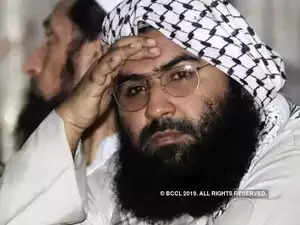
Masood Azhar listed as global terrorist after China lifts restrictions China today lifted its hold on the listing of Jaish-e-Mohammad chief, as a global terrorist by the UN. ET Online|Updated: May 01, 2019, 07.11 PM IST


In what can be seen as a massive diplomatic victory for India, terrorist Masood Azhar has been listed as a global terrorist by the UN Security Council. 

China today lifted its hold on the listing of Jaish-e-Mohammad chief, Masood Azhar, as a global terrorist by the United Nations. China had placed a "technical hold" on a proposal initiated by the U.S., the U.K, and France after the Pulwama attack in February this year. 

China's decision can largely be seen as an outcome of international pressure to blacklist the Pakistan-based terror organisation’s head. The U.S., supported by France and the U.K., moved a draft resolution directly in the U.N. Security Council to blacklist the Pakistan-based terror organisation’s head. 


WHY MODI IS A HEAD OF HIS RIVALS IN POLLS ?

Modi's war chest leaves opposition in the dust

Opaque campaign financing in the world's largest democracy makes it tricky to get a full picture.

Reuters|
Updated: May 01, 2019, 01.34 PM IST
Untitled-6

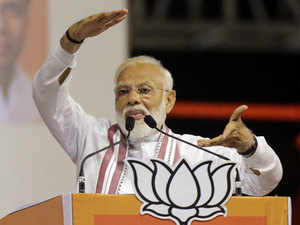
MUMBAI/DELHI: Prime Minister Narendra Modi's BJP is flush with cash, giving his bloc a massive advantage over the main opposition Congress party as he seeks to win a second term in India's general election. 

Opaque campaign financing in the world's largest democracy makes it tricky to get a full picture of money in politics here. But current and former BJP supporters, opposition politicians, businessmen and activists interviewed by Reuters say Modi has an unprecedented advantage, thanks to support from businesses and expectations he will be the winner. 

Staggered voting in the general election is currently in progress across India, with results to be declared on May 23. 

The BJP war chest has allowed it to unleash a massive amount of advertising on social media and send Modi and party officials crisscrossing India to campaign. 

The ruling party has showered money on Facebook and Google advertisements, spending six times more than Congress since February according to data from the two firms. Modi merchandise abounds, as do Modi marketing sites. 

The money puts the BJP in an extraordinarily powerful position, even over logistical issues like how to get its leaders to election rallies. A Congress official said the BJP had the funds to reserve most of India's fleet of helicopters for hire for 90 days, making it difficult for opponents to get hold of them. 

"We have never ever seen an election with such disparity. Financially, we cannot compete with them," said another veteran Congress politician, who asked to remain anonymous. 

He and another high-ranking Congress official said they expected the BJP to outspend them by a factor of ten. A third Congress source estimated the disparity at twice that. 


Two BJP officials declined to provide an estimate of spending, but one said the "BJP definitely has a big war chest and has more funds at its disposal than the Congress." 

Congress has received far fewer funds because of a perception it is unlikely to win the election, political strategists said. The opposition party has been hampered by its inability to forge a national alliance to take on Modi and has struggled to capitalise on discontent against the BJP over a lack of jobs and distressed farm incomes. 

Modi has been topping polls as India's most popular politician, well ahead of Congress President Rahul Gandhi. 

LONG ELECTION 

Money has become critical in elections given the country's 1.3 billion population, its voting over 39 days and the sheer complexity of the electorate, in terms of region, religion, language, and caste. 

A tradition of doling out freebies to sway voters only adds to costs. Authorities say they have seized goods and cash worth about $456 million since March 26. 

"This war chest gives the BJP significant advantages," said Milan Vaishnav, director of the Carnegie Endowment for International Peace's South Asia programme. "Money is useful for wooing voters but also for keeping networks of party workers and influencers well lubricated." 

Parliamentary candidates' expenditure is capped at up to 7 million Indian rupees (about $100,000), but the limit is widely flouted, and political parties are allowed to spend freely. 

For a factbox on campaign finance rules, see: 

The New Delhi-based Centre for Media Studies (CMS) estimates almost $8.6 billion will be spent on this year's vote, roughly twice the 2014 election. 

The figure would surpass OpenSecrets.org's estimate that $6.5 billion was spent in the 2016 U.S. presidential and congressional elections. 

Recent reforms under Modi may have fueled the spending spree: Companies can fund parties anonymously through new 'electoral bonds' and they no longer face a donations cap. Activists say that gives corporations too much sway and obscures ties between politicians and businessmen. 

About 95 percent of electoral bonds snapped up in a first tranche offering last year went to the BJP, according to data reviewed by Reuters through a Right To Information request and BJP filings. 

When asked whether the BJP had a financial advantage, party spokesman Anil Baluni said "it is not an unfair advantage." 

"I guess maybe the BJP does believe in taking maximum donations by cheque or through bonds... We are the largest political party in the country," Baluni added. 

He said he did not have information on the provenance of funds or the uses. 

Pawan Khera, a Congress spokesman, said this was "turning out to be the most unequal election," but did not provide specifics. 

MODI RETAINS BACKERS 

Modi was elected in 2014 as a darling of the business community. 

His star has dimmed somewhat, in part due to fallout from a shock 2016 decision to scrap then circulating high-value bank notes, but with some businesses wary of a fragile opposition coalition coming to power, Modi retains backers. 

"Modi has made business easier," said businessman Sunil Alagh, who heads consulting firm SKA Advisors and sits on several boards. 

Still, business titans tend to give to several parties to hedge their bets, politicians and executives say. 

Mukesh Ambani, Asia's richest man and the boss of the Reliance Industries conglomerate , hails from Modi's home state of Gujarat and his family has praised the prime minister publicly. Ambani even splashed Modi's face on advertisements for the Reliance Jio telecoms launch in 2016. 

But last month, Mumbai-based Ambani endorsed Congress candidate Milind Deora, appearing in a video saying "Milind is the man for South Bombay." Deora's politician father was a close friend of the Ambanis. 

BIND OVER BONDS 

Under the electoral bond scheme announced by Finance Minister Arun Jaitley last year, individuals and companies can anonymously buy as many bonds as they wish to in denominations ranging from 1,000 rupees to 10 million rupees and deposit them in a party account at the State Bank of India (SBI). 

"The electoral bond scheme .... envisages total clean money and substantial transparency," Jaitley said in a Facebook post. 

Activists say the opposite is true. 

"If you do not know the donor and you do not know who the money is given to, where is the transparency? Dubious donations are now legitimised," said Jagdeep Chhokar, a founder of the Delhi-based Association for Democratic Reforms. 

When Reuters reporters visited SBI branches during bond sales in Delhi and Mumbai this year, a handful of men who described themselves as politicians or company representatives were waiting to open bank accounts or buy bonds. 

SBI officials declined to provide details on the sales 
Co-location scam jigsaw and how Sebi cracked the code The stock exchange allowed OPG and others to back-up servers and gave them first access. ET Bureau|Updated: May 01, 2019, 09.09 AM IST

NSE-1200

What is co-location? 
Co-location allow brokers to operate closer to their servers upon payment of additional fees. It helps brokers secure advantage over others due to proximity to exchange servers as data transmission takes less time. Orders reach exchange servers faster than those who have not availed of the facility 

What is the scam? 
A whistleblower in 2014-15 complained to the Securities and Exchange Board of India (Sebi) saying some brokers in collusion with a few top NSE officials had abused the colocation facility. NSE was then using the so-called tick-by-tick (TBT) server protocol to relay data to members. The peculiar part about this protocol is how it delivers the information. Normal data protocols send data to all users connected on the network at the same time. But TBT transmits in the sequence of orders received. In other words, the user who gets the access to the system first would receive data earlier than the rest. A A select set of brokers in collusion with NSE officials and Omnesys Technologies (the company that provided technology to NSE) got the first access to the NSE’s servers giving them a head start. 


What did Sebi find? 
The Sebi order found OPG Securities, GKN Securities and Way2Wealth along with internet service provider Sampark Infotainment were guilty of unfair trading practices. These brokerages continuously got first access to NSE servers. 

How did OPG and others pull this off? 
OPG got access to NSE’s backup servers which were maintained by the exchange to prevent technical glitches on the main server from impacting operations. 


Traffic is either light or non-existent on these servers as they are for backup only. On normal days, even when the main server is working, anyone logging in through backup servers can send and receive data faster. OPG and others exploited this to their advantage, Sebi says. 

Did NSE break rules? 
The exchange allowed OPG and others access to back-up servers and gave them first access which helped them in executing orders fast. NSE also overlooked the fact that Sampark Infotainment did not have a valid Department of Telecom licence to provide dark fibre connectivity to some brokers. Along with brokers, Sebi has also charged several NSE top officials for colluding with brokers. These include former NSE CEO Chitra Ramakrishnan, former MD Ravi Narain, Deviprasad Singh, the former head of colo department at NSE, Ravi Varanasi, its current business development head, Umesh Jain, CTO of NSE, and others. In its report, Sebi has clearly said that the key functionaries did not follow the appropriate protocols. Further, NSE has been slapped with a fine of Rs 687 crore plus interest. 


What is dark fibre connectivity? 
A connection through dark fiber ensures more bandwidth and less distortion of data, meaning faster and efficient access to the exchange’s servers. 

How will the order affect NSE? 
NSE will have to pay Rs 687 crore and it can’t access capital markets for six months. Its IPO will be delayed till the year-end but that is unlikely to affect NSE or its valuation. NSE also has enough reserves to pay this fine and remain financially strong. 

Will normal operations be affected? 
No. The Sebi order in no way affects normal trading on the exchange. 

Naxal attack in Gadchiroli leaves 15 security personnel dead Confirming the death toll, Director General of Police, Maharashtra, Subodh Jaiswal told ET that 15 security personnel and a driver have been killed in the attack.

By Rashmi Rajput


MUMBAI: 15 personnel of the Quick Response Team (QRT) and a driver were killed in an Improvised Explosive Device (IED) blast in north Gadchiroli. The incident took place around 12.30pm when the patrolling party was travelling from Kurkheda-Korchi road in north Gadchiroli. The incident comes hours after 27 vehicles belonging to contractors pressed to construct National Highway 136 were alleged torched by Maoists, the police said. 

Confirming the death toll, Director General of Police, Maharashtra, Subodh Jaiswal told ET that 15 security personnel and a driver have been killed in the attack. 


Terming it a "big loss" for the force, Jaiswal said that police "were ready to give a befitting reply to the Naxals". 

"I cannot call this an intelligence failure... The Maharashtra police will take whatever action needed against such activities. It is a big loss for Maharashtra police," Jaiswal said. 

“The blast occurred around 12.30 pm near Lendhri nullah a few kilometers from Kurkheda in north Gadchiroli. The QRT was from Kurkheda police station and was en route to Purada village in a private vehicle,” DIG (Gadchiroli range) Ankush Shinde told ET. 

“Most of the 27 vehicles which were torched belonged to Amar Infrastructures Ltd which has been roped in for construction of Purada- Yerkad sector of the National highway 136,”said another official. 

Monday, April 29, 2019

NOTHING IS PERMANENT IN UNIVERSE

Nothing Is Permanent in Universe
WA killed SMS
Email killed Fax
Youtube killed DVD
Internet killed Library
Uber killed Yellow Cab
Google killed Dictionary
Social Media Killed MSM
Netflix killed Cable Channels
Wikipedia killed Encyclopedia
AND
*Rahul Gandhi Killed Stand Up Comedians.......
Image result for PIC OF RAHUL GANDHI WINKING

Sunday, April 28, 2019

About 200 US companies seeking to move manufacturing base from China to India: Report


Washington: About 200 American companies are seeking to move their manufacturing base from China to India post the general elections, a top US-based advocacy group has said, observing that there is a fantastic opportunity with firms looking at alternatives to the Communist giant.
The US-India Strategic and Partnership Forum's (USISPF) President Mukesh Aghi said that the companies are talking to them about how to set up an alternative to China by investing in India.
Aghi said that USISPF’s recommendation to the new government would be to accelerate the reforms and bring transparency in the decision-making process.
“I think that's critical. We would advise to bring more transparency in the process and to make it more consultative because in the last 12 to 18 months, we are seeing US companies look at some of the decisions being made, either e-commerce or data localisation, as more domestic-oriented than global," he told PTI in an interview.In his reply to what the agenda of the new Indian government should be to attract investment, Aghi suggested that New Delhi needs to accelerate reforms, be more transparent in the process and engage more.
“We need to understand how we can attract those companies. And that means all the way from land issues to customs issues to being part of the global supply chain. Those are critical issues. There’s a whole plethora of reforms that need to go further down, and I think that is also going to create a lot of jobs," he said.
He said that Mark Linscott, the former Assistant US Trade Representative for South and Central Asian Affairs, is working with USISPF member companies to come up with a recommendation as to what India needs to do to enhance its exports and work up from that perspective.“One recommendation, which I strongly believe is going to help India is that we should now start thinking of a Free Trade Agreement (FTA) between India and the US," Aghi said.
"I think if India is concerned about cheap goods coming from China, an FTA will eliminate that need. You can put barriers to Chinese goods and still have the U.S. providing access to the Indian market and Indian companies having more access to the US market, and issues like GSP would diminish," he said.
Aghi said that they have formed a high-level manufacturing council within the member companies, led by John Kern, Senior Vice President of Supply Chain Operations at Cisco who are putting a document together detailing what India needs to do to turn it into a manufacturing hub."We plan to have the document ready by the time elections are over as part of recommendation," he said.
“What they're saying is we want a backup strategy to start manufacturing in India. There are small-small issues, which can slow them down. And at the moment most of them are waiting for elections to be over. But there's a large deluge of companies keen to not only manufacture in India but also who want to go after the domestic market," he said.
On the amount of investment these companies would bring to India, he said the number in question is substantial.
“If you look at, our member companies in the last four years have invested over USD 50 billion," he added.

Father, two brothers of Sri Lanka suicide bombings mastermind killed in gun battle Authorities have detained more than 100 people, including foreigners from Syria and Egypt since the April 21 bombings. REUTERS|Apr 28, 2019, 03.53 PM IST

Sri-Lanka-

The father and two brothers of the suspected mastermind of Sri Lanka's Easter Sunday bombings were killed when security forces stormed their safe house two days ago, police sources and a relative of the suicide bombers told Reuters on Sunday. 

Zainee Hashim, Rilwan Hashim and their father Mohamed Hashim, who were seen in a video circulating on social media calling for all-out war against non believers, were among 15 killed in a fierce gun battle with the military on the east coast on Friday, four police sources said. 


Niyaz Sharif, the brother-in-law of Zahran Hashim, the suspected ringleader of the wave of Easter Sunday bombings that killed over 250 people in churches and hotels across the island nation, told Reuters the video showed Zahran's two brothers and father. 

Three of the people killed in Friday's gun battle were the same people who were seen in the undated video on social media, in which they discus martyrdom and urge their followers to kill all non believers, police sources said. 

Sri Lanka has been on high alert since the attacks on Easter Sunday, with nearly 10,000 soldiers deployed across the island to carry out searches and hunt down members of two local Islamist groups believed to have carried out the attack. 

Authorities have detained more than 100 people, including foreigners from Syria and Egypt since the April 21 bombings.In the video, Rilwan Hashim is seen calling for all out 'jihad', or holy war, while children cry in the background. 

"We will destroy these non-believers to protect this land and therefore we need to do jihad," Rilwan says in the video, sitting beside his brother and father. 

"We need to teach a proper lesson for these non-believers who have been destroying Muslims." 

Authorities suspect there may be more suicide bombers on the loose. Defence authorities have so far focused their investigations on international links to two domestic groups they believe carried out the attacks, the National Thawheedh Jamaath and Jammiyathul Millathu Ibrahim. 

Islamic State has claimed responsibility for the Easter bombings, and on Sunday the group said three of its members clashed with Sri Lankan police for several hours in Friday's gun battle on the east coast before detonating their explosive vests, the militant group's news agency Amaq said. 

The group said 17 policemen were killed or injured in the attack, but the Sri Lankan military has denied this. A police source told Reuters two policemen were slightly injured in the battle. 

Police have said six children were among the other 12 people who died in the gun battle, but have not released further details. 


Sri Lanka troops kill four suspected IS gunmen Police later said clearing operations on Saturday showed a total of four suspected suicide bombers had died during the overnight confrontation.

terrorist-agencies

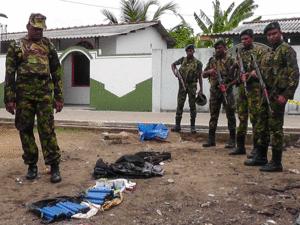
Colombo, April 27, 2019 -Sri Lankan security forces exchanged fire with suspected Islamic State affiliated militants and killed at least four of them in the east of the country, police and the military said Saturday. 

Gunmen opened fire on troops when they attempted to storm a house in the town of Kalmunai, military spokesman Sumith Atapattu said. "In our retaliatory fire, two gunmen were killed," he said adding that a civilian caught in the crossfire was also killed. 


Govt may debar Deloitte for five years over alleged misconduct in IL&FS case This extreme action is being warranted after Deloitte's alleged misdemeanours and conduct in the IL&FS case. IANS|Updated: Apr 28, 2019, 10.45 AM IST

Deloitte_Reuters

New Delhi: Even as Deloitte Haskins and Sells remains perched precariously on the high wire over its questionable role in the IL&FS audit process, it appears that the Ministry of Corporate Affairs may invoke section 140 (5) of the Companies Act to debar the firm for alleged malpractice in IL&FS accounts. This extreme action is being warranted after Deloitte's alleged misdemeanours and conduct in the IL&FS case. 

This Section essentially looks at the following: 


(5) Without prejudice to any action under the provisions of this Act or any other law for the time being in force, the Tribunal either suo motu or on an application made to it by the Central Government or by any person concerned, if it is satisfied that the auditor of a company has, whether directly or indirectly, acted in a fraudulent manner or abetted or colluded in any fraud by, or in relation to, the company or its directors or officers, it may, by order, direct the company to change its change its auditors. 

If this were to happen, it will be the second such instance after Price Waterhouse was nailed in the Satyam scam. 

In January, 2018, nine years after the Satyam scandal stunned corporate India, SEBI banned Price Waterhouse (PW) from providing audit services to listed companies and market intermediaries for two years in the Satyam fraud. Two PW partners were banned for three years. The regulator also imposed a disgorgement of Rs 130.9 million on Price Price Waterhouse, and two of its chartered accountants - S Gopalakrishnan and Srinivas Talluri. 

The three entities also have to pay 12 per cent interest on the disgorgement amount since January 7, 2009, in 45 days from the date of the order. Further, it said that no listed company or intermediary registered with SEBI to be engaged with any audit firm associated with the PW network for issuing any certificate with respect to compliance of statutory obligations which SEBI is competent to administer and enforce, under various laws for a period of two years. These entities were charged under SEBI prohibition of Fraudulent and Unfair Trade Practices (FUTP) regulation.

When contacted, Deloitte spokesperson told IANS: "The investigations on the company IFIN are in progress and we are cooperating fully. We reaffirm that we have conducted our audits in accordance with the Standards on Auditing and applicable laws and regulations." 

Deloitte on its part contends that the Group's defaults began in May 2018. The three principal arms of IL&FS Group - IL&FS, ITNL and IFIN -- according to sources within Deloitte saw SRBC &CO (E&Y) audit two of the firms in both 2017-18 and 2018-19, namely IL&FS and ITNL. IFIN meanwhile was audited by BSR (KPMG) in 2018-19 DHS (Deloitte) and BSR (KPMG). 

In 2016-17 DHS audited IL&FS, ITNL along with SRBC &Co (E&Y) and IFIN on its own. Of course, till 2015-16 for many years DHS audited all three Group entities Trying to maintain distance from the opaque architecture of the 347 subsidiaries - majority of them overseas -- Deloitte has clarified that they were audited by various smaller firms, most of them being non Big Four. It has also emerged that during the many years that Deloitte was auditing the Group, secured loans were sufficiently collaterised which in turn was independently valued by reputable parties such as Knight Frank or realty and N M Raiji. 

The value of the assets and loans was corroborated by the fact that in 2015-16, Piramal Group had proposed to acquire a stake in IL&FS at Rs 750 a share after commissioning a detailed due diligence exercise by KPMG. LIC had at the time bunged in a monkey wrench, saying that the value was too low citing fair value at Rs 1100. 

Similarly, Deloitte has claimed that they did not audit the financial statements of 111 subsidiaries, 36 jointly controlled entities, 11 associates in 2016-17, or the financial information of 13 subsidiaries, two jointly controlled entities or six associates. This is where the real jiggery pokery exists. 

ARE YOU RICHER THAN YOU THINK?

Image may contain: 1 person, text