Pages

Sunday, December 30, 2018

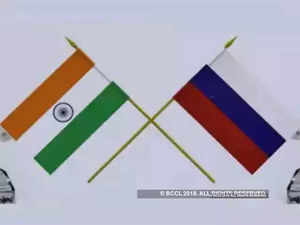
Russia imparts state-of-the art training to Indian engineers contributing to Make in India By Dipanjan Roy Chaudhury

india-russia-bccl


NEW DELHI: Russian State Research Center JSC “RPA CNIITMASH”(which is part of Rosatom's machine building division JSC “Atomenergomash”) has concluded state of the art training courses for Indian engineers involved in heavy engineering works that would boost Make in India initiative. 

These courses took place at the Center for General Engineering and Technical Education (TSOITO) in Ranchi, at the premises of HEC Ltd (one of the largest state-owned machine-building enterprises in India) ) with the aid of the State Department of heavy mechanical engineering. 


As part of the Agreement between CNIITMASH and HEC Ltd, 120 specialists have already completed six training courses out of nine planned. The remaining 3 courses will be offered by the CNIITMASH scientists to the Indian machine builders in 2019. The final course of the current year was attended by 20 Indian engineers and was called “Technology of casting blanks equipment for heavy and power engineering” and lasted for 9 days. 

The cooperation Agreement between НЕС Ltd and CNIITMASH was signed in December 2015. The Central Research Institute for Engineering Technology (JSC RPA CNIITMASH) was founded in 1929 and has the status of the State Scientific Center of the Russian Federation. It is the developer of basic materials, technologies and products of power and heavy engineering, including the most important elements of the equipment of nuclear power units with VVER-1000 reactors, nuclear power plants of the new generation NPP-2006, hydraulic and gas turbines, power units of thermal power plants, powerful presses and metallurgical units. The RPA includes five specialized institutes, a pilot plant, as well as attestation and certification centers. 

JSC “Atomenergomash” is the power and machine building division of Rosatom State Corporation, and is one of the leading power engineering companies of the Russian Federation. 


Friday, December 28, 2018

Over 1 lakh companies deregistered this fiscal: Govt PTI|Dec 28, 2018, 02.42 PM IST source=ET TopNews

Over 1 lakh companies deregistered this fiscal: Govt
Under the Companies Act, 2013, a company can be deregistered if it has not been carrying out any business for two continuous years and has also not applied for obtaining dormant status. 


NEW DELHI: Names of more than 1 lakh companies have been struck off the official records in the current fiscal for not carrying business activities for a long time, the government said Friday. 

As part of clamping down on illicit fund flows, the Corporate Affairs Ministry has been taking action against entities that are suspected to be shell companies. 

Under the Companies Act, 2013, a company can be deregistered if it has not been carrying out any business for two continuous years and has also not applied for obtaining dormant status. 


Minister of State for Corporate Affairs P P Chaudhary informed the Lok Sabha that 2.26 lakh companies were struck off from the Register of Companies as on December 31, 2017. 

"During financial year 2018-19, a total of 2,25,910 companies have been identified for action under Section 248 of the Act and after following due process of law, names of 1,00,150 companies have been struck off from the Register of Companies. This is a continuous process," he said in a written reply. 

Section 248 pertains to removal of name of a company that has not been carrying out business activities for a long time. 

In a separate written reply, the minister said that the National Company Law Tribunal (NCLT) does not maintain data related to non-performing assets. 

"However, as per the information given by Insolvency and Bankruptcy Board of India (IBBI), orders of resolution against 65 corporate debtors have been issued by the NCLT as on October 31, 2018 with a realisable amount of Rs 60,636 crore by the creditors," he noted. 

According to him, a total of 40,712 cases have been registered with the NCLT and 26,290 cases have been disposed by the tribunal till November 30, 2018. 

WONDERFUL TWO FACE CAR WITH TWO ENGINES-TWO STEERING-TWO GEAR BOX SETS

2 इंजन, 2 स्टीयरिंग और 2 गियर सेट जैसी खूबियों से लदी है यह अनोखी 2 फेस कारTo make the car, Mr Roni Gunawan split two Toyota Limbo cars in half and welded them together.VIDEO SCREENGRAB FROM CNN INDONESIA

Indonesian man Roni Gunawan has invented a double-faced car using two Toyota Limbo cars, reported British newspaper The Sun.
The unusual car took six months to build, with the help of Mr Roni's 10 workers from his car workshop in Bandung in West Java.
The straight Times Jan 2018

POST RETIREMENT CHAIR FOR OLDIES WHO ARE FOND OF WINES ETC.

No automatic alt text available.

India's manned space mission is on, Cabinet okays Rs 10,000 crore plan ET Online|Updated: Dec 28, 2018, 04.14 PM IST

Space Mission
This could make India the fourth nation to send a human in space. 


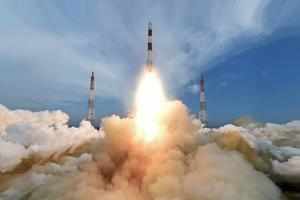
India's manned space mission is on track. On Friday, the Cabinet okayed Gaganyaan, India's human spaceflight programme, which will see a 3-member crew spend a minimum of 7 days in space at an overall cost of Rs 10,000 crore. 

The space programme, the largest ever, will make India the fourth country to send a human to space. 
Isro is confident of pulling off the feat by 2022—the ambitious timeline set by Prime Minister Narendra Modi during his Independence Day speech. 


Since 2004, when Isro first prepared a plan for human spaceflight, the agency has been developing technologies that are building blocks for such a mission. The most crucial is that of a crew module, a capsule that can carry humans and which Isro has successfully demonstrated by having a prototype re-enter the earth’s atmosphere withstanding the thermal heat caused by friction. In July this year, it demonstrated the pad abort test (PAT), or the crew module ejecting from the rocket in case of a failure. 

Successive governments have been concerned over the lack of a powerful homegrown rocket for undertaking human spaceflight. Modi’s announcement underscored the government’s confidence in Isro’s ability to bridge the gaps in these technologies. Isro is looking to send the crew, to be trained by the Indian Air Force and possibly Russia, on its powerful Geosynchronous Satellite Launch vehicle Mk III (GSLV-MkIII). The space suit, according to a previous report, has been designed by DEBEL, a unit of the Defence Research and Development Organisation. 


View: Bureaucracy continues to stymie India’s entrepreneurs by setting up a veritable licence raj

Torture_agenciesImage result for PIC OF INDINA BABUS AT GOVT
Regardless of their responsibility, bureaucrats have no skin in the game and suffer no consequences for bad decisions. 

By Venkatesh Shukla 

I am a huge admirer of Prime Minister Narendra Modi. He is the only political leader since Independence to recognise that entrepreneurs have the potential to transform India through their innovations. 

Startups not only bring dynamism to the economy, they also create jobs, and successful ones distribute huge amount of wealth among its stakeholders. PM Modi had the conviction to stake his prestige with the launch of his government’s Startup India initiative. 

This initiative captured the imagination of young Indians, inspiring many to dream of being an entrepreneur. But Modi trusted the bureaucracy to flesh out the details of this policy. They got a few things right, but the rest has been nothing short of the return of ‘licence raj’, and mostly a disaster. 

One of the two things the bureaucrats got right was providing matching funds to venture capital funds and, thus, providing a multiplier-effect for local local capital. The second was transforming the Department of Industrial Policy and Promotion (Dipp) into a champion for startups within GoI. 

With competent leadership, Dipp has served this role well. But its effectiveness is limited given that the best it can do is to educate and persuade other parts of the government to do the right things without having the authority to make it happen. Bureaucrats are as far removed from entrepreneurship as one can possibly get. They have chosen a career with zero risk of losing job, salary, perks or promotions. From the day they join the service, they live in the ‘civil lines’ cocoon insulated from the daily grind of an entrepreneur. They have never created a single job on their own and never had to spend a sleepless night worrying about where the money for the next payroll for employees is going to come from. 

Regardless of their responsibility, they have no skin in the game and suffer no consequences for bad decisions. Basically, they have no clue about entrepreneurship. But they do love control and discretionary authority. Startup India’s policy reflects this cluelessness. It got a few things right, but it also has elements that are utter nonsense, some downright harmful to the cause. 

Straitjacket That Fits All 
Here’s an example. The startups are given a three-year exemption from income tax. But startups don’t become profitable in three years. So, this is a meaningless provision. And, miraculously, if they do become profitable, why shouldn’t they pay taxes? Provisions like these are perverse incentives to bad actors to position themselves as startups. 

Another example of nonsense: a pages-long definition of what a startup is and a committee of bureaucrats that decides whether you are a startup worthy of being an ‘approved startup’. A bunch of civil servants who are clueless about entrepreneurship get to decide winners and losers. Licence raj again, anyone? 

One of the most damaging provisions is taxing angel investment in a startup. Mind you, it is not the income but investment that is being taxed. Investment is the fuel without which a startup cannot get going. Startups are strategic to the future of India. Yet, the bureaucratic instinct to retain discretion and control has created the most perverse disincentive to invest in an Indian startup.India is the only country that taxes angel investment. 

The bureaucrats trot out convoluted reasons why investment needs to be treated as income. After a recent outcry, a typical bureaucratic response came in: we will go easy on enforcing angel tax for the time being. Translation: we are not going to solve the core problem, so we have control and discretion over you, and please keep knocking on the door for our benevolence. Licence raj again, anyone? 

Guess how the most promising startups are dealing with such idiocy? By incorporating abroad, even if the entire workforce and market are in India. It’s India that’s the big loser. So, it’s no surprise that another of Modi’s radical initiative, the rollout of the goods and services tax (GST), got panned for its complexity. Who framed the rules? Once again, a bunch of bureaucrats who have no clue about how a small business actually operates. 

Complexity is what people create when they don’t really understand something.If only a single practising chartered accountant was involved in making those rules, the GST rollout would not have caused as much heartburn as it did. 

Bureaucrats be Nimble 
No bureaucrat ever suffers the consequences of a bad decision, but politicians do. I wonder why politicians don’t do something about this structural problem — making sure that people who understand the issues and have their skin in the game get involved in formulating policy? And not just to provide inputs, but also to decide policy. 

The prime minister is not afraid to make audacious decisions when he is convinced that it is for the good of the country, even if it is at a considerable peril to him politically. So, why does he keep relying on the bureaucracy that keeps failing him on some of his signature initiatives? 

[The writer is general partner, Monta Vista Capital and former chair, TiE (The Indus Entrepreneurs) Global] 

Lok Sabha passes Triple Talaq Bill after over four hours of debate ET Online|Updated: Dec 27, 2018

Lok Sabha passes triple talaq bill; Congress, AIADMK stage walkout
Lok Sabha passes triple talaq bill; Congress, AIADMK stage walkout 


Lok Sabha today passed the Triple Talaq bill after government refused to refer the bill to joint select committee of the Parliament. 245 Lok Sabha MPs voted in favour of the bill, while 11 members voted against it. Before the start of the voting, Congress and AIADMK staged a walk out from the House opposing certain provisions of the bill that makes instant triple talaq or talaq-e-biddat a criminal offence, with a jail term of up to three years with a fine. 

Opposition pitched for referring the triple talaq bill to a joint panel of Parliament, claiming its provisions were unconstitutional and that there was a need for a greater scrutiny of the draft law, but the government rejected the demand. 

The bill makes instant triple talaq a cognizable if information relating to the offence is given by the married woman against whom talaq has been pronounced or any person related to her by blood or marriage. 

Bill will now be send to Rajya Sabha for debate. Passage of the bill in the upper house would not be easy for the government as it needs 123 votes and the Opposition including Congress, BJD, AIADMK, SP have already rejected the bill in the lower House. NDA parties have around 80 seats in Rajya Sabha If passed by Rajya Sabha, the proposed law would be applicable to the entire country, except in Jammu and Kashmir. 


Earlier in the day, the government rejected opposition's claim that the bill to penalise the practice of instant triple talaq by Muslim men was aimed at targeting any community. 

Read more at:
//economictimes.indiatimes.com/articleshow/67274271.cms?utm_source=contentofinterest&utm_medium=text&utm_campaign=cppst.. 


IT IS YOUR LIFE

Image may contain: text

Thursday, December 27, 2018

GOOD MESSAGE BY A PERSON WHO BELIEVES IN HOLDING RELATIONSHIPS

Image result for PIC OF MAN DOING MOBILE SMSImage result for PIC OF MAN DOING MOBILE SMSImage may contain: text

AN APPLICATION BY SOMEONE WHO FEELS UNSAFE IN INDIA (IN CONTEXT WITH WHAT MR.NASEERUDDIN SHAH SAID FEW DAYS BACK)

No automatic alt text available.

View: With GST clock ticking away, Jaitley needs to go for the KISS principle

View: With GST clock ticking away, Jaitley needs to go for the KISS principle
Many think Jaitley is making haste slowly. He can be reminded of the KISS principle. 

Finance minister Arun Jaitley’s announcement that the sun will soon set on 28% GST slab except for luxury items and the country can look forward eventually to only two slabs – 5% and a standard rate between 12% and 18% (apart from exempt items) is welcome. But many think he’s making haste slowly. He can be reminded of the KISS principle. 
Many think Jaitley is making haste slowly. He can be reminded of the KISS principle. 

KISS – Keep It Simple, Stupid – is a well-known acronym and an accepted credo in business. Attributed to Lockheed aircraft engineer Kelly Johnson, it was to urge his engineers to keep aircraft design so simple that even a stupid person should be able to repair the aircraft with ordinary tools on the combat field. 

Bureaucracy, the world over, is usually oblivious to the KISS principle. An Amazon ad boasts that it sells more than a crore different products, besides myriad services, with more categories added every day. In this context, asking bureaucrats to identify and categorise all products and services for differential tax slabs in the GST regime is the surest way to get into a muddle. 

Empirical data from across the world on the benefits of a unified single tax is incontrovertible. So, an unambiguous directive to the bureaucracy is necessary to come up with just two categories: goods eligible for zero tax, and all the rest to come under a single rate, say 10% or 12% or even lower. That means everything, except those specifically exempt, is taxed. 

This needs bold and clear reformist thinking at the political level. Take the so-called ‘sin’ taxes. They make no sense and are at cross purposes with government’s overarching policies of generating growth and creating jobs under the much touted ‘Make In India’. 

A typical 300 room five-star hotel generates direct employment to around 500 people, 90% of whom are waiters, housekeeping staff, front desk and concierge staff, besides cooks, chefs, managers, financial and clerical staff. There are a host of others employed in associated services such as the spa, gift shops and swimming pool. 

The hotel also generates indirect employment in ancillary areas: it buys bed linen, furnishings, rugs and carpets (that are periodically replaced, generating employment in textiles), air conditioners, cutlery, electrical fittings, furniture … and consumes enormous quantities of food produce. All these generate jobs and income for farmers, construction contractors, artisans and other manufacturers. 

Five-star hotels also generate foreign exchange by attracting rich tourists and visitors and has a direct bearing on FDI. So, it is unwise to tax these hotels to death. It’s the same warped view that has high taxes on air conditioners, sanitary and chocolates or luxury cars. They generate many ancillary jobs downstream. 

One must figure out how to rev up the economy by making the rich spend, and to move more people up the value chain to buy more chocolates and ACs, instead of designing a tax system that keeps these products out of the new consumer class’s reach. Similarly, in a roadside bakery for example, officials have excelled in the art of creating confusion – bread is zero tax, but the vegetable sandwich is in the 5% tax slab, hitting the vegetable grower directly. Bun is zero but bun with a few raisins is 5%. And cakes and chocolates are 18%! It’s the same with taxes on wine, rum and beer, which generate huge employment and are the backbone of the grapes and sugarcane farming and cocoa industry. 

The low-cost airline model is successful because of the KISS principle: elimination of all frills – food, water, freebies, assigned seats, etc – single-class seating, point-to-point travel with no code-sharing, direct internet booking, no middlemen … It’s an Udupi self-service hotel in the sky. 

Jaitley, instead of moving gingerly as has been the case till now, should take a cue from the PM who hinted at major reforms in GST, and do away with all the confusing tax slabs in one fell swoop. He can then usher in a truly single low tax rate along with a list of exempt items. That will ensure compliance, widen the tax net, boost the economy, create jobs and increase tax collection as witnessed in many countries – a move that will be both populist and well-regarded by economists. And a wonderful new year gift to the country. 


The writer is an entrepreneur, founder of Air Deccan and a retired Captain Of Indian Army. Views are personal. 


Govt hands massive blow to Amazon, Flipkart; bars deep discounts, cashback schemes, exclusive deals Online retailers have also been banned from entering into exclusive deals to promote brands

Amazon and Walmart-owned Flipkart will suffer a big blow as the government has barred them from selling their own goods while also putting an end to deep discounts and cashback schemes offered by them.
The government’s move comes after local traders complained that they were being put out of business because of steep discounts these e-commerce companies offered.
The government also banned the online retailers from entering into exclusive deals to promote brands. This means, Xiaomi will not be able to sell its Mi phones exclusively on Flipkart, a practice typically adopted at the time of a product launch.Besides, e-commerce companies will now have to furnish a certificate along with a report of statutory auditor to the Reserve Bank of India (RBI), confirming compliance of these guidelines, by September 30 of every year for the preceding financial year, indicating that the violations will be strictly dealt with.
The changes have been made to provide clarity to Foreign Direct Investment (FDI) policy on e-commerce sector and will be applicable from February 1, 2019, Department of Industrial Policy and Promotion (DIPP) said in a statement.
According to the new rules, ‘inventory of a vendor will be deemed to be controlled by e-commerce marketplace entity if more than 25 percent of purchases of such vendor are from the marketplace entity or its group companies’.
“An entity having equity participation by e-commerce marketplace entity or its group companies, or having control on its inventory by e-commerce marketplace entity or its group companies, will not be permitted to sell its products on the platform run by such marketplace entity,” the DIPP said.
This means that a seller has some stake in the e-commerce entity or its group companies or its sales amount to more than a fourth of total sales from a single seller (on the e-commerce portal) will not be allowed to sell its products on the platform.
“In light of the deeming fiction, any sale beyond 25 percent from a single vendor will automatically be treated as inventory and thus be barred,” Atul Pandey, Partner, Khaitan & Co said.
The government has also clarified that cash back discounts provided by e-commerce companies should be ‘fair and discriminatory’.
At present, online retail firms such as Amazon, Flipkart, Snapdeal, among others, follow a marketplace model, wherein they merely help sellers and buyers connect with each other by providing a technology platform.
In 2016, much to the ire of the offline traders, the government had allowed 100 percent foreign direct investment (FDI) in e-commerce firms following a marketplace model.
Under this rule, e-commerce firms looking for capital from foreign investors cannot have an inventory model. This means they cannot stock goods or services and then sell it to buyers coming to their website.
As per the FDI policy, 100 percent foreign direct investment is allowed in business to business (B2B) e-commerce, but not in business to consumer (B2C) commerce.
Under the rules, large online retail firms were classified as B2B because they were earning commission from the vendors who sold goods and services on their platforms.
The development comes at a time when the government is also working on a comprehensive e-commerce policy.
In July, it came up with the first leg of the draft e-commerce policy, which talked about allowing e-commerce companies that have FDI of up to 49 percent to switch from a marketplace model to an inventory-led model.
The idea was to promote the sale of domestically-produced goods on online platforms under the government’s 'Make in India' initiative by allowing B2C online retail companies to keep limited inventory.
However, offline traders did not take to the proposal kindly and criticised it for acting as a backdoor entry for FDI in B2C retail.
First Published on Dec 26, 2018 08:12 pm moneycontrol.com Shreya Nandi

Wednesday, December 26, 2018

NIA busts IS module in Delhi, UP, arrests 10 after raids at 16 places Members of IS affiliate had plans to carry out terror attacks and were making suicide vests, says agency Last Published: Wed, Dec 26 2018. 10 50 PM IST

NIA and Delhi Police officials conduct search operations at Jaffrabad in Delhi on Wednesday. Photo: PTI
New Delhi: Just when India’s intelligence agencies had discounted the threat from the Islamic State (IS) to the Indian subcontinent, the country’s vulnerability to the now- fragmented terror group stood exposed on Wednesday with the National Investigation Agency (NIA) saying it had busted an IS module in the nerve centres of Delhi and Uttar Pradesh.
Security establishments had maintained over the last year that the IS—like the Al-Qaeda—posed little to no threat to India’s security. But Wednesday’s arrest of 10 alleged members of the IS affiliate Harkat-ul Harb-e-Islam highlights the first major instance of the group’s proliferation in the country.
The discovery comes a month ahead of Republic Day celebrations and takes the total number of IS-related arrests to 200, according to a senior central government official.
“We searched 16 locations in total. They were in advanced stage of preparing for and carrying out a series of blasts. They were targeting vital installations, security installations, important persons—political and other personalities—and crowded places. They even had plans to carry out terror and fidayeen attacks and were in the process of making suicide vests,” NIA spokesperson, inspector general Alok Mittal said.
The NIA along with Delhi and Uttar Pradesh police seized a large amount of explosives, weapons, ammunition, including a country-made rocket launcher, a total of ₹7.5 lakh in cash, nearly 100 mobile phones, 135 SIM cards, laptops and memory cards.
“They were in touch with a handler abroad and the main gang leader is Jaffrey Sohail who works in an Amroha mosque in Uttar Pradesh as a maulvi (cleric) and he was guiding these boys. They wanted to make several bombs, and we found 120 alarm clocks, potassium nitrate, potassium chlorate, sulphur and sugar paste to the extent of 25kg,” Mittal added.
Mittal said the group had been in existence for the last four months, during the course of which the agency had received intelligence inputs on its presence. The group was self-funded and its members were engineering and other graduate students from middle income families.
Defence experts added that even though the IS was only functional in Syria, there were similar radical organizations which were prevalent in India.
“All Islamic radical organizations would be functioning in the same manner. IS as an organization isn’t capable of controlling this world over. But homegrown terrorism can take shape. We need to keep our eyes open on the way terrorism can take shape in the rest of India in the form of indirect attacks and not just in Kashmir. Wednesday’s searches are just preliminary information and we need to see how fast prosecution starts,” said Lt Gen (retd) H.S Panag.
Intelligence officials, speaking on condition of anonymity, said that they had been keeping a close watch on the activities of IS affiliates.
“We have been closely tracking the development of Islamic State in India and what we saw in south India and Kashmir is worrying,” the official said.
The official added that while radicalization was rampant in Kerala, Karnataka, Andhra Pradesh and Maharashtra, the pattern of using radio frequency improvised explosive devices, civilian killings and the threat of suicide bombings in Kashmir indicated a proliferation of IS affiliates in India.

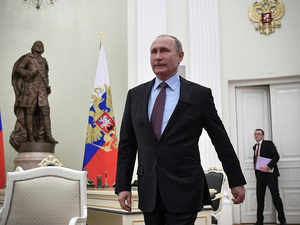
Putin hails 'successful' test of new hypersonic missile

Russia's Putin oversees test of hypersonic weapon

MOSCOW: Russian President Vladimir Putin on Wednesday hailed final tests of a hypersonic missile, which he earlier said would render existing missile defence systems obsolete. 

"On my instructions, the Ministry of Defence prepared and conducted a final test of this system. This has just been completed with absolute success," Putin said during a televised meeting with members of the government. 

"Russia has a new type of strategic weapon," he said, adding that the intercontinental "Avangard" system would be ready for use from 2019. 

The Kremlin told Russian news agencies the test had taken place in far eastern Kamchatka while Putin was at the national defence control centre. 

Putin unveiled features of the Avangard during his annual address in March, which he said would be part of a new generation of "invincible" weaponry. 


I SHALL BE ALONE IN INDIA ON THIS NEW YEAR EVE.


MY SON CA. VARUN SINGHAL PIC AT FRANKFURT GERMANY

Bidders face jail term if they back out from insolvency process

cash-agencies

NEW DELHI: The government and the Insolvency & Bankruptcy Board of India are looking at using provisions of the Insolvency & Bankruptcy Code (IBC) against Liberty House and other companies, which have gone back on their plans to take over companies through the resolution process and derailing the entire process. 

Lenders were looking to invoke section 74 of the IBC against Liberty House earlier, which provides for a penalty and a possible jail term. 

The issue has now moved to the government, with sources saying the plan could also include Adani Wilmar, which pulled out of a deal to buy Ruchi Soya after the committee of creditors backed it. Liberty House has backed off from the resolution process of Adhunik Metals and Amtek Auto, citing various issues. But the government and bidders, who kept them out of the ABG Shipyard resolution plan, are not buying its arguments. 


Apart from invoking section 74 of the IBC, the government is also looking for imposition of a maximum Rs 1 crore penalty. 

Several key resolutions plans have been held up due to Liberty House's reluctance to honour its commitment, said sources. The sudden burst of aggressive interest from the UK-based entity controlled by Sanjeev Gupta had come as a surprise for lenders of beleaguered companies and the government. But the interest from the company seems to have fizzled out in recent weeks. 

In an interview to a TV channel last week, Gupta suggested that he was keen to see the Adhunik Metals transaction to go through but added that Liberty House was interested in clean assets with no claims. At the same time, the TV channel quoted him to say that he had concerns over resolution exercise of Amtek Auto, including the valuation report. Although Gupta said he was still interested in the company, which was a high-profile NPA for several large banks, he wanted the concerns to be addressed .

The government is keen to resolve glitches in the IBC implementation process and is seeking to fast-track cases to ensure that the maximum permissible time limit is adhered to. In fact, the ministry of corporate affairs has initiated talks with banks to find ways to decide cases at the earliest. 


Tuesday, December 25, 2018

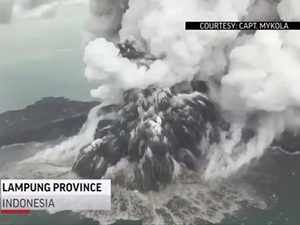
Indonesia tsunami toll reaches 429, thousands homeless Reuters|Updated: Dec 25, 2018, 02.50 PM IST

Indonesia: Tsunami set off by volcanic eruption leaves beach towns devestated

Indonesian rescuers on Tuesday used drones and sniffer dogs to search for survivors along the devastated west coast of Java hit by a tsunami that killed at least 429 people, warning more victims are expected to be uncovered as the search expands. 

Thick ash clouds continued to spew from Anak Krakatau, a volcanic island where a crater collapse at high tide on Saturday sent waves smashing into coastal areas on both sides of the Sunda Strait between the islands of Sumatra and Java. 


ICAI CENTRAL COUNCIL ELECTIONS RESULT DEC 2018.

[TO BE PUBLISHED IN PART III SECTION 4 OF THE GAZETTE OF INDIA, EXTRAORDINARY DATED 24th December 2018]
THE INSTITUTE OF CHARTERED ACCOUNTANTS OF INDIA
NEW DELHI – 110 002
New Delhi, 24th December, 2018
NOTIFICATION
(Chartered Accountants)
No. 54-EL(1)/15/2018: In pursuance of Rule 36 of the Chartered Accountants (Election to the Council) Rules, 2006, the Council of the Institute of Chartered Accountants of India is pleased to notify for general information the names (in alphabetical order), membership numbers and places of the members, who have been elected to the Twenty Fourth Council of the Institute from the constituencies as given below:-
1. Western India Regional Constituency comprising the States of Goa, Gujarat and Maharashtra and the Union Territories of Dadra & Nagar Haveli and Daman & Diu.
Sl.No.
Names
Membership No.
Place
1.
CA. Bhandari Anil Satyanarayan, FCA
104644
Mumbai
2.
CA. Chhaira Jay Ajit, FCA
103559
Surat
3.
CA. Chhajed Prafulla Premsukh, FCA
47690
Mumbai
4.
CA. Chitale Chandrashekhar Vasant, FCA
35885
Pune
5.
CA. Ghia Tarun Jamnadas, FCA
35489
Mumbai
6.
CA. Hegde Nandkishore Chidamber, FCA
40197
Mumbai
7.
CA. Jambusaria Nihar Niranjan, FCA
35520
Mumbai
8.
CA. Joshi Shriniwas Yeshwant, FCA
32523
Mumbai
9.
CA. Kabra Durgesh Kumar, FCA
44075
Mumbai
10.
CA. Khandelwal Dheeraj Kumar, FCA
105591
Mumbai
11.
CA. Talati Aniket Sunil, FCA
131567
Ahmedabad
2. Southern India Regional Constituency comprising the States of Andhra Pradesh, Karnataka, Kerala, Tamil Nadu and Telangana and the Union Territories of Lakshadweep and Pondicherry.
Sl.No.
Names
Membership No.
Place
1.
CA. Babu Abraham Kallivayalil, FCA
26973
Kochi
2.
CA. Dayaniwas Sharma, FCA
216244
Hyderabad
3.
CA. Prasanna Kumar D, FCA
23999
Visakhapatnam
4.
CA. Rajendra Kumar P, FCA
204314
Chennai
5.
CA. Sekar G, FCA
25533
Chennai
6.
CA. Vijay Kumar M P, FCA
201797
Chennai
3. Eastern India Regional Constituency comprising the States of Arunachal Pradesh, Assam, Manipur, Meghalaya, Mizoram, Nagaland, Orissa, Sikkim, Tripura, West Bengal and the Union Territory of Andaman & Nicobar Islands.
Sl.No.
Names
Membership No.
Place
1
CA. Agarwal Ranjeet Kumar, FCA
59869
Kolkata
2
CA. Goyal Sushil Kumar, FCA
57534
Kolkata
3
CA. Mitra Debashis, FCA
53649
Guwahati
4. Central India Regional Constituency comprising the States of Bihar, Chhattisgarh, Jharkhand, Madhya Pradesh, Rajasthan, Uttarakhand and Uttar Pradesh.
Sl.No.
Names
Membership No.
Place
1.
CA. Agrawal Manu, FCA
72814
Kanpur
2.
CA. Boob Pramod Kumar, FCA
76077
Jaipur
3.
CA. Goyal Anuj, FCA
75710
Kaushambi, UP
4.
CA. Gupta Satish Kumar, FCA
72990
Jaipur
5.
CA. Sharma Prakash, FCA
72332
Jaipur
6.
CA. Soni Kemisha, FCA
78005
Indore
5. Northern India Regional Constituency comprising the States of Haryana, Himachal Pradesh, Jammu & Kashmir and Punjab and the Union Territories of Chandigarh and Delhi.
Sl.No.
Names
Membership No.
Place
1.
CA. Chugh Hans Raj, FCA
88646
New Delhi
2.
CA. Gupta Atul Kumar, FCA
97009
Delhi
3.
CA. Jain Pramod, FCA
90358
New Delhi
4.
CA. Nanda Charanjot Singh, FCA
89658
New Delhi
5.
CA. Sharma Rajesh, FCA
98258
Delhi
6.
CA. Singhal Sanjeev Kumar, FCA
95377
Delhi
(V. Sagar)
Returning Officer and Secretary