Pages

Monday, February 24, 2020

South Korea becomes biggest coronavirus centre outside China The country has seen a rapid surge in the number of coronavirus cases -- adding more than 700 cases in less than a week -- since a cluster of infections emerged from a religious sect in the southern city of Daegu. PTI @moneycontrolcom


South Korea reported 161 more coronavirus cases Monday, taking the nationwide total to 763 and making it the world's largest total outside China.
The country has seen a rapid surge in the number of coronavirus cases -- adding more than 700 cases in less than a week -- since a cluster of infections emerged from a religious sect in the southern city of Daegu.
Most of the country's cases are connected to the Shincheonji Church of Jesus in the southern city of Daegu, including 129 of Monday's confirmations, the Korea Centers for Disease Control and Prevention said in a statement.
Two more people had died, it added -- both of them connected to a second cluster around a hospital in Cheongdo -- taking the toll to seven.
South Korean President Moon Jae-in on Sunday raised the country's virus alert to the highest "red" level, in a bid to strengthen the government response to the spiralling outbreak.
The government has extended kindergarten and school holidays by one week nationwide and plans to enforce tighter two-week monitoring of arrivals from China.
The outbreak has forced South Korean tech giant Samsung Electronics to suspend operations at its smartphone plant in Gumi, 200 kilometres (125 miles) southeast of Seoul, after one of its employees was infected at the weekend.
The Gumi plant manufactures high-end products for the domestic market, including Samsung's latest Galaxy S20 and luxury Galaxy Z Flip models.
The Shincheonji cluster began with a 61-year-old woman who developed a fever on February 10 and attended at least four services in Daegu -- South Korea's fourth-biggest city, with a population of 2.5 million -- before being diagnosed.
Daegu mayor Kwon Young-jin said 85 percent of the city's 292 cases were linked to Shincheonji.
Authorities say some 9,300 Shincheonji members in Daegu have either been quarantined or have been asked to stay at home, but hundreds have still yet to be reached.
Shincheonji, often accused of being a cult, claims its founder has donned the mantle of Jesus Christ and will take 144,000 people with him to heaven on judgement day.
But with more church members than available places in heaven, they are said to have to compete for slots and pursue converts.
In a video statement read out by its spokesman on Sunday, Shincheonji apologised for "causing concern", but insisted it was cooperating with health authorities for the "early cessation" of the situation.
The spokesman rejected public criticism blaming his church over the spike in the number of infections, noting the virus had broken out in China.
"Please be aware that the Shincheonji Church of Jesus and its members are the biggest victims of the COVID-19," he said.

Banana and Milk: Why You Should Never Consume These Two Things Together? 19 February, 2020 5:38 PM IST By: Pronami Chetia


Banana milkshake or banana milk is one the most appealing breakfast or snack time menu for many of us. Moreover, milk and banana is our favorite childhood combination. But as per experts, banana and milk together may not be the best combination while separately, both are extremely nutritious and can do wonder. As per Ayurveda, banana and milk are not an ideal combination and advised not to consume together. Let know which one is the myth and which has been scientifically proven for health benefits. Let’s explore whether we should go for it or just avoid it.

Banana and Milk-Two Different Entity Altogether

Nutrition of Milk

Composition-Proteins, Vitamins, Minerals, Riboflavin, calcium and vitamin B 12
Milk is enriched with proteins, vitamins, and minerals like riboflavin, calcium and vitamin B 12. Per 100 grams of milk contains 42 calories. However, the old saying of ‘milk being a complete meal’ does not stand true as it lacks vital vitamins vitamin C, dietary fiber and very less carbohydrate. Since we are a vegetarian nation, we struggle to complete our protein requirement on a daily basis and milk can majorly help you in this regard.

Nutrition of Banana

Composition- Vitamin B6, manganese, vitamin C, dietary fiber, potassium, and biotin
Banana, on the other hand, is loaded with vitamin B6, manganese, vitamin C, dietary fiber, potassium, and biotin. Every 100 grams of this sweet fruit contains 89 calories, hence heavy on the stomach which makes us feel fuller for a longer time and charges our lost energy. High in carbohydrates, bananas are often considered a great pre-and post-workout snack.

What Happens when Banana and Milk Come Together?

As per expert Dietitian and Psychologist Harish Kumar, this is what he had to say, "We do not recommend this combination as it may prove to be very harmful to the body. Even if you want to consume them, you can first take the milk and after 20 minutes, eat a banana. You must also avoid banana milkshake as it hinders the digestion process and disturbs your sleeping pattern.

Disturbs digestion

As per science, consuming banana and milk together not only disturbs our digestive system as it is heavy but also disrupts our sinus. This leads to sinus congestion, cold & cough and other allergies like rashes on the body. Therefore, while many believe that consuming the two together may sort out our digestive problems, it would rather lead to vomiting and loose motions in the long run.

What Ayurveda is saying? 

As per Ayurveda, every food has its own taste (rasa), post-digestive effect (vipaka) and a heating or cooling energy (virya). Therefore, an individual's Agni or gastric fire determines how well or poorly the food is digested, and the right food combinations are of great importance. Ayurveda strictly puts milk and banana in the list of the most incompatible foods.
As per Ayurveda experts, "It is a bad combination and is known as Viruddh Aahar (incompatible combinations). It generates Ama, a toxic substance that is the root cause of imbalance and diseases in the body. It douses the digestive fire hence disrupting the intestinal flora. It also causes congestion, cold, cough, rashes and allergies. It creates a negative reaction in the body, generates additional water, blocks body channel, and contributes to heart diseases, vomiting and loose. 
According to the book The Complete Book of Ayurvedic Home Remedies, A Comprehensive Guide to the Ancient Healing of India by Vasant Lad, combinations of fruits and milk are to be avoided strictly.
What’s the Best Way to Eat?
You need to remember that the best way to consume banana and milk is separately. If you wish to consume this as a pre-workout or post-workout snack, then eat the banana after 20 minutes of consuming milk. Or you can add banana to your yogurt recipes if you really wish to consume it with a dairy product.

Source-KrishiJagran Health & Style.

Saturday, February 22, 2020

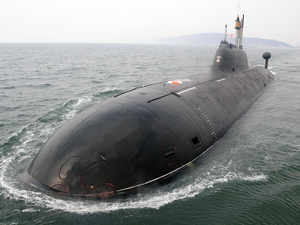
India’s Rs 1.2 lakh crore nuclear submarine project closer to realisation Nuclear attack submarines will give India a significant strike and area denial capability in the region. By Manu Pubby, ET Bureau|

INS Chakra

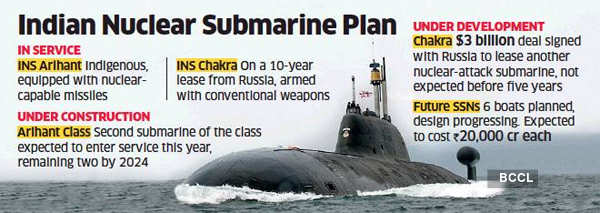
NEW DELHI: India is taking a crucial step for its Rs 1.2 lakh crore project to produce future nuclear-powered submarines, with top levels of the government processing clearances for the detailed design phase.

The plan to build six advanced attack submarines — to be nuclear powered but armed with conventional missiles and torpedoes — is being monitored closely and the first of the boats could roll out in a decade if things go as per plan.Sources told ET that the initial design phase for the new boats has progressed successfully and more resources will now be deployed to move to the more complex detailed design and construction — to be undertaken by the Directorate of Naval Design (Submarine Design Group) with assistance from the Defence Research and Development Organisation (DRDO).

sda


The timing of the critical clearances coincides with the pace of current work at the Ship Building Centre (SBC) in Visakhapatnam, where the Arihant class of nucleararmed submarines are being built. Major structural work on the fourth of the class is nearing completion and the centre would be able to take on work for the next generation of vessels as early as next year, if need be. Though this is unlikely as the developmental phase will take longer.

Sources said the second of the Arihant class — the slightly bigger and better-armed INS Arighat — is expected to be commissioned this year, adding teeth to India’s nuclear deterrence. Two follow-on boats after that are likely to enter service before 2024.


Relief for Vodafone Idea after Infratel-Indus tower deal gets government nod livemint. Updated: 21 Feb 2020, 09:31 PM IST Navadha Pandey

The merger of Bharti Infratel and Indus Towers will create the world’s second largest tower company. (Mint)
NEW DELHI : Vodafone Idea has received the first ray of hope for survival with the department of telecommunications finally according a key approval for the merger of tower companies Bharti Infratel and Indus Towers.
This government approval for FDI enhancement was key for merger of the two tower companies and in turn crucial for Vodafone Idea to divest its stake and raise funds.
“The final FDI enhancement approval required for Indus-Infratel merger has come. This is a big positive for Vodafone Idea," a person aware of the matter said requesting anonymity.
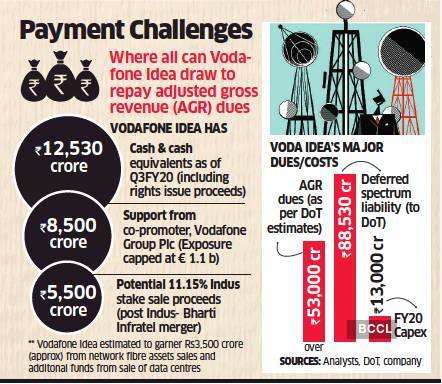
“The merger should come through in a couple of weeks now. Vodafone Idea has 11.15% stake in Indus Towers which it plans to monetise after the tower merger. This stake sale could fetch Vodafone Idea about 4500 crore," the person said.
To be sure, the approval has come just days after Vodafone Idea chairman Kumar Mangalam Birla on Tuesday met telecom secretary Anshu Prakash followed by a meeting on Wednesday with finance minister Nirmala Sitharaman over concerns that DoT could resort to invoking bank guarantees of the telecom operator.
Raising funds is important for Vodafone Idea which owes 50,000 crore in past adjusted gross revenue dues to the DoT after an unfavourable court verdict in October that upheld the government’s definition of revenue based on which companies pay levies.
Emails sent to Vodafone Idea and DoT were not immediately answered.
A 24 October verdict of the Supreme Court upheld the department of telecommunications’ (DoT) definition of AGR and directed companies to pay licence fee and spectrum usage charge dues.
Vodafone Idea is the worst hit by the verdict. Its last-ditch efforts to earn a reprieve from the apex court on Monday failed after which it paid 2,500 crore the same day. Vodafone Idea paid an additional 1,000 crore on Thursday.
To be sure, the tower companies had announced their merger back in April 2018 but were waiting for DoT approval.
In fact, Bharti Infratel board had allowed two extensions of the long stop date, first on 24 October and second on 24 December, to secure more time to get nod for merger with Indus Towers.
The merger of Bharti Infratel and Indus Towers will create the world’s second largest tower company.
The two tower companies had in April last year agreed to merge their businesses. The combined entity will own more than 163,000 towers, second only to China Tower.
Under the proposed merger, Bharti Airtel, which currently owns 53.5 per cent in Bharti Infratel, will own stake between 33.8% and 37.2% in the merged tower entity, while Vodafone Plc will own between 26.7% and 29.4% per cent of the combine. However, Airtel and Vodafone Plc will have equal rights in the merged tower entity.
Vodafone Plc and Bharti Infratel Ltd hold 42% each in Indus Towers while Vodafone Idea Ltd owns 11.15% and US-based private equity fund Providence owns 4.85%.

Thursday, February 20, 2020

Simple Solutions just require Common Sense only

Image may contain: people sitting

Meaning of some of SUZUKI Cars -Source Gilmor Motors

Suzuki literally means "bell tree" in Japanese
Suzu - "bell"
Ki - "tree"
A common Japanese surname and business name
      freeimages.com/eurokfreeimages.com/claudiameyer


Kizashi


Kizashi is a Japanese word meaning “a sign of great things to come”


Pronounced “Kee-Zah-Shee"

Celerio

"Celestial River"
"Celer-" is also a latin root word meaning "swift" "fast" "speedy" or "quick" giving us "accelerate" in English
freeimages.com/stosicmarko

Swift

Adjective: Moving or capable of moving with great speed, fast
Noun: The swift is also a medium-sized bird, an excellent flier that can sleep on the wing
http://www.rspb.org.uk/discoverandenjoynature/discoverandlearn/birdguide/name/s/swift/

Alto

"High" from the Latin "altus"
In music, "alto" refers to a musical range lower than a soprano and higher than a tenor
freeimages.com/alexanderwaalnoefer

Jimny

Similar to "Jiminy", an expression of surprise, eg "by Jiminy, she was right!" (of course!)

Grand Vitara

"Awesome way of life" - well that's what we reckon anyway! smiley

Grand - “Great"
Vitara - "way of life”

Baleno

Italian for "flash" or "lightning"
Ignis
Latin for "fire"
  

Wednesday, February 19, 2020

Aircel Insolvency: UV ARC Proposes Rs 6630 Crore Resolution Plan February 18, 2020

Image result for pic of Aircel

UV Asset Reconstruction Company has proposed a resolution plan for the bankrupt telecom operator Aircel Ltd. and its subsidiaries—Aircel Cellular Ltd. and Dishnet Wireless Ltd.
Under the proposed resolution plan, which has been approved by the committee of creditors, the ARC will issue zero coupon optionally convertible debentures worth Rs 6,630 crore against the secured financial creditor’s claims of around Rs 19,600 crore.
Aircel’s committee of creditors comprises 12 lenders, including 4 foreign banks and domestic banks led by State Bank of India. Aircel’s distributors and lessors have moved the National Company Law Tribunal seeking direction against the resolution professional’s reduction or rejection of their claims. The NCLT will pass an order after hearing pleas filed by the operational creditors and distributor.
Aircel, along with its group entities, has telecom license and spectrum in nine telecom circles and is currently undergoing insolvency resolution process. It had filed a voluntary insolvency petition in March 2018 citing operational difficulties and owes around Rs 27,000 crore to its creditors and vendors on a standalone basis.
Aircel’s fate symbolises the troubles of the Indian telecom sector which underwent turbulent times. The wireless carrier’s problems began in 2011 when investigative agencies started probing its sale to Malaysia’s Maxis Bhd., after owner C Sivasankaran alleged he was pressured to sell the operator.
Here are the key details of the resolution plan:
UV ARC has proposed a consolidated resolution plan for three Aircel Group entities owing to their operational interdependence and common debt structure, which was guaranteed under an obligor co-obligor model. Ravi Kadam, senior counsel representing Aircel’s resolution professional, informed the tribunal that standalone assets or entities didn’t receive any interest from resolution applicants.
Kadam said that the resolution plan was in the best interests of all stakeholders as any failure in approving the plan would result in liquidation of the company, which may drastically affect total recoveries. Accordingly:
  • The resolution plan will be funded through a combination of zero coupon optionally convertible debentures repayable over a period of five years from the date of approval of the resolution plan.
  • Initially, secured financial creditors will get 24 percent equity while 76 percent equity will be held by UV ARC.
  • Financial creditors would get 74 percent equity in case of any default by UV ARC in repayment of debentures.
  • Resolution plan proposes payments to operational creditors and employees.
Asset Monetisation
Pradeep Sancheti, senior counsel representing the asset reconstruction company, said UV ARC will fund the resolution plan through a combination of asset sales and tax set-offs. He also said that:
  • UV ARC will try to monetise Aircel’s assets—including 2G and 3G spectrum licenses in key telecom circles.
  • Aircel’s business operations comprising tower-leasing services and dark fiber lines will contribute to income generation.
  • Aircel has unabsorbed losses and depreciation, which can be set off by UV ARC against future profits for a period of eight years.
  • The asset reconstruction company will monetise Aircel’s 14,500-kilometre optical fiber network across India. It will make investments to upgrade or repair the network to cover slippages.
  • Aircel has receivables or claims against third parties exceeding Rs 700 crore. Cash generated through receivables will be used to make payments against the debentures.
  • Aircel entities have cash as well as certain receivables from the Department of Telecommunications.
Resolution Vs Liquidation
  • Sancheti said the resolution plan balanced the interests of all stakeholders and was better than liquidation because:
  • Benefits for claiming unabsorbed losses and depreciation will not be available if the Aircel entities go into liquidation.
  • License granted by the telecom department would be revoked in such a case.
  • Liquidation would result in distressed sale of assets which would fetch significantly lower value.
What TRAI, Telecom Department Said
Telecom Regulatory Authority of India moved the NCLT claiming the money lying with Aircel in the form of deposits made by subscribers and users’ prepaid balances.
Ashish Piyasi, counsel representing the telecom regulator, informed the tribunal that amount lying with Aircel in the form of postpaid security deposits, disincentives for call drops or outstanding prepaid balance cannot form part of Aircel’s cash or assets and must be deposited with the regulator, according to telecom regulations.
Aircel’s previous distributors also moved the tribunal, seeking direction against the resolution professional for classifying them as operational or financial creditors.
The tribunal reserved its order on the resolution plan and will hear pleas by telecom regulator and distributors next week.―Bloomberg Quint

Tuesday, February 18, 2020

Kumar Mangalam Birla meets telecom secretary amid Voda Idea troubles livemint . 11:11 PM IST Navadha Pandey

Kumar Mangalam Birla, Vodafone Idea chairman (Photo: Pradeep Gaur/Mint)
New Delhi: Vodafone Idea Ltd chairman Kumar Mangalam Birla met telecom secretary Anshu Prakash on Tuesday amid fears that the government may invoke the company’s bank guarantees, a move that may threaten the very survival of India’s second-largest telecom operator.
“Bank guarantees were discussed in the meeting," a person aware of the matter said, requesting anonymity. Birla, however, declined to disclose the issues that were discussed in the meeting with Prakash.
Birla’s meeting with top government officials indicate that the billionaire chairman of the Aditya Birla Group is actively involved in efforts to save Vodafone Idea, which has 304 million subscribers and about 13,000 direct employees. Apart from the impact on subscribers and employees, a potential bankruptcy will add to the pile of stressed assets on banks’ books.
Till recently India’s largest telco by users, Vodafone Idea is the worst hit by a top court verdict directing it to pay 50,000 crore in past licence fees and spectrum usage dues by 23 January.
Last-ditch efforts by the company to get a court reprieve on Monday failed, prompting speculation that the government will encash its bank guarantees. Vodafone Idea’s oral plea in the Supreme Court seeking directions to the telecom department not to pursue coercive steps for recovery of dues was not entertained.
(Graphic: Sarvesh Kumar Sharma/Mint)
The court on 14 February pulled up telecom operators and officials of the department of telecommunications (DoT) for failing to comply with the 24 October verdict that upheld the government’s definition of adjusted gross revenue on which licence fee and other levies are calculated.
Hours after the court’s observations, DoT raised demand for the dues and said “necessary action will be taken in terms of the provisions of the licence agreement without any further notice" if dues were not paid immediately.
“The DoT is currently awaiting legal opinion on whether it can resort to invoking bank guarantees," the person cited earlier said. Solicitor general Tushar Mehta did not answer Mint’s calls or messages.
Vodafone Idea and DoT did not respond to Mint’s query.
Analysts said the outlook for the company remains critical and a potential closure will have a ripple effect on the economy.
“For the Indian banking sector, Vodafone Idea potentially shutting down creates a $16 billion concern for banks, with roughly $3.5 billion in funded exposure and $12.5 billion in spectrum guarantees," BofA Securities said in a note dated 17 February.
“While almost all players are likely to have exposure, smaller private and PSU banks would likely take a disproportionate hit on their P&L (profit and loss statement) and capital,"the brokerage said. “In our coverage IndusInd, Yes Bank and to some extent SBI would likely have bigger impacts in this scenario. At this stage, banks could still hope for either a potential government and/or promoter rescue of Vodafone or the government not invoking guarantees."

Vodafone Idea’s exit may increase Airtel, Jio’s opex & capex: Analysts Analysts though said it won’t be a cakewalk for either Airtel or Jio as they would need to invest top dollars in fresh spectrum resources to boost their respective network capacities to take on VIL’s customers. By Kalyan Parbat

Untitled-3

KOLKATA: A potential Vodafone Idea(VIL) shutdown could push opex and capex levels up in the near-term for Bharti Airtel and Reliance Jio Infocomm, but such cost upticks would be more than offset by strong customer gains for both telcos if the sector takes on a private sector duopoly structure, analysts said.


BofA Securities said if VIL, with over 300 million users, is pushed to bankruptcy, and India becomes a two-player telecom market, “opex could increase (for Airtel) by 15-20% due to a reversal of existing tower sharing agreements, and capex could increase too in the near term”.


But Airtel and Jio, it said, would be “big beneficiaries” in terms of market share gains, though adding that the Mukesh Ambani-led telco, which doesn’t face any material (AGR) payment risks (unlike Airtel) is better positioned in the long run and to also invest in 5G with less pressure on its balance sheet”.

image (40)
Analysts though said it won’t be a cakewalk for either Airtel or Jio as they would need to invest top dollars in fresh spectrum resources to boost their respective network capacities to take on VIL’s customers. But actual size of such investments on network capacity ramp-ups, they said, would hinge on the price at which they buy VIL’s spectrum resources.


Rajiv Sharma, research head at SBICap Securities, estimates the adjusted value of VIL’s spectrum that the company acquired in the previous auctions is estimated at roughly $14 billion.


“In a duopoly scenario, Airtel and Jio might bargain hard and get the government to auction VIL’s spectrum at a significant discount by getting it to slash the reserve price,” Sharma told ET.

Motilal Oswal said a duopoly market seems apparent, and assuming “a 40:60 share of (VIL’s) subscribers for Jio/Airtel, both telcos could see Ebitda addition of Rs 15,000 crore/Rs 10,000 crore with 50% margin, implying a jump of 29%/22% on FY22 Ebitda to Rs 67,100 crore/Rs 54,700 crore”.


The Supreme Court on Monday dismissed Vodafone Idea’s plea to direct the telecom department not to take any coercive action against the operator, such as invoking bank guarantees. Experts believe this further reduces the struggling telcos’s chances of withstanding its over Rs. 53,000 crore AGR shock.


VIL shares closed 0.6% lower at Rs. 3.42 on BSE on Monday.

Goldman Sachs said Airtel’s stock may currently be pricing in an ARPU (average revenue per user) of Rs181, assuming one-third of Vodafone Idea’s subscribers move to the company over the next couple of years.


Airtel shares were virtually unchanged, closing at Rs. 565 on BSE on Monday.

If VIL indeed shuts down, Jio would need to launch another aggressive 4G featurephone offer to attract Vodafone Idea’s user base, many of which are still on 2G and 3G, who by default would otherwise move to Airtel that offers the legacy technologies, say experts.

Sharma of SBICap Securities said, “Airtel might need to evaluate offering 4G handset subsidy to attract VIL’s 2G/3G users and get them to upgrade to 4G”, especially since it has been “underinvesting in 2G and is also shutting down 3G services nationally by March”.

Experts added that Airtel and Jio have leverage issues, particularly Airtel, which, post a potential Rs. 35,586 crore AGR payout to the government, may not be able to bid aggressively in the next airwaves sale.


Separately, they said if VIL were to shut down soon, and the government is eager to sell the company’s spectrum resources to Jio and Airtel for ensuring tele-density levels don’t crash, it may consider auctioning such airwaves at a sharp discount.


Only aggressive investors should bet on Voda; avoid Airtel too: Sudip Bandhopadhyay Under the circumstances, pharma companies having a significant domestic presence such as Torrent Pharma, Natco Pharma, Sun Pharma are looking good at current levels and are worth picking, says Sudip Bandyopadhyay, Director, Inditrade Capital. ET Now | February 18, 2020, 21:01 IST


What are you making of recent market moves?

The way global markets have shaped up over the last one or two days and the coronavirus scare is affecting the global companies and global sentiments and this was expected. If you look at large global corporations, they are also getting scared and are kind of predicting a dip in earnings because most of them have supply chains out of China and that is getting impacted. So, global growth probably will get impacted for maybe a quarter or two and that does not bode well for markets like India. Having said that, the entire confusion over the AGR dues is also creating a huge overhang over Indian markets, particularly Indian banks. It does not augur well for the health of the Indian market. At this stage, we have to be a bit cautious and wait and watch how things pan as far as the global event and the AGR issue are concerned.

What is the biggest risk currently? Why would you reckon that ‘wait and watch’ would be the correct step? Do you think this global event will only be the sole risk as of now for the Indian equity market?

Not really. This global event is definitely a risk and it is not only affecting the supply chains but some of the pharmaceutical companies are already having problems in procuring the APIs which come from China.

Beyond that, the sentiment significantly gets impacted. We should focus on local issues and this AGR issue is becoming a huge problem for the local banks and if something unfortunate happens to Vodafone-Idea, then its impact will be significantly felt by Indian markets, particularly Bank Nifty. By and large, a lot of banks will take a hit on the chin. We have to be prepared for that and also a bit cautious on account of that.


For someone who asks what is the way forward? Then Vodafone is not heading the Jet-way and that it will have some operating business. If they inject capital, they will have to take out a loan or increase the equity. Bottom line is that they will survive. So at Rs 3 what is there to lose? You are buying pretty much an option value and if it survives, it could go to Rs 10-12.

If you are an aggressive investor, you are taking a bet that eventually good sense will prevail and some kind of solution will work out. It is worthwhile taking that bet but the way things have been moving over the last few months, it does not give much hope. I am not sure that one should be taking that bet at this stage unless you are a really aggressive investor or in other words what we call a ‘punter’. For an investor who is looking at steady returns, some amount of safety of capital, then you must definitely avoid it. I would say the same thing for the entire telecom space, leaving aside Reliance as that is a different ball game altogether. I would avoid Bharti Airtel under the current circumstances.

This AGR issue is a big headache for PSUs. SBI, once again, has the biggest exposure to Vodafone-Idea followed by a couple of other PSU banks. What would be your take on these names? How would you go about looking for an opportunity in these PSU banking names?

As far as the PSU banking pack is concerned, we were all assuming that we are heading towards a phase where the asset quality will gradually start improving. Post the NCLT recoveries and Essar or Ruchi Soya verdict, we assumed that things will start improving and those recoveries will start coming to the bottom line. Unfortunately, this entire telecom space issue is throwing all the calculations out of the window and one is back at the point where one has to speculate as to what kind of hit may be coming to these PSU and other large corporate banks.

It is a matter of concern and one needs to be really careful. However, considering the fact that SBI has significant exposure in Vodafone-Idea, if I have to recommend a PSU bank, it will still be SBI. Beyond this Vodafone-Idea issue, things have been improving. There have been recoveries through Essar. There has been value unlocking possibility through the sale of the card’s business via an IPO. There has been talk of some traction in the general insurance business of SBI which will again unlock value. Value unlocking along with gradual asset quality recovery as well as recovery of the written of assets through the NCLT process will probably take SBI to a different level by the end of the next fiscal. Hence, a long term investor can definitely look at SBI at current levels. One has to brace for the telecom related confusion but beyond that, I think SBI is worth picking up.

We had seen a recent uptick on some of those pharma names including the big ones like Cipla, Lupin, Dr Reddy’s and also in the midcap basket. Would you go out on a limb and pick something from the pharma pack even at these lower levels? Are you anticipating any kind of comeback with regards to the theme?

Pharma does look interesting but in pharma, one has to be extremely stock specific. Every pharma company has its own areas where they are vulnerable as well as their own areas of strength. At this stage, we believe domestic pharma is something which is giving good returns and growing at about 15% CAGR. Under these circumstances, companies having a significant domestic presence are our favourites. So, Torrent Pharma, Natco Pharma, even Sun Pharma look good at current levels and are worth picking.

In regard to the disturbances in China, I think one sector which one needs to look at is the chemical sector, speciality chemicals in particular because they will be significant beneficiaries of supply chain disruption in China and one should definitely look at these agrochemical companies and chemical companies like Deepak Nitrite, UPL, PI Industries.

What else would you buy given the opportunity this fall presents?

We are getting a feeling that as far as rural India is concerned, probably green shoots are slowly becoming visible. Look the government is trying desperately to put money in the hands of rural people. The rabi crop is expected to be good. Also, the MSPs and the market prices of most of the agri products have increased significantly which does imply that money will be going more in the hands of rural population. This augurs well for FMCG and consumer durable companies having a rural focus. So, a company like Voltas which sells smaller air conditioners, room air conditioners and has a significant presence in rural India can be looked at. On the FMCG side, Dabur which has got a significant rural presence and a distribution network can definitely be looked at and of course, if somebody wants to play very safe the HUL surely can be looked at.

Reliance Jio, Bharti Airtel, Vodafone Idea oppose Trai's tariff transparency drive The limited set of existing users availing of such plans -- not otherwise on offer to new users -- it said, are “fully aware of applicable benefits, terms and conditions”. Kalyan Parbat | ETTelecom | February 18, 2020, 22:39 IST


Image result for pic of Indian telecom
KOLKATA: Reliance Jio and older incumbents, Bharti Airtel and Vodafone Idea are finally on the same page on a key issue concerning transparency in tariff plans. All three telcos have strongly discouraged the sector regulator on the need to publish details of all plans, including those not on offer but active. They said publication of withdrawn offers, active only among a few users, would create confusion, leading to a surge in customer complaints.

In its submissions to Telecom Regulatory Authority of India (Trai), Jio said if plans not available for subscription to new users are published alongwith all plans available, there’s “liable to be confusion for a customer, leading to unwanted complaints”. It added users “might like an unavailable plan, and complain to the Authority” if unable to subscribe to the same.

The limited set of existing users availing of such plans -- not otherwise on offer to new users -- it said, are “fully aware of applicable benefits, terms and conditions”.

Mirroring Jio’s views, Airtel said “display of all plans, including those not on offer,” would make “customers unhappy” and also impact “quality of services at telco call-centres” if awash with queries about plans no longer available for subscription.


Vodafone Idea backed their views, saying publishing details of “many withdrawn plans” would end up “consuming a lot of space, cost, and cause unnecessary confusion for consumers”.

Less than three years ago, the older carriers had sparred with Jio on the matter of transparency of tariff plans, with the incumbents saying that some offers, especially counter-offers to retain users, had to be kept confidential to protect competitive advantage. Mukesh Ambani-led Jio had then batted for all plans to be made public on a common platform.

Subsequently, in December 2018, the Telecom Disputes Settlement & Appellate Tribunal (TDSAT) set aside a rule in Trai’s earlier predatory pricing regulation that required big telcos to report all tariffs in the interests of transparency and non-discrimination. It had then ruled that segmented offers and discounts offered in ordinary course of business to existing customers without any discrimination within the targeted segment did not amount to a tariff plan and needed no reporting in the manner prescribed for regular tariff plan.

The telecom tribunal’s verdict had allowed the then dominant players – Airtel and VIL – to continue offering customised discounts to retain subscribers, and they also wouldn’t be bound to report those to the regulator or make them public.

The Big 3 telcos now appear to have buried their differences in their latest submissions, in response to Trai’s recent paper on ways to boost transparency levels in all tariff-related communications of phone companies to protect consumers.

On Trai’s call for a standard template for publication of tariffs, Jio said any “further intervention by the Authority” would tantamount to micro regulation, and would “irreversibly affect the well turned out policies of forbearance and light-touch regulations”.

Airtel said “any intrusive regulatory framework on publication of tariff offers would create unnecessary hindrances, be counter-productive and restrict the ability of telcos to carry on their business”.

The telcos, in their submissions, have also told Trai that publication of tariffs via alternate channels such as Facebook, Whatsapp, Twitter, service provider apps would have serious limitations like screen size, character limitation, which need to be considered while disseminating critical information to consumers.

If Vodafone Idea disconnects, India picks up the bill India faces a multi-billion-dollar hit to its economy and a tarnished reputation as a place for multinationals to invest unless it can keep Vodafone Idea in business. Reuters | February 17, 2020, 22:39 IST

If Vodafone Idea disconnects, India picks up the bill
By Sankalp Phartiyal and Aftab Ahmed

NEW DELHI - India faces a multi-billion-dollar hit to its economy and a tarnished reputation as a place for multinationals to invest unless it can keep Vodafone Idea in business.

Vodafone Idea, a joint venture between Britain's Vodafone Group Plc and India's Idea Cellular, is the most vulnerable of the mobile carriers ordered on Friday to immediately pay billions in unpaid government dues and interest following a Supreme Court ruling.

It has said it cannot immediately pay the $3.9 billion it owes and its ability to survive was contingent on the government agreeing a flexible payment schedule.

With 13,000 direct employees and loans from banks of about $3.8 billion, Vodafone Idea's potential exit would send shockwaves through India's economy, which is already growing at its slowest pace in 11 years.

"A default of such a large scale could increase India's fiscal deficit by about 40 basis points," Aliasgar Shakir, a research analyst at Motilal Oswal, said.

A 40 basis point increase in fiscal deficit roughly translates to a revenue loss of about 1 trillion rupees ($14.01 billion) for Prime Minister Narendra Modi's government, when it is facing the country's first fall in direct taxes in decades.

Another issue is that Vodafone Idea's departure would essentially leave a duopoly between Bharti Airtel and Reliance Jio, which is backed by Asia's richest man Mukesh Ambani.

That could dampen interest in an auction of 5G airwaves expected before the end of March.

A former executive at Vodafone Idea, who asked not to be identified, said the risk of deterring investment was high.

"They have been beaten down by the environment here," the executive said. "(We're sending investors) a very negative signal - it says the trust factor between the government and the industry doesn't exist."

NO EASY ANSWERS

The risks are not lost on Delhi, but finding a solution is fraught.

Two official sources said the government was seeking to come up with a plan that did not violate the court's order.

"(The government) is concerned with what is happening in the sector and its impact on the investment climate," a top Finance Ministry official said, asking to remain anonymous.

A separate source said the government was seeking to structure a relief plan before the next court hearing on March 17, but declined to provide details. The telecoms ministry has been speaking with the prime minister's office to resolve the issue, the official added.

Lawyers in the telecoms sector said the government could urge the court to allow companies to pay over a longer time frame.

India's telecoms ministry did not immediately respond to a request for comment.

Modi has faced criticism for failing to create jobs in a country where about one million job seekers enter the market every month. Even some in the business sector, which broadly cheered him to power, have turned on him. State-run banks are already burdened with some $140 billion in stressed debt.

However necessary, some analysts are sceptical the government can pull together a relief plan in time.

The telcos still have some options, including filing a curative petition to the Supreme Court, although analysts see little chance of success.

"The acceptance of a curative petition itself is an onerous task - and with the Supreme Court's tough stance now, the merits of opting for this route may have diminished," Morgan Stanley said in a note to clients.

In the meantime, Vodafone Idea has said it will pay 35 billion rupees ($490 million) in dues to the federal government by Feb. 21. Rival Bharti Airtel paid $1.40 billion on Monday, less than a third of the total it owes.

($1 = 71.3640 Indian rupees)

(Additional reporting by Manoj Kumar in New Delhi and Nupur Anand in Mumbai; Editing by Alexandra Ulmer and Barbara Lewis)