Pages

Friday, March 6, 2020

Koreans know where it was, helping contain coronavirus outbreak Without using data as ammunition, it isn’t clear how to effectively contain the spread of this disease. Bloomberg|Last Updated: Mar 06, 2020, 09.27 AM IST

Coronavirus: Koreans know where is was, helping contain outbreak
By Anjani Trivedi

Like it or not, we may have to submit to the intrusion of big data because of the coronavirus.

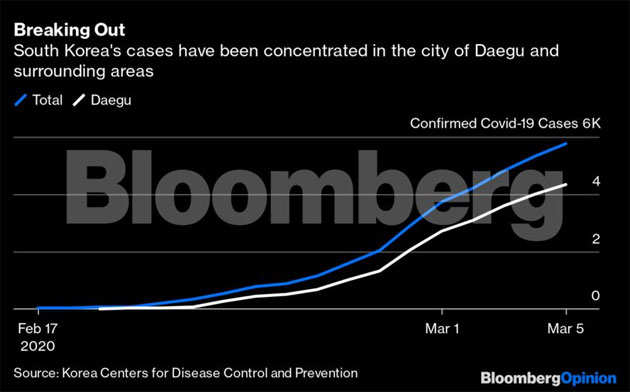
South Korea is at the cutting edge of how this could work in a democracy. Tracking down patient zeros — the first documented cases — and the ones that follow is becoming critical to containment and public safety. There won’t be a cure or vaccine anytime soon. The global number of cases is nearing 100,000. South Korea has the largest outbreak outside China, with almost 6,000 cases. The surge has largely been contained to the city where it erupted, Daegu, around a religious cult.

Central to South Korea’s approach has been the extensive collection and effective use of data as a public good – in this case, disease surveillance and testing. The Korea Centers for Disease Control and Prevention’s daily reporting details patients affected and being tested, connections between them and what provinces they’re in. It includes fatality rates by age and gender. Health authorities posted a detailed log of patients’ whereabouts prior to confirmation of infection. Their names weren’t given, but they were numbered. People were informed that this personal information was being collected and publicized. They didn’t have a choice.

A Wall Street Journal report chronicled this: “Patient No. 12 had booked seats E13 and E14 for a 5:30 p.m. showing of the South Korean film, “The Man Standing Next.” Before grabbing a 12:40 p.m. train, patient No. 17 dined at a soft-tofu restaurant in Seoul. Patient No. 21 drove her car to attend a weekday evening church service.”


From a visit to a funeral home to a restaurant and bakery, a website that uses government data now allows tracing infected individuals. Colour-coded by timing, it allows people to avoid those places and enables so-called social distancing, or staying away from large groups and crowds. It’s a more focused way to confront the epidemic than living in a generalized state of paranoia. And far more targeted than locking down entire cities. App developers are using the public data to warn users if an infected person is within 100 meters. Because the coronavirus has been asymptomatic in some cases, tracing those infected is even more important.
graph
Tech giants have mined data this way in marketing for at least a decade. Scientists have analyzed data from Twitter Inc. and Alphabet Inc.’s Google Trends to understand human mobility. Cellphone data has been used to track cholera outbreaks and the role of crowds. South Korea is pulling all these threads together. It’s also collecting data from pharmacies and doctors on how medication is being dispensed, and plans to use a similar system to ensure people aren’t hoarding masks.

Breaking Out
The more information you have, the more you can do with it. South Korea’s growing pile of data has enabled authorities to quickly test for the disease and keep pace with its rapid spread. Knowing that the cases are concentrated in Daegu has helped ramp up testing there. That’s a big step forward. In previous outbreaks, delays in collecting and tracking led to slow response times.
This capacity hasn’t been conjured from nothing. South Korea has spent years investing in technology and, more recently, biotechnology. Research and development spending accounts for around 4.5% of gross domestic product, topping the list of countries in the Organization for Economic Cooperation and Development, which average around 2.37%. Given the out-sized role of companies like Samsung Electronics Co. and SK Hynix Inc. in the country’s life, South Koreans are highly tech-enabled, with nine out of 10 people on the internet and 95% using smartphones.

To be sure, disease surveillance isn’t new. Typically, healthcare professionals need to inform public health officials for selected diseases. That takes time. Voluntary sharing risks misreporting, with no validation from lab tests. There are other pitfalls, especially data collection based on human behavior and media coverage. For instance, Google and the U.S. Centers for Disease Control and Prevention teamed up for web data on searches around the flu. In 2013, Google’s estimates for Christmas-time flu peak were almost double the CDC’s. Meanwhile, Google underestimated swine flu.

Putting data to work effectively isn’t an easy task. In China, a highly connected and watched society, fears of misuse and mass-scale surveillance abound. Beijing has resorted to data to track citizens in the ongoing quarantines across the country. The U.S. doesn’t seem to have the data, or at least isn’t marshaling it effectively Much of what it collects is in the hands of Big Tech. Testing and reporting for the coronavirus is proving difficult (and almost non-existent in places). In Europe, even if governments wanted to fully utilize all available information, new privacy laws would get in the way.

South Korea is conscious of risks to privacy; there are laws to protect data about children and personal information. But having a watchful eye in the name of public health has helped in this time of crisis. Without using data as ammunition, it isn’t clear how to effectively contain the spread of this disease without locking down large parts of a country.

So, wouldn’t you rather know if someone with coronavirus had been sitting where you’re now sipping coffee?

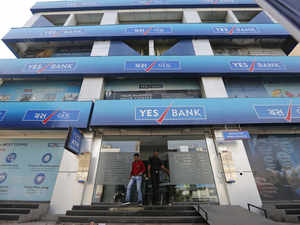



RBI announces draft revival plan for Yes Bank. Here are details The plan proposes that SBI can invest in reconstructed bank for up to 49% stake for nearly Rs 2,450 crore. ET Online|Last Updated: Mar 06, 2020, 05.52 PM IST

yes bank_AP

Reserve Bank of India (RBI) today announced a draft revival plan for the beleaguered Yes Bank, in which it has been proposed that SBI can invest in the reconstructed bank for up to 49 per cent stake for nearly Rs 2,450 crore. The central bank has invited suggestions from public on the draft scheme till Monday, after which a final call will be taken. The draft plan has also been sent to the SBI and Yes bankNSE -56.11 % for their comments.

Earlier in the day, RBI governor Shaktikanta Das had assured Yes Bank depositors that a resolution plan will be announced in 30 days. RBI placed Yes Bank under a moratorium yesterday, saying it was taking control of it for 30 days and would work on a revival plan.

Here are the full details about the RBI's revival plan for the crisis-hit Yes Bank:

* RBI says that State Bank of India (SBI) has expressed its willingness to make investment in Yes Bank and participate in its reconstruction scheme.
* All employees of the reconstructed Yes Bank will continue with the same pay for at least one year.

* RBI plans to alter the authorised capital for the reconstituted bank to Rs 5,000 crore and number of equity shares will also be altered to 24,000 crore of Rs 2 each aggregating to Rs 48,000 crore.

* It has been proposed that the investor bank will not reduce its holding in the new bank below 26 per cent before completion of three years from the date of infusion of the capital .


* The investor bank shall agree to invest in the equity of the reconstructed bank to the extent that post infusion it holds 49 per cent shareholding in the bank at a price not less than Rs 10 (Face value of Rs 2 and premium of Rs 8).

* A new board will be constituted.

* The plan proposes that Board of Directors of the Reconstructed Bank will have the freedom to discontinue the services of the Key Managerial Personnel (KMPs) at any point of time after following the due procedure .


* The investor bank shall have two nominee directors on the Board of the Reconstructed Bank.

* RBI may appoint additional directors. It will be open to the Board of directors of Yes Bank to co-opt more directors to it.

* It will be open to the reconstructed bank to open new offices and branches or close down existing offices or branches, in accordance with the extant policy of the Reserve Bank and complying with the necessary terms and conditions


Vodafone CEO Nick Reed meets Nirmala Sitharaman, Ravi Shankar Prasad to discuss AGR dues Reed's India visit comes ahead of final hearing of the adjusted gross revenue (AGR) issue at the Supreme Court slated for March 17. Vodafone Idea has the maximum AGR dues of Rs 53,000 crore, of which it paid Rs 3,500 crore last month. Muntazir Abbas&Anandita Singh MankotiaETTelecomUpdated: March 06, 2020, 16:36 IST

Image result for pic of vodafoneVodafone CEO Nick Read meets Finance Minister Nirmala Sitharam amid AGR crisis

Nick Reed, CEO of the Vodafone Group, on Friday called on Finance Minister Nirmala Sitharaman and Telecom Minister Ravi Shankar Prasad. He was accompanied by Vodafone Idea MD Ravinder Takkar.

“It was a good meeting,” Prasad said when asked about his discussions with Reed.

Reed in a 40-minute long meeting discussed the company’s current situation with Prasad and Telecom Secretary Anshu Prakash.


Reed's India visit comes ahead of final hearing of the adjusted gross revenue (AGR) issue at the Supreme Court slated for March 17. Vodafone Idea has the maximum AGR dues of Rs 53,000 crore, of which it paid Rs 3,500 crore.

Vodafone Idea on Friday submitted its self assessment of statutory dues to the telecom department and said that its adjusted gross revenue (AGR) dues stand at Rs Rs.21,533 crore as per its calculations.


Vodafone Idea Limited (VIL), a joint venture between the UK's Vodafone group and India's Aditya Birla group's Idea Cellular, has sought government intervention to wade financial woes.

Reed was accompained by company's India operations chief executive Ravinder Takkar. The meeting with Prasad ahead of the next round of court hearing is considered crucial and an effort to save Vodafone Idea.

Last November, Reed said that he was confident about India’s growth potential and the country was an important market for the multinational company.

Meanwhile on Tuesday, the telco paid Rs 3042.80 crore for airwaves bought in the auctions of 2014, in addition to Rs 2,500 crore it cleared in February against statutory-AGR dues.

Last month, Vodafone Idea chairman Kumar Mangalam Birla met Finance Minister Nirmala Sitharaman and the Department of Telecommunications (DoT) Secretary Anshu Prakash to press the demand for relaxation.

However, Birla earlier said that without any government relief, the telecom joint venture might be forced to wind up.

Mutual funds schemes with significant exposure to troubled Yes Bank Many mutual fund investors are wondering whether their mutual fund schemes have exposure to the troubled bank’s stocks or bonds. By Shivani Bazaz, ET Online| ..

Yes-Bank-AFP

The Yes Bank shares and bonds took a huge hit after the Reserve Bank of India (RBI) imposed a month-long moratorium on the bank on Thursday. Shares of YES Bank tumbled 85% in Friday’s trade after the news of a month-long moratorium. Many mutual fund investors are wondering whether their mutual fund schemes have exposure to the troubled bank’s stocks or bonds.


According to data from Value Research, a mutual fund tracking firm, Nippon India has four schemes which have huge exposure to the troubled stocks/bonds. Some schemes from big fund houses like Franklin Templeton, HDFC Mutual Fund and SBI Mutual Fund also had large exposure to stocks/bonds.


“The Reserve Bank assures the depositors of the bank that their interests will be fully protected and there is no need to panic,” RBI said in a statement.Nippon India Equity Hybrid Fund has an exposure of Rs 587.58 crore in the bonds/NCDs of the troubled bank. Next in line is Nippon India Credit Risk Fund with an exposure of Rs 468.45 crore in bonds/NCDs of Yes Bank. Similar exposure can be seen in Nippon India Strategic Debt Fund where Rs 410.8 crore are at stake. Franklin India Short Term Income Plan also has an exposure worth Rs 281.09 crore to Yes Bank bonds. HDFC Balanced Advantage Fund has an exposure of Rs 93.03 crore to Yes Bank stocks. SBI ETF Nifty 50 also has investments worth Rs 116.61 crore to Yes Bank stocks.
Mutual Fund YES Bank data

Abandoned by their NRI husbands, the women fight back

By The Rediff News Bureau

Last updated on: March 05, 2020 19:08 IST

The men promised a life abroad.
They demanded -- and got -- tens of thousands of dollars in dowry.
Then they left, abandoning their wives, and sometimes children, in India, as they settled in the United States, Canada, Europe and Australia.
But now those wives are fighting back.
In a pink-walled room of a government office in Punjab they spend their days cancelling the passports of runaway husbands.
They've created what the regional passport chief describes as a 'terror' in several foreign countries.
All photographs: Anushree Fadnavis/Reuters
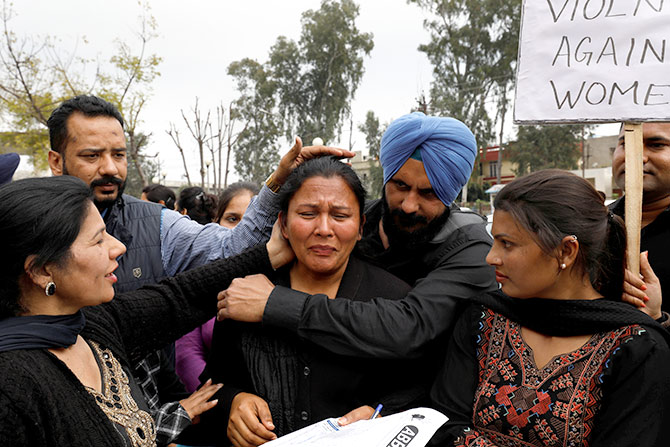
Women, who claim to have been abandoned by their NRI husbands, take part in a protest outside the regional passport office in Jalandhar. It all began when several women started approaching regional passport chief in Chandigarh, Sibash Kabiraj, with their pleas for help. Kabiraj knew that passports of men who've misled their wives can be suspended or cancelled, though it requires a lot of paperwork. So he explained passport law to the women, gave them a room with a computer, printer and fax machine, and told them if they would do the paperwork, he would sign it. In the past year-and-a-half, the women have managed to suspend more than 400 passports and revoke 67 others, says Kabiraj.
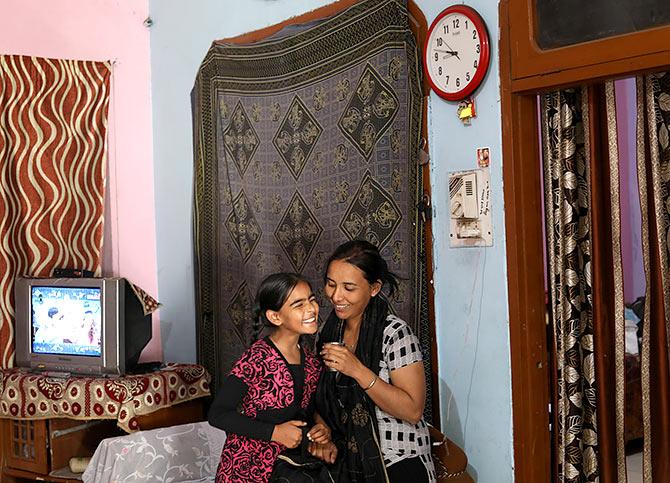
Amritpal Kaur, left, looks at Reena Mehla, right, while she cries remembering her husband, who she says abandoned her and left for the US after a few years of marriage. Kaur and Mehla work together at a desk in the regional passport office in Chandigarh. Mehla knows she’s defying traditions back home, where married women don’t leave the house without male relatives or have a separate identity. "Even our soul is not allowed, because a husband is everything. A husband is like God," she says.
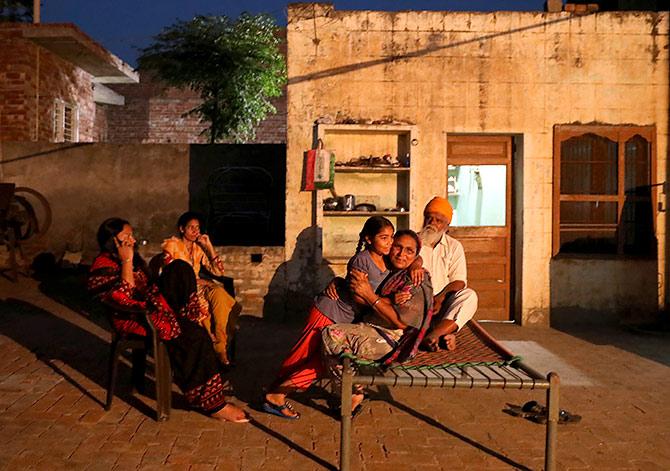
Satwinder Kaur, whose husband abandoned her in 2015 and settled in Poland, speaks on the phone as she sits with her family in the courtyard of her house in the village of Toosa, south of Ludhiana. Kaur says her neighbours and even relatives call her banj, or 'rotten womb'. "In my own house, I was called that," she said.
Satwinder speaks to a woman who visited her to ask for advice on a personal issue. Every day, women with husband problems pile into Satwinder Kaur's family courtyard in a village surrounded by mustard fields.
Satwinder reacts during a court hearing after a judge postponed the trial, as her in-laws got a stay order over the warrant of possession of the house, in the lower court at Jagraon. She has filed 11 court cases against her husband.
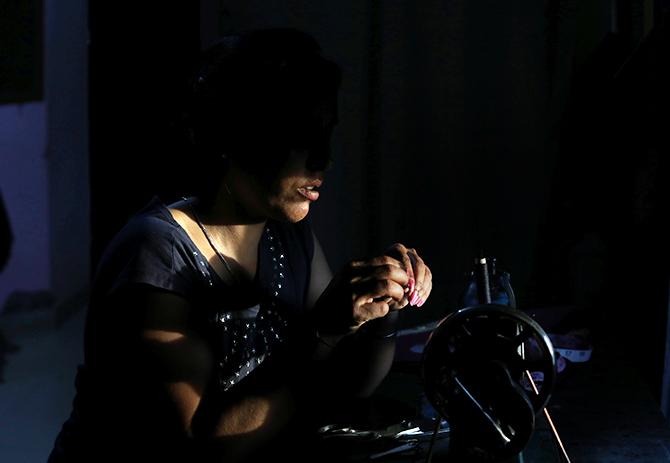
Sarbjeet Kaur sews a garment at her house in Gurdaspur. In 2015, her husband Daler Singh who is in Canada asked for divorce. Daler went abroad when Sarbjeet was pregnant with her daughter. She sold her jewellery, borrowed money from her parents and pawned her cousins'. aunts' and friends' jewellery too to help him go to the US and then Canada. Initially, he did send some money back, but only for his parents. He also stopped sending the school fees of their daughter in 2016. Sarbjeet had to sell her furniture so that her daughter could finish a term at the school before she moved her to a new, cheaper one. Next year, she sold the gold earrings her parents had given to her daughter again, for her school fees. These days, Sarbjeet stitches salwar kameez and simple dresses on a pedal-operated machine beside her bed to earn money.
Sarbjeet Kaur's mother gives money to pay for her daughter Ekampreet's school fees at their house in Mukerian, Punjab.
Ekampreet, 10, laughs with her mother Sarbjeet at their house in Gurdaspur. Kaur and her daughter live at their in-laws house after the court granted permission for them to stay there.
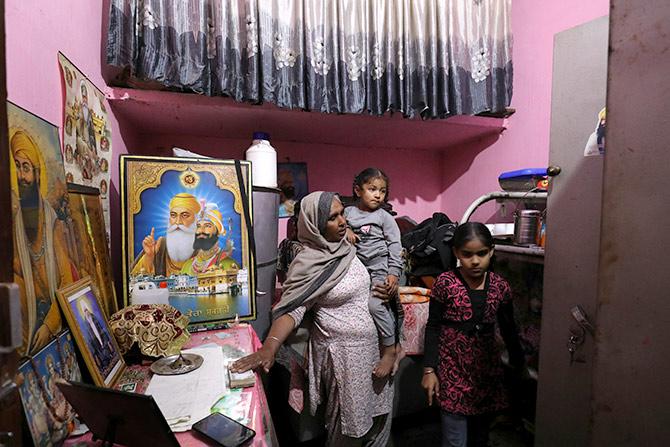
Baljit Kaur, 43, who is a policewoman, sits next to her mother on a bed on the verandah at her mother's house in the village Khara, Punjab. Baljit married at the age of 39 in 2014 and her in-laws demanded a huge dowry. She also gave cash to her husband, who went to the US a month after the marriage. He even asked for money from there but Baljit refused and they've been locked in the legal battle ever since. "We are like dead bodies walking. We have no place in society. We cannot live and we cannot even die," said Baljit, an assistant sub inspector in the Punjab police. Kaur's mother passed away last year.
Palwinder Kaur, left, and Satwinder Kaur, right, speak to a woman who says she has been abandoned by her husband, in the village of Toosa.
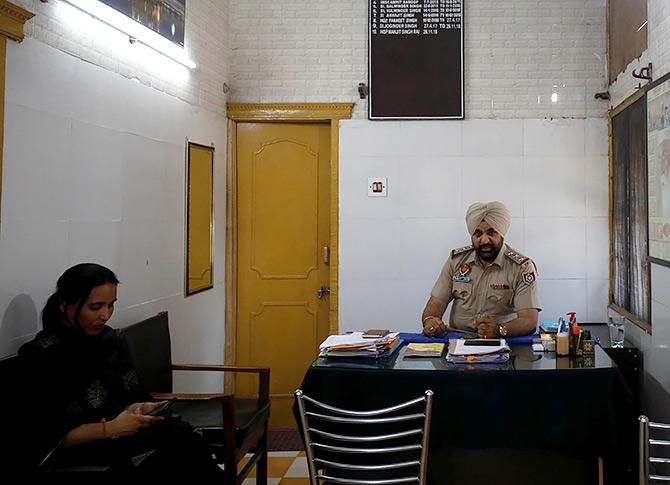
Manjit Singh, the station house officer at the NRI police Station, and Sarabjeet wait for a victim who had come to lodge a complaint against her NRI husband, in Gurdaspur.
Neelam, a woman abandoned by her NRI husband, reacts during a protest in Jalandhar.
Abandoned women protest in Jalandhar. In all, more than 5,000 women have filed abandonment complaints with the ministry of external affairs.


used here for educational purposes only

Relief in the works for AGR-hit telecom companies The development comes a day after the DoT issued notices to telcos to pay their remaining AGR dues without any further delay, increasing pressure on Vodafone Idea. The DoT also wrote to telcos seeking details and explanations for their self-assessment, needed for the government to reconcile the amounts with its calculations. ET Bureau

telecom-1


NEW DELHI: The government is working on steps to provide relief to the telecom sector that will need to be ratified by the Cabinet, a senior official said, raising the prospect of a possible reprieve for financially strapped Vodafone Idea, which faces AGR dues of Rs 53,000 crore. On the eve of Vodafone Group CEO Nick Read’s visit to India, the official said any package will need to conform to the Supreme Court’s AGR ruling. The next hearing is on March 17.

“Any decision will have to be cleared by the Cabinet. The government’s intent is clear — it does not want any company to close down,” the official told ET. “However, the relief will be for everyone, not just Vodafone Idea.”

Vodafone Idea, a JV between Vodafone Group and Aditya Birla Group, is the most precariously placed of the operating telcos, facing AGR dues of Rs 53,000 crore as estimated by telecom department.

‘Relief Steps Not Finalised Yet’
The company has said it will have to shut if it doesn’t get any relief on its AGR dues or if its bank guarantees are invoked to recover part of the amount. Its own assessment has pegged AGR dues at around Rs 23,000 crore, of which Rs 7,000 crore is the principal. The telco has so far paid only Rs 3,500 crore.

1

The official said that no relief steps have been finalised as yet.


Karachi-bound Chinese ship found carrying parts used to make nuclear missile livemint Updated: 05 Mar 2020, 01:46 PM IST Elizabeth Roche

A file photo of Kandla port. (A file photo of Kandla port)


NEW DELHI: A Hong Kong flagged ship bound for Karachi and intercepted by Indian customs officials early February has been found carrying equipment that can be used to manufacture parts of nuclear capable ballistic missiles.


Thursday, March 5, 2020

RBI supersedes board of Yes Bank, caps withdrawals at Rs 50,000 The RBI has also superseded the Board of Directors of Yes Bank Ltd for a period of 30 days. ET Bureau|Last Updated: Mar 05, 2020, 10.10 PM IST

Untitled-6

MUMBAI: The Reserve Bank of India superseded the Board of Directors of Yes BankNSE 25.60 % and imposed a moratorium for a month as its financials deteriorated, but has promised to come up with a credible restructuring plan in the next few days that may involve merging it with another lender.

The regulatory action follows extended period of inability of the bank management to come up with fund raising that would have helped it provide against loan losses. Prashant Kumar, former deputy managing director at State Bank of India, would be the administrator.


Depositors can pull out a maximum of Rs. 50,000 per head even if an individual has more number of accounts, a government gazette notification said. The outstanding amounts on drafts and pay orders issued so far would be paid in full, it said.

Namaste, Israel: Coronavirus Spurs Unique Response (And Warning From Rabbis) Public events like Purim parades are canceled, Netanyahu urges people to try ‘Namaste’ greeting, Orthodox Jews attempt to see the funny side of the crisis – and there's even an app with an 'Isolated Together' chat Source HAARETZ

  • Prime Minister Benjamin Netnayahu and Health Minister Yaakov Litzman at a press conference on the coronavirus in Jerusalem on Wednesday, March 4 2020
  • Normally, spring in Israel is a cavalcade of festivals and celebrations, with the Jewish holiday of Purim followed quickly by Passover and Independence Day, and Ben-Gurion airport jammed with tourists heading in and out.
  • But the new coronavirus has cast a grim shadow over the usual preparation and anticipation of parades, all travel and large gatherings, as the government has taken a maximalist approach to prevent the spread of COVID-19, which has placed tens of thousands in home quarantine, crippled business travel and devastated the tourism industry.
  • Israel may be viewed as an “Americanized” society, but its government’s response to the epidemic strikes a sharp contrast to the United States. President Donald Trump has been criticized for what are being seen as overly optimistic remarks regarding the dangers of the spread of COVID-19. That has sparked concern that out of deference to Trump and his concerns about the stock market and other economic concerns that could damage him politically, the federal government, including health authorities, is downplaying the threat.
    In Israel, the criticism is precisely the opposite: That draconian efforts to preserve the public health are overly extreme, and their potential damage to the country’s economy are not being weighed heavily enough.
    A security guard at Maccabi Tel Aviv's Euroleague basketball game against Andolo Zero, which was played behind closed doors on March 4, 2020.
    Nir Keidar
    Prime Minister Benjamin Netanyahu set the tone Wednesday in a joint press conference with Health Minister Yaakov Litzman, declaring that the world was in the midst of a global pandemic, and that it could be “among the most dangerous of such pandemics in the past 100 years.”
    Extolling the fact that “Israel is in the best situation of all other countries, together with another two or three Western countries,” Netanyahu added that Israel’s abundance of caution has, so far, paid off. “We were compelled to take harsh – even very harsh – measures in order to slow the pace of the spread of the disease in Israel, and indeed this has happened,” he said.

Coronavirus update: Paytm employee in Gurgaon tests positive for deadly virus livemint . Updated: 04 Mar 2020, 08:54 PM IST Written By Deepak Upadhyay

In India, at least 29 confirmed cases of COVID-19 have been reported in India till Wednesday. (Photo: Reuters)
A Paytm employee in Gurgaon has tested positive for novel coronavirus, the company said in a statement on Wednesday. The employee had recently returned from a vacation in Italy, one of the worst-hit countries from coronavirus.

Tuesday, March 3, 2020

SBI board approves Rs 23,000-crore RCom insolvency resolution plan: Sources ​​UV Asset Reconstruction Company is believed to have placed bid of around Rs 14,700 crore, while Reliance Jio has made an offer of Rs 4,700 crore for tower and fibre assets of Reliance Infratel. There will also be a clawback of Rs 4,300 crore of priority payments made to Chinese and Indian creditors.

reliance-communications_bccl

New Delhi: The board of State Bank of India is learnt to have approved resolution plan for Reliance Communications, through which lenders are expected to recover around Rs 23,000 crore.

UV Asset Reconstruction Company is believed to have placed bid of around Rs 14,700 crore, while Reliance Jio has made an offer of Rs 4,700 crore for tower and fibre assets of Reliance Infratel. There will also be a clawback of Rs 4,300 crore of priority payments made to Chinese and Indian creditors.


Jio placed bid for tower and fibre assets of Reliance Infratel (RITL) and UVARC for assets of RCom and Reliance Telecom.

"SBI board has approved resolution plan for RCom. It is expected to vote favourably for the RCom resolution plan at the committee of creditors (COC) Meeting. Voting on the RCom Resolution Plan has started at the COC and will end on March 4," according to sources privy to the development.

Email query sent to SBI and RCom resolution professional did not elicit any immediate reply.

RCom's secured debt is estimated to be around Rs 33,000 crore. Lenders submitted claims of around Rs 49,000 crore in August.

Reliance Communications has put all of its assets on sale that include spectrum holding of 122 megahertz (MHz), tower business, optical fibre network and data centres.

According to an order by the National Company Law Tribunal, the CoC had to complete the entire process by January 10 but it sought extension in deadline. The resolution professional, Deloitte, is expected to file resolution plan with the NCLT Mumbai on March 5.

RCom in the past had tried to sell assets to various companies, including Reliance Jio, to clear debt but the deals did not materialise. Reliance Jio cancelled agreement to buy RCom assets, including spectrum, as it did not want to bear the past liabilities of the debt-ridden firm.

Later, the insolvency proceedings against RCom started on a plea filed by Swedish telecom gear maker Ericsson after the company failed to clear its dues

Govt suspends visas for people travelling from Italy, Iran, S Korea and Japan livemint. Updated: 03 Mar 2020, 06:54 PM IST Leroy Leo

Photo: Reuters (Reuters)
NEW DELHI : The Indian government has suspended visas and e-visas granted on or before Tuesday to people travelling from Italy, Iran, South Korea and Japan, effective immediately, following a surge in cases of COVID-19, commonly referred to as novel coronavirus, in these countries.
“Those requiring to travel to India due to compelling reasons, may seek fresh visa from nearest Indian Embassy/Consulate," the government said in a fresh travel advisory.
India had suspended grant of visas to Chinese nationals on 5 February following the outbreak in the country, and the new advisory reflects the rapid spread of cases in the four countries cited above.
The advisory issued on Tuesday now said that all regular (sticker) Visas/e-Visa (including VoA for Japan and South Korea) granted to nationals of Italy, Iran, South Korea, Japan and issued on or before 03 March 2020 and who have not yet entered India, stand suspended with immediate effect. Those requiring to travel to India due to compelling reasons, may seek fresh visa from nearest Indian Embassy/Consulate. Regular (sticker) visa /e-Visa granted to nationals of Peoples Republic of China, issued on or before 05 February 2020 were suspended earlier. It shall remain in force. Those needing to travel to India under compelling circumstances may apply for fresh visa to nearest Indian Embassy/Consulate.
“Regular (sticker) visas/e-Visas granted to all foreign nationals who have travelled to Peoples Republic of China, Iran, Italy, South Korea and Japan on or after 01.02.2020, and who have not yet entered India stand suspended with immediate effect. Those requiring to travel to India under compelling circumstances may apply for fresh visa to nearest Indian Embassy/Consulate," the advisory said.
“Diplomats, officials of UN and other International bodies, OCI cardholders and Aircrew from above countries are exempted from such restriction on entry. However, their medical screening is compulsory. Passengers of all international flights entering into India from any port are required to furnish duly filled self declaration form (including personal particulars i.e. phone no. and address in India) and travel history, to Health Officials and Immigration officials at all ports," it said.
The government has also said that passengers (foreign and Indian) other than those restricted, arriving directly or indirectly from China, South Korea, Japan, Iran, Italy, Hong Kong, Macau, Vietnam, Malaysia, Indonesia, Nepal, Thailand, Singapore and Taiwan must undergo medical screening at port of entry. The government has said that Indian citizens are advised to refrain from travel to China, Iran, Republic of Korea, Italy and advised to avoid non-essential travel to other COVID-19 affected countries.
Since it was first reported in late December, the number of people infected has now topped 90,000 globally, and while more than 80,000 of these are in China, infections in other countries, especially Italy, Iran, South Korea and Japan, have seen an alarming rise.
South Korea now has 4,800 cases, the largest number outside of China, while in Italy there are over 2,000 who have tested positive for novel coronavirus. In Iran, the number has risen to 1,501 as of today from less than 1,000 on Monday, while there are 274 cases in Japan, according to information available on the John Hopkins University portal for the disease.
There are more than 100 cases each in US, Singapore, Spain, Germany and France as well. On Monday, the Indian government confirmed two fresh cases of coronavirus, one in Delhi and another in Telangana. Six suspected cases have likely been detected in Agra who may have come in contact with the patient from Delhi. The government is awaiting test results from the National Institute of Virology in Pune, the health ministry said in an update on Tuesday.

Delhi violence: Mohammed Shahrukh, the man who pointed a gun at policeman, arrested from UP livemint. Updated: 03 Mar 2020, 05:38 PM IST

Police are also trying to trace Shahrukh's family members, who are absconding.
NEW DELHI : A gun-wielding man, Mohammed Shahrukh, who was seen confronting an unarmed policeman during violence at Maujpur in northeast Delhi last week was arrested from Uttar Pradesh's Shamli district, police said on Tuesday.
Addressing a press conference, Additional Commissioner of Police (Crime Branch) AK Singhla said, "He (Shahrukh) was planning to flee from Shamli but was nabbed and later brought to Delhi."
Mohammed Shahrukh will be produced in court and taken into police remand, said Delhi Police
Mohammed Shahrukh will be produced in court and taken into police remand, said Delhi Police (Photo: PTI)
"We are trying to recover the pistol used by him during the violence. The pistol used was of good quality. He fired three rounds. He had gone alone in the protest," Singhla said.
"He will be produced in court and taken into police remand," Singhla added.
In a video that went viral last week, Shahrukh (33) could be seen pointing his country-made pistol at the policeman on the Jaffrabad-Maujpur road on 25 February.
Police are also trying to trace Shahrukh's family members, who are absconding.
A college dropout, Shahrukh was interested in modelling and used to make Tik Tok videos.

Airtel, Vodafone Idea, Jio collectively pay ₹6,045 crore in non-AGR dues livemint. Updated: 03 Mar 2020, 05:50 PM IST Navadha Pandey


(Photo: Mint)

NEW DELHI: Vodafone Idea, Bharti Airtel and Reliance Jio on Tuesday collectively paid 6,045 crore to the department of telecommunications (DoT) as half-yearly installments for deferred spectrum charges, three persons aware of the matter said requesting anonymity.
Of the total amount paid so far, Vodafone Idea has given 3,042 crore, Reliance Jio 1,053 crore, and Bharti Airtel 1,950 crore as spectrum dues for airwaves purchased in 2014.
These are routine payments, made twice a year in September and March, and not related to adjusted gross revenue (AGR) dues.
Emails sent to Reliance Jio, Bharti Airtel, DoT, and Vodafone Idea were unanswered till press time.
The Union Cabinet in November had approved the recommendation of the Committee of Secretaries (CoS) on relief to the stressed telecom sector, allowing operators a two-year moratorium on spectrum-related dues.
As a result, after today's payment, companies have the option to pay the next installment in 2022-23.
However, the deferred amounts will have to be equally spread over the remaining installments.

Monday, March 2, 2020

Vodafone chief Nick Reed seeks meeting with Telecom Minister S Ronendra Singh New Delhi | Updated on March 02, 2020 Published on March 02, 2020


With the final hearing of the adjusted gross revenue (AGR) issue at the Supreme Court slated for March 17, Vodafone Group Chief Executive Officer Nick Read has sought a meeting with Telecommunications and Information Technology Minister Ravi Shankar Prasad this week.
Multiple sources told BusinessLine that Read will be visiting India on March 6 (Friday) and has requested for the meeting along with Ravinder Takkar, Managing Director and CEO, Vodafone Idea (VIL), with Prasad anytime during the day.
“We would be grateful for a meeting as per your convenience on March 6, 2020,” says a letter written by P Balaji, Chief Regulatory and Corporate Affairs Officer, VIL, seen by BusinessLine.
A government official has confirmed about the meeting request, but also said that the Minister has not given a time yet.
A global spokesperson at Vodafone Group — when contacted — did not respond.
VIL has the maximum AGR dues of 53,000 crore, of which it has paid 3,500 crore last month.
The company has been pleading with the government for a significant hike of mobile data tariff and call charges at six-paise per minute to be able to improve its balance sheet and pay its AGR dues.
Kumar Mangalam Birla, Chairman of VIL, has in the recent past said that without government relief his company may be forced to shut shop. Last month, Birla also met Finance Minister Nirmala Sitharaman and Telecom Secretary Anshu Prakash to these issues.
The meeting of Nick Read with Prasad is being seen as a last ditch effort from the Vodafone top brass to save its business in India. Vodafone had earlier too said that it was committed to partner the Indian government’s ‘Digital India’ programme and invested a lot towards such projects.
In November, Read had said that “Vodafone wants to stay in India for a long time” and he was confident of India’s prospects in the telecom sector and that India was an important market for the Group.

The Hindu-Business Line
Published on March 02, 2020